By: Editorial Staff
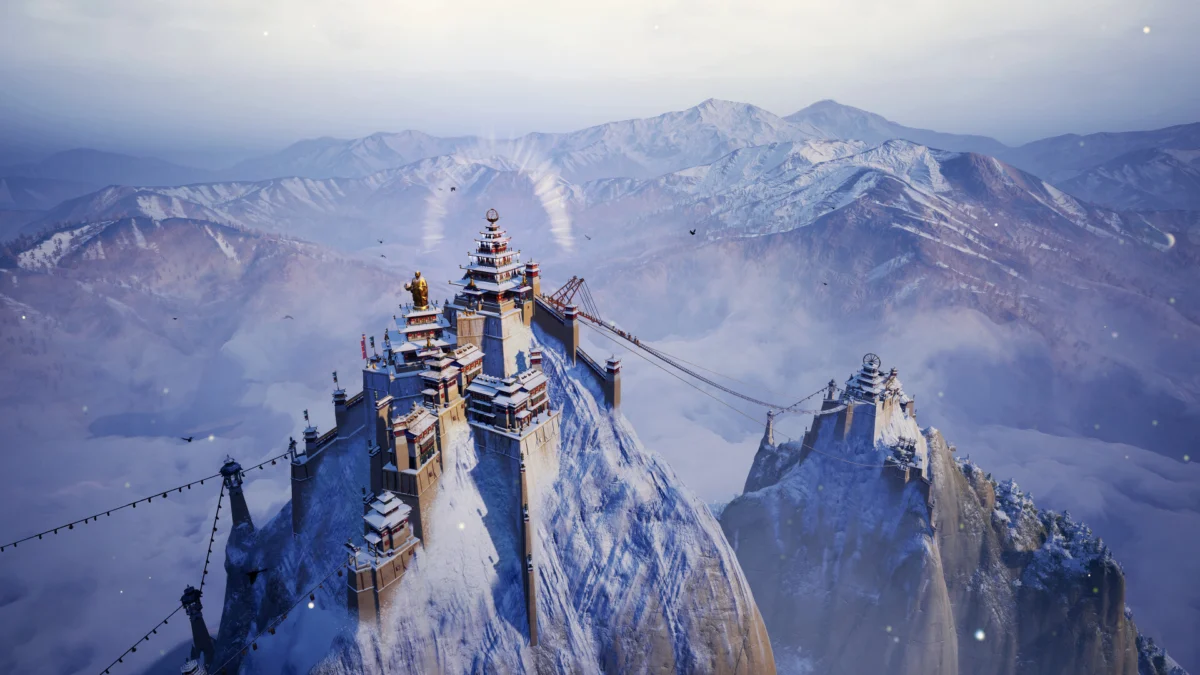
In the saturated world of city-building simulations, where the horizon is typically a flat, grid-based expanse, Laysara: Summit Kingdom arrives as a breath of thin, high-altitude air. Developed by Nejcraft and published by Quite OK Games, this title challenges the core tenets of the genre. Rather than sprawling outward across fertile plains, players must conquer the treacherous, vertical geometry of mountain ranges. Following its successful PC debut, the game has now made the leap to the Nintendo Switch, bringing its unique logistical puzzles to a handheld audience.
Main Facts: Redefining the City-Builder Paradigm
At its core, Laysara: Summit Kingdom is a sophisticated strategy simulation that shifts the traditional city-building focus from "how far" to "how high." In most titles within the genre, space is a luxury you earn; in Laysara, space is a scarce resource you must fight to optimize.
The game tasks players with establishing a series of interconnected settlements across varying mountain altitudes. The ultimate objective is as spiritual as it is architectural: to construct a grand temple at the very summit of the mountain. To achieve this, players must navigate a multi-tiered economy that demands precision. The population is divided into three distinct social classes—Lowlanders, Artisans, and Monks—each with specific needs and contributions to the kingdom’s stability.
The primary mechanics involve:
- Vertical Logistics: Constructing buildings on narrow ledges and steep slopes.
- Inter-Settlement Trade: Establishing transport networks (including cable cars and yaks) to move resources between towns.
- Social Stratification: Managing the specific requirements of the three population tiers.
- Disaster Management: Mitigating the unique risks posed by mountainous terrain, such as avalanches and shifting weather patterns.
Chronology of Development and Release
The journey of Laysara: Summit Kingdom began with a vision to marry the meditative aesthetics of Himalayan-inspired architecture with the crunching, high-stakes logistics of a strategy game.

- Early Development: Nejcraft focused on the procedural generation of mountain terrain, ensuring that each map presented a fresh puzzle. The team spent significant time refining the "verticality" engine, which allows buildings to snap onto inclines that would be considered "unbuildable" in competing titles like Cities: Skylines or Anno.
- PC Launch: Upon its initial release on PC, the game garnered praise for its visual fidelity and the sheer satisfaction of seeing a complex, multi-level production chain function in harmony. The game was lauded for its Tibetan-inspired visual design, which differentiates it from the industrial or historical aesthetics common in the genre.
- Nintendo Switch Port: Bringing the game to Nintendo’s hybrid console presented unique challenges. The transition from a mouse-and-keyboard interface to a controller-based input system necessitated a complete overhaul of the menu architecture. The recent release on Switch represents the culmination of this effort, allowing players to manage their mountain empires while mobile.
Supporting Data: The Mechanics of Altitude
To understand the complexity of Laysara, one must examine the data layers that drive the gameplay. Unlike games where road connections are simple, Laysara requires a holistic view of the mountain.
The Economy of the Heights
Production chains in Laysara are inherently fractured. Because certain resources can only be harvested at specific altitudes, players are forced to create "specialist towns." A settlement at the base might focus on agriculture, while a settlement near the clouds might focus on extracting rare minerals or housing monks for spiritual research. The efficiency of your kingdom is entirely dependent on the speed and reliability of your transport links.
The Three-Tier Social Structure
Managing the population is not merely about providing housing. It is about balancing the needs of the Lowlanders (the backbone of your labor force), the Artisans (who refine your raw goods), and the Monks (who provide the cultural and spiritual progress necessary for endgame objectives).
- Lowlanders: Require basic sustenance and safety.
- Artisans: Demand access to refined goods and social spaces, increasing the density of your city layouts.
- Monks: Require isolation and high-altitude sanctuaries, forcing the player to dedicate the most precious, high-elevation real estate to their needs.
Technical Performance
On the Nintendo Switch, the game maintains a stable frame rate, which is critical for a title that requires constant micro-management. While the interface is undeniably busier than its PC counterpart, the visual clarity remains high in both docked and handheld modes. The developers have clearly prioritized the readability of the terrain, ensuring that even on a smaller screen, the vertical nature of the geography is discernible.
Official Responses and Developer Insight
The developers at Nejcraft have been vocal about the "frustration-reward" cycle inherent in their design. In various community forums and interviews, the team has acknowledged that the late-game experience—where players are forced to tear down and relocate infrastructure to accommodate higher-tier buildings—is intentionally demanding.
"We wanted to avoid the stagnation that often sets in during the end-game of city builders," a representative noted. "By forcing players to rethink their earlier layouts, we ensure that the mountain remains a dynamic puzzle until the very final temple block is laid."

While some critics have pointed to the "cumbersome interface" on consoles, the developers have emphasized that they opted for a "depth-first" design. They believe that simplifying the UI too much would have stripped the game of its core strategic depth, effectively "dumbing down" the complex logistical operations that define the Laysara experience.
Implications: The Future of Niche Strategy Games
The success of Laysara: Summit Kingdom suggests a growing appetite for "high-friction" simulation games. Players are increasingly looking for titles that don’t just provide a sandbox, but provide a challenge.
A Departure from "Relaxing" Sims
There has been a recent trend toward "cozy" city builders, where failure is near-impossible. Laysara pushes against this current. Its logistical headaches and constant optimization requirements serve as a reminder that strategy games thrive when there is a risk of collapse. The implication for the industry is clear: there is a significant, passionate market for titles that reward patience, spatial reasoning, and forward-thinking.
The Role of Portability
The Switch port serves as a case study for bringing complex strategy games to consoles. By successfully translating a mouse-heavy UI to a controller, Nejcraft has opened the door for more intricate simulation games to move away from PC-exclusivity. However, the game also serves as a warning: the complexity of the control scheme can be a barrier to entry, potentially alienating casual players who are drawn to the game’s serene art style but are intimidated by its mechanical depth.
Conclusion: Is it for You?
Laysara: Summit Kingdom is not a game for those who wish to build and forget. It is a game for the obsessive planners, the ones who get a genuine dopamine hit from watching a chain of yaks successfully deliver stone to a high-altitude construction site. While it stumbles occasionally with its interface and can be punishing in its late-game requirements, it remains a triumph of thematic design.
By grounding its mechanics in the realities of mountain geography, Laysara proves that the genre still has room to scale new heights. Whether you are playing on a massive PC monitor or on the train with your Switch, the satisfaction of conquering the peak remains unparalleled. It is a challenging, rewarding, and deeply atmospheric experience that reminds us why we fell in love with city builders in the first place: the joy of taking a chaotic, wild landscape and imposing order upon it, one brick—or one mountain—at a time.