

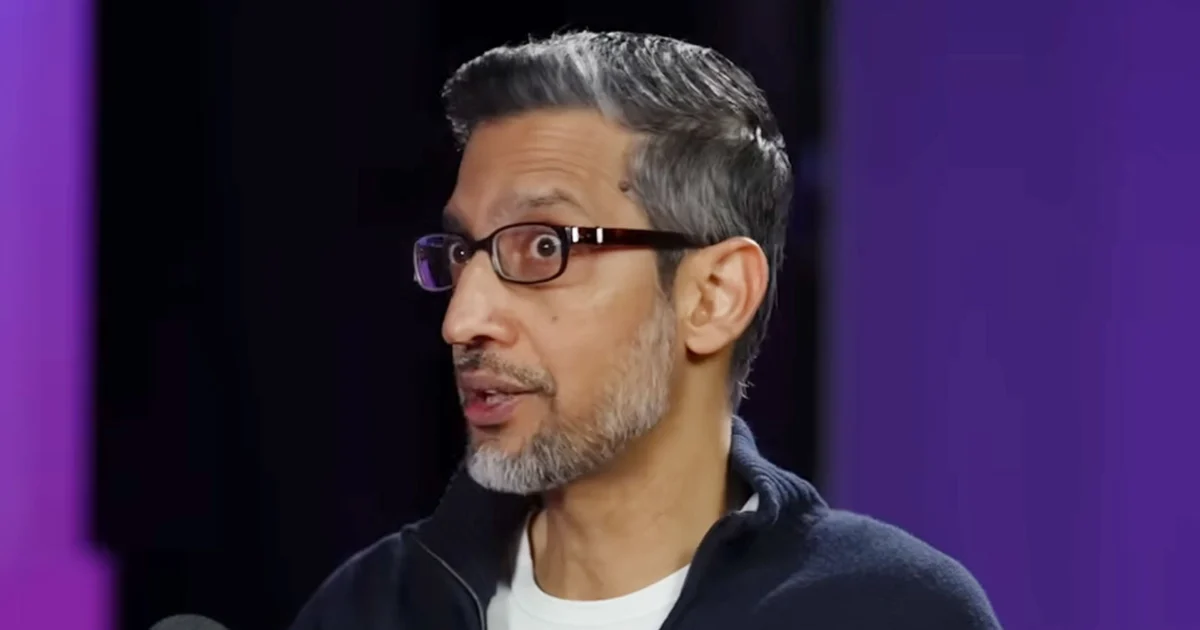
The digital landscape is currently witnessing a profound, potentially existential, friction between the world’s most powerful search engine and the publishers who populate it. In a recent, wide-ranging interview with The Verge, Google CEO Sundar Pichai defended the company’s pivot toward AI-driven search experiences. However, his remarks have done little to soothe the growing anxieties of SEO professionals, content creators, and major media conglomerates, who fear that the era of the "referral-rich" search engine is effectively coming to an end.
At the heart of the debate is the concept of "Google Zero"—a scenario where users consume AI-generated summaries directly on Google’s platform, eliminating the need to click through to original sources. While Pichai characterizes this shift as a natural, long-term evolution of information retrieval, the publisher community increasingly views it as an existential crisis.
Main Facts: The AI-Driven Shift in Search Quality
For over two decades, Google has refined its search algorithms based on a sophisticated bedrock of user satisfaction metrics. During the interview, Pichai emphasized that these pillars—engagement, session duration, return behavior, and "bounce-backs"—remain the primary compass guiding the development of AI Overviews.
The core takeaway is that Google is no longer merely an indexer of links; it is becoming an aggregator of synthesized opinion. When challenged by The Verge’s Nilay Patel regarding inconsistent AI results—specifically, conflicting recommendations for "best Chromebook" sourced from Reddit, the New York Times, and Google’s own AI—Pichai conceded that the AI could be "more opinionated than it should be." He framed this as a byproduct of a "fast-evolving space" rather than a fundamental flaw in the technology, suggesting that these "less than ideal" results are inevitable growing pains.
A Chronology of the Friction
The tension between Google and the publishing ecosystem did not emerge overnight; it is the culmination of years of algorithmic shifts and the recent, rapid deployment of generative AI.
- The Pre-AI Era: For years, publishers thrived on a predictable flow of organic traffic. Google’s metrics were focused on relevance and authority, typically favoring high-quality journalism and structured content.
- The Rise of AI Overviews: In the past year, Google’s aggressive rollout of AI-generated answers at the top of search results began to cannibalize "top-of-funnel" traffic.
- The "Google Zero" Warning: Major publishers, including Conde Nast, began publicly stating that they are preparing for a future where search referral traffic from Google drops to zero. This prompted the direct confrontation between Nilay Patel and Sundar Pichai, marking a shift from industry grumbling to a high-level public debate.
- The Current Impasse: Google maintains that the "content pie" is growing and that its mission to connect users to the web remains unchanged. Conversely, publishers argue that the "pie" is being sliced in a way that keeps the most valuable pieces—the answers—within the Google ecosystem.
Supporting Data: Satisfaction Metrics vs. Public Sentiment
A fascinating, if troubling, disconnect exists between how Google measures success and how the public perceives AI. Pichai insists that Google’s metrics are "very, very sophisticated" and allow for long-term course correction. However, Patel challenged the validity of these metrics, pointing to a "yawning gap" between Google’s internal satisfaction data and external public sentiment.
The Measurement Dilemma
Google’s reliance on engagement metrics is problematic in the age of AI. As research from the U.S. Department of Justice antitrust hearings has previously highlighted, click-through data is inherently noisy and often only becomes statistically significant at a massive scale. When applied to AI-generated answers, these metrics may track whether a user stayed on a page, but they fail to measure distrust or the societal anxiety surrounding the rapid, often non-consensual, integration of AI into daily life.
The Reality of Public Opposition
Patel cited several indicators of a broader cultural malaise:
- Generational Dislike: Younger demographics are increasingly vocal about their fatigue with AI-generated content.
- Institutional Backlash: High-profile figures, such as former Google CEO Eric Schmidt, have faced public hostility (including being booed at public events) linked to the perceived negative impacts of AI.
- Infrastructure Resistance: Significant public opposition has emerged regarding the massive data centers required to power AI, further alienating the public from the technology.
Pichai acknowledged this anxiety, labeling AI as the "most profound technology humanity is going to deal with." He argued that society is struggling to keep pace with the rate of change, but he stopped short of admitting that Google’s current AI implementation might be part of the problem.
Official Responses and the "Personalization" Defense
One of the most revealing moments in the interview occurred when Pichai addressed why specific AI search results might be poor. He suggested that "personalization"—the tailoring of answers to the individual user’s history—might be to blame.
This admission is significant for SEOs. If AI search results are hyper-personalized, the "objective truth" of search ranking disappears. A website might appear for one user but be completely ignored for another based on their search history or interaction style. This creates a volatile environment where the predictability of organic traffic is severely compromised.
Pichai’s defense was that such occurrences likely represent "the 0.0001%" of edge cases. However, for a publisher, even a 1% shift in traffic due to algorithmic "opinionation" can equate to the difference between profitability and insolvency.
Implications for the Future of the Web
The implications of this conversation for the digital economy are severe. If "Google Zero" becomes the default, the incentive structure for creating high-quality, independent content will collapse.
1. The Death of the "Click"
If Google succeeds in answering queries within the search interface, the incentive for users to visit the source website diminishes. This creates a "parasitic" relationship where Google trains its models on publisher content but denies those publishers the traffic necessary to sustain their operations.
2. The Attribution Crisis
As AI-generated answers blend with traditional organic results, attribution becomes increasingly murky. Publishers struggle to measure their ROI because their content is being consumed in a black-box environment. The data provided by Google Search Console is increasingly insufficient for understanding how a site is performing within an AI-first paradigm.
3. A Widening Trust Gap
The divide between Google’s executive outlook and the publisher reality is not merely a PR problem; it is a fundamental disagreement about the value of the internet. Pichai views the web as an "exceptionally dynamic" ecosystem that is simply shifting from mobile to "ongoing conversations." Publishers view it as the systematic dismantling of a fair exchange of value.
Conclusion: A Disconnected Vision
Sundar Pichai’s insistence that Google remains committed to connecting users to the web stands in stark contrast to the experience of site owners who see their referral numbers stagnating or declining. While Google frames its strategy as a "long-term evolution," the immediate, short-term impact on the digital publishing industry is one of contraction and uncertainty.
As the technology continues to evolve at a pace that even its creators admit is overwhelming, the question remains: Can Google truly reconcile its need for AI-driven engagement with the survival of the very publishers that provide the data to train its models? For now, the answer from Mountain View appears to be a polite "wait and see," while the rest of the web is left to prepare for a world where search traffic may no longer be a reliable pillar of business.












No comments yet. Be the first to join the conversation!