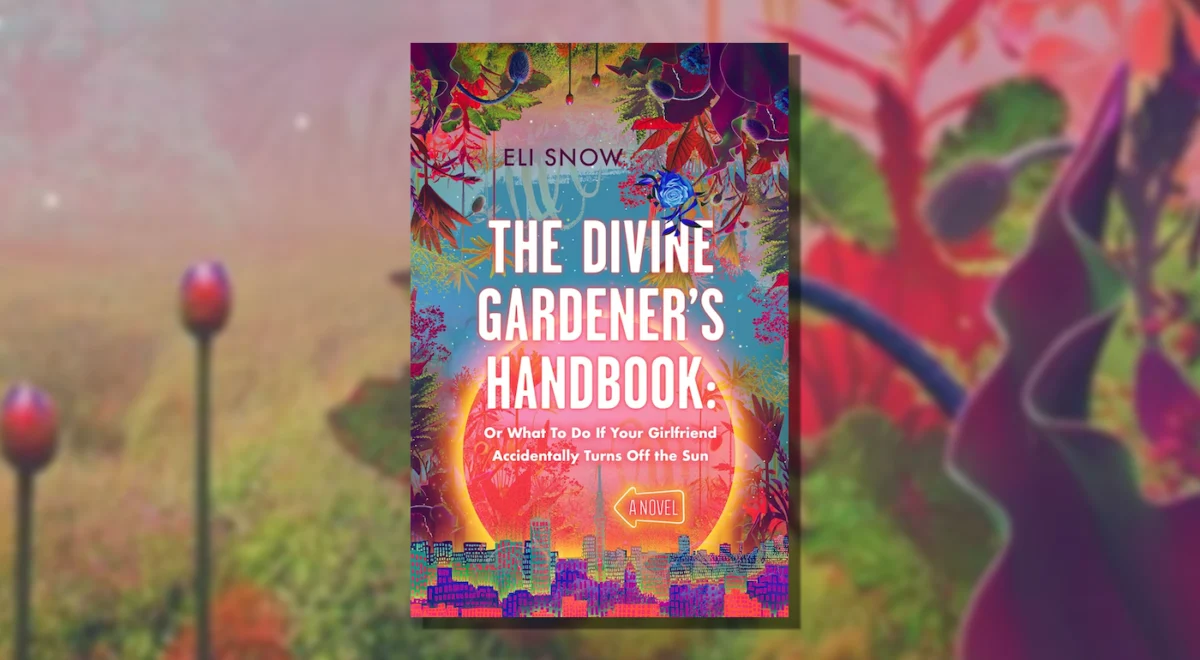
In the landscape of modern speculative fiction, the "romantasy" genre has undergone a significant evolution, shifting from traditional high-fantasy settings to more claustrophobic, high-stakes dystopian environments. Enter Eli Snow’s latest offering, The Divine Gardener’s Handbook, a sapphic, atmospheric, and tension-drenched narrative scheduled for release on August 18th via Saturday Books. The novel promises to be a cornerstone of the 2026 publishing calendar, blending the meticulous detail of horticultural science with the cutthroat politics of a vertical, "Jenga-stacked" megacity.
The Core Premise: A World of Glowing Flowers and Forbidden Ambition
The narrative centers on Cyprin, a woman born into the grueling reality of the city’s apple orchards—a subterranean existence defined by stale air, cramped conditions, and the rhythmic, soul-crushing labor of feeding a megacity that barely acknowledges the existence of its lower-tier workers. Above her lies the "Divine Garden," an elite, near-mythical horticultural hub where the flora is genetically modified to hum in the dark and the architecture defies the laws of physics.
Access to the Divine Garden is essentially non-existent; it is a closed loop of ten thousand residents, an exclusive cult of botanists who view themselves as the pinnacle of human achievement. Cyprin, however, is not a woman prone to resignation. Her journey to infiltrate this sanctum—beginning with a desperate attempt to win the city’s annual flower pageant—sets the stage for a narrative that explores themes of class disparity, professional obsession, and the volatile intersection of rivalry and romance.
A Chronology of Conflict: The Meeting That Changed Everything
The novel’s narrative momentum hits a critical inflection point during the administrative interview process. The excerpt provided by the publisher details a visceral encounter between Cyprin and the established hierarchy of the gardens.
- The Preparation: Cyprin arrives at the admin center, having scrubbed her identity clean to mimic the "purist" aesthetic of the garden staff—waxed hair, precision-lined lips, and impractical white coveralls.
- The Encounter: Cyprin finds herself waiting behind two palace staff members: the sympathetic Amanda Anstan and the formidable head gardener, Purcell Whitlock.
- The Friction: The initial meeting is defined by immediate, palpable hostility. Purcell, depicted as emotionally erratic and obsessively perfectionist, treats the administrative process with a casual flippancy that strikes a nerve with the desperate Cyprin.
- The Realization: As the interaction concludes, the rivalry is cemented. Cyprin realizes that the garden is not just a place of work, but a battleground of ego. The dynamic between her and Purcell—described as "hate at first sight"—functions as the primary engine for the story’s romantic tension.
Supporting Data: The Socio-Economic Architecture of the Kingdom of Verdure
To understand the weight of Cyprin’s mission, one must examine the world-building of the "Divine Kingdom of Verdure." The society is predicated on a radical imbalance of resources:
- Population Density: With seven billion people living in the Kingdom, the competition for the ten thousand positions in the Divine Gardens is mathematically staggering.
- Retention Rates: The gardens are not merely a workplace; they are a lifestyle. Retirement is rare, and the "garden family" often retains staff until death, creating a stagnant power structure that makes "plucking" a new gardener out of obscurity an event of near-miraculous rarity.
- The Horticultural Standard: The descriptions of the garden—lustrous leaves, laser-cut grass, and petals resembling fresh paint—highlight a society that has moved beyond nature into a state of "divine" artificiality. This aesthetic superiority acts as a primary motivator for the protagonist, who seeks to escape the "hot-sick smell" of the lower-level trash heaps.
Official Responses and Industry Reception
While the book has yet to hit shelves, early buzz from Macmillan and the editorial team at Saturday Books suggests that The Divine Gardener’s Handbook is being positioned as a flagship title. The industry is noting the book’s "sapphic dystopian" framing as a refreshing departure from standard tropes, particularly in its focus on the psychological toll of ambition.
"Eli Snow has crafted a world where the stakes are as fragile as a petal, yet as heavy as the city itself," says a source close to the publisher. "The focus on the ‘exhausted’ nature of divinity—the idea that God is simply a man managing a garden—adds a layer of subversive irony that readers are going to find both hilarious and deeply unsettling."

Implications: Ambition, Obsession, and Potential Ruin
The thematic core of the novel lies in the relationship between Cyprin and Purcell. What begins as a professional struggle—a fight over flower pageants and gardening positions—quickly devolves into "increasingly personal acts of warfare."
The "Enemy-to-Lovers" Dynamic
The tension between the two leads is not merely romantic; it is psychological. Cyprin’s urge to "crack Purcell open like a piñata" speaks to a predatory level of obsession that suggests the relationship will be one of mutual destruction as much as mutual attraction. The implication is that the two women are mirror images of one another—both caught in the gears of a system that demands perfection, and both willing to burn down the structures that hold them to achieve their ends.
The Dystopian Undercurrent
Beyond the romance, the "truth beneath the Gardens" promises a shift from a character-driven drama to a high-stakes thriller. As rebellion spreads through the city, the gardens stop being a sanctuary and start being a target. The central question of the book is whether the protagonists’ ambition will blind them to the unraveling of their world until it is too late.
The Role of the Divine
Perhaps the most intriguing aspect of the narrative is the deconstruction of the "God" figure. By painting the deity as an "exhausted man with a very good garden," Snow creates a vacuum of power. In a world where the divine is merely a tired bureaucrat, the struggle for control over the gardens becomes a struggle for control over the city’s reality.
Conclusion: Why This Matters
The Divine Gardener’s Handbook is not just a story about two women fighting over flowers; it is a commentary on the cost of excellence in an unequal society. As Cyprin navigates the treacherous corridors of the Divine Gardens, readers are invited to consider whether the "perfect" life is worth the sacrifice of one’s humanity.
With its blend of high-concept science fiction and intense, character-focused romance, Eli Snow’s latest is poised to capture the attention of a wide demographic. Whether it is the vivid, sensory-rich prose or the dangerously combustible chemistry between the leads, the novel offers a compelling look at what happens when ambition meets obsession in a world that is already on the brink of collapse.
The Divine Gardener’s Handbook hits bookstores on August 18th. For those who enjoy their romance with a side of thorns and their dystopia with a touch of divine madness, this is undoubtedly the season’s must-read.