
For the past several years, Japan has been the darling of the global travel industry. From the neon-lit streets of Shinjuku to the historic temples of Kyoto, the archipelago has seen an unprecedented influx of international travelers. However, a new report from the Japan National Tourism Organization (JNTO) has cast a shadow over this period of relentless growth, revealing that the number of foreign visitors to Japan has dipped for the first time in five years.
While the data has sparked anxiety regarding the sustainability of Japan’s "tourism boom," a deeper analysis suggests that the situation is far more nuanced. Rather than a total collapse of Japan’s appeal, the industry is witnessing a profound, geopolitical, and structural shift in its visitor base.
Main Facts: The First Dip in Half a Decade
According to the latest figures released by the JNTO on July 15, 2026, Japan welcomed approximately 21,084,800 overseas visitors between January and June of this year. While maintaining a robust volume—surpassing the 20-million-visitor threshold for the second consecutive year—this figure represents a 2 percent decrease compared to the same six-month period in 2025.
The most jarring data point concerns the month of June 2026, which saw 3,148,600 international arrivals. This represents a 6.8 percent decline compared to June 2025. This downturn, while seemingly modest in percentage terms, is significant because it breaks a long-standing streak of month-on-month growth, signaling that the factors driving the decline are not merely seasonal or temporary, but persistent.
Chronology of the Decline: The China Factor
The primary catalyst for this downward trend is the dramatic collapse in visitor numbers from China. For years, Chinese travelers have been the backbone of Japan’s tourism economy. However, following a government-issued travel advisory in China that effectively discouraged citizens from visiting Japan, the numbers have plummeted.
- January–June 2026: Chinese visitor numbers fell to 2,058,200, a staggering 56.4 percent decrease compared to the 4,720,600 visitors recorded in the same period last year.
- The Seven-Month Slide: June marked the seventh consecutive month of decline for Chinese tourism to Japan. In that month alone, arrivals from China totaled just 340,700—a 57.3 percent drop from the previous June.
This geopolitical friction has effectively severed the supply line of one of Japan’s most vital tourism markets, forcing the industry to reckon with its over-reliance on a single source of travelers.
Supporting Data: The New Pillars of Japanese Tourism
While the drop in Chinese tourism is statistically significant, the overall picture of Japan’s tourism industry is buoyed by a surprising resilience in other markets. As the "China gap" widens, travelers from South Korea, Taiwan, and the United States have surged to fill the void, demonstrating that the appetite for Japanese culture remains high.
A Shift in Ranking
The hierarchy of Japan’s top visitor sources has undergone a fundamental transformation:
- South Korea: Consolidating its position as the largest source of tourists, South Korea sent 5,675,100 visitors during the first half of 2026—an 18.6 percent increase.
- Taiwan: Rising to become the second-largest market, Taiwan saw 3,972,200 visitors, a 20.9 percent jump that effectively pushed it ahead of China in the national rankings.
- The United States: Despite the distance, U.S. visitors set a June record of 354,500, representing a 2.7 percent increase.
Economic Vitality: Higher Spend per Head
Perhaps the most optimistic data point for the Japanese government is that while the volume of tourists has dipped, the quality of tourism—measured by expenditure—remains strong. Between April and June 2026, total tourism consumption reached 2.5096 trillion yen (approximately US$17 billion), an increase of 0.2 percent over the previous year.
Even more telling is the record-high average spending per visitor, which rose 3.3 percent to 244,457 yen (roughly $1,507). This suggests that the current crop of tourists is staying longer, venturing further into regional Japan, and engaging more deeply with the economy, thereby offsetting the decline in raw visitor numbers.
Official Responses and Strategic Pivot
Government officials and tourism boards have been quick to address the report, acknowledging the concerns while maintaining a pragmatic outlook. The consensus among policymakers is that the current situation is an "adjustment phase."
The Japan National Tourism Organization has emphasized that the decline is not a symptom of a loss of interest in Japan, but a direct result of external geopolitical pressure. Official statements suggest that the government will not pivot away from its broader goal of attracting 60 million annual visitors by 2030, but it will likely refine its marketing strategies to focus on market diversification.
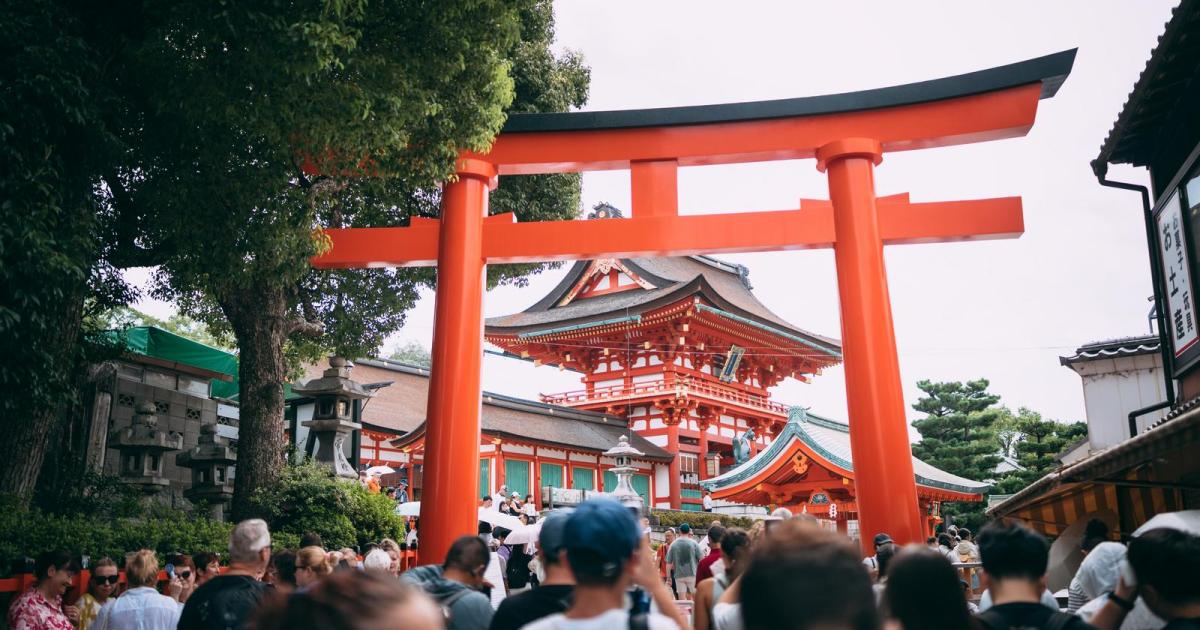
There is a growing internal movement within the tourism industry to prioritize "high-value" travelers. By moving away from the mass-market volume that defined the previous decade, Japan aims to alleviate the strain of "overtourism" in popular spots like Kyoto and Tokyo, while simultaneously shielding the industry from the volatility of any single source country.
Implications for the Future
The current downturn offers a crucial lesson for Japan: the vulnerability of a tourism model tethered to a single, politically sensitive market. The implications of this are twofold:
1. The Challenge of Market Diversification
Japan’s reliance on China was a byproduct of proximity and economic growth in the region. However, the recent decline has highlighted the necessity of aggressive marketing in Western markets, Southeast Asia, and the Middle East. To sustain the current level of economic contribution from tourism, the industry must ensure that a dip in one region does not trigger a national crisis.
2. Infrastructure and Sustainable Tourism
With the growth in visitor numbers slowing, local governments have a rare opportunity to pause and evaluate the impact of tourism on local communities. The conversation is already shifting toward "sustainable tourism"—managing crowds, preserving cultural heritage sites, and improving transportation infrastructure to handle peak flows without degrading the visitor experience.
3. Economic Resilience
The fact that average spending per visitor has hit a record high is a positive signal for the Japanese economy. If Japan can successfully transition to a model where tourists spend more per stay—through luxury experiences, regional tourism, and high-end retail—the industry may find itself more profitable even with lower overall volume.
Conclusion
Is this the beginning of the end for Japan’s tourism boom? The data suggests the answer is a firm "no." Instead, it is the beginning of a more mature, complex chapter for the industry. While the double-digit decline in Chinese visitors is a concern, the robust growth in other sectors and the rising spending power of individual travelers prove that Japan remains one of the most desirable travel destinations in the world.
The path forward for Japan involves a delicate balance: managing the political realities of international relations while cultivating a diverse, high-value tourism ecosystem. The "boom" may be losing some of its initial velocity, but for Japan, the goal is no longer just about numbers—it is about endurance, resilience, and long-term economic integration. As the country looks toward the second half of 2026, the focus will undoubtedly be on proving that Japan can weather the storm and emerge as a more stable, diversified destination for the global traveler.