

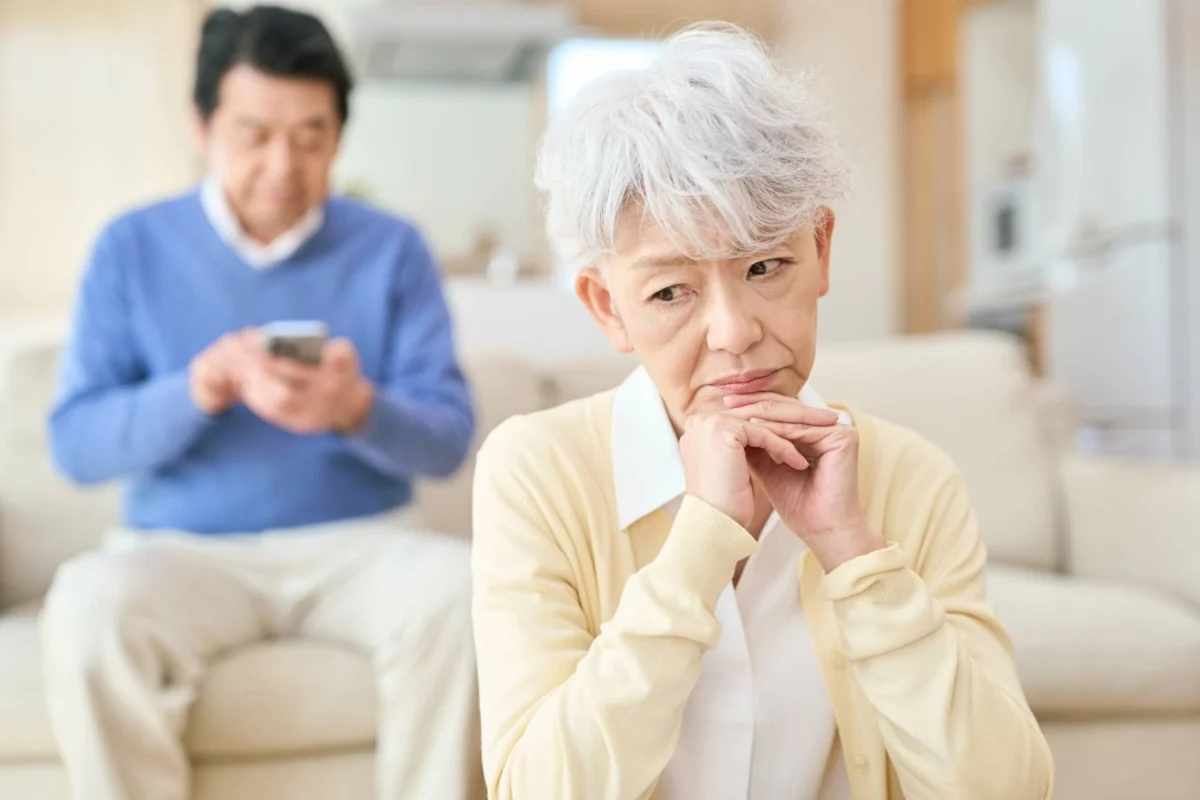
For decades, the standard narrative of retirement in Japan was one of well-earned respite. After a lifetime of grueling "salaryman" hours, the golden years were meant to be a period of tranquil domesticity. Yet, for an increasing number of Japanese households, the reality of post-retirement life has morphed into a source of profound psychological and physical strain.
The phenomenon, known in Japan as fugenbyō—literally "husband-origin illness"—has emerged as a stark indicator of the friction that occurs when long-established, work-centric relationship dynamics collide with the sudden, 24/7 reality of retirement.
The Reality Behind the Retirement Dream
Retirement is widely marketed as the ultimate reward, but for many, it functions as a sudden, destabilizing life event. In the traditional Japanese household, the husband’s career often defined the rhythm of the home. The wife managed the domestic sphere with relative autonomy, while the husband was a peripheral figure, present only during limited evening hours or weekends.
When that structure collapses upon retirement, the domestic equilibrium is often shattered. Wives who spent decades cultivating their own routines, social circles, and personal space suddenly find themselves sharing that space with a partner who lacks an external purpose or a defined social outlet.
The sentiment is captured in the colloquial phrase, Otto ga ie ni iru to, nazeka taichō ga waruku naru ("When my husband is at home, I somehow start to feel unwell"). While it may sound like a lighthearted quip, for many, it describes a genuine psychosomatic response to the pressures of an unwanted domestic "invasion."
Chronology of a Cultural Shift: From Salaryman to Full-Time Resident
To understand the emergence of fugenbyō, one must look at the structural evolution of the Japanese family unit over the last half-century.
The Era of Separation (1960s–1980s)
During Japan’s economic miracle, the "salaryman" culture necessitated near-total dedication to the corporation. Men were expected to work late hours, engage in mandatory after-work socializing, and leave domestic labor entirely to their wives. This created a profound emotional and physical distance between spouses, which, paradoxically, kept marriages stable by minimizing daily conflict.
The Slow Transition (1990s–2010s)
As the economic bubble burst and corporate culture began to shift—however slowly—the amount of time men spent at home increased. During this period, the first whispers of "retirement divorce" (jukunen rikon) began to circulate. Women, having raised children and maintained households independently, grew less willing to tolerate husbands who expected the same level of service they received when they were working.
The Modern Crisis (2020s–Present)
The post-pandemic era has accelerated this trend. With remote work becoming more normalized and the retirement age pushing upward, the physical boundaries between "work life" and "home life" have all but vanished. Fugenbyō is no longer just a private frustration; it is recognized as a legitimate health concern, with clinics and therapists reporting a rise in middle-aged and elderly women seeking treatment for stress-related symptoms directly linked to their husbands’ presence.
Supporting Data: The Anatomy of Stress
The medical community in Japan has begun to treat fugenbyō with the seriousness of a public health issue. While the term is not a formal diagnostic category in the DSM-5, its symptoms are well-documented: chronic headaches, insomnia, depression, gastrointestinal distress, and high blood pressure.

Research indicates that the root cause is rarely the individual husband’s personality, but rather the structural inability of the couple to pivot from a "provider/homemaker" dynamic to a "companionate" one.
- The Loss of "Me-Time": Studies show that women who lose their sole control over the home environment experience a significant spike in cortisol levels.
- Communication Gaps: A 2023 survey of retired couples found that over 40% of women reported that their husbands "do not know how to occupy themselves," leading to a reliance on the wife to provide entertainment, meals, and emotional labor.
- Social Isolation: In Japan, men who retire often lose their only social network—their workplace. They look to their wives to fill the vacuum, placing an undue emotional burden on the spouse.
Official Responses and Societal Implications
The Japanese government and various health organizations have begun to address the issue of the "post-retirement adjustment period" as part of a broader push for better mental health support.
The Role of Community Centers
Local municipalities are increasingly hosting "retirement preparation seminars" not just for men, but for couples. These workshops focus on "domestic co-habitation skills," encouraging men to take up hobbies, volunteer, or participate in community groups that take them out of the house for several hours a day.
Healthcare Providers
Psychologists are now routinely screening for domestic triggers when treating elderly patients for stress-related illnesses. The medical consensus is that the solution requires a "separation of spaces"—a physical and mental re-establishment of boundaries within the home.
Cultural Commentary
Sociologists argue that fugenbyō is a symptom of a patriarchal structure that failed to evolve. By training generations of men to be exclusively "workers," society robbed them of the ability to be "partners." The illness, therefore, is a collective failure, not a individual one.
The Implications for the Future
As Japan faces one of the fastest-aging populations in the world, the issue of fugenbyō will likely intensify before it dissipates. The societal implications are significant:
- The "Jukunen Rikon" (Retirement Divorce) Trend: If the domestic stress remains unresolved, more couples are choosing to separate after the husband retires. This has long-term economic consequences for the husband, who often loses his primary caregiver, and the wife, who may face financial instability.
- Redefining Masculinity: There is a growing movement to encourage men to "re-learn" how to exist in the domestic sphere without assuming a position of authority or dependency. This involves men learning to cook, clean, and manage their own schedules—a fundamental shift from the "salaryman" era.
- The Importance of Independent Hobbies: Experts now stress that the healthiest retired couples are those who maintain separate social lives. The idea that "you must spend every moment together in retirement" is being debunked as a recipe for disaster.
Conclusion: A New Chapter or a New Conflict?
The phenomenon of fugenbyō serves as a poignant reminder that retirement is not merely an economic transition—it is a radical reorganization of human connection. The Japanese experience offers a cautionary tale to other nations: when a society builds its entire identity around the labor of its people, it leaves them ill-equipped for the silence that follows.
For many Japanese couples, the "golden years" have become a trial by fire. The ones who succeed in navigating this transition are those who recognize the need for autonomy within marriage. They are the couples who understand that for a relationship to survive the loss of the workplace, it must be rebuilt on a foundation of mutual independence rather than mutual dependence.
As Japan continues to navigate this social shift, the focus must remain on mental health, the destigmatization of domestic stress, and the urgent need for a societal reimagining of what it means to grow old together—without losing oneself in the process. Quality, long-term health, as it turns out, requires not just physical fitness, but the freedom to breathe within one’s own home.











