

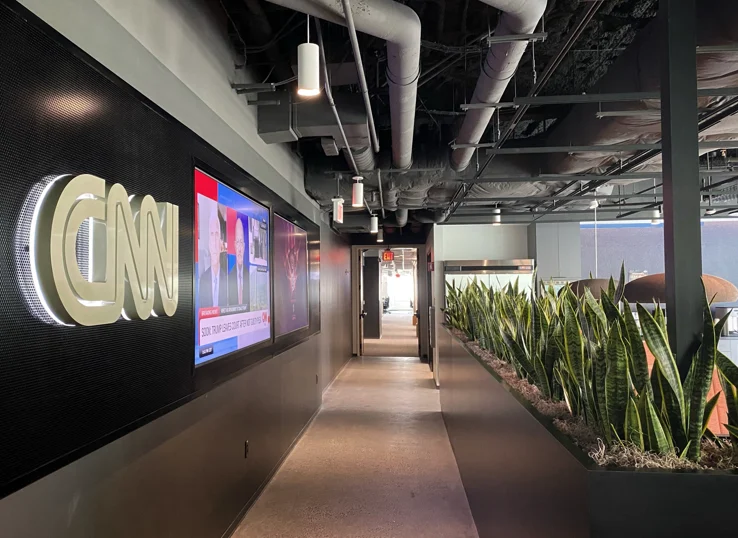
The corridors of CNN’s Hudson Yards headquarters, once synonymous with a sense of journalistic permanence, have lately been permeated by a palpable, corrosive tension. As the acquisition of Warner Bros. Discovery (WBD) by the Paramount-Skydance conglomerate enters what industry insiders are calling “extra time”—a protracted period of regulatory scrutiny and complex deal-structuring—the network’s rank-and-file are bracing for a future that feels increasingly unmoored.
For the men and women who produce the news, the impending transition is not merely a change in corporate branding or ownership; it is viewed by many as an existential threat to the network’s editorial identity and its operational stability. As external observers analyze the financial metrics of the deal, the internal reality at CNN is defined by a singular, haunting question: What happens when a legacy news organization is subsumed by an entity that many staffers fear neither understands nor values the nuances of global journalism?
The Main Facts: A Network in Limbo
The fundamental reality facing CNN today is one of strategic drift. The merger, which promises to consolidate vast media assets under the Paramount-Skydance banner, has inadvertently cast the news network as a pawn in a much larger, capital-intensive game of corporate consolidation.
Recent reporting from Variety’s Brian Steinberg has underscored a critical disconnect between the incoming leadership and the newsroom floor. Staffers, speaking on condition of anonymity due to the sensitivity of the ongoing negotiations, have expressed a profound lack of confidence in the incoming executive suite. The perception, right or wrong, is that these new stakeholders lack the institutional knowledge required to manage a 24-hour news operation, navigate its razor-thin profit margins, or protect its editorial integrity against the pressures of a shifting media landscape.
This anxiety is compounded by the silence emanating from the highest levels of leadership. CNN CEO Mark Thompson, a veteran of the BBC and the New York Times, finds himself in an unenviable position. According to reporting from New York Magazine’s Tom Kludt, Thompson—tasked with steering the network through a period of declining linear viewership and digital transition—is reportedly operating in a state of strategic ambiguity. He is, by all accounts, as much in the dark as his employees regarding the specific mandates the new ownership will impose.
Chronology: The Road to the "Extra Time" Phase
To understand the current state of affairs, one must look back at the precipitous decline of the traditional cable news model and the subsequent desperation for scale.
- Q1 2024: Whispers of a WBD-Paramount-Skydance deal began to circulate as WBD sought to address its substantial debt load and stagnant stock price.
- Q2 2024: Official negotiations commenced. The markets reacted with cautious optimism, viewing the deal as a necessary consolidation in an era of streaming dominance.
- Q3 2024: The deal entered the regulatory review phase. As the complexity of the asset transfers became apparent, the timeline for closure began to slip, leading to the current “extra time” scenario.
- Q4 2024: Internal morale at CNN hit a nadir. Reports surfaced regarding potential leadership shakeups and ideological shifts, specifically regarding the influence of controversial media figures like Bari Weiss, whose name has become a lightning rod for staff concerns regarding the network’s future editorial direction.
- Present Day: CNN remains in a state of professional paralysis. Every memo from HR and every town hall meeting is scrutinized for hidden signals about the network’s post-merger fate.
Supporting Data: The Erosion of the Cable News Hegemony
The anxiety at CNN is not occurring in a vacuum; it is underpinned by brutal industry metrics. In 2024, the network continued to navigate the "cord-cutting" phenomenon, which has seen cable subscription numbers plummet across the industry.
- Viewership Trends: CNN’s linear ratings have faced consistent pressure, forcing the network to pivot aggressively toward the "CNN Max" streaming platform and digital-first content.
- Financial Pressures: WBD has struggled to integrate the disparate parts of its empire, and the acquisition by Paramount-Skydance is essentially an attempt to buy time through scale. However, the cost of this scale is often deep, swift, and indiscriminate budget cutting.
- Executive Turnover: The revolving door of the C-suite—from the Jeff Zucker era to Chris Licht’s brief, tumultuous tenure, and now the Thompson era—has left the workforce exhausted. The proposed merger represents a third major structural shift in less than five years.
For staffers, these numbers are not just spreadsheets; they represent the potential for layoffs, the shuttering of international bureaus, and the reduction of field reporting in favor of cheaper, studio-based commentary—a shift many journalists fear will permanently degrade the brand.
Official Responses: A Wall of Silence
The official communication strategy from both WBD and the prospective Paramount-Skydance leadership has been a masterclass in obfuscation. In response to inquiries regarding the staff’s trepidation, spokespeople for both sides have consistently relied on boilerplate language.
"We remain committed to the editorial independence and journalistic excellence of CNN," a spokesperson for the transition team noted in a recent email. "Our focus during this period is on ensuring a smooth transition that maximizes value for our shareholders and provides the resources necessary for the network to compete in a digital-first global media market."
However, such statements have done little to quell the unrest. When pushed on the specific concerns regarding management styles and potential editorial interference, the silence is deafening. Mark Thompson, for his part, has maintained a focus on his internal "transformation plan," attempting to keep the newsroom focused on the daily mission of covering the news, even as his own future at the helm remains subject to the whims of a new board of directors.
Implications: The Future of a Legacy Brand
The implications of this merger extend far beyond the offices of Hudson Yards. They touch upon the very nature of American media ownership in the 21st century.
1. Editorial Independence vs. Corporate Strategy
The primary concern among CNN’s veteran journalists is that the incoming ownership will view the news as a commodity rather than a public trust. If the management team is, as critics suggest, unversed in the complexities of investigative journalism, the risk of "softening" the news to avoid political or corporate backlash becomes a genuine threat.
2. The Talent Exodus
CNN has long relied on its reputation as the gold standard for global crisis reporting. If the culture shifts to one defined by austerity and micromanagement, the network risks losing its top-tier talent. Journalists who have built their careers on the promise of editorial autonomy are already fielding calls from competitors and digital startups, creating a "brain drain" that could cripple the network’s ability to compete.
3. The Digital Pivot
The merger is fundamentally a bet on the future of streaming. The implication for CNN is that it will be forced to accelerate its shift to a digital-only future at a pace that may be unsustainable. If the transition is handled poorly, the brand risks alienating its core audience—those who still tune in on cable—before it has secured a loyal base on digital platforms.
4. The Political Perception
Finally, the involvement of high-profile figures rumored to be aligned with the new ownership has created a perception problem. CNN has spent years battling the "fake news" narrative, and any perceived shift toward a specific ideological viewpoint under new ownership could permanently damage its credibility with the center-right and center-left alike, rendering it just another partisan outlet in an already saturated market.
Conclusion: The Long Wait Continues
As the calendar turns and the merger negotiations continue to drag on, the mood at CNN remains one of weary resignation. The "extra time" phase is not merely a bureaucratic delay; it is a period of sustained psychological strain for a staff that has endured more than its fair share of instability.
Whether the Paramount-Skydance acquisition proves to be the salvation of a storied brand or the beginning of its slow decline remains to be seen. What is clear, however, is that the trust of the newsroom has been severely shaken. For Mark Thompson and his team, the challenge is not just to manage a network, but to manage a workforce that is collectively holding its breath, waiting for the other shoe to drop.
Until the final papers are signed and the strategic vision of the new owners is laid bare, CNN remains in a state of suspended animation—a powerful, influential, yet deeply anxious institution caught in the gears of a corporate machine that may not know how to handle the fragile, vital cargo it is currently acquiring.










