

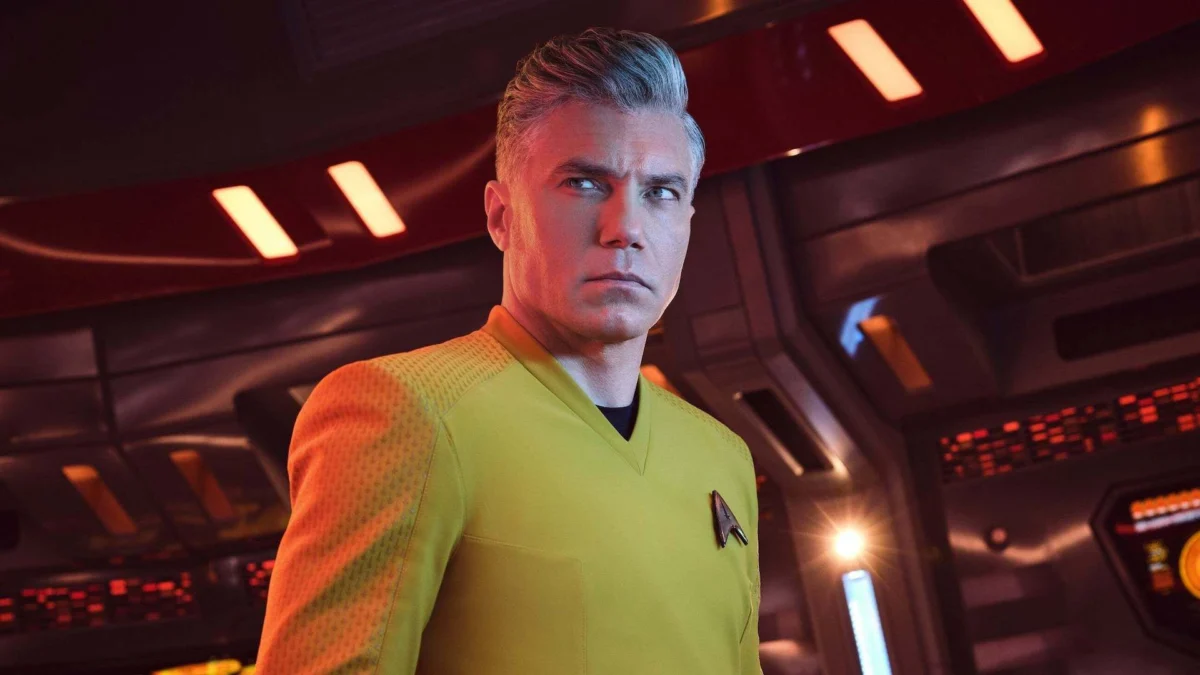
As the Star Trek universe continues to expand on Paramount+, one question has lingered in the minds of dedicated fans since the inception of Star Trek: Strange New Worlds: How will the series navigate the inevitable intersection with the franchise’s most iconic, yet tragic, legacy story? Specifically, fans are clamoring to know if showrunners Henry Alonso Myers and Akiva Goldsman intend to revisit or modernize "The Menagerie," the seminal two-part episode from The Original Series (TOS) that defined the fate of Captain Christopher Pike.
With the highly anticipated fourth season of Strange New Worlds set to premiere on July 23, 2026, and the series confirmed to conclude with a six-episode fifth season, the window for addressing this narrative "elephant in the room" is closing.
The Weight of History: Understanding "The Menagerie"
To appreciate the gravity of the potential creative choices facing the Strange New Worlds team, one must look back to the origins of the franchise. In 1964, Gene Roddenberry produced the original Star Trek pilot, "The Cage," featuring Jeffrey Hunter as Captain Christopher Pike. When NBC executives famously rejected the pilot as "too cerebral," the project was overhauled, leading to the 1966 series that eventually starred William Shatner as Captain James T. Kirk.
However, rather than consigning "The Cage" to the annals of lost media, the production team repurposed the footage into "The Menagerie." In this episode, a middle-aged, severely scarred, and wheelchair-bound Pike—rendered mute and paralyzed following a delta-ray accident—is abducted by his former science officer, Spock. Spock’s desperate attempt to return his former commander to the illusionary paradise of Talos IV serves as the framework for the footage from the original pilot.
For decades, this remained the definitive "end" of the Christopher Pike story. Now, with Anson Mount’s charismatic portrayal of Pike in Strange New Worlds, the franchise has spent years humanizing a man who we know is walking toward a horrific, life-altering accident. The juxtaposition of Pike’s current adventurous spirit against his predetermined future creates a unique tension that permeates every frame of the prequel series.
Official Responses: The Creative Philosophy of Henry Alonso Myers
At the recent Television Critics Association event, showrunner Henry Alonso Myers addressed the growing speculation surrounding a potential remake or retelling of "The Menagerie." Speaking with Matt Mitovich of Matt’s Inside Line, Myers provided insight into the creative philosophy driving the Strange New Worlds writers’ room.
While he stopped short of confirming that the storyline is off the table, Myers emphasized that the team’s priority is not merely to retread familiar ground. "A key part of our journey sends us towards the things that we know are going to happen," Myers explained. "But hopefully, for all of our viewers, there will be some surprises that hit you along the way. Why should we show you the thing you already know? We want to show you the thing that you don’t."
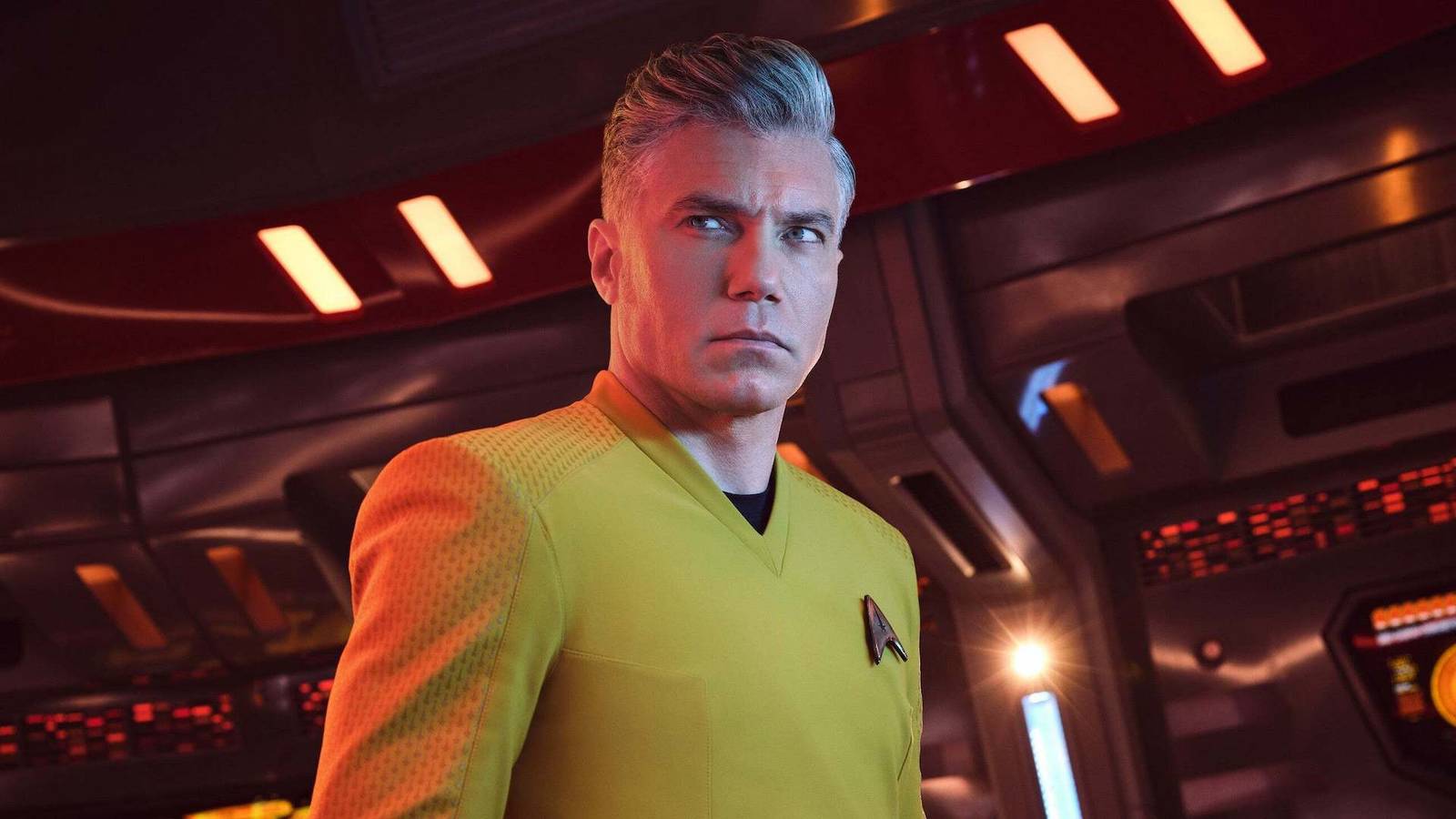
This statement is telling. It suggests that the production team is acutely aware of the "prequel problem"—the risk of the narrative feeling like a checklist of established canon. By prioritizing "the thing you don’t know," Myers signals a desire to subvert expectations, potentially offering a different path or a deeper emotional exploration of Pike’s final days than the original series provided, without necessarily contradicting the established continuity of the 1960s episodes.
Chronology and the Looming Deadline
The timeline of Star Trek is notoriously complex, but Strange New Worlds occupies a specific pocket: the years between the Discovery Season 2 events and the dawn of the Kirk era. We know from the events of Star Trek: Discovery that Pike has already seen his future. During an encounter on the planet Boreth, Pike touched a time crystal, experiencing a vision of the very accident that will leave him paralyzed and scarred.
This knowledge fundamentally changed the character. Unlike the Pike of The Original Series, who was a passive participant in his fate, the Pike of Strange New Worlds is a man living in the shadow of his own death. Every mission, every diplomatic crisis, and every personal relationship is colored by his awareness of the "present day" storyline of "The Menagerie."
With Season 4 of Strange New Worlds dropping ten episodes this summer, and the final six-episode run of Season 5 looming on the horizon, the creative team has only 16 episodes left to bring this arc to its conclusion. The pressure to provide a satisfying resolution—one that honors the legacy of TOS while standing on its own—is at an all-time high.
Exploring the Potential: Flashforwards and Alternative Perspectives
How could the show incorporate "The Menagerie" without simply recreating it? Fans have posited several theories. One possibility is the use of "visionary narrative" or "flash-forwards." Just as Pike has experienced visions of his future before, the show could utilize a dream sequence or a temporal anomaly to allow the audience to see a different, more nuanced perspective of the events surrounding his retirement to Talos IV.
Another avenue is a "court-martial" parallel. The Original Series focused on Spock’s trial for his mutiny. Strange New Worlds could potentially shift the focus to a court-martial involving Pike himself, or perhaps a legal battle regarding the ethical implications of the Talosians’ mental projections. This would allow the show to explore the themes of "The Menagerie"—duty, loyalty, and the right to choose one’s own ending—without needing to lift footage from a 60-year-old pilot.
Furthermore, the show has already demonstrated a willingness to experiment with established canon. In the Season 1 finale, "A Quality of Mercy," the writers presented an alternate timeline in which Pike survived the accident, allowing him to see the catastrophic consequences that his survival would have on the galaxy. This precedent proves that the show is willing to use "what-if" scenarios to deepen the tragedy of the character’s eventual sacrifice.

Implications for the Star Trek Franchise
The decision to either revisit or diverge from "The Menagerie" has massive implications for the broader Star Trek franchise. Strange New Worlds has been lauded for its episodic, "planet of the week" format, which pays homage to the classic feel of TOS while utilizing modern production values.
If the showrunners choose to "remake" the ending of the Pike era, they risk alienating purists who feel the original story is untouchable. Conversely, if they ignore it entirely, they risk leaving a massive narrative hole that undermines the tragic weight of the character’s arc. The "middle path"—acknowledging the events of "The Menagerie" while providing a new, emotionally resonant context—seems to be exactly what Myers is hinting at.
The success of Strange New Worlds lies in its ability to balance nostalgia with innovation. By giving us a captain who is actively grappling with his own legacy, the show has elevated the character of Christopher Pike from a footnote in history to one of the most compelling figures in modern science fiction.
Conclusion: A Legacy in the Making
As we look toward the final two seasons of Strange New Worlds, it is clear that the creative team is not interested in simply acting as a museum curator for Star Trek history. They are storytellers tasked with bridging the gap between the past and the future. Whether or not they choose to explicitly adapt "The Menagerie," the influence of that story will undoubtedly continue to loom large over the Enterprise.
For fans, the promise of "surprises that hit you along the way" is perhaps the most exciting prospect. In a franchise defined by exploration, the most important discovery might not be a new world or a new species, but the final, definitive understanding of what it means to be a hero in the face of an unavoidable fate.
The fourth season of Star Trek: Strange New Worlds arrives on Paramount+ on July 23, 2026. As the Enterprise sets its course for the final time, one thing is certain: Captain Pike’s journey will be one for the history books, regardless of how the final page is written.










