

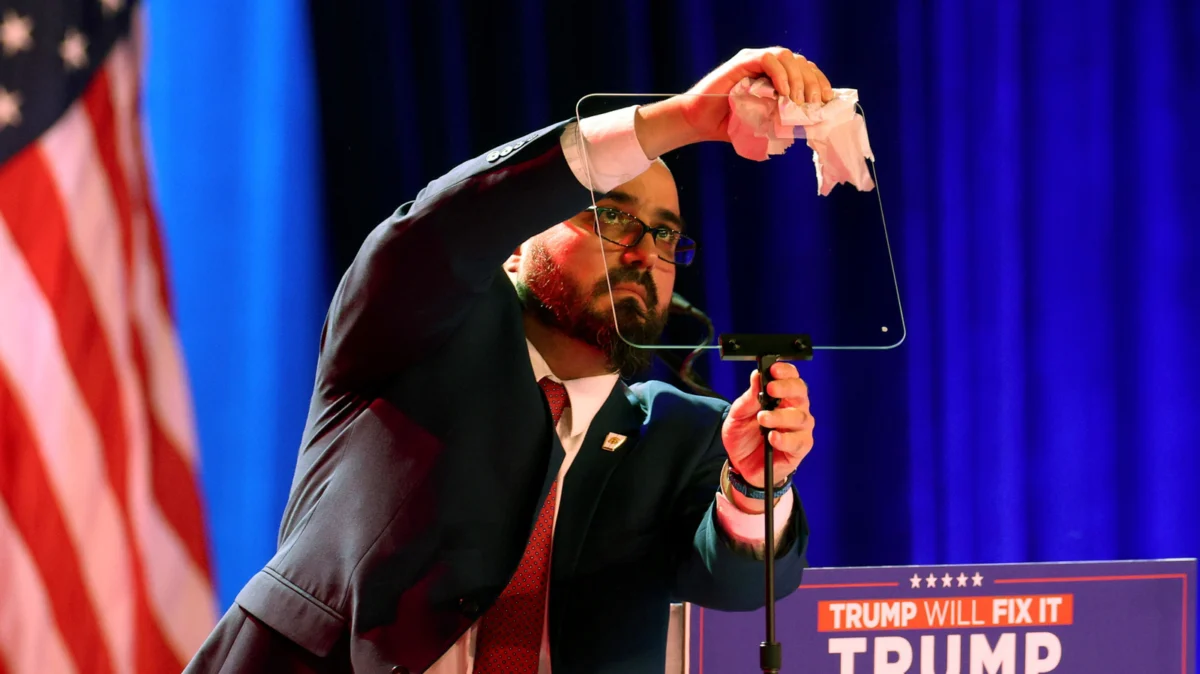
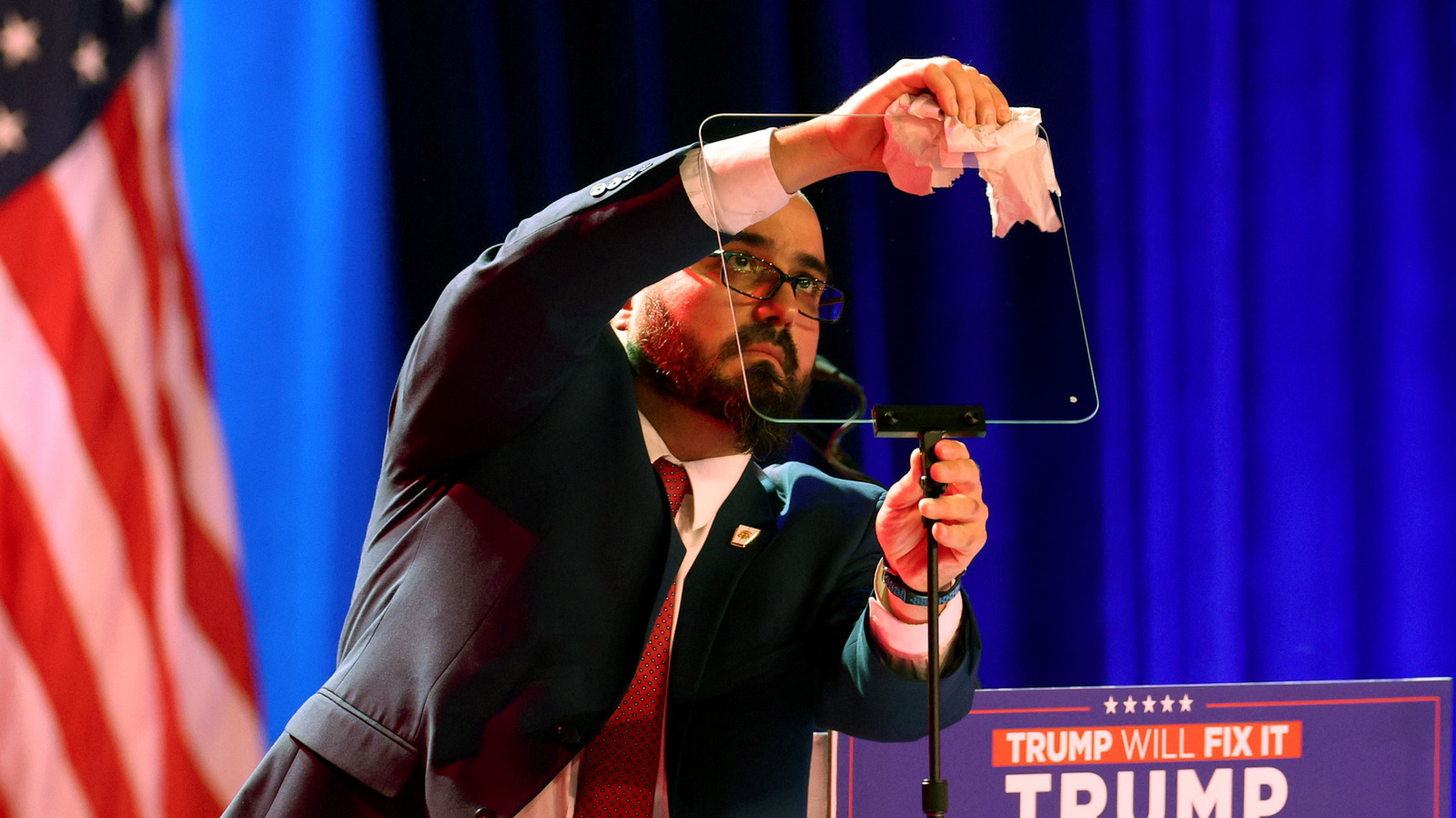
In a revelation that has sent shockwaves through the intersection of American politics and the burgeoning world of prediction markets, a high-level White House staffer has been placed on administrative leave following allegations of systemic insider trading. Gabriel Perez, who served as President Donald Trump’s primary teleprompter operator, is under investigation by the Commodity Futures Trading Commission (CFTC) for allegedly leveraging his unique access to classified speech drafts to secure over $100,000 in winnings on the betting platform Kalshi.
The scandal marks one of the most high-profile instances of potential market manipulation involving a government employee, raising critical questions about the integrity of political prediction markets and the ethical standards governing those with direct access to the levers of executive power.
The Mechanics of the Alleged Scheme
At the heart of the controversy is the nature of Perez’s role within the White House. As the person responsible for the final review of the President’s prepared remarks, Perez possessed information that was not only non-public but effectively proprietary. This "last-look" access provided him with an unprecedented window into the specific content, duration, and tone of the President’s upcoming public addresses.
According to reports from ABC News, Perez allegedly utilized this information to place strategic bets on Kalshi, a platform that allows users to wager on the outcomes of future events, including the duration of political speeches. By knowing exactly what was written on the teleprompter, Perez could calculate the length of a speech with remarkable precision.
The evidence suggests the scheme was not a one-off error in judgment but a calculated pattern of activity. Perez allegedly placed bets on a variety of high-profile events, including the State of the Union address, a keynote speech at the World Economic Forum in January, and remarks delivered during a Medal of Honor ceremony in March. Sources close to the investigation note that Perez was so confident in his inside knowledge that he would frequently hedge or withdraw bets if he observed the President deviating from the prepared text—a clear indication that his betting behavior was directly tethered to the teleprompter’s content rather than market trends.
A Chronology of Discovery
The unraveling of the scheme began when internal monitoring systems at Kalshi flagged suspicious, highly accurate betting patterns originating from a single account.
- Early 2026: Perez allegedly begins placing bets on the length of presidential speeches, systematically winning as his inside knowledge provides an insurmountable edge over other market participants.
- March 2026: Following a series of trades surrounding a Medal of Honor ceremony, internal algorithms at Kalshi trigger an alert regarding anomalous trading behavior.
- April 2026: In a proactive move to address potential regulatory scrutiny, Kalshi implements new "guardrails" intended to prevent political insiders and athletes from wagering on their own fields of influence.
- Mid-2026: Investigators from the CFTC initiate a formal inquiry. During an interview with authorities, Perez reportedly confessed to several of the trades, admitting to the nature of his access and the intent behind his wagers.
- July 2026: The news becomes public, and the White House confirms that Perez has been placed on unpaid administrative leave, with officials stating he will "no longer be here."
The Regulatory Landscape and Kalshi’s Response
The incident has placed Kalshi—a platform that has fought a protracted legal battle to establish itself as a legitimate financial market—under intense pressure. The company issued a statement confirming that it had "promptly flagged and referred" the trades to the CFTC as soon as the patterns were identified.
Kalshi’s struggle to maintain market integrity is not new. Earlier in 2026, the platform suspended three political candidates for engaging in what the company deemed insider trading on its own platform. In June, the company doubled down on these efforts by mandating that users disclose their employment information before placing certain high-stakes bets, an attempt to create a "know-your-customer" (KYC) environment that rivals traditional stock brokerages.
However, the Perez case highlights the inherent difficulty in policing such markets. Even with enhanced disclosure requirements, a sophisticated actor with direct access to the source material can easily circumvent standard monitoring unless the platform has specific knowledge of the user’s professional clearance levels.
Official Responses and Political Fallout
The White House reaction was swift and unequivocal. During a press briefing, Press Secretary Karoline Leavitt addressed the matter with visible frustration, confirming that President Trump was briefed on the situation.
"The actions taken by this individual are deeply unfortunate and a disgrace to the office," Leavitt stated. She emphasized that the administration maintains a strict standard of conduct and that any betrayal of the public trust is taken with the utmost seriousness. The transition from active staffer to terminated employee was rapid, signaling the administration’s desire to distance itself from the optics of a corruption scandal.
For the CFTC, the case represents a test of its authority. The commission is reportedly open to a settlement with Perez, provided he disgorges his $100,000 in winnings. This approach suggests a preference for rapid resolution and restitution rather than a protracted criminal trial, though the optics of a government employee profiting from presidential remarks remain a significant political liability.
Implications for Prediction Markets
The Perez incident raises fundamental questions about the future of political betting. For years, proponents of prediction markets have argued that they offer a more accurate forecast of future events than traditional polling. Critics, however, have long warned that these platforms are vulnerable to manipulation, particularly by those with "insider" access to the very events being predicted.
1. The Erosion of Public Trust
If the general public perceives that political prediction markets are "rigged" by those within the halls of power, the legitimacy of these platforms as a barometer of public sentiment will vanish. The Perez case provides tangible evidence for skeptics who argue that the risk of moral hazard is too high when government employees are permitted to trade on the outcome of their own work.
2. The Regulatory Tug-of-War
The legal status of these platforms is already in flux. When New Jersey attempted to ban Kalshi entirely, a U.S. Circuit Court of Appeals intervened, ruling that the state lacked the authority to stifle a federally regulated market. This victory for Kalshi shifted the burden of regulation squarely onto the CFTC. Now, the commission faces a new mandate: they must prove they can police the market effectively, or face calls from Congress to impose a blanket ban on political betting.
3. A Precedent for Future Compliance
The requirement for users to disclose their employment status is likely just the beginning. We are moving toward a reality where platforms like Kalshi may need to integrate with government databases to verify a user’s "insider" status. This would fundamentally change the nature of these platforms, transforming them from decentralized, accessible betting markets into highly regulated financial instruments that require rigorous vetting.
Conclusion
The story of Gabriel Perez is a cautionary tale of greed meeting opportunity in the digital age. By blurring the lines between his professional obligations and his private financial interests, he has inadvertently triggered a reckoning for the entire political prediction market industry.
As the CFTC moves forward with its investigation, the focus will likely shift from the individual to the infrastructure. The question is no longer just whether Perez broke the rules, but whether the rules themselves are sufficient to handle the speed, scale, and influence of modern political betting. For now, the teleprompter at the White House remains, but the person behind it serves as a stark reminder that in the high-stakes world of modern politics, information is the most valuable—and dangerous—currency of all.











