

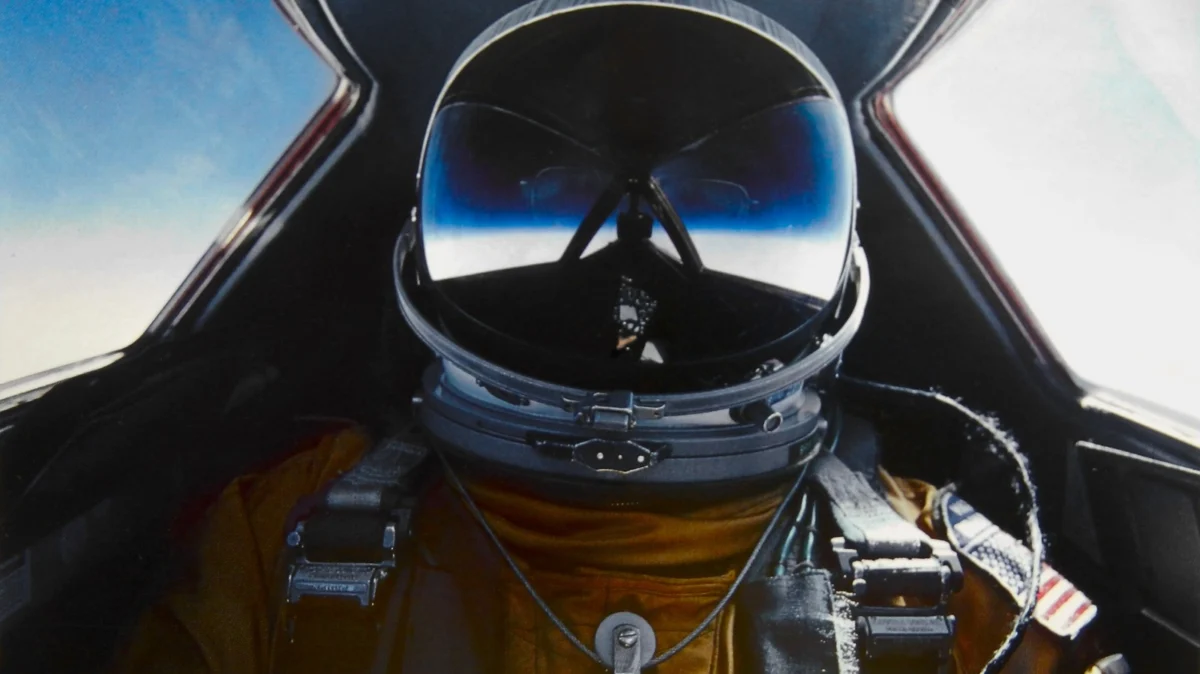
The Lockheed SR-71 Blackbird remains the most evocative symbol of Cold War aviation prowess. With its sinister, razor-sharp profile and an ability to outrun surface-to-air missiles by cruising at speeds exceeding Mach 3, the aircraft redefined the limits of aeronautical engineering. Developed by Clarence "Kelly" Johnson’s legendary Skunk Works division in the 1960s, the Blackbird was not merely an airplane; it was a strategic reconnaissance marvel that operated at the edge of space. While history books frequently celebrate the titanium-clad airframe and the Pratt & Whitney J58 engines, the human element—the pilots who operated these machines—often fades into the background. To fly the SR-71 was to bridge the gap between traditional military aviation and spaceflight.
The Astronauts of the Atmosphere: Main Facts
To understand the SR-71 is to understand the extreme environment in which it operated. Flying at altitudes above 85,000 feet, the Blackbird pushed its crew into the realm of the "near-space" environment. At these heights, the atmospheric pressure is insufficient to sustain human life, and the temperatures generated by aerodynamic friction against the airframe are staggering.
Unlike the pilots of the F-4 Phantom or the F-105 Thunderchief, who relied on standard flight suits and oxygen masks, the SR-71 crew operated as astronauts. They were tasked with flying a platform that was fundamentally unstable, requiring constant vigilance and a mastery of systems that were decades ahead of their time. The mission was one of absolute secrecy, high-stakes intelligence gathering, and extreme physical endurance.
A Chronological Evolution: From Concept to Retirement
The trajectory of the SR-71 is a testament to rapid technological advancement during the mid-20th century.
- 1960s (Development): Under the veil of "Project Oxcart" and the A-12 precursor, Lockheed’s Skunk Works began crafting a platform that would eventually become the SR-71. The focus was on "stealth" in the form of speed and altitude rather than radar cross-section reduction.
- 1964 (First Flight): The SR-71 made its maiden flight, signaling a new era of reconnaissance. It would go on to serve the U.S. Air Force for over two decades.
- 1970 (S1030 Integration): The introduction of the David Clark S1030 Full Pressure suit marked a shift toward standardized astronaut-grade safety equipment, recognizing that the cockpit environment was essentially a vacuum.
- 1990 (Initial Retirement): The U.S. Air Force officially retired the fleet, citing high operating costs and the emergence of advanced satellite reconnaissance.
- 1995–1999 (The NASA Era): NASA briefly reactivated the fleet for high-speed research, utilizing the Blackbird as a testbed for aerodynamic and propulsion experiments before its final decommissioning.
The Human Machine: Pilots and Flight Preparation
The selection process for the SR-71 program was arguably the most rigorous in the military. It was a voluntary program, but volunteers were subject to exhaustive psychological profiling, astronaut-grade physicals, and specialized flight aptitude testing. A pilot could not simply be a talented aviator; they had to possess the temperament of a test pilot and the resilience of an astronaut.
The Specialized Diet and Pre-Flight Rituals
Before a pilot even approached the flight line, they were subjected to a specialized lifestyle. Nutrition was managed through a dedicated dining facility that catered exclusively to the "Blackbird and Dragon Lady" (U-2) community. This was not a matter of luxury, but of biology; high-protein, low-residue diets were necessary to minimize the risk of digestive issues during long-duration, pressurized flights.
The preparation for a mission was a multi-hour ordeal. It began with the donning of the S1030 Full Pressure suit. This was not a quick process. The suit consisted of multiple layers, including a comfort liner, a thermal barrier, and an outer pressurized shell. Each layer had to be inspected for integrity. Once suited, the pilot donned heavy, specialized flight boots and a parachute harness, followed by a sealed, communications-equipped helmet. Before the engines could even be turned over, the pilot was required to breathe pure oxygen for an extended period to purge nitrogen from their bloodstream, preventing the "bends" during the rapid climb to altitude.
The Engineering of Survival
The cockpit of the SR-71 was a crucible of heat. During flight, the airframe would expand due to the extreme kinetic heating caused by moving through the atmosphere at Mach 3.2. The quartz windshield, specifically designed to withstand these temperatures, could reach 580 degrees Fahrenheit. To mitigate this, pilots were equipped with a portable cooling unit that connected directly to their suits, circulating air to prevent heat exhaustion.
Feeding was equally complex. Because the cockpit was pressurized for survival, the pilot could not simply remove their helmet. Instead, they utilized food tubes filled with pureed, high-calorie meals. In some instances, they would press food packets against the cockpit window, which acted as a natural stove, heating the contents to a manageable temperature through the sheer heat of the glass.
Supporting Data: Technology and Constraints
The technical requirements for flying the Blackbird were immense. The J58 engines, for example, required external heating of the oil before the ignition sequence could begin. The airframe itself was constructed largely of titanium, which was so scarce that the United States had to covertly purchase the material from the Soviet Union through shell companies—a historical irony of the highest order.
The pressure suit was not merely a garment; it was a life-support system. If the cockpit were to lose pressure at 80,000 feet, the suit would automatically inflate, providing the pilot with enough pressure and oxygen to descend to a survivable altitude. The engineering behind the S1030 ensured that the pilot remained a functional operator even in the event of a catastrophic structural failure.
Official Responses and Historical Perspective
While the Department of Defense maintained a strict policy of "no comment" regarding specific missions for decades, the declassification of documents in the late 1990s revealed the immense scope of the SR-71’s intelligence-gathering capability. Former pilots, such as Col. Richard Graham, have described the sensation of flight as "being strapped to a rocket ship." The consensus among aerospace experts remains that the SR-71 was not just a tool of war, but a landmark in human ingenuity.
NASA’s involvement in the later years provided an official, public-facing acknowledgement of the aircraft’s utility. By using the SR-71 to study high-speed aerodynamics, NASA validated that the lessons learned from the Skunk Works program remained relevant decades after the plane’s inception.
Implications for Future Flight
The legacy of the SR-71 is found in the current push for hypersonic flight. The challenges faced by Blackbird pilots—thermal management, high-altitude life support, and the sheer instability of operating at Mach 3+—are the same challenges being addressed by current developers of hypersonic cruise missiles and next-generation reconnaissance aircraft.
The SR-71 taught the aviation community that the human body is the limiting factor in flight performance. As we look toward the future of space tourism and suborbital point-to-point travel, the protocols established for the Blackbird remain the gold standard for high-altitude operations. The men who flew these machines did more than just gather intelligence; they served as the bridge between the age of the propeller and the age of the stars.
In conclusion, the SR-71 Blackbird represents a unique intersection of military necessity and scientific exploration. It required a pilot who could operate as a systems engineer, a tactician, and an astronaut simultaneously. While the aircraft now sits in silent repose in museums across the United States, its contribution to aviation science—and the harrowing stories of the men who donned the silver suits—remains a vital chapter in the history of human flight. The Blackbird did not just fly; it pushed the boundaries of what was physically and technically possible, leaving an indelible mark on the trajectory of modern aerospace engineering.











