


The Japanese language is a complex tapestry of three distinct writing systems: Hiragana, Katakana, and Kanji. While Hiragana serves as the phonetic foundation for native Japanese words and grammar, Katakana acts as the essential script for loanwords, foreign names, and onomatopoeia. For any aspiring student of the Japanese language, mastering Katakana is a rite of passage that bridges the gap between basic vocabulary and real-world comprehension.

Main Facts: Understanding the Role of Katakana
Katakana is a syllabary—a set of written characters that represent syllables. Unlike the English alphabet, where letters represent individual sounds, each Katakana character denotes a consonant-vowel combination. There are 46 basic characters in the standard set, which mirror the sounds found in Hiragana.
The primary function of Katakana in modern Japan is to transcribe foreign words (gairaigo). For instance, the English word "coffee" becomes kōhī (コーヒー), and "television" is rendered as terebi (テレビ). Because Japan frequently incorporates international terminology into its daily lexicon, an inability to read Katakana creates a significant barrier to navigating menus, street signs, and technical manuals.

While some learners are intimidated by the prospect of memorizing a second phonetic script, experts strongly recommend tackling Katakana immediately after Hiragana. The two systems share the same phonetic sounds, and learning them in close proximity leverages the cognitive momentum gained from your initial studies.
Chronology of Learning
The journey to literacy in Japanese typically follows a structured path. Most language institutions and successful self-learners adopt the following sequence:

- The Hiragana Foundation: Before touching Katakana, students should have a firm grasp of the Hiragana chart. This provides the necessary "sound memory" required to transition smoothly into the more angular Katakana strokes.
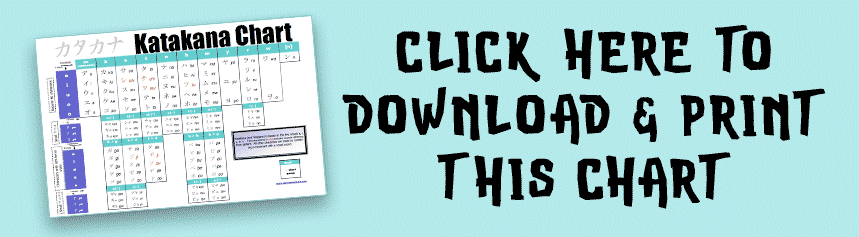
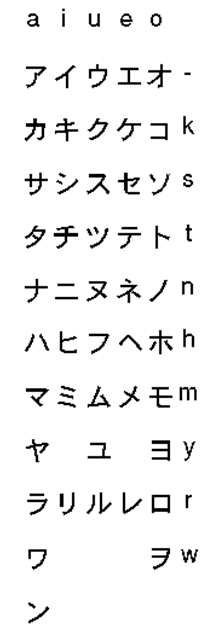
- Katakana Introduction: Once Hiragana is stable, the learner begins the Katakana chart. The characters are grouped by vowel sounds (A, I, U, E, O) and consonant rows (K, S, T, N, H, M, Y, R, W, N).
- Pattern Recognition: By observing the layout of the chart, students quickly realize that the rows follow a logical, predictable sequence. This allows for rapid memorization through repetition.
- Advanced Phonetics: After mastering the core characters, the learner progresses to modified sounds—specifically, the application of the ten-ten (voicing marks) and the maru (small circle for P-sounds).
- Sound Blending: The final phase involves mastering small-character combinations, such as the use of smaller versions of ya, yu, and yo to create blended syllables like kya or ryo.
Supporting Data and Structural Nuance
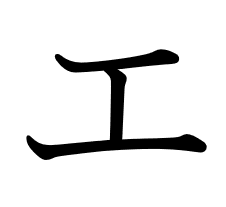
The structure of Katakana is designed for efficiency. Unlike the flowing, cursive nature of Hiragana, Katakana characters are characterized by straight lines and sharp corners. This design choice historically served as a form of "shorthand" used by Buddhist monks in ancient Japan to annotate Chinese texts.

- The Vowel Row: The foundation starts with A, I, U, E, and O. These are the building blocks for all subsequent rows.
- Consonant Rows: By adding a consonant to the front of these vowels, the chart expands. For example, the "K" row follows the same pattern: KA, KI, KU, KE, KO.
- Exceptions and Irregularities: While the system is largely logical, it is not without its quirks. For instance, the "S" row includes "shi" instead of the expected "si," and the "T" row includes "tsu" instead of "tu." These irregularities are historical artifacts that must be memorized through rote practice and mnemonic devices.
- Visual Mnemonic Aid: Because some Katakana characters bear a striking resemblance to one another—such as so (ソ) and n (ン)—it is critical to pay close attention to stroke direction and angle. A common rule of thumb is that the so character’s stroke usually descends, while the n character’s stroke is more horizontal.
Official Pedagogical Perspectives
Linguists and educators at prominent language centers, such as The Japanese Page and The Japan Shop, emphasize that Katakana is not merely an "optional" skill. It is an essential survival tool. In a professional or travel context, failing to recognize Katakana means failing to identify imported technologies, global brands, or foreign names—all of which are vital for daily functioning in a modern, globalized Japan.
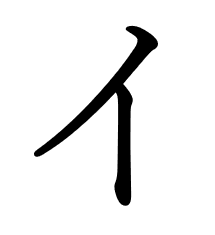
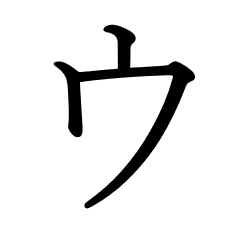
The consensus among teachers is that passive reading is insufficient. Active engagement, through tools like practice quizzes and writing drills, is required to move the characters from short-term memory to long-term recognition. Using mnemonics—associating a character’s shape with a mental image—is frequently cited as the most effective method for overcoming the initial "recognition hump."

The Mechanics of Modification
The flexibility of Katakana is found in its modifiers. To expand the range of sounds, the language employs two specific marks:
- The Ten-Ten ("): This symbol, which looks like a double quotation mark, is attached to the upper right of a character. It transforms unvoiced consonants into voiced ones. For example, "K" becomes "G," "S" becomes "Z," and "T" becomes "D."
- The Maru (°): This small circle is reserved exclusively for the "H" row. It transforms the soft "H" sound into a crisp "P" sound (HA becomes PA, HI becomes PI, etc.).
These modifiers are essential for rendering foreign names or technical jargon accurately. Without them, the phonetic capabilities of the Katakana script would be severely limited.

Implications: From Novice to Intermediate
The transition from learning Katakana to achieving functional fluency is marked by the ability to read and parse these characters in real-time. Once a student can read Katakana without stopping to mentally "decode" each stroke, they are ready to enter the world of intermediate Japanese.
- Cognitive Load: Mastery reduces the "cognitive load" during reading, allowing the brain to focus on grammar and context rather than character identification.
- Integration: With Katakana under your belt, you can begin to identify the vast array of English-derived words that populate the Japanese language. This instantly provides you with a "cheat code" to vocabulary, as many of these words are already familiar to English speakers.
- Continued Growth: Once comfortable, the learner is encouraged to pursue comprehensive study bundles that include digital books and audio resources. This immersion-based approach solidifies the knowledge gained during the initial learning phase.
Conclusion
Katakana is the gateway to the modern Japanese experience. It is a system that, while initially appearing as a collection of disjointed, angular shapes, is actually a highly logical and efficient tool for communication. By following a structured path of learning—moving from basic rows to modified sounds and blended syllables—students can transform a daunting task into a series of achievable milestones.

As you embark on this journey, remember that consistency is the primary driver of success. Whether through daily flashcards, online quizzes, or writing practice, the goal is to make these characters second nature. Once you reach that level of comfort, you will find that a vast new world of Japanese literature, media, and daily life has become accessible to you. Congratulations on taking the first step toward mastering one of the world’s most unique and fascinating writing systems.












No comments yet. Be the first to join the conversation!