Suro Senen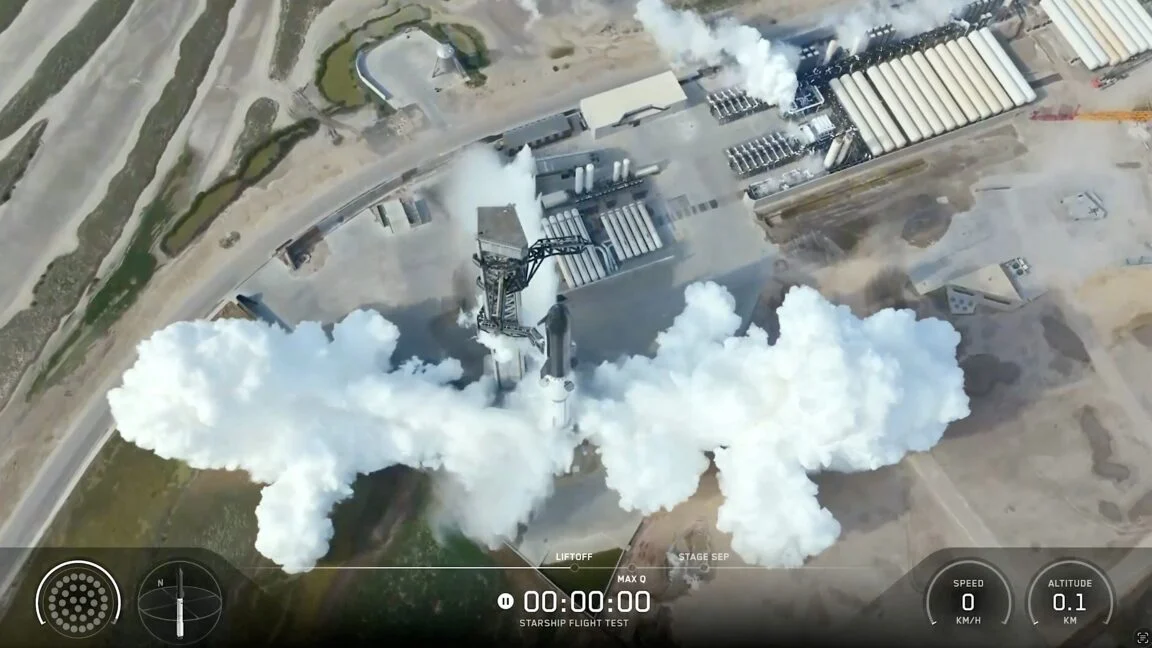
By [Your Name/Journalism Desk]
In the high-stakes world of orbital rocketry, the margin between a triumphant leap toward the stars and a grounded vehicle is measured in milliseconds and sensor data. On Thursday, the countdown for the latest test flight of SpaceX’s Starship—the largest and most powerful rocket ever built—reached its final seconds at the company’s Starbase facility in South Texas, only to be halted by an automated safety system.
The abort, which occurred during the critical engine ignition sequence for the Super Heavy booster, serves as a sobering reminder of the extreme engineering complexities involved in SpaceX’s quest to colonize Mars and revolutionize heavy-lift space transport. As the countdown clock hit zero, the launch team, stationed near the US-Mexico border, was forced to stand down, initiating a complex process of offloading millions of pounds of propellant and recalibrating the launch timeline.
The Chronology of an Abort: From Propellant Loading to Stand-Down
The day began with an atmosphere of cautious optimism. For the teams at Starbase, the operations leading up to the 5:45 p.m. local time (6:45 p.m. EDT) launch window had proceeded with practiced efficiency. The massive, 400-foot-tall stainless-steel structure—a marvel of modern aerospace engineering—sat poised on the launch pad, dwarfing the surrounding wetlands and the Gulf of Mexico.
Throughout the afternoon, the logistical operation to fuel the vehicle was completed without incident. Ground crews successfully loaded over 11.5 million pounds of liquid methane and liquid oxygen into the two-stage rocket, a volatile and cryogenic cocktail necessary to propel the craft into the stratosphere.
However, as the automated flight computers took command for the final seconds of the countdown, the process stalled. During the startup sequence for the Super Heavy’s massive cluster of Raptor engines, the onboard software detected an anomaly. In a fraction of a second, the computers triggered an automatic abort, cutting off the ignition sequence before the rocket could break free from the pad.
Immediately following the scrub, the SpaceX operations team pivoted to safety protocols. The primary objective shifted from liftoff to the delicate task of defueling the rocket. This process is inherently hazardous; draining the cryogenic propellants requires precise thermal management to ensure the stability of the vehicle and the safety of the ground infrastructure. As the sun set over the Texas coast, the Starship mission shifted from an active flight test to a post-mortem analysis of the mechanical failure.
Technical Analysis: The Anatomy of a Raptor Failure
At the heart of the Super Heavy booster lies a complex array of 33 methane-fueled Raptor engines. Each of these powerhouses is designed to generate over half a million pounds of thrust, working in concert to lift the massive vehicle off the pad. The ignition of these engines is a choreography of extreme physics; they are designed to fire in a staggered sequence to minimize structural shock and manage the acoustic energy directed at the launch pad’s water-cooled flame diverter.
The Challenge of Raptor 3
This specific test flight—the 13th full-scale launch attempt in the Starship development program—marked the second time SpaceX has employed the upgraded Raptor 3 engine. The Raptor 3 represents a significant evolution in the company’s propulsion technology, designed for higher efficiency, simplified plumbing, and improved durability.
While SpaceX officials remained tight-lipped regarding the specific nature of the failure, real-time telemetry captured during the live stream provided a glimpse into the issue. A diagnostic graphic on the SpaceX broadcast showed that four of the 33 engines failed to register a successful ignition during the sequence.
The failure of even a small fraction of the engine array is enough to trigger an automatic abort. In the context of a vehicle this size, engine symmetry is paramount; an uneven thrust profile at liftoff could cause the rocket to tilt, risking a catastrophic interaction with the launch tower or the pad itself. The sophisticated sensor suite on the Super Heavy is programmed to detect such deviations instantaneously, prioritizing the safety of the facility over the launch schedule.
Official Responses and the Road Ahead
Elon Musk, the founder and CEO of SpaceX, took to his social media platform, X (formerly Twitter), to provide transparency regarding the incident. "Some of the engines didn’t start, triggering an automatic launch abort," Musk wrote shortly after the scrub. He confirmed that the vehicle was in a safe state and that propellant offloading was underway.
The immediate reaction from the engineering team was decisive. By late Thursday evening, Musk announced that ground crews would be replacing two of the Raptor engines on the Super Heavy booster. This maintenance is a testament to the "test-fly-learn" methodology that defines SpaceX’s approach to aerospace engineering. By identifying and swapping out hardware that failed to perform under the intense pressure of the pre-launch sequence, the team aims to ensure a more robust performance for the next attempt.
While initial hopes for a quick turnaround on Friday evening were dashed by the need for hardware replacement, Musk suggested that the most probable timing for the next launch attempt will be early next week. This buffer allows for rigorous testing of the newly installed engines and a comprehensive review of the data generated by Thursday’s aborted ignition sequence.
Supporting Data: Why Starship Matters
To understand the weight of this delay, one must consider the strategic importance of the Starship project. Starship is not merely a rocket; it is designed to be the world’s first fully and rapidly reusable transportation system.
- Payload Capacity: Starship is intended to carry over 100 metric tons to low-Earth orbit.
- Reusability: Unlike traditional rockets that expend their boosters in the ocean, Starship’s Super Heavy booster and the Starship upper stage are designed to return to Earth, landing vertically on the launch mount.
- Economic Impact: By drastically reducing the cost per kilogram to orbit, Starship is the cornerstone of NASA’s Artemis program, which aims to return humans to the lunar surface. It is also the primary vehicle envisioned by SpaceX for the eventual transport of humans to Mars.
Every test flight, even those that end in an abort on the pad, provides invaluable data that cannot be simulated in a laboratory. The behavior of cryogenic propellants at scale, the performance of the Raptor 3 engines in a flight-ready configuration, and the responsiveness of the ground-based automated safety systems are all critical metrics.
Implications: The High Cost of Innovation
The failure to launch on Thursday is a reminder that the "Space Age 2.0" is still in its infancy. For all the progress SpaceX has made in making space flight routine, the physics of rocketry remains unforgiving.
The incident also highlights the immense pressure placed on the team at Starbase. Because the Starship program is highly visible, every abort is broadcast to a global audience. However, critics and industry experts alike argue that this transparency is a necessary byproduct of SpaceX’s rapid development cycle. Unlike traditional aerospace programs that might take years to debug a system in a clean room, SpaceX prefers to push the hardware to its limits, accept the failures, and iterate at a breakneck pace.
The Regulatory and Safety Landscape
Beyond the mechanical issues, the launch of such a massive vehicle requires coordination with the Federal Aviation Administration (FAA) and other regulatory bodies. Each flight requires rigorous safety assessments to ensure that the risks to the surrounding environment and public safety are mitigated. The abort on Thursday, while frustrating for enthusiasts, demonstrates that these safety protocols are working exactly as intended. The automated abort sequence is the ultimate fail-safe, ensuring that if conditions are not perfect, the vehicle remains safely grounded rather than endangering the mission or the hardware.
Conclusion: A Philosophy of Resilience
As the engineers at Starbase begin the process of swapping engines and re-verifying the systems, the mood is one of clinical focus. There is little room for sentimentality in the world of heavy-lift rocket design. The goal remains the same: to reach orbit, demonstrate the viability of the Raptor 3 engines, and eventually prove that the Starship can land safely after a successful mission.
The delay is, in many ways, a microcosm of the entire Starship program. It is a story of ambitious goals tempered by the cold reality of mechanical limitations. Every engine swap, every aborted countdown, and every drop of liquid methane drained from the tanks is a step closer to a future where space travel is not an extraordinary event, but a standard component of human industry.
For now, the world watches the Texas coastline, waiting for the next window of opportunity. When the engines finally ignite and the Super Heavy booster clears the tower, it will be the result of a thousand small lessons learned from days exactly like this one. SpaceX has made it clear: they are not in a rush to launch; they are in a rush to succeed. And if that means waiting a few more days to ensure those 33 engines fire in perfect unison, it is a price the company—and the global aerospace community—is willing to pay.


 Laily UPN
 Jia Lissa