

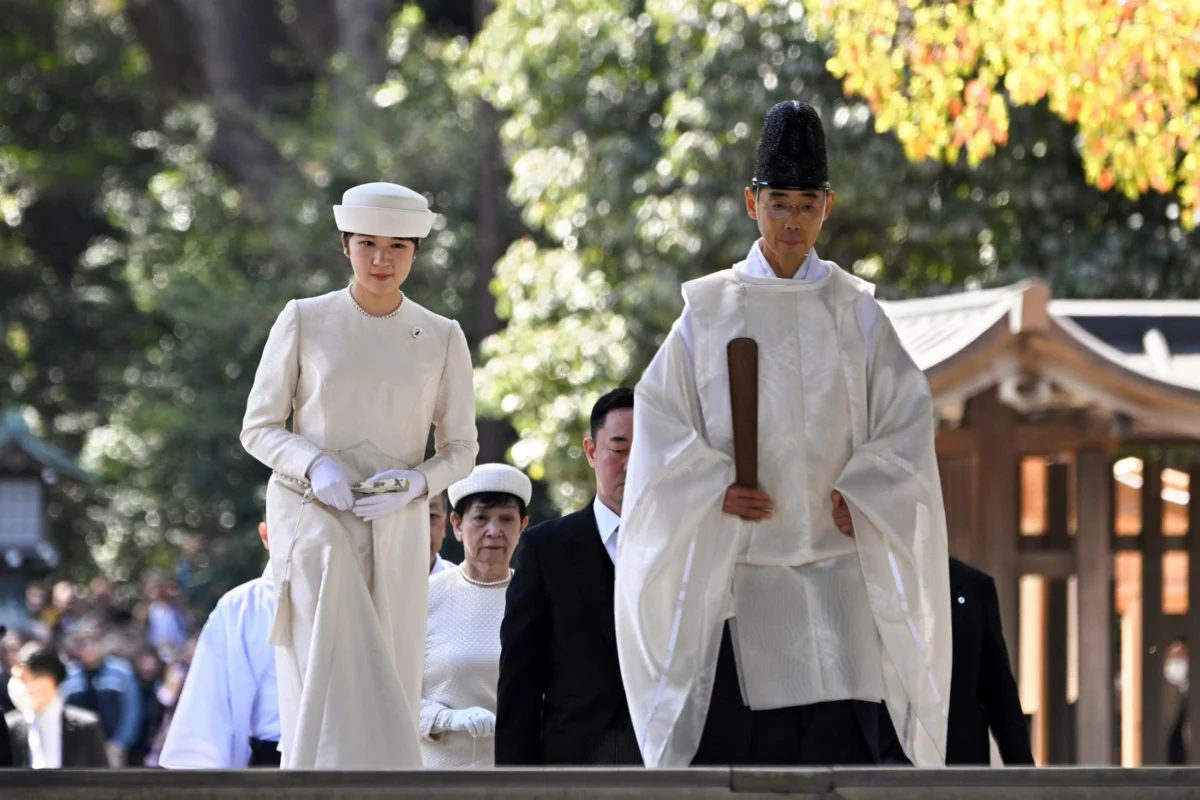
TOKYO — In a move that has sent shockwaves through the foundations of the world’s oldest hereditary monarchy, the Japanese parliament enacted a historic and deeply controversial revision to the Imperial House Law this Friday. By cementing the requirement that only paternal-lineage men can ascend the Chrysanthemum Throne, the government has moved to secure a centuries-old tradition, yet critics argue they may have inadvertently signed the death warrant for the institution itself.
The revision—the most significant legislative change to the imperial system since the post-war era—introduces two primary measures: the adoption of distant male relatives to serve as future imperial stock and a provision allowing princesses to retain their royal status after marrying commoners. While the government presents these steps as a vital preservation of the "male bloodline," observers warn that the policies represent an increasingly desperate attempt to sustain a system that is rapidly running out of heirs.
The Shrinking Imperial Lineage: A Statistical Reality
The urgency behind the legislation is rooted in a demographic crisis. The Japanese imperial family, once a vast and sprawling institution, has withered to just 16 adults, with no children remaining in the royal household. Of those 16 individuals, only five are men.
The current line of succession is narrow and precarious:
- Crown Prince Akishino: The Emperor’s 60-year-old younger brother.
- Prince Hisahito: The 19-year-old nephew of the Emperor and the only male of his generation.
- Prince Hitachi: The 90-year-old uncle of the Emperor.
For decades, the Imperial Household has been obsessed with the birth of male heirs. Prince Hisahito remains the first male child born into the family in over 40 years. This extreme scarcity has created an environment that feminist scholars and sociologists describe as "inhumane." Chizuko Ueno, a prominent academic, has fiercely criticized the legislation, noting that it treats male royals as "stallions" and forces female members into the role of "childbearing machines" tasked with producing the next generation of boys.
Chronology of a Disappearing Institution
To understand the current tension, one must look at the historical trajectory of the monarchy:
- 1890: The Imperial House Law is established, enshrining the male-only succession rule as Japan pivots toward a rigid patriarchal system during the Meiji era.
- 1947: Following Japan’s defeat in World War II, the current version of the law is enacted. It stripped dozens of collateral imperial branches of their royal status to reduce the postwar financial burden on the state, significantly narrowing the pool of potential heirs.
- 2005: A government panel proposes allowing female monarchs to ensure the stability of the throne. The proposal is abruptly scrapped shortly after the birth of Prince Hisahito, which conservatives hailed as a "miracle" that rendered the change unnecessary.
- 2019: Emperor Akihito abdicates, bringing his son Naruhito to the throne. Naruhito’s daughter, Princess Aiko, is excluded from succession despite her overwhelming popularity with the Japanese public.
- 2026: Parliament enacts the latest revisions, effectively closing the door on female succession while creating a complex, controversial mechanism to bring distant relatives back into the fold.
The "Stallion" Policy: Adopting Distant Relatives
The most contentious element of the new law is the provision allowing for the adoption of unmarried male descendants (aged 15 or older) from distant imperial branch families. These families were removed from the imperial line 79 years ago.
According to officials at the Imperial Household Agency, these potential adoptees are at least 36 generations removed from Emperor Naruhito, tracing their common male-line ancestor back some 600 years. The practical implementation of this policy faces immense skepticism.
"Who wants the son of an adoptee whom nobody knows to be emperor instead of Aiko?" asks Yoshinori Kobayashi, a well-known cartoonist and advocate for female succession.
Beyond the question of legitimacy, there is the human cost. Potential candidates would be asked to enter an institution that has been described by some as "an enclave without human rights." Asahiro Kuni, a former royal whose family was stripped of status in 1947, expressed grave reservations. "You are asked to sacrifice your life for the happiness of the people," Kuni told TBS television. "I can’t tell my family to choose such a difficult life. It’s cruel."
Official Responses and Political Ideology
The driving force behind this legislative push is a powerful faction within the ruling party, led by figures like Prime Minister Sanae Takaichi. For these conservatives, the male-only succession is not merely a rule; it is the "only source of the emperor’s authority and legitimacy."
However, this adherence to tradition has sparked a disconnect with the Japanese public. Princess Aiko, a Harvard-educated and highly regarded figure, is widely viewed as a capable potential leader. Yet, the government insists that allowing her to rule would break an unbroken, albeit historically debated, chain of male succession.
Hideya Kawanishi, a monarchy expert at Nagoya University, characterizes the government’s stance as a veil for deeper chauvinism. "They cannot say it’s male chauvinism, so they call it tradition," he notes. "It’s a declaration to defend the male-lineage at all costs."
Even the imperial family itself seems conflicted. While never overtly political, the Emperor and the Emperor Emeritus have both hinted at their discomfort. Emperor Naruhito stated in June that he hoped discussions on the matter would reach a conclusion that "gains the understanding of the people," a remark widely interpreted by palace watchers as a subtle signal of his personal dissatisfaction with the exclusion of his daughter.
Implications for the Future of the Chrysanthemum Throne
The implications of these revisions are profound and potentially destabilizing:
1. The Erosion of Public Trust: As the government prioritizes bloodline purity over the suitability of the current generation, the monarchy risks becoming increasingly detached from the reality of modern Japanese life, where gender equality is a growing national priority.
2. The "Princess Exodus": The new law allows princesses to keep their status upon marriage, yet it offers no path to the throne for their children. Critics argue this is a "Band-Aid" solution that does nothing to address the instability of the succession line. Many expect that younger princesses, such as Aiko’s cousin Kako, may still choose to marry commoners and renounce their titles to escape the suffocating nature of imperial life, as Mako Komuro did in 2021.
3. The Risk of Irrelevance: Historians argue that the male-only system is a modern invention that worked only when emperors practiced polygamy and relied on concubines—a practice that ended a century ago. By forcing a 19th-century framework onto a 21st-century society, the government may be pushing the institution toward an eventual collapse.
4. A Legacy Undermined: Former Emperor Akihito spent his reign trying to modernize the monarchy and distance it from the wartime nationalism of his father’s era. By doubling down on a rigid, exclusionary patriarchal structure, the current government is accused of rolling back the "humanized" image of the throne that Akihito worked so carefully to build.
Conclusion
As Japan enters this new chapter, the debate remains polarized. The government has prioritized its vision of "tradition" at the expense of potential reform. Whether the Japanese people will accept a future where the throne is held by an adopted distant relative rather than the Emperor’s own daughter remains the central, unresolved question of the era.
For now, the Chrysanthemum Throne stands as a paradox: a symbol of timeless continuity that is, through its own rigid insistence on the past, creating an increasingly uncertain future. The question is no longer whether the imperial family will survive, but whether it can survive its own rules.











