

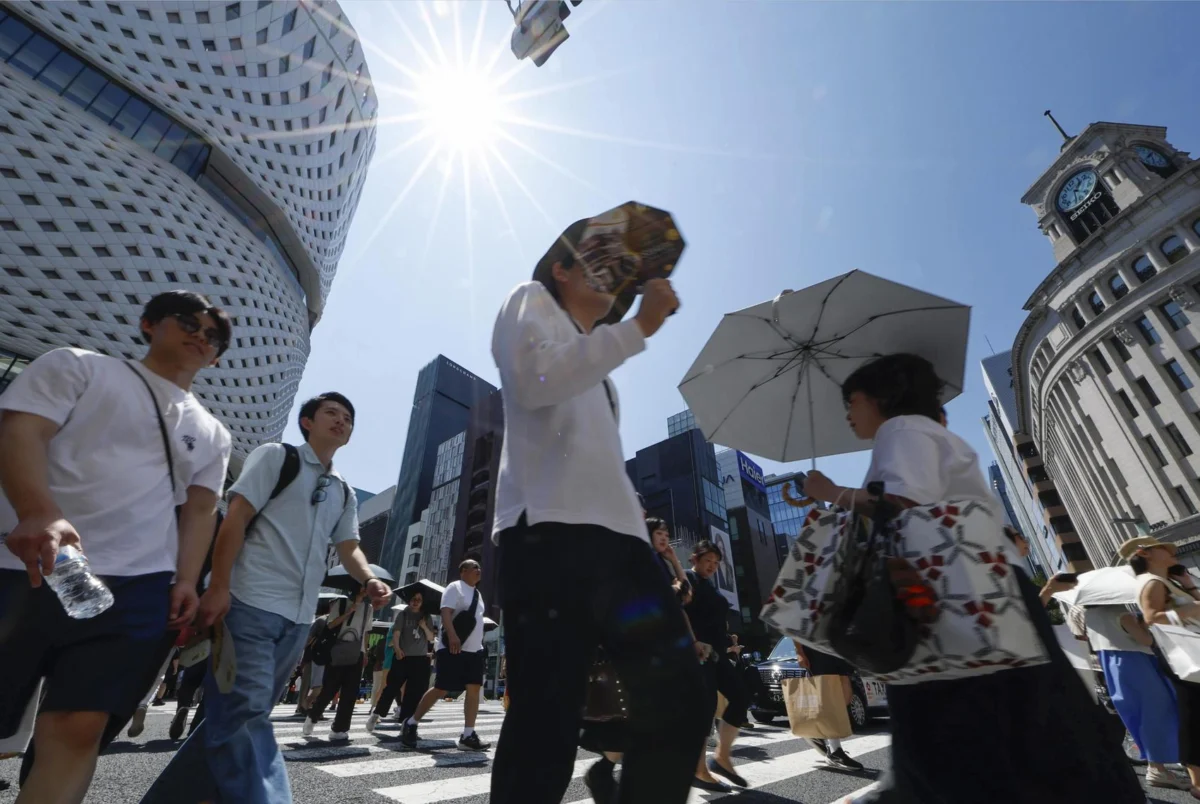
TOKYO — The Japan Meteorological Agency (JMA) officially declared the end of the rainy season for large swaths of the country on Monday, signaling a swift and blistering transition into the heart of summer. As the damp, overcast days of the tsuyu season recede, the nation has been thrust into an immediate and perilous heatwave, with the mercury soaring past 35 degrees Celsius (95 degrees Fahrenheit) in Tokyo, marking the capital’s first "extremely hot" day of the year.
The abrupt conclusion of the rainy season—which arrived significantly later than in previous years—has left millions of residents bracing for a prolonged period of dangerous, record-breaking temperatures. With heatstroke alerts active across most of the archipelago, authorities are urging citizens to prioritize hydration and limit outdoor exertion as the country faces one of the most intense early-summer heat events in recent memory.
Chronology: A Delayed Exit and a Scorching Arrival
The transition from the rainy season to summer heat has been anything but typical. Typically, the tsuyu front sweeps across Japan with a degree of predictability, clearing the way for the humid, sunny days of mid-July. This year, however, the meteorological patterns were heavily disrupted.
In the Kanto-Koshin region—which encompasses the Tokyo metropolitan area—the rainy season ended approximately 22 days later than the previous year. Similarly, the Tokai region, centered on the industrial hub of Nagoya, saw the season conclude 23 days behind the 2023 schedule.
The JMA’s announcement followed a staggered withdrawal of the rainy front. The southwestern region of Kyushu was the first to experience the end of the rains on July 13. By the morning of the three-day holiday weekend, the front had finally retreated, exposing the Kanto and Tokai regions to the full force of a high-pressure system.
By Monday morning, the impact was immediate and widespread. Of the 914 observation points monitored by the JMA, more than 600 recorded temperatures exceeding 30 degrees Celsius (86 degrees Fahrenheit) before noon. By midday, Tokyo hit the 35-degree threshold, a meteorological marker defined by the agency as an "extremely hot day," turning the capital into a concrete heat trap.
Supporting Data: The Scale of the Thermal Surge
The current meteorological data underscores the severity of the heatwave. The JMA’s monitoring network has provided a granular view of the rising temperatures, highlighting that the heat is not merely a localized phenomenon but a nationwide trend.
Temperature Forecasts and Heat Indices
The forecast for the remainder of the week is grim. Meteorological models indicate that a persistent Pacific high-pressure system is funneling warm, tropical air over the Japanese archipelago. The JMA has projected the following:
- Tokyo: Forecasts predict temperatures reaching as high as 37 degrees Celsius.
- Nagoya: Expected to face extreme conditions, with thermometers potentially climbing to 40 degrees Celsius (104 degrees Fahrenheit).
These temperatures represent a significant deviation from the historical average for late July. The heat index—which calculates the perceived temperature based on humidity—is expected to push "real-feel" temperatures even higher, creating a dangerous environment for those with underlying health conditions, the elderly, and outdoor workers.
Regional Breakdown of the Heat Wave
- Western Japan: The heat is expected to be relentless, with humidity levels exacerbating the physical toll of the rising air temperature.
- Eastern Japan: The Kanto region remains under a high-pressure dome, preventing the usual cooling breezes from the Pacific from providing relief.
- Inland Areas: Cities located away from the coast, such as those in the Gifu and Saitama prefectures, are expected to bear the brunt of the heat, as they lack the moderating effect of sea breezes.
Official Responses and Public Health Directives
The Japanese government and local municipal authorities have mobilized to address the health risks posed by the extreme weather. The Ministry of the Environment, in conjunction with the JMA, has issued widespread "Heatstroke Alerts," which are triggered when the Wet Bulb Globe Temperature (WBGT) index reaches a specific, high-risk threshold.
Government Initiatives
The JMA has advised that the public take "proactive measures" to prevent heat-related illnesses. These include:
- Usage of Air Conditioning: Authorities are explicitly encouraging the use of air conditioning, even during the night, to prevent heatstroke while sleeping.
- Hydration Protocols: Citizens are advised to consume water and electrolyte-replenishing beverages before they feel thirsty.
- Modified Schedules: Schools and construction firms have been urged to shift outdoor activities to the cooler early morning or evening hours.
- Community Wellness Checks: Local governments have activated networks to check on the elderly, who are statistically the most vulnerable to heat-related mortality.
"The humidity levels combined with these record-breaking temperatures create a ‘perfect storm’ for heatstroke," a spokesperson for the JMA stated during a press briefing on Monday. "We are urging the public not to underestimate the severity of this heat. Please avoid non-essential outdoor activity and stay in climate-controlled environments whenever possible."
Implications: A Broader Climate Context
The unusual timing of this year’s rainy season, coupled with the intensity of the subsequent heat, has ignited a wider conversation about climate change in Japan.
Infrastructure and Urban Planning
The "Urban Heat Island" (UHI) effect, particularly in the Tokyo-Yokohama corridor, is being scrutinized. The vast expanse of asphalt, concrete, and high-rise structures absorbs and re-radiates heat, keeping city temperatures significantly higher than in surrounding rural areas, especially at night. As the frequency of these extreme heat events increases, urban planners are under mounting pressure to integrate "green corridors," permeable pavements, and more energy-efficient building materials to mitigate the rising thermal load.
Economic and Societal Impact
The heatwave is also expected to have tangible economic consequences.
- Energy Grid Strain: Power companies are bracing for record-high demand for electricity as households and businesses ramp up air conditioning usage. While the government has stated there is currently no immediate risk of power outages, the strain on the national grid remains a primary concern.
- Agricultural Concerns: Farmers are facing a dual challenge. The prolonged rainy season in some areas hindered early crop development, and the sudden, intense heat threatens to scorch sensitive vegetable crops and reduce livestock productivity.
- Labor Productivity: With the government recommending restricted outdoor labor, the construction and logistics sectors are bracing for potential delays. The economic cost of lost labor hours during these "extremely hot" days is becoming a recurring line item in national fiscal assessments.
A New Normal?
Meteorologists are increasingly pointing to the late end of the rainy season as evidence of shifting atmospheric patterns. The delay, which left many regions in a state of suspended anticipation for summer, is consistent with broader global climate trends that suggest Japan’s weather patterns are becoming more volatile.
As the nation moves deeper into July, the focus remains on surviving the immediate threat. The JMA continues to monitor the atmospheric pressure gradients, and while the forecast currently points to sustained heat, the agency remains prepared to issue emergency weather warnings should conditions worsen.
For now, the message from officials is clear: the rainy season may have ended, but the danger to public safety is only just beginning. As the Japanese public navigates the transition to high summer, the combination of technological mitigation, government vigilance, and individual responsibility will be the primary defenses against what is shaping up to be a brutal, record-defying season.
© KYODO











