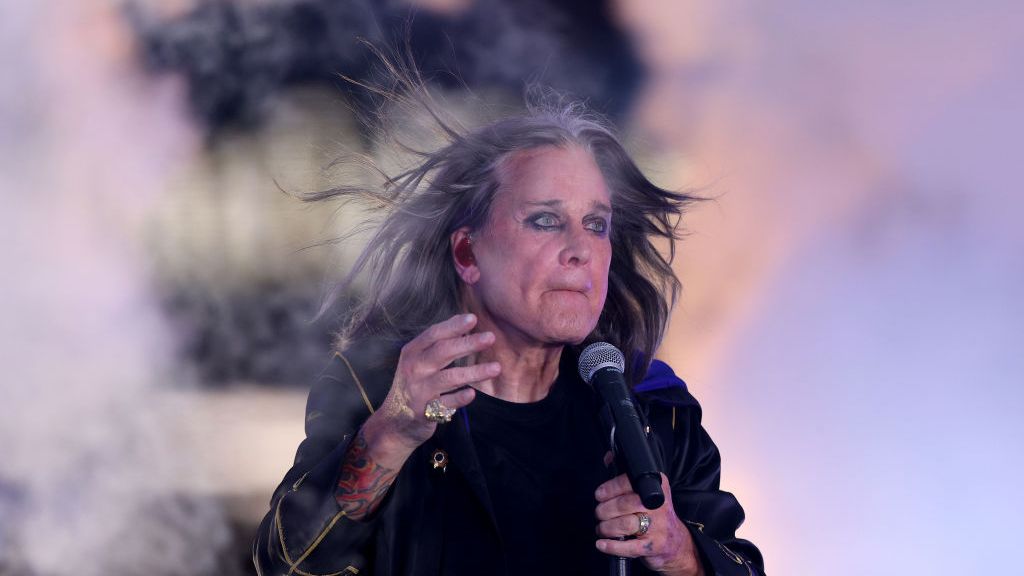
In an era where generative AI can synthesize a symphony in seconds or produce hyper-realistic digital illustrations with a single text prompt, the concept of "human craft" has become a battleground. Today, on the anniversary of Ozzy Osbourne’s passing, a reflection he shared in a 2011 interview with The Guardian rings with renewed, almost prophetic, clarity. Discussing the sterile nature of modern studio production, the Prince of Darkness famously declared: "Rock music is not meant to be perfect. [Guitarist] Randy Rhoads loved hearing his fingers slide up and down the strings. Nowadays everyone irons the fucking air; it’s all about technology."
Osbourne’s critique of "ironing the air"—the process of digitally scrubbing away the visceral, messy humanity of a performance—serves as a poignant metaphor for the current trajectory of the creative industries. As generative AI tools become ubiquitous, the tension between algorithmic perfection and human imperfection has reached a breaking point.
The Anatomy of Perfection: A Chronology of Artistic Automation
The path toward "perfect" creative output has been a long, gradual incline. To understand the current climate, one must look at the evolution of creative technology:
- The Analog Era (Pre-1980s): Creativity was defined by physical limitation. Tape hiss, guitar string squeaks, and brushstrokes were considered essential components of the work’s identity. The "mistake" was often the hook.
- The Digital Revolution (1990s–2010s): The rise of DAWs (Digital Audio Workstations) and Adobe Creative Suite allowed for non-destructive editing. Musicians could "quantize" drums to the grid, and designers could undo every action. The ability to "fix it in post" became the industry standard.
- The AI Inflection Point (2020–Present): The debut of Large Language Models (LLMs) and diffusion-based image generators marked a departure from assisting the human to replacing the human intent. We moved from tools that sharpen our skills to tools that bypass the process entirely.
The Frictionless Trap: Why "Flawless" Often Means "Lifeless"
The primary appeal of AI is efficiency. It offers the ability to generate ten times the number of ideas in a fraction of the time. However, as Osbourne’s philosophy suggests, the "idea" is only the skeleton of a creative work; the "craft" is the meat and muscle.
When we rely on automation, we inadvertently prune away the "happy accidents"—those spontaneous deviations that occur when a human mind interacts with a physical or conceptual medium. In music, this is the slight rhythmic push-pull of a drummer playing just behind the beat. In writing, it is the idiosyncratic voice that defies grammatical norms to strike a specific emotional chord.
Data from recent creative industry surveys suggest a growing divide. While agencies report that AI has increased output volume by 40% in some sectors, focus groups with consumers often report a "blandness" or "uncanny valley" effect in AI-generated assets. The technology is technically superior, yet it fails to evoke the same emotional resonance as human-created work.
Official Perspectives and Industry Skepticism
The response to this technological surge has been polarized. On one side, tech evangelists argue that AI democratizes creativity, allowing those without technical training to bring their visions to life. On the other, established artists and guilds argue that the "ironing" of art—the removal of the human element—strips the soul from the craft.
Industry leaders are beginning to grapple with this. In a recent panel discussion on the future of generative media, several creative directors expressed a growing trend of "re-analoging." They noted that they are now consciously forcing their teams to perform manual sketches or rough cuts before touching AI tools. "We use AI as a brainstorming partner," one designer noted, "but we treat it as an intern, not as the architect. The architecture must remain human."
This mirrors Osbourne’s sentiment: technology should be a vessel for the artist’s intent, not the artist itself. The danger lies in the loss of agency. When the process becomes too smooth, the artist stops thinking, stops struggling, and eventually, stops feeling.
The "Human Texture" Implication: A New Creative Manifesto
What does this mean for the future of the artist? The implications are profound and require a paradigm shift in how we approach creative workflows.
1. The Value of the "Process"
Creatives must learn to guard their process. If the result is the only metric of success, AI will always win. However, if the process—the experimentation, the failure, and the unique path taken to arrive at a solution—is part of the product’s value, then the human remains indispensable. We must market the "handmade" aspect of our work as a premium, distinct from the mass-produced, automated output of algorithms.
2. Mindful Automation
I have spoken to numerous creative professionals who admit to "automation fatigue." Their brains have become so accustomed to predictive text and AI-assisted layout that they struggle to start with a blank page. The solution is a disciplined, mindful approach: reaching for automation only after the foundational, human-driven creative work is established. We must train ourselves to pull back, to leave the "finger slides on the strings" in the final mix.
3. Embracing Inconsistency
AI is inherently designed to converge on the "average" or the "statistically probable" outcome. It excels at being safe. Human creativity, by contrast, is often defined by its divergence—by the irrational, the weird, and the inconsistent. To survive in an AI-dominated landscape, creatives should lean into their quirks. Your imperfections are not flaws; they are your unique signature in a market increasingly flooded with generic, "perfect" content.
Conclusion: Lessons from the Prince of Darkness
Ozzy Osbourne’s career was never built on the back of technical perfection. It was built on grit, personality, and the raw, unvarnished energy of human performance. As we navigate this new frontier of artificial intelligence, his words serve as a reminder that "ironing the air" is a pursuit of diminishing returns.
The most successful creators of the coming decade will not be those who use the most powerful AI, but those who best know when to turn the machine off. By preserving the breathing room for human texture and friction, we ensure that art remains a reflection of the human condition rather than a calculation of data.
In the final analysis, technology is a tool, but the artist is the vessel. Let us not sacrifice the soul of our work for the sake of a smoother, faster, and ultimately emptier creative experience. As we look forward to the innovations of 2026 and beyond, let us remember: the beauty is in the slide, the squeak, and the struggle. That is where the music lives.
For more insights into how the creative industry is adapting to the AI revolution, explore our ongoing AI in Focus 2026 series. And don’t forget to sign up for the Creative Bloq daily newsletter to stay updated on the latest shifts in art, design, and technology.