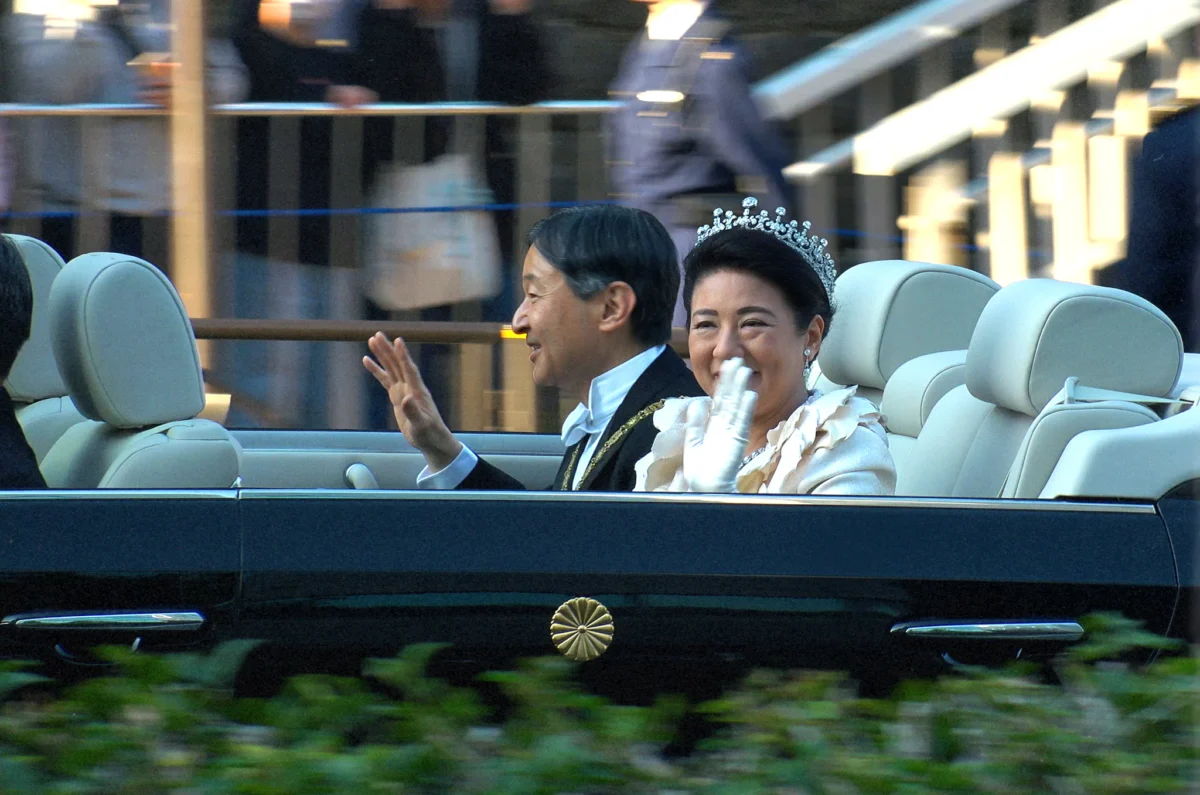
In a move that has sent ripples through the heart of Japan’s political establishment, the government officially adopted a bill on Tuesday to revise the Imperial House Law. The legislation, intended to stabilize the future of the world’s oldest continuous hereditary monarchy, seeks to address the acute shrinking of the imperial family. However, rather than resolving the existential crisis facing the Chrysanthemum Throne, the proposal has deepened the chasm between public expectation and the conservative doctrine of the ruling Liberal Democratic Party (LDP).
The bill introduces two primary structural changes: it would allow female imperial family members to retain their royal status after marriage—a departure from current laws that force them into commoner status—and it would permit the adoption of male, paternal-line descendants from former imperial branches that were stripped of their status during the 1947 Allied occupation. Crucially, the bill pointedly excludes any provision for female succession, maintaining the absolute male-only primogeniture that has defined the institution for centuries.
A Chronology of Crisis: From 1947 to the Present
The current dilemma is rooted in the seismic geopolitical shifts of the mid-20th century.
- 1947: The Postwar Purge: Under the direction of the Allied Occupation, the Imperial House Law was revised to curtail the power and reach of the monarchy. Eleven collateral branches of the imperial family were removed from their status, significantly narrowing the pool of eligible heirs to the throne.
- 2000s: The Looming Shortage: As the number of imperial members dwindled, the lack of male heirs became a matter of national concern. In 2006, the birth of Prince Hisahito—the current Emperor’s nephew—briefly assuaged fears of an immediate succession crisis, but the lack of further male births reignited the debate.
- 2021: The Expert Panel: The government convened an expert panel to study stable succession. The panel suggested both allowing female members to remain in the family after marriage and the reinstatement of former male royals.
- June 2026: The Legislative Push: With the Diet session nearing its conclusion on July 17, the government fast-tracked the current bill, bypassing broad cross-party consensus and drawing sharp criticism from opposition blocs.
The Succession Paradox: Public Sentiment vs. Political Dogma
The tension between the Japanese public and the government’s policy reflects a broader societal shift regarding gender equality and the relevance of tradition in the 21st century.
Recent polling data from The Asahi Shimbun and The Mainichi paints a stark picture of public opinion. Over 70% of respondents in these surveys favor allowing a woman to ascend the Chrysanthemum Throne. This widespread support is often tied to the immense popularity of Princess Aiko, the only child of Emperor Naruhito, whose grace and intelligence have endeared her to the Japanese public.
Conversely, the government’s preferred solution—the adoption of male-line descendants from the former imperial branches—has garnered a tepid reception, with only 28% of respondents expressing support. Many citizens view the potential adoption of distant, male-line relatives as an artificial attempt to cling to a patriarchal structure that no longer aligns with modern Japanese values.
Defending Bansei Ikkei: The Conservative Stance
Despite the lopsided public support for female succession, the conservative wing of the LDP remains immovable in its commitment to bansei ikkei—the concept of an unbroken, single-line male succession. For these lawmakers, the male-only rule is not merely a legal detail but the very soul of the imperial institution.
The rhetoric from senior party members has been notably blunt. On Sunday, Hirofumi Nakasone, a veteran LDP lawmaker, sparked national outrage by declaring that Princess Aiko’s succession was "out of the question." Nakasone’s argument, centered on the idea that the Princess would face "tremendous pressure" to produce a male heir and that "there would be no one willing to marry her," has been widely criticized by gender equality advocates as archaic and misogynistic.
Critics argue that by framing the issue through the lens of a future husband’s reluctance or the burden of childbirth, the government is trivializing the role of the monarch. Proponents of female succession argue that the monarchy should evolve to reflect a nation where women are increasingly active in all levels of professional and political life.
Legislative Maneuvering and Political Backlash
The methodology behind the government’s bill has proven as controversial as its contents. Opposition parties, led by the Constitutional Democratic Party of Japan (CDP), have accused the LDP of "deceptive" tactics.
Shunichi Mizuoka, leader of the CDP, expressed his frustration during a press briefing, stating, "I cannot help but feel angry at the government and ruling party for presenting something that has not been discussed at all until now in a deceptive manner." The criticism centers on the fact that the adoption provision was introduced late in the process, effectively sidelining the possibility of a thorough, transparent parliamentary debate.
Mizuho Fukushima, leader of the Social Democratic Party, went further, labeling the government’s entire approach as "reckless." The opposition contends that by rushing the legislation through before the July 17 deadline, the government is prioritizing the maintenance of a specific political tradition over the long-term health and democratic legitimacy of the imperial institution.
Implications: A Monarchy in Limbo
The implications of this bill, should it pass, are profound. By "patching" the system with the adoption of distant male relatives, the government may succeed in preventing an immediate succession crisis, but it risks creating a "legitimacy gap."
1. The Stability vs. Legitimacy Trade-off
The government argues that the bill provides a "stable" path forward. However, if the public perceives the new imperial members as distant, unconnected individuals chosen solely for their gender, the perceived authority of the throne could diminish. A monarchy that does not resonate with the values of its people risks becoming an empty shell of its former self.
2. The Future of the "30-Year Review"
The bill includes a clause calling for a review of the system every 30 years. While this is intended to provide flexibility, it also serves as an admission that the current legislation is a stop-gap measure. It effectively "kicks the can down the road," ensuring that the debate over female succession will remain a dormant but volatile issue for decades to come.
3. The Impact on the Imperial Family
Perhaps the most significant, yet least discussed, implication is the impact on the individuals involved. Forcing a choice between the stability of the institution and the personal autonomy of royal family members—particularly women who may now be allowed to stay but remain barred from the throne—places the imperial family in an impossible position.
Conclusion: A Nation at a Crossroads
As the July 17 deadline looms, Japan finds itself at a defining moment. The government’s attempt to preserve the status quo through the Imperial House Law revision is a testament to the power of tradition in Japanese politics. However, it is also a striking example of the friction that occurs when such traditions collide with the modern, egalitarian aspirations of a democratic citizenry.
Whether the government can successfully force this bill through the Diet remains to be seen. What is clear, however, is that the question of who—or what—the Japanese monarchy represents is no longer a settled matter. By attempting to solve a modern problem with a century-old logic, the ruling party may have inadvertently ensured that the debate over the Chrysanthemum Throne is far from over. The future of Japan’s imperial history is currently being written, and for now, it remains a story of deep division, unresolved questions, and an institution struggling to find its place in a changing world.