

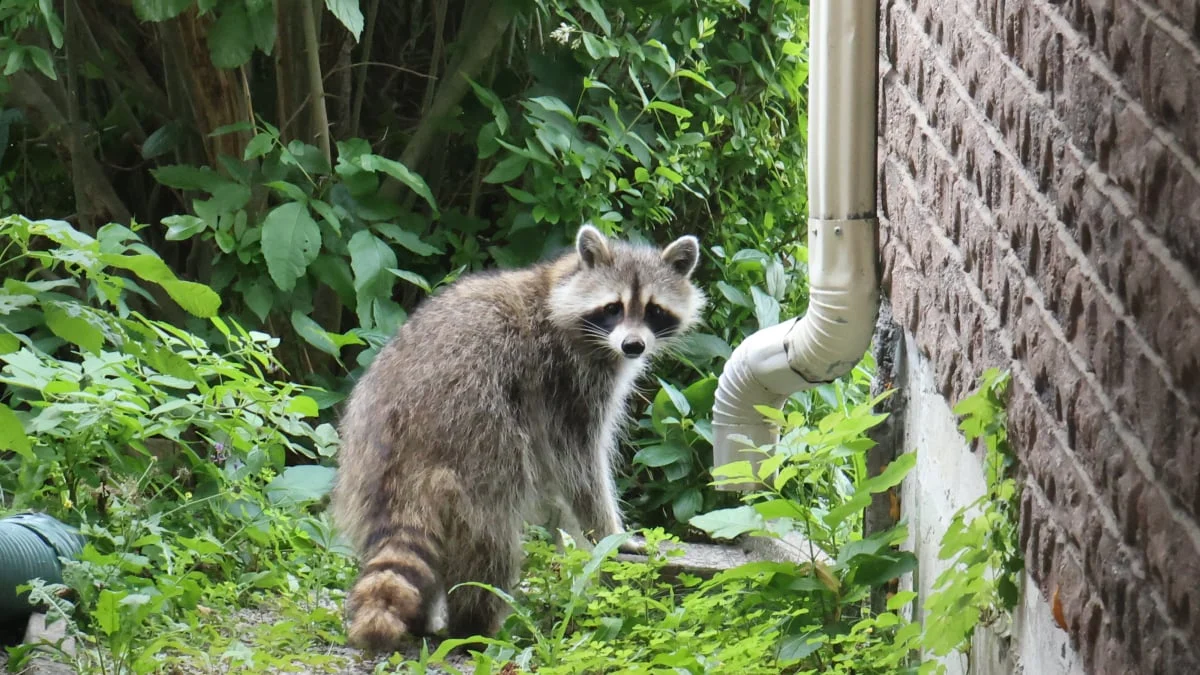
Seattle’s Ballard neighborhood has long been known for its maritime history, vibrant culinary scene, and close-knit community. However, in recent months, the neighborhood has found itself at the epicenter of a bizarre, heartwarming, and increasingly complex internet phenomenon: the rise of "Jimothy."
The raccoon, characterized by a distinctively compressed torso and neck that gives him a remarkably round, stature-defying appearance, has become an accidental global celebrity. Yet, as digital sleuths and local residents dig deeper into the archives of neighborhood security footage, a scientific and existential question has emerged: Are we witnessing the life of one extraordinary, resilient animal, or is "Jimothy" a recurring biological phenomenon in the heart of the Pacific Northwest?
The Anatomy of an Internet Icon
The saga began on July 13, when local resident Kiana Hall was taking a stroll through Ballard. Beneath the chassis of a parked car, she spotted a creature she initially dismissed as a stray cat. When the animal emerged, the truth was far more curious: it was a raccoon, but one with a silhouette that defied standard biology. Its torso was notably shortened, giving the animal a "compact" look that immediately struck a chord with the internet.
Hall named him "Jimothy," a moniker that felt perfectly suited to the raccoon’s quirky, unassuming demeanor. The footage, capturing the raccoon’s determined waddle and inquisitive face, went viral almost instantaneously, garnering millions of views across platforms like Instagram, X (formerly Twitter), and TikTok.
What followed was a cultural whirlwind. "Hot Jimothy Summer" became a rallying cry for fans, resulting in an outpouring of creative tributes: murals painted on brick walls, intricate tattoos, and a deluge of fan-made merchandise. The fervor even reached institutional levels, with the University of Washington bestowing an honorary doctorate upon the creature, and the Seattle Mariners incorporating a costumed Jimothy into their seventh-inning "Salmon Run." Even Google joined the fray; a search for "Jimothy" or "Jimothy the raccoon" triggers a custom animation of the creature scurrying across the user’s screen, a digital nod to his newfound status as Seattle’s premier mascot.
Scientific Speculation: The Short Spine Syndrome Theory
While the internet treats Jimothy with the reverence of a folk hero, wildlife experts are approaching the subject with cautious clinical interest. The most prevalent theory regarding the raccoon’s appearance is that he suffers from a congenital spinal deformity, colloquially referred to as "short spine syndrome."
Though Jimothy has not been captured or examined by a veterinarian—and wildlife officials are strongly discouraging any such attempts—his physical presentation is consistent with the condition. Short spine syndrome, while rare, can occur in various mammals. Despite the compressed nature of his skeleton, observation footage confirms that the animal is highly functional. He is documented climbing, foraging for food, and navigating the complex urban landscape of Ballard with a level of autonomy that suggests his condition, while visually striking, does not significantly hinder his survival.
A Chronological Conundrum
As the legend of Jimothy grew, the community transitioned from passive admiration to active investigation. Residents began scouring years of personal security-camera footage and backyard photographs, attempting to map the timeline of the "round raccoon."
This archival deep-dive has produced the central conflict of the Jimothy saga. While the viral footage from July established a clear point of fame, reports of sightings have surfaced that date back as far as 2017. If these older sightings are indeed the same animal, it would place Jimothy’s age at nearly nine years old—a statistical anomaly for a wild raccoon.
Wendi Mallo, an experienced animal keeper at the Northwest Trek Wildlife Park, provided a sobering reality check in an interview with FOX 13 Seattle. "Three to five years would already be a long lifespan for a wild raccoon," Mallo explained. "Many do not survive their first year due to the inherent dangers of urban living: traffic, domestic dogs, disease, and the difficulty of securing consistent nutrition."
The math simply does not support the idea of a single, decade-long Jimothy. A raccoon born in 2017 would be an elderly member of his species, defying the typical mortality rates associated with the wild. This has led to two distinct, competing theories: either Ballard is home to a line of exceptionally long-lived, short-spined raccoons, or the label "Jimothy" has been applied to several different animals that happen to share a similar genetic trait.
The "Multiple Jimothy" Hypothesis
The possibility that there is more than one "Jimothy" is a subject of intense debate among local enthusiasts. Rebecca Sorenson, a Ballard resident who has become an unofficial archivist of the sightings, noted the conflicting accounts during her media appearances. "There are posts that say he was born a year ago, and others that claim sightings from 2017," Sorenson said. "I’m curious now—are there more than one?"
The theory that the neighborhood is home to multiple raccoons with similar spinal abnormalities is scientifically plausible, if rare. Genetic clusters or inherited traits within a local population could lead to a recurring appearance of the same deformity. However, without DNA evidence or long-term tracking—which is neither feasible nor ethical in an urban wildlife setting—this remains purely speculative.
For the residents of Ballard, the truth is almost secondary to the narrative. One set of videos appears to show a young Jimothy living with a mother and siblings as recently as 2025, while other residents insist they have seen the "original" Jimothy in entirely different parts of the city. The result is a patchwork of memories and digital clips that have created a mythical, singular identity out of what might actually be a recurring biological phenomenon.
Official Responses and Ethical Implications
The rise of Jimothy has necessitated a response from wildlife authorities, who are concerned about the human element of the story. While the internet treats the situation as a lighthearted meme, the reality of wildlife-human interaction is fraught with hazards.
Wildlife officials have issued firm guidance: observers must maintain a significant distance. The urge to feed, trap, or "rescue" Jimothy is strong among his fans, but such interventions are dangerous. Feeding wild animals leads to habituation, which decreases their natural wariness of humans and vehicles, significantly increasing the risk of fatal accidents. Furthermore, attempting to capture a wild animal, even with good intentions, can lead to severe injury to both the human and the raccoon.
The increased foot traffic in Ballard as "Jimothy-tourists" descend upon the neighborhood has also raised alarms. Increased human presence in residential areas, particularly at night, creates a stressful environment for the local raccoon population and increases the risk of road accidents. Authorities are urging the public to enjoy the videos online and leave the actual animals to their nightly routines.
The Future of the Legend
As the mystery of Jimothy continues, it is becoming clear that "Jimothy" is no longer just a name; it has become a title. Whether he is one exceptionally resilient raccoon or a lineage of similarly shaped survivors, he serves as a symbol of the wild’s ability to persist within the concrete confines of a modern city.
The lack of a definitive answer may actually be the secret to his longevity as a pop-culture icon. As long as the mystery remains unsolved, the community can continue to project its own hopes, stories, and curiosities onto the masked face of their neighbor.
For now, the advice from experts remains consistent: "There’s magic in the wild. We’ve just got to look for it." Whether that magic is one raccoon or many, Seattle’s commitment to its most unusual resident speaks to a broader human need to connect with the natural world, even when that world presents itself in the most unexpected and round of packages.
As the sun sets over Ballard, residents continue to check their security feeds, hoping for a glimpse of the waddling silhouette. If they see him, they will likely call him Jimothy. And perhaps, in the grand scheme of things, that is enough.











