

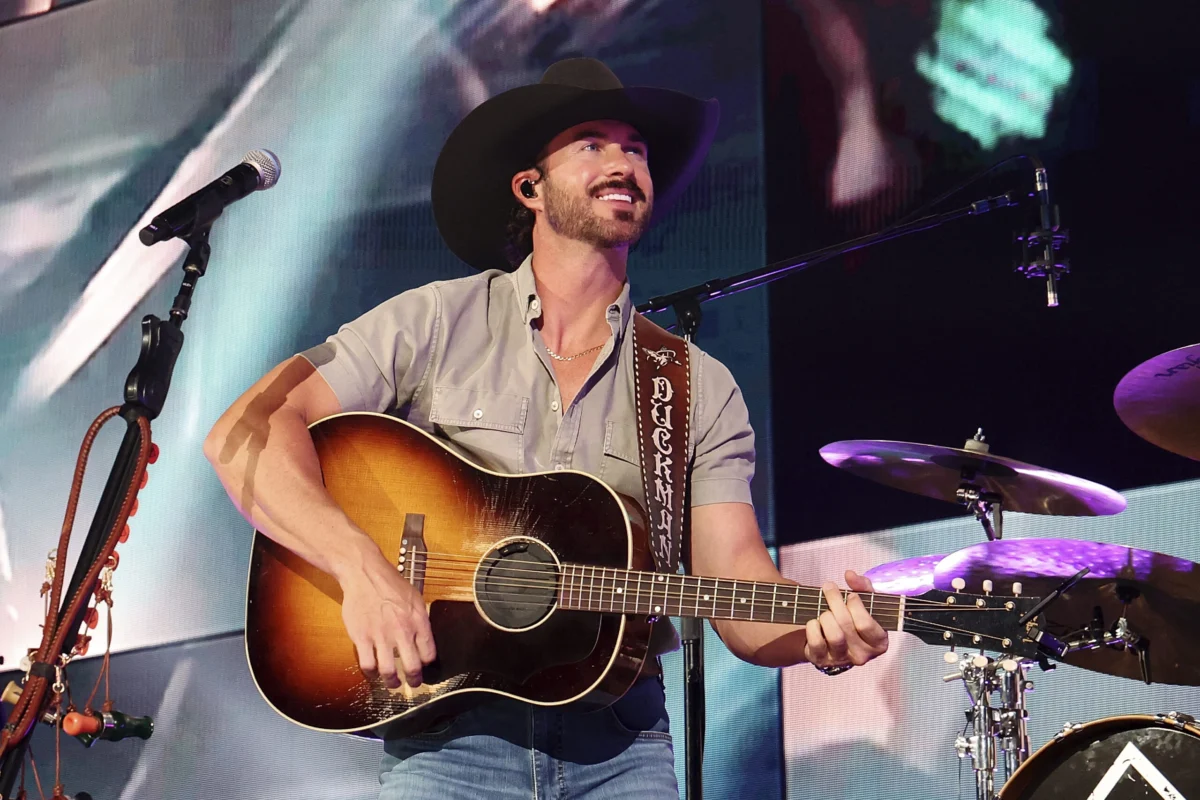
The musical landscape of primetime television is set for a significant shake-up this fall. NBC has officially announced that country music sensation Riley Green will be joining the star-studded coaching panel for the landmark 30th season of its flagship singing competition, The Voice. This appointment signals a strategic pivot for the long-running series, which continues to evolve its identity by blending seasoned veterans with fresh, genre-defining voices. Green, whose rise through the ranks of country music has been marked by chart-topping hits and a rapidly expanding touring footprint, will sit alongside returning favorites Kelly Clarkson and Adam Levine, rounding out a panel that promises both professional camaraderie and fierce competitive tension.
The Evolution of the Coaching Panel: A Chronology of Change
The announcement of Riley Green’s arrival follows the conclusion of a highly successful 29th season, which featured a coaching lineup consisting of Kelly Clarkson, Adam Levine, and John Legend. As The Voice moves into its 30th installment, the production team has opted to expand the panel back to a four-coach format. While three seats have now been accounted for, industry speculation is already swirling regarding the fourth chair, which is expected to be filled by another major musical powerhouse in the coming weeks.
The journey to Season 30 has been one of constant refinement. Since its inception, The Voice has relied on the chemistry between its coaches to drive viewership. The return of Adam Levine—a foundational figure in the show’s history—alongside the powerhouse energy of Kelly Clarkson, provided a sense of continuity in Season 29. However, the introduction of Green represents a concerted effort to capture the burgeoning country music demographic, a strategy that has served the show well in previous seasons with coaches like Blake Shelton.
For Green, this marks a professional evolution. While he is no stranger to the lens of a camera, his previous television experiences were centered on reality adventure and scripted drama rather than the high-stakes world of musical mentorship. His transition from the stage to the spinning red chair is widely viewed as a "coming of age" moment for the artist, positioning him as a mentor for the next generation of singer-songwriters.
Supporting Data: The Rising Star of Riley Green
To understand why NBC chose Riley Green, one must look at his trajectory within the country music industry. Over the past several years, Green has solidified his reputation as one of the most authentic voices in the genre. With three full-length studio albums to his credit, he has cultivated a sound that resonates with a broad, blue-collar audience.
His catalog is defined by hits that have become staples of modern country radio. Tracks such as "There Was This Girl," "I Wish Grandpas Never Died," and "Half of Me" showcase his ability to blend traditional storytelling with contemporary production. Furthermore, his collaborative efforts—most notably "Different ‘Round Here" with fellow superstar Luke Combs—have elevated his profile from a regional favorite to a national headliner.
Beyond the recording studio, Green has demonstrated a unique versatility. His 2012 stint on CMT’s Redneck Island provided him with his first taste of reality television, helping him develop the natural charisma required to hold an audience’s attention. More recently, his four-episode arc on the Yellowstone spinoff Marshals—where he portrayed a former Navy SEAL teammate of the central character Kayce Dutton—proved that he has the gravitas to excel in high-profile entertainment settings. This multifaceted career makes him an ideal candidate for The Voice, where coaches must be part mentor, part entertainer, and part television personality.
Official Responses and the "Call to Arms"
The confirmation of Green’s role was handled with a blend of professional courtesy and playful competitive banter, perfectly capturing the spirit of the show. In an Instagram reveal that quickly went viral, Green shared a recorded voicemail from his new colleague, Kelly Clarkson.
"We have never officially met," Clarkson began in the recording, her signature humor immediately evident. "I am super stoked to coach alongside you. Welcome to The Voice. I was stoked when I heard you’re going to be a coach because I actually am a super fan of your music, man, you’re so good. You probably know that, because I’ve covered your songs, big fan."
However, the tone shifted quickly from admiration to warning. "But, needless to say, fan and all, it’s a competition," she continued. "So I, as a future friend, I sent you something, a little gift, while you’re out on the road doing shows to get your head in the game for The Voice coming up, because I think you’re gonna need the practice, because Team Kelly’s gonna whoop that ass."
Green, clearly energized by the challenge, responded to his fans and his new rival with equal parts humility and confidence. "I guess y’all can start calling me coach," he posted, signaling his readiness for the fall season. The interaction serves as a masterclass in modern promotional strategy, leveraging the personal brand of a pop icon like Clarkson to validate the rising influence of a country star like Green.
Implications for the Future of ‘The Voice’
The addition of Riley Green to the coaching panel carries significant implications for the future of the series. First, it reinforces the show’s commitment to country music, a genre that has historically provided some of the most successful winners in the history of the franchise. By bringing in a contemporary artist who is currently active in the touring circuit, NBC ensures that the advice given to contestants remains relevant to the current state of the music business.
Second, the structural change—expanding to four coaches—indicates that the production team is doubling down on the "battle" element of the show. The competition between four distinct coaches provides a wider array of feedback for the contestants, which in turn leads to a more diverse range of performances. As the show approaches its 30th season, the pressure to maintain relevance in an era of streaming and social media is higher than ever. By integrating a star with a loyal, grassroots following like Green, the show effectively bridges the gap between traditional broadcast television and the digital-first habits of younger viewers.
Furthermore, the production pedigree remains as strong as ever. With the show being produced by MGM Television, Warner Horizon Unscripted Television, and ITV America, the infrastructure is designed to handle the logistical complexities of a four-coach format. The executive production team, led by industry heavyweights including John De Mol, Mark Burnett, and Audrey Morrissey, has proven time and again that they can successfully reinvent the show’s formula to keep audiences engaged.
As we look toward the fall, the narrative arc of Season 30 is already beginning to take shape. It will be a season defined by the clash of philosophies: the seasoned pop experience of Clarkson and Levine versus the raw, storytelling-driven approach of Green. For fans, this creates a compelling "must-watch" dynamic. For the contestants, it offers a rare opportunity to learn from artists who occupy different ends of the musical spectrum.
Ultimately, the casting of Riley Green is a statement of intent. It is an acknowledgment that while The Voice is a titan of the television industry, it cannot afford to rest on its laurels. By inviting a new generation of talent into the fold, the show ensures that it remains not just a competition, but a vital platform for the next wave of American musical talent. Whether Green can withstand the competitive spirit of Kelly Clarkson remains to be seen, but one thing is certain: the red chairs are ready for their newest occupant.









No comments yet. Be the first to join the conversation!