Nana Wu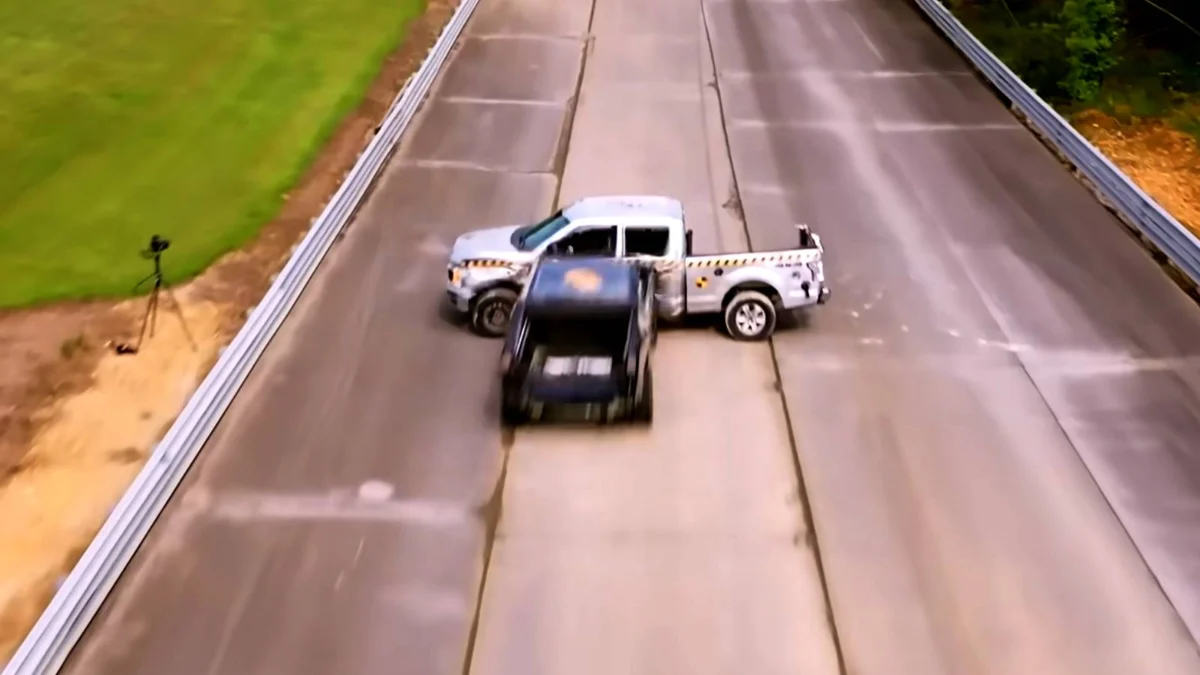
In the high-stakes world of automotive content creation, few figures command as much attention—or generate as much controversy—as Cody “WhistlinDiesel” Detwiler. Known for pushing vehicles to their absolute breaking points, Detwiler has officially concluded his exhaustive, two-year-long durability experiment pitting the Tesla Cybertruck against the Ford F-150. The saga, which involved off-road abuse, explosive testing, and high-speed impacts, culminated in a spectacular 111-mph remote-controlled collision that left both vehicles in literal shreds.
While the imagery of a stainless-steel exoskeleton meeting a traditional truck chassis at highway speeds captured the internet’s imagination, the conclusion of the series offers a nuanced look at modern vehicle engineering, build quality, and the cost of innovation.
The Chronology of Destruction: A Two-Year Odyssey
The rivalry began in 2024, born from a desire to test the real-world utility of Tesla’s polarizing electric pickup against the gold standard of American work trucks: the Ford F-150. Detwiler’s testing methodology was never intended to be scientific in the traditional sense; rather, it was a stress-test designed to see what these machines could endure before failing.
Phase One: The Initial Off-Road Tests
The early stages of the project saw both vehicles subjected to punishing terrain. While the Cybertruck’s stainless-steel “Exoskeleton” proved remarkably resilient against dents and scrapes that would have crippled a traditional truck, the vehicle struggled with mechanical reliability. During a recovery effort, the Cybertruck’s rear frame suffered a catastrophic failure while attempting to pull the F-150 out of an obstacle, highlighting a disparity between exterior armor and structural integrity.
Phase Two: Moab and Mechanical Fatigue
The experiment moved to the rugged trails of Moab, Utah, a testing ground for the world’s most capable off-roaders. It was here that the cracks in the Cybertruck’s reliability surfaced. Shortly after entering the trail, a loose towing module rendered the Tesla immobile. The Ford F-150, by contrast, continued to traverse the course despite sustaining significant damage, including operating on three wheels. Eventually, even the Ford succumbed to wire damage, but its ability to remain operational for longer proved to be a harbinger of the final verdict.
Phase Three: The Grand Finale
The climax of the series involved an ambitious technical feat. Detwiler outfitted the Cybertruck with mechanical actuators, allowing him to operate the vehicle remotely via FPV (First Person View) goggles. With no human occupants inside, the Cybertruck was launched down a drag strip, striking a stationary F-150 at an indicated 111 mph. The resulting impact was devastating, separating the Ford’s cab from its frame and triggering a fireball.
Supporting Data: The Cost of Ownership
To understand why Detwiler crowned the Ford F-150 the overall winner, one must look past the spectacle of the crash and examine the maintenance logs. Over the two-year period, the Cybertruck required six to seven separate trips for repairs, costing a reported $53,000.
Throughout these repairs, the F-150 remained a consistent, albeit battered, performer. Detwiler noted that the Ford never once required a trip to the dealership for mechanical failures during the duration of the series. This contrast—between a high-tech vehicle requiring constant, expensive intervention and a traditional truck that absorbed abuse without requiring specialized factory support—formed the bedrock of Detwiler’s final assessment.
The Engineering Divide: Stainless Steel vs. Traditional Steel
Detwiler’s experiment inadvertently highlighted the philosophical divide between Tesla and legacy manufacturers.
The Tesla Cybertruck: Innovation at a Price
Detwiler acknowledged that Tesla is “onto something” with the Cybertruck. He offered high praise for its suspension, comfort, and, most notably, its body composition. Even after the 111-mph collision, the Cybertruck’s structure remained significantly more intact than the Ford’s. Furthermore, despite the severity of the crash, the high-voltage battery system did not ignite, a point of significant interest for electric vehicle safety advocates.
However, the "teething problems" associated with the platform—software glitches, sensor failures, and frame-stress issues—demonstrate the growing pains of a vehicle that relies heavily on integrated electronics and unconventional materials.
The Ford F-150: The Value of Proven Architecture
The F-150’s victory was not one of "strength" in terms of crash-test survivability, but rather one of "operational endurance." By maintaining mobility in the face of extreme conditions without requiring constant maintenance, the F-150 proved that its architecture is built for the rigors of the field. The ease with which the Ford could be pushed to its limits and still function represents a mature manufacturing process that has been refined over decades.
Implications for the Industry
While Detwiler’s stunts are explicitly for entertainment purposes and do not serve as a controlled safety comparison, they have sparked significant discussion regarding the long-term viability of high-tech pickups.
The Durability vs. Repairability Debate
One of the most salient takeaways is the disparity in repairability. The Cybertruck’s reliance on specialized stainless steel and proprietary Tesla electronics makes it a difficult vehicle to service outside of an official Tesla service center. For owners who use their trucks in remote areas or for heavy-duty labor, the "six to seven" trips for repairs reported by Detwiler raise questions about the total cost of ownership for early adopters.
Safety and Public Perception
The viral nature of these tests has also had real-world consequences. When footage of the wrecked Cybertruck circulated on social media, it briefly fueled false rumors regarding Detwiler’s health. This highlights the double-edged sword of modern content creation: while it generates massive visibility, it can also lead to the rapid spread of misinformation when the context of a "staged" event is stripped away.
The Final Shredding
Following the conclusion of the testing, both vehicles met the same end. Deemed non-repairable and dangerous, the remnants of the Cybertruck and the F-150 were transported to a recycling facility. There, they were dismantled by heavy machinery and fed into an industrial shredder—a final, violent end to a project that kept millions of viewers glued to their screens.
Conclusion: Is the Cybertruck Ready?
Cody Detwiler’s final assessment was balanced. He praised the Cybertruck for its forward-thinking design, superior body durability, and impressive performance metrics, but warned that Tesla needs to focus on making the vehicle last.
The experiment serves as a stark reminder that while cutting-edge technology and bold design can capture the market’s attention, the true measure of a truck—for the average user—remains reliability, ease of repair, and the ability to withstand the unforgiving nature of the real world. As the industry shifts toward electrification, the lessons learned from this two-year durability test may well influence how future pickups are engineered, serviced, and sold. For now, the Ford F-150 retains its crown as the champion of the work site, while the Cybertruck remains a fascinating, albeit flawed, glimpse into the future of automotive engineering.


 Evan Lee Salim
 Lina Hope