On August 4, 2026, the quiet streets surrounding the University of Alabama’s Gamma Phi Beta chapter were transformed into a high-octane film set. A custom-branded Nike trailer, sleek and imposing, pulled up to the curb. Inside, sorority members were treated to an immersive retail experience: personalized sneakers, branded fleeces, and curated gear, all tailored to the aesthetic of the Greek system. Outside, a professional crew of three videographers waited, cameras at the ready, to capture the “authentic” joy of the members.
By the time the sun set, over 150 women had cycled through the experience. Within hours, the resulting content—glossy, high-definition clips featuring sorority sisters showing off their new Nike-branded wardrobes—was circulating through the "For You" pages of millions of users.
This isn’t just a college tradition anymore; it is a calculated, professional-grade marketing operation. Welcome to the increasingly branded world of "RushTok."
The Evolution of a Digital Phenomenon
Sorority recruitment has long been a staple of campus life, characterized by synchronized clapping, elaborate door songs, and a high-stakes selection process. However, the rise of TikTok—specifically the "Bama Rush" phenomenon that captured the national imagination in 2021—transformed this localized ritual into global appointment viewing.
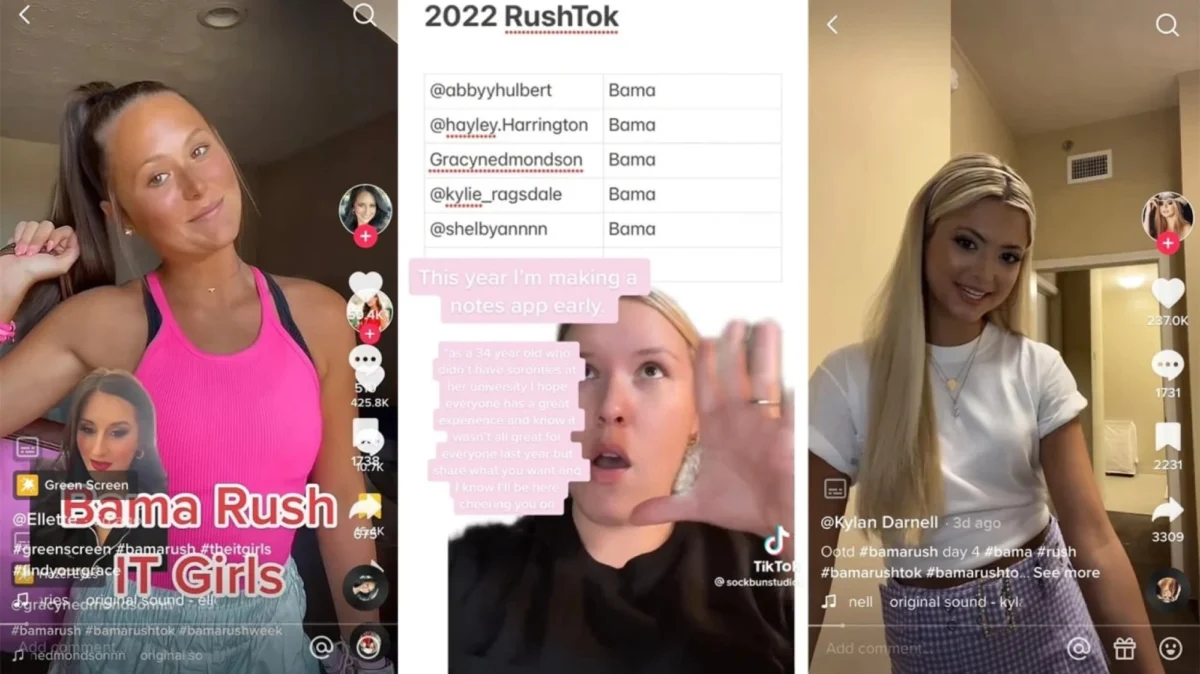
Before 2021, the inner workings of sorority recruitment were shielded by the closed doors of chapter houses. TikTok tore those doors off their hinges. Prospective new members (PNMs) began documenting every step of the week-long process: outfit breakdowns, emotional reactions to "bid day" reveals, and the granular details of Panhellenic politics.

What started as organic, student-led content quickly caught the attention of the commercial world. Brands that once ignored the Greek ecosystem suddenly realized that they were sitting on a goldmine of influence. The demographic is highly coveted: affluent, trend-conscious, and hyper-connected. By 2026, the intersection of sorority life and corporate marketing has evolved from accidental exposure to a sophisticated, multi-million dollar industry.
Chronology of a Corporate Infiltration
The transition from grassroots documentation to sponsored content was swift and aggressive.
- 2021: The Organic Catalyst. The inaugural "Bama Rush" trend proved that collegiate recruitment could drive massive engagement. Retailers like the Tuscaloosa-based "Pants Store" saw their online and local sales spike by over 200% simply because they were mentioned in the background of student videos.
- 2022: The "Gift-Bomb" Era. Recognizing the power of these influencers, brands like Tarte Cosmetics pivoted to direct engagement. Tarte shipped over 30,000 units of mascara and lip balm to sorority hopefuls across eight universities. The ROI was immediate, with student-discount program sales jumping 1,300%.
- 2023: Experiential Marketing. Companies stopped relying on mail-ins and started showing up in person. Hally Hair, a hair coloring brand, dispatched a branded bus to the University of Alabama. The campaign generated half a million impressions and sent applications to their ambassador program skyrocketing by 200% in just half a day.
- 2024–2025: Strategic Partnerships. Agencies began acting as matchmakers between sororities and major corporations. Bubble Skincare utilized its "Bubble on Campus" program to blanket 15 universities, while individual influencers like Kylan Darnell and Blythe Beardsley turned viral moments into six-figure careers, proving that a single recruitment video could launch a professional life as a content creator.
- 2026: The "Branded House" Peak. Today, the integration is seamless. With the help of agencies like Campus Launch, corporations are no longer just sending products; they are producing content for the sororities, sponsoring choreographed dance routines, and creating pop-up experiences that feel more like festival activations than college recruitment events.
Data Points: Why the Investment Works
The numbers behind the RushTok gold rush are staggering. For corporations, the return on investment (ROI) is not just found in immediate sales, but in long-term brand affinity.
When Sephora at Kohl’s launched its "Beauty Bodega" tour, it wasn’t just a PR stunt; it was a data-gathering mission. Thousands of students attended, receiving touch-ups and product samples. This allowed the brand to intercept Gen Z consumers at a pivotal moment in their social development.
Furthermore, the rise of the "influencer-student" has created a new class of brand ambassadors. When a chapter partners with a celebrity like Love Island USA contestant Kayda Bosse, they aren’t just gaining a temporary guest; they are tapping into an audience of millions. The viral nature of these partnerships ensures that a single video can accumulate tens of millions of views, far exceeding the reach of traditional television advertising for a fraction of the cost.

The Industry Perspective: "Meeting Gen Z Where They Are"
From the perspective of corporate marketing departments, the logic is sound. Christie Raymond, the Chief Marketing Officer at Kohl’s, noted that these activations provide an opportunity to meet Gen Z "where they are already engaging."
Sorority houses, which once functioned as private sanctuaries, are now being treated as lifestyle hubs. The theater of recruitment—the costumes, the choreography, the perfectly curated aesthetics—aligns perfectly with the requirements of the TikTok algorithm.
Agencies such as Campus Launch have professionalized this relationship. They provide the infrastructure that turns a sorority house into a filming location. They negotiate the contracts, secure the brand sponsors, and ensure that the "spontaneous" content posted by students is polished enough to serve as an official marketing asset.
Implications: The High Cost of the "Perfect" Aesthetic
While the synergy between brands and Greek life is lucrative, it has sparked a broader conversation about the nature of college experiences and the pressures on young women.
The Erosion of Authenticity
The most common critique of the "branded" RushTok is the loss of the human element. When recruitment becomes a set-piece for a Nike trailer or a Poppi advertisement, the genuine, messy reality of choosing a sisterhood is sanitized. The pressure to present a perfectly curated life is amplified when that life is being bankrolled by corporate interests.

The Rise of the "Professional Student"
The success stories of influencers like Kylan Darnell and Blythe Beardsley have created a new, often unattainable standard for the average student. While many women participate in recruitment to find community, the "RushTok" environment pushes them to view their personal identity as a commodity. This can lead to intense imposter syndrome, as noted by Beardsley, who spoke candidly about the mental health struggles associated with suddenly being thrust into the public eye.
The Future of Campus Marketing
The trend shows no signs of slowing down. As we move toward 2027 and beyond, expect the line between "campus life" and "brand influencer marketing" to blur even further. We may soon see permanent, branded, state-of-the-art content studios built directly into sorority houses, or recruitment cycles that are entirely sponsored by multi-national corporations.
Conclusion: A Shift in the Social Fabric
Sorority recruitment has always been a form of performance. Even back in 2017, the choreography, the synchronized clapping, and the wardrobe planning were intense. TikTok did not invent the performance; it simply provided a global stage.
The shift we are seeing today is the commercialization of that stage. When brands supply the wardrobe, build the sets, and script the moments, they are not just selling products; they are becoming participants in the social rites of passage of American higher education.
As the lines continue to blur, the ultimate question remains: How much of the "sorority experience" is being driven by the women themselves, and how much is being curated by the brands looking to capture their attention? For now, the cameras are rolling, the trailers are parked, and the recruitment season continues to be the most lucrative, branded, and scrutinized spectacle on the internet.