Neng Nana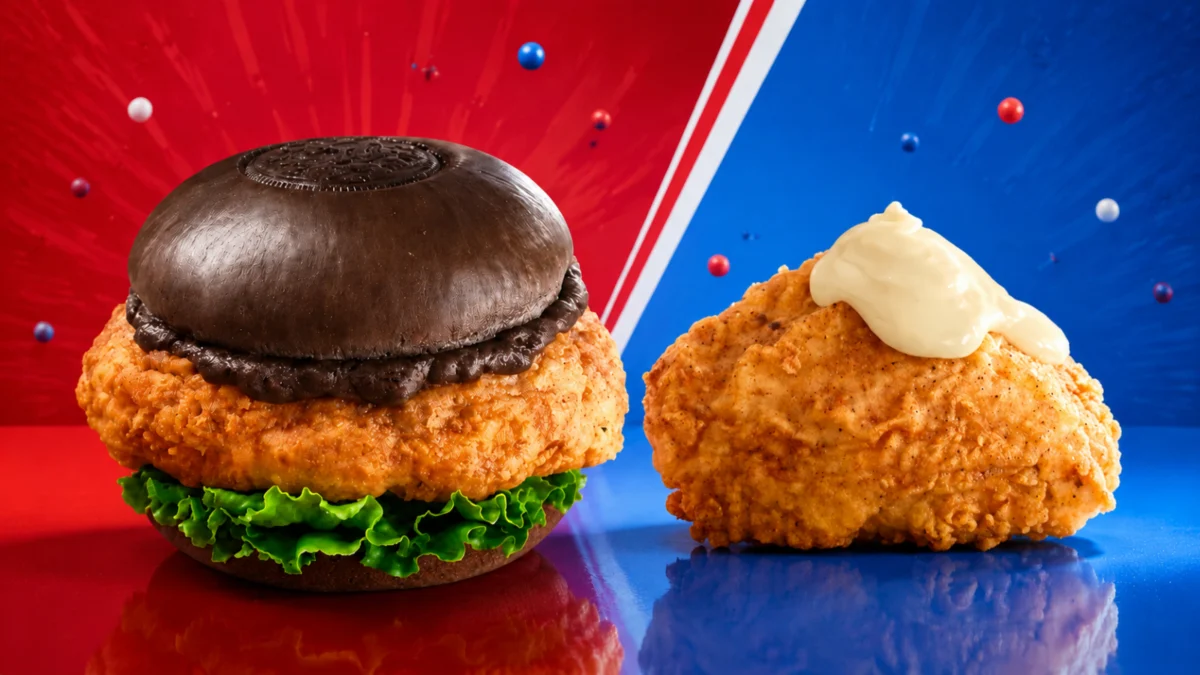
In the high-stakes world of fast-food marketing, innovation is the engine of growth. Brands are constantly battling for social media dominance through increasingly bizarre, limited-time menu items. However, rarely has a product launch caused such a stark disconnect between a parent brand and its regional subsidiary as the latest offering from KFC China. On August 28, the division unveiled the "Oreo Original Recipe Chicken Burger"—a creation so polarizing that it has left KFC’s global social media team visibly baffled, much to the amusement of millions online.
The Anatomy of an Unlikely Culinary Union
The Oreo Original Recipe Chicken Burger is a masterclass in culinary maximalism. At its core, the sandwich features KFC’s signature Original Recipe chicken thigh fillet and fresh lettuce, but the traditional elements stop there. The "buns" are replaced with two black, Oreo-flavored bread disks, and the ensemble is topped with a generous portion of mashed potatoes infused with crushed Oreo cocoa pieces.
The promotional narrative surrounding the burger frames it as a "collision of sweet and savory flavors." According to marketing materials, the goal is to create a multi-sensory experience where the saltiness of the fried chicken, the creaminess of the potatoes, and the signature crunch of the cocoa crumbs provide a complex, layered texture profile.
Beyond the burger itself, KFC China has introduced a pair of "sweet fried chicken companion sauces." Customers can opt for a stark white, vanilla-flavored dip or a deep black, cocoa-infused sauce. At a price point of roughly 2.5 yuan ($0.35 USD) for a 30g serving, these sauces are clearly intended to nudge the consumer toward treating fried chicken as a dessert-adjacent indulgence rather than a traditional savory meal.
A Chronology of the Viral Outbreak
The saga began in late August, as details of the launch began to trickle out of China and into the wider global ecosystem. The initial announcement was met with immediate, widespread disbelief.
- August 26-27: Leaks and early promotional materials for the Oreo Chicken Burger began circulating on platforms like X (formerly Twitter). The imagery, which showcased the striking black buns and the unconventional potato-cookie topping, quickly gained traction, with one report alone garnering over 24 million views.
- August 28: The product officially launched across KFC outlets in China. As photos of the real-world product began to surface, the digital backlash—and fascination—reached a fever pitch.
- August 29: KFC’s main X account, clearly caught off guard by the regional team’s creative direction, began a series of public responses that signaled a complete lack of oversight or involvement in the decision.
- Late August to Present: The dialogue continues as consumers, food critics, and social media users weigh in on the "Oreo-fication" of fast food, with the discussion expanding into the broader trend of brands pushing the boundaries of palate acceptability.
The Corporate Standoff: When the Brand Doesn’t Recognize the Menu
Perhaps the most compelling aspect of this story is the official response from the KFC parent brand. While most global corporations maintain a polished, unified front, KFC’s social media team took a decidedly human, bewildered approach.
When the music and entertainment platform My Mixtapez shared the news of the burger’s debut, the official KFC account responded with a reaction GIF of actor Ice Cube looking suspicious and confused, accompanied by the caption, "us looking at KFC China."
The interaction didn’t stop there. When confronted with further queries about the product, the account replied directly to Dexerto with another reaction GIF, confirming the sentiment: "us to KFC China." The following morning, the brand doubled down, quote-posting an image of the burger with a blunt, exasperated directive: "KFC CHINA guys."
This public distancing act serves as a fascinating look at the autonomy granted to international divisions. KFC China, which operates as a separate entity under the Yum! China umbrella, has historically been far more experimental with its menu than its Western counterparts. While the US and UK teams often rely on nostalgia and established flavor profiles, the Chinese market is known for its hyper-competitive food landscape, where "viral-worthy" items are often the only way to cut through the noise of a saturated market.

The Pattern of Absurdity: A History of Experimental Marketing
To understand the Oreo Chicken Burger, one must look at the recent trajectory of the fast-food industry. This isn’t the first time KFC and Oreo have crossed paths. Earlier in August, the two brands collaborated on "fried chicken-flavored cookies," which featured a savory, poultry-inspired creme. In that instance, the collaboration felt like a novelty stunt. The burger, however, represents a more aggressive shift toward merging entire food groups.
KFC is certainly not alone in this race to the bottom—or perhaps the top—of the absurdity index. The strategy is global:
- KFC Canada: Recently launched a "Flamin’ Hot Cheetos" menu, which includes a "Dirty Soda" that features the iconic neon-red snack dust mixed with beverage ingredients.
- KFC UK: In previous years, the brand has experimented with highly divisive items such as gravy-flavored gelato and, most notoriously, fried-chicken-flavored toothpaste.
- The Oreo Factor: Oreo itself has been on a crusade to rewrite the rules of snacks. In the United States, the company recently polled fans on a selection of experimental flavors including Chicken & Waffles, Banana Pudding, and Deep-Fried Oreo cookies.
These items rarely stay on the menu for long. Their purpose is not to become a staple of the diet, but to generate "earned media"—the kind of organic social sharing that money cannot buy. By creating something so jarring that people must post about it, the brand ensures its name stays at the forefront of the cultural conversation.
Implications for the Fast Food Industry
The reception of the Oreo Chicken Burger highlights a growing divide between "food as sustenance" and "food as content." The primary goal of such a product is not flavor satisfaction, but rather the creation of a "shareable moment."
The "Content-First" Strategy
In the age of TikTok and Instagram, a product’s photogenicity is often prioritized over its taste. The black bun of the Oreo burger provides a high-contrast visual that is tailor-made for social media algorithms. The mashed potatoes and cookie crumbs add a texture that is visually intriguing, even if the taste profile remains debatable.
The Regional Autonomy Paradox
The reaction from KFC’s main account highlights a structural tension. Global brands rely on consistency to maintain equity, yet regional managers are under pressure to localize and innovate. When a regional team succeeds too well—or too loudly—at innovation, it can cause "brand dilution" in the eyes of the global consumer. KFC’s decision to distance itself is a rare admission that the global brand does not necessarily endorse the experimental whims of its regional outposts.
The Sustainability of Shock Value
How much further can the industry go? As consumers become accustomed to increasingly bizarre flavor pairings, the threshold for what constitutes a "viral" item continues to rise. We are witnessing the limits of the novelty cycle. Eventually, the shock value wears off, and brands may find themselves in a position where they must pivot back to quality and consistency to retain a loyal customer base.
Conclusion: A Culinary Curiosity
As of now, there are no plans to introduce the Oreo Chicken Burger to markets outside of China. For most of the world, the item will remain a digital curiosity—a photo to be scrolled past, a GIF to be shared, and a subject for debate.
The KFC Oreo Chicken Burger is a testament to the modern fast-food landscape: a place where the lines between dinner and dessert are intentionally blurred, where regional teams are given the keys to the kingdom, and where the most important ingredient in any recipe is, increasingly, its ability to go viral. Whether it is a stroke of genius or a culinary catastrophe, one thing is certain: it has captured the attention of the world, and in the relentless economy of modern marketing, that is the only metric that truly matters.

 Siti Muinah
 Laily UPN