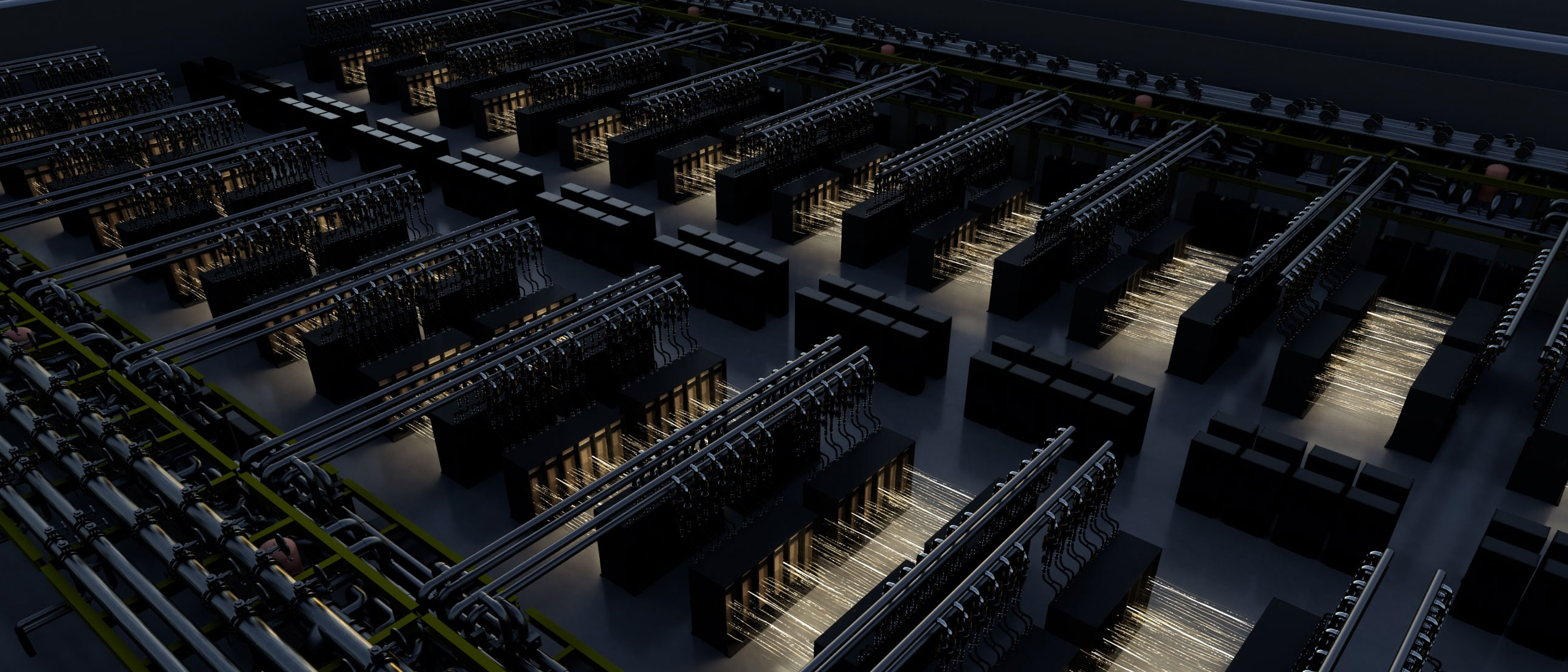
As the artificial intelligence industry accelerates, the bottleneck for progress is no longer just compute, silicon, or even memory bandwidth—it is power. The physical limit of how much electricity a data center can draw from the grid and distribute to its racks has become the primary constraint on performance. During the recent Hot Chips conference, Nvidia unveiled its strategy to overcome these limitations through its new Rubin GPU architecture and the accompanying DSX MaxLPS (Land, Power, Shell) management suite, signaling a shift toward intelligent, dynamic, and facility-wide power orchestration.
The Power Paradox: Why Static Provisioning is Failing
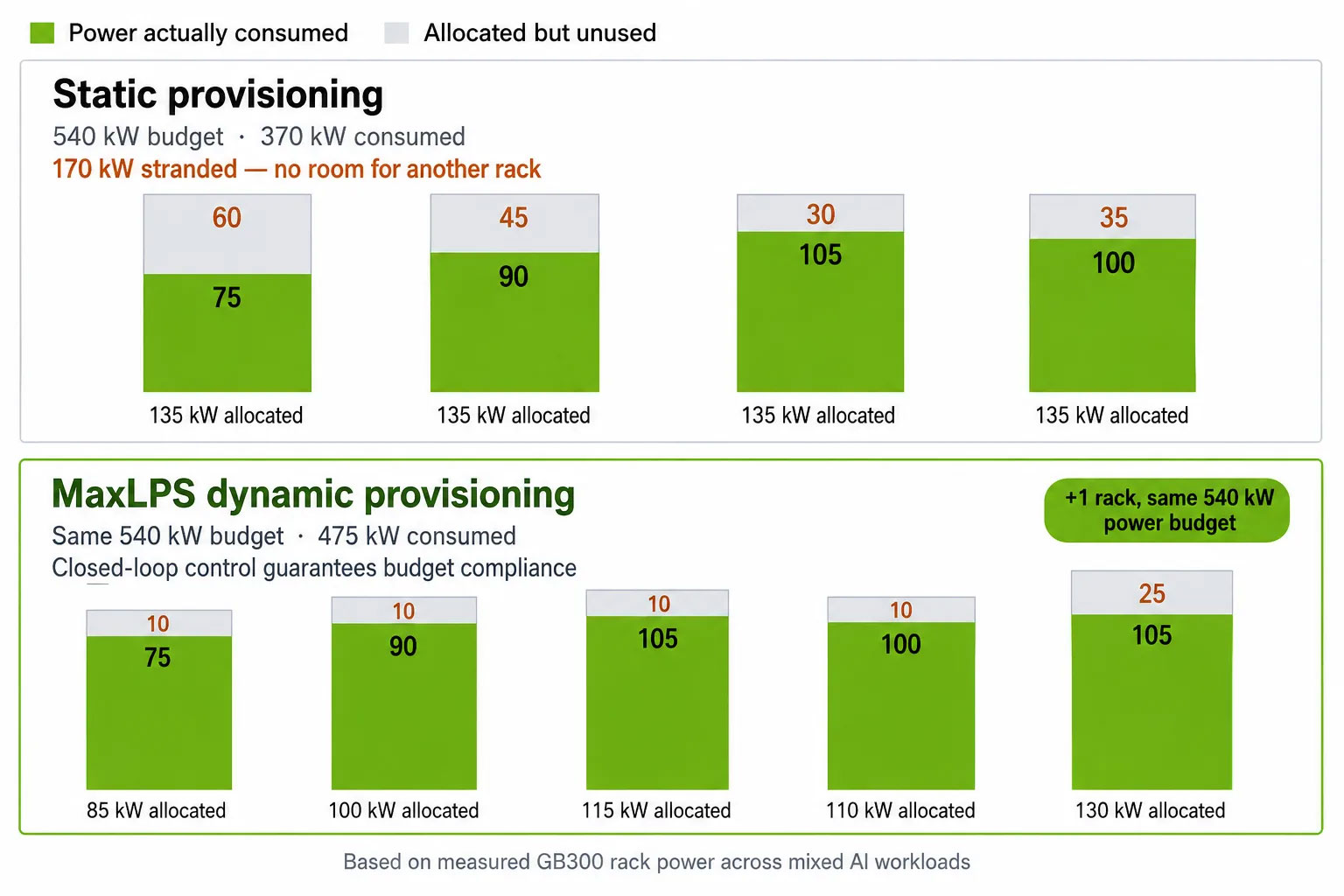
For decades, data centers have relied on "static provisioning." In this traditional model, infrastructure planners assign a fixed, worst-case power budget to every individual rack. If a rack’s hardware is rated for a peak power draw of 135kW, the facility sets aside 135kW of capacity for it, regardless of whether that rack is running a high-intensity training workload or a lighter inference task.
This approach creates "stranded power"—capacity that is technically available to the facility but remains unusable because it is locked behind a conservative, static guard band. When multiplied across thousands of racks, this leads to massive inefficiencies. Nvidia’s analysis of legacy setups suggests that as much as 170kW of power per cluster could sit idle, trapped in underutilized racks while other, busier systems are throttled by the inability to access that surplus.
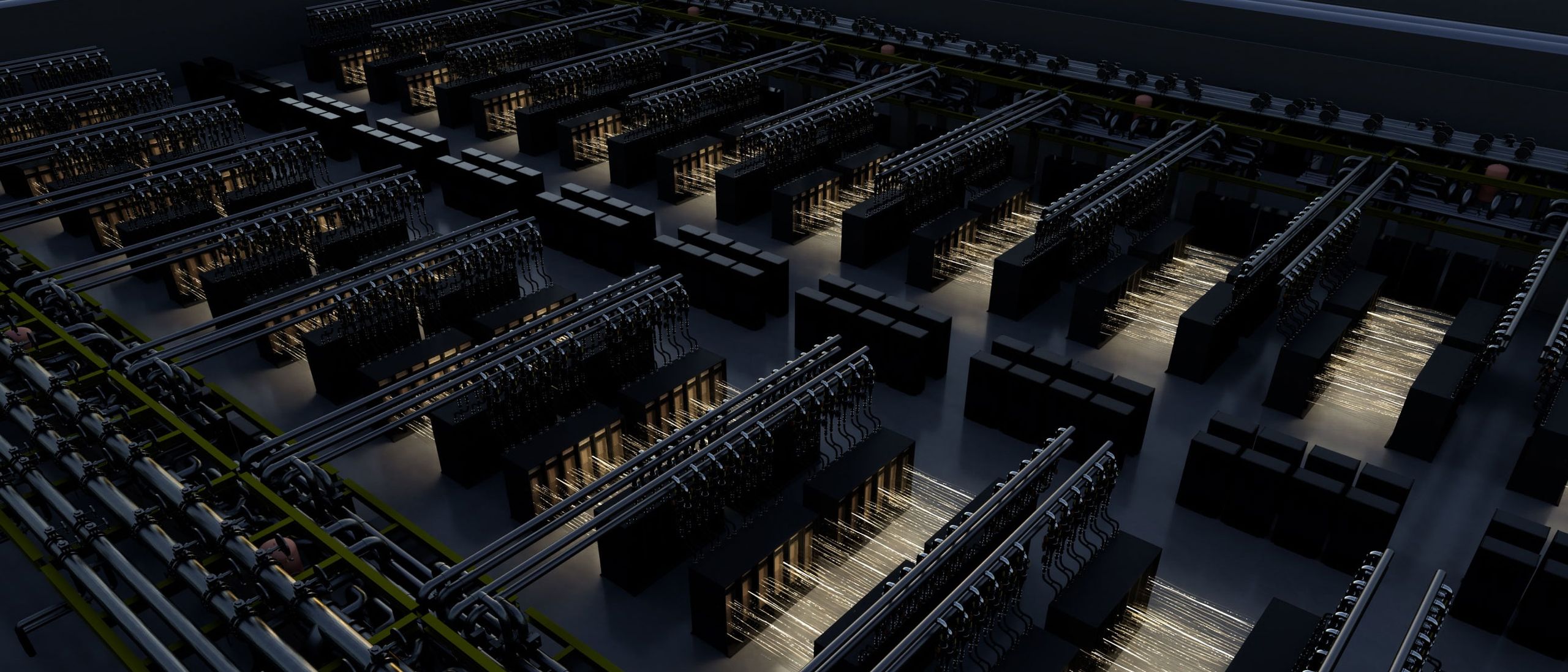
In the era of the "AI Factory," where companies are spending billions to build facilities with 100MW+ power budgets, wasting even a fraction of that capacity represents a catastrophic loss in potential compute, revenue, and technological output.
Chronology: From Static Limits to Dynamic Orchestration
The evolution toward dynamic power management did not happen overnight. The industry has long recognized the inefficiency of worst-case-scenario planning, but it lacked the fine-grained control loops required to manage power at the scale of a multi-rack system.
- The Era of Fixed-Peak Provisioning: For years, data centers were architected around the "worst-case" scenario. This ensured stability but resulted in significant capital waste.
- The Rise of Accelerated Computing: With the introduction of the Hopper and Blackwell architectures, power density increased exponentially. The "per-rack" power draw climbed from a few kilowatts to over 100kW, making the inefficiencies of static provisioning impossible to ignore.
- The Introduction of Rubin and DSX MaxLPS: At Hot Chips, Nvidia presented the Rubin NVL72. More than just a GPU, the platform is designed as a holistic system where the silicon, the rack, and the building’s cooling infrastructure are treated as a single, interconnected power-managed entity.
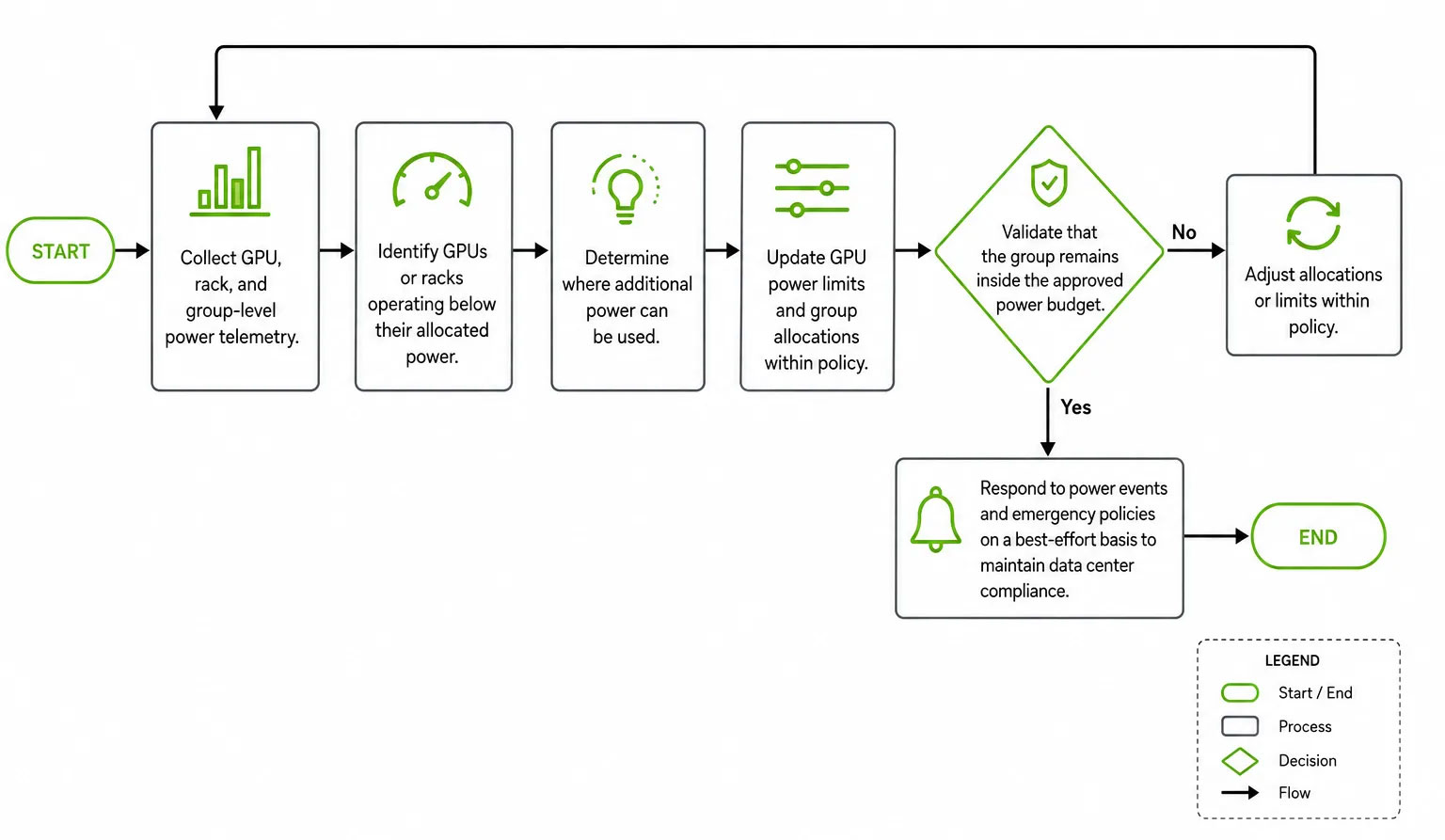
- The Implementation Phase: Moving forward, the industry is transitioning to "Dynamic Power Software." This control loop enables real-time, microsecond-level adjustments to power allocation based on actual workload telemetry rather than theoretical maximums.
Supporting Data: The Math of the 100MW Target
Nvidia’s performance claims for the Vera Rubin NVL72 are staggering, but they are predicated on the ability to manage a massive 100MW power budget with extreme precision.
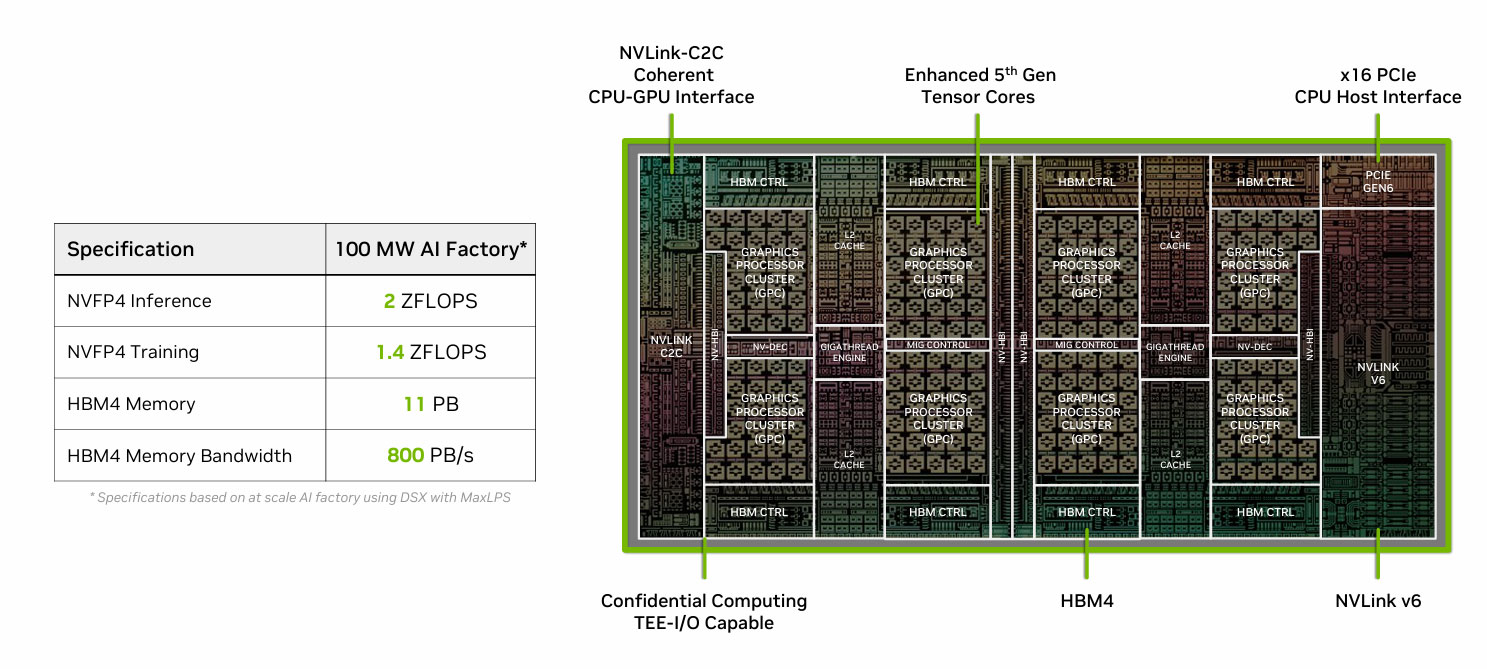
In a hypothetical 100MW installation, Nvidia asserts that its suite of power management technologies—in tandem with the DSX MaxLPS framework—will allow operators to deploy up to 40,000 next-generation GPUs. The projected output for this configuration is up to 2 zettaFLOPS (ZFLOPS) for NVFP4 inference and 1.4 ZFLOPS for NVFP4 training.
While analysts caution that these figures likely represent peak theoretical performance rather than real-world sustained throughput, the underlying point is clear: by shifting from static to dynamic, Nvidia is essentially "creating" extra capacity out of thin air. By eliminating the conservative "guard bands" that traditionally throttled performance, operators can squeeze more compute into the same facility footprint.
For example, in a test using the Grace Blackwell GB300 system running the DeepSeek-R1 model, the traditional static approach would have required a massive 136kW power allocation per rack. By applying the DSX MaxLPS dynamic profile, that requirement dropped to 101kW—a nearly 26% reduction in power consumption without a single drop in delivered performance.
Official Perspectives: The "Dry Cooling" Philosophy
A critical, yet often overlooked, component of Nvidia’s power strategy is its move toward "dry cooling." During a recent visit to Nvidia’s engineering proving grounds, it was revealed that the Rubin NVL72 racks are designed to operate with inlet coolant temperatures as high as 45°C.
Traditional liquid-cooled systems require much lower temperatures, necessitating the constant use of massive, power-hungry mechanical chillers. Nvidia’s approach minimizes the reliance on these chillers, which can account for up to 40% of a data center’s total power budget. By allowing the system to run hotter, Nvidia enables the facility to rely more on ambient air cooling or more efficient heat-rejection methods, significantly improving the site’s Power Usage Effectiveness (PUE) rating.
"We are moving away from the idea of the server as an island," an Nvidia spokesperson noted during the presentation. "The facility, the cooling loops, and the GPUs are now part of a single, orchestrated control loop."
Implications for the Future of AI Infrastructure
The transition to dynamic power management carries profound implications for the future of the technology sector.
1. The Lifespan of a Data Center
Traditionally, data centers were built for a specific hardware generation. Because power was statically assigned, upgrading to new, more power-hungry hardware often required a total gutting of the power infrastructure. With the DSX MaxLPS approach, facilities gain "operational agility." As hardware ages and shifts from intensive training tasks to lower-power inference roles, the facility can dynamically reallocate that saved power to new, high-performance training clusters within the same footprint. This effectively extends the usable life of the building.
2. The Economics of "Tokens"
For cloud providers and AI companies, the goal is to maximize "tokens per watt." In an environment where grid power is expensive or limited by local utility providers, the ability to pack more compute into a fixed power budget directly translates to higher revenue. If a data center can increase its density by 20% simply by using software-defined power management, the competitive advantage is insurmountable.
3. Sustainability and Grid Constraints
As AI factories grow to consume hundreds of megawatts, they are increasingly scrutinized for their impact on local energy grids. By optimizing every watt and utilizing higher-temperature cooling, Nvidia is helping operators do more with less. While the absolute power consumption of these facilities will remain high, the efficiency of that power usage is reaching levels previously thought impossible.
Conclusion: The Holistic Approach
Nvidia’s message at Hot Chips was clear: the era of the "siloed" data center is over. You cannot maximize the performance of a modern AI factory by looking only at the GPU. You must look at the rack, the cooling system, the site-level management, and the power grid as a unified organism.
The DSX MaxLPS toolkit is the bridge between the silicon and the facility. By replacing rigid, static assumptions with a fluid, data-driven approach to energy, Nvidia is ensuring that the hardware of the future isn’t just faster—it is fundamentally more capable of operating within the harsh, limited realities of our global power infrastructure. Whether these ambitious ZFLOPS targets hold up in the real world remains to be seen, but the shift in how we think about energy in the data center is already underway, and it promises to be the defining challenge of the next decade of computing.