Layla Zulfa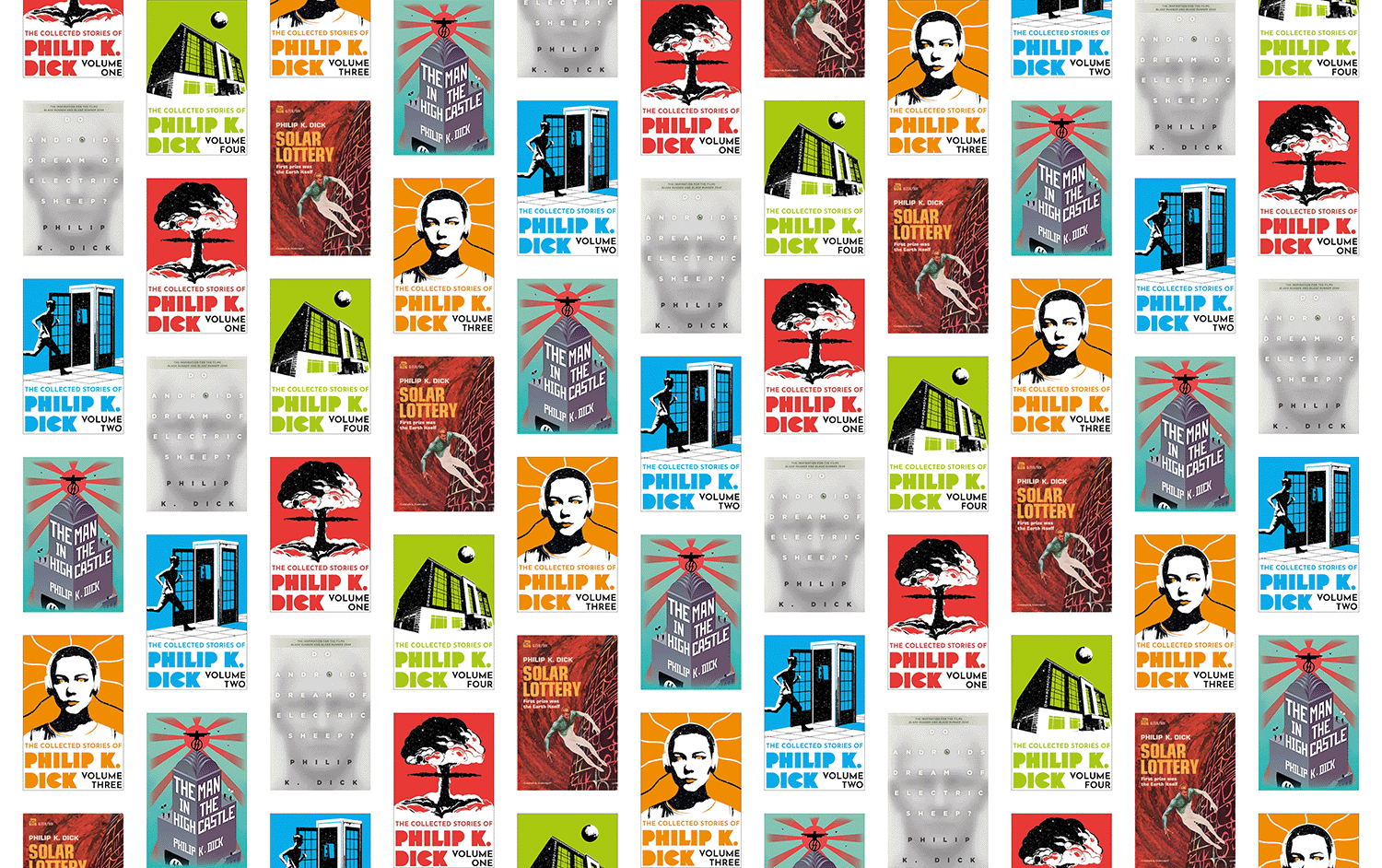
Philip K. Dick (PKD) is not merely an author; he is a persistent, iconic cultural force whose fingerprints are found on the most significant speculative narratives of the last half-century. From the neon-drenched dystopia of Blade Runner to the chilling, surveillance-heavy precognition of Minority Report, his creative output has shaped the visual and thematic language of modern cinema. Whether it is the alternate history of The Man in the High Castle, the paranoid schizophrenia of A Scanner Darkly, or the shifting identity landscapes of Total Recall, Dick’s concepts have permeated the public consciousness.
Yet, as is often the case with high-concept literature, these adaptations maintain a strained, often distant relationship with the source material. Hollywood frequently strips away the philosophical density of Dick’s prose to prioritize spectacle. However, even in their most bastardized forms, these films underscore the singular strength of PKD’s genius: the "Big Idea."
The Philosophy of the "Big Idea"
Science fiction has a long, storied history of grand concepts, but Philip K. Dick possessed an almost pathological ability to interrogate the most fundamental aspects of existence. His inquiries were not concerned with the technical minutiae of fusion reactors, the logistics of faster-than-light travel, or the mechanics of terraforming Mars. For Dick, the "how" and the "what" of science were merely launchpads.
Instead, his work focused on the "why" of human perception. He constantly wrestled with the most unsettling questions imaginable: What if we are not who we think we are? What becomes of the human soul when memories are synthesized or erased? What if reality itself is, in every measurable sense, a fabrication?
Dick’s fiction acts as a mirror, reflecting the fragility of our subjective truths. By stripping away the comfort of an objective reality, he forced his readers into a state of permanent ontological instability. This is why his work thrives in adaptation—the core concepts are so potent that they survive even when the nuance of his prose is discarded in favor of blockbuster action sequences. Why explore the crushing weight of existential despair when a studio can offer an iconic Arnold Schwarzenegger stunt instead?
Chronology and the Unappreciated Master
Despite his immense influence on cinema, Dick’s actual bibliography remains, quite unfairly, under-appreciated by the broader reading public. This is not entirely the fault of the film industry; rather, it is a byproduct of the challenging nature of his work.
Dick was a man who pushed ideas to the point of exhaustion, often spiraling into dense, recursive loops of logic. His narratives can twist like a child’s tangled Slinky, and they are—to be frank—frequently just as infuriating to unwind. For the reader who approaches his novels expecting the streamlined clarity of his film adaptations, the experience can be jarring. His prose is demanding, occasionally claustrophobic, and deeply cynical.
Yet, to ignore his books is to ignore the source of the modern zeitgeist. A chronological approach to his work reveals an author who was constantly iterating on the nature of control, authority, and identity. From his debut in the mid-1950s to his final, hallucinatory works in the early 1980s, Dick tracked the decline of the American Dream, replacing it with a landscape of corporate hegemony and technological malaise.
Supporting Data: The Pillars of Dick’s Canon
To understand Dick, one must engage with the works that best capture his transition from pulp science fiction to metaphysical exploration.
The Obvious Entry: Do Androids Dream of Electric Sheep?
Often mistakenly conflated with Ridley Scott’s Blade Runner, the novel is a vastly different beast. While the film is a masterclass in aesthetic world-building, the book is a gritty, existential noir. The term "blade runner" never appears in the text; it was borrowed by screenwriters from an entirely different author.
In the novel, the extinction of organic life makes the possession of a real animal the ultimate status symbol. Deckard is not a heroic archetype, but a cold, transactional bounty hunter. The novel’s true power lies in its challenge to the reader: in a world where empathy is a manufactured commodity, what does it actually mean to be human? It is a story about the tragedy of loss and the desperate, jealous love for a dying natural world.
The Masterpiece: The Man in the High Castle
Widely considered the definitive alternate-history novel, High Castle is an "alt-alt-history." Set in a post-WWII world where the Axis powers emerged victorious, the book focuses on a group of ordinary people living under the occupation of Imperial Japan and Nazi Germany.
The brilliance of the book lies in the inclusion of The Grasshopper Lies Heavy, a work of fiction within the novel that depicts a reality where the Allies won. This narrative layer forces the reader to question the stability of their own history. If reality can be forged, and if the "truth" is just another version of a story, then the entire foundation of our lives becomes suspect.
The Debut: Solar Lottery
While not as refined as his later works, Solar Lottery is essential for understanding the roots of Dick’s anti-authoritarianism. In a future where world leadership is decided by a random lottery and a "Quizmaster" is hunted by an officially sanctioned assassin, Dick crafts a satire of cold, bureaucratic rationality. It serves as a blueprint for the themes that would define his later career: the intersection of messianic figures, the corruption of institutions, and the struggle of the individual against an uncaring system.
Official Responses and Literary Impact
The literary community has long struggled to categorize Dick. During his lifetime, he was largely relegated to the "ghetto" of paperback science fiction. It was only after his death in 1982—coinciding with the release of Blade Runner—that critics began to recognize him as a preeminent philosopher of the 20th century.
Contemporary scholars often compare his work to that of Franz Kafka or Jorge Luis Borges. The "Dickian" quality—the sensation that the ground is shifting beneath your feet—has become a standard descriptor in literary criticism. Academic analysis frequently centers on his "VALIS" trilogy and his later non-fiction, which explored his own reported religious experiences. These works, while polarizing, have solidified his status as a visionary who saw the digital age coming long before the internet became a household utility.
Implications: The Legacy of a Visionary
Why should we read Philip K. Dick today? We live in an era of "deepfakes," algorithmic manipulation, and the erosion of shared reality—a world that feels increasingly like a PKD novel. His work was never just about space travel or robots; it was about the psychological toll of living in a world where you cannot trust your own eyes.
Dick’s legacy is not just in the films that have been made, but in the ones that are yet to be imagined. He taught us that the most frightening thing in the universe is not an alien invader, but the possibility that our own minds are being manipulated by forces we cannot see.
For the prospective reader, the advice remains the same: do not start with his most abstract, avant-garde experiments. Begin with the noir, move to the history, and then allow yourself to be led into the deep end. The journey into his work is not easy, and it is rarely comfortable, but it is necessary. To understand the future we are currently building, we must first understand the man who mapped the terrain of our modern disillusionment. Philip K. Dick did not just write science fiction; he wrote the manual for the 21st century.


 Nana Wu