Directed by: Steven Spielberg
Screenplay by: Michael Crichton and David Koepp
Based on the novel by: Michael Crichton
Starring: Sam Neill, Laura Dern, Jeff Goldblum, and Richard Attenborough
Would you go to Jurassic Park? It is a question that sits at the intersection of childlike wonder and existential dread. If the park were a tangible reality, offering a glimpse into the lives of breathing, non-avian dinosaurs, the allure would be nearly impossible to resist. For many, the prospect of a controlled safari through a prehistoric ecosystem represents the ultimate human achievement. Yet, the franchise itself serves as a cautionary tale—a philosophical muddle that pits our insatiable curiosity against the chaotic reality of nature. Despite this, the 1993 film remains an untouchable pillar of cinema, a work that manages to be simultaneously a warning and a dream.
A Genesis of Genetic Ambition
The path to the big screen began long before the cameras rolled in Hawaii. Michael Crichton, a polymath with a keen interest in the intersection of science and narrative, had been fascinated by the concept of genetic reclamation since the early 1980s. Initially, Crichton drafted a screenplay focused on the technical mechanics of cloning. However, he shelved the project, fearing that dinosaurs were already too pervasive in pop culture.

The "amusement park" angle—the pivot that turned a cold science-fiction premise into a high-stakes adventure—arrived when Crichton questioned the economic viability of such a venture. Who would fund the impossible? A theme park, he reasoned, would be the only way to monetize the astronomical costs of genetic engineering.
The literary journey was equally brisk. Crichton began writing the novel in 1988, finishing the manuscript in May 1990. Knopf released the book in October of that same year. Steven Spielberg, then scouting for his next blockbuster, famously acquired the rights after a heated bidding war, even before the novel hit bookstore shelves. While Malia Scotch Marmo and David Koepp contributed significantly to the screenplay, the core narrative—a clash between corporate hubris and biological reality—remained intact. Spielberg’s objective was clear: he wanted to craft a creature feature as iconic and visceral as his 1975 masterpiece, Jaws.
The Technical Paradigm Shift
The production of Jurassic Park is perhaps one of the most thoroughly documented in film history, yet the sheer scale of its technical ambition often overshadows the nuance of its craft. The film is frequently cited as the catalyst for the digital revolution in cinema, but it is important to clarify that Spielberg did not set out to replace practical effects. The initial mandate was a hybrid approach: life-sized animatronics and stop-motion animation, augmented by CGI.

The Art of the Animatronic
Stan Winston, a titan of special effects whose work on The Terminator and Aliens had set the industry standard, was tasked with bringing the dinosaurs into the physical world. The creation process was exhaustive. Concept artist Mark "Crash" McCreery worked alongside paleontologists like Jack Horner and paleoartists like John Gurche to ensure the designs were grounded in the best available science of the early 1990s.
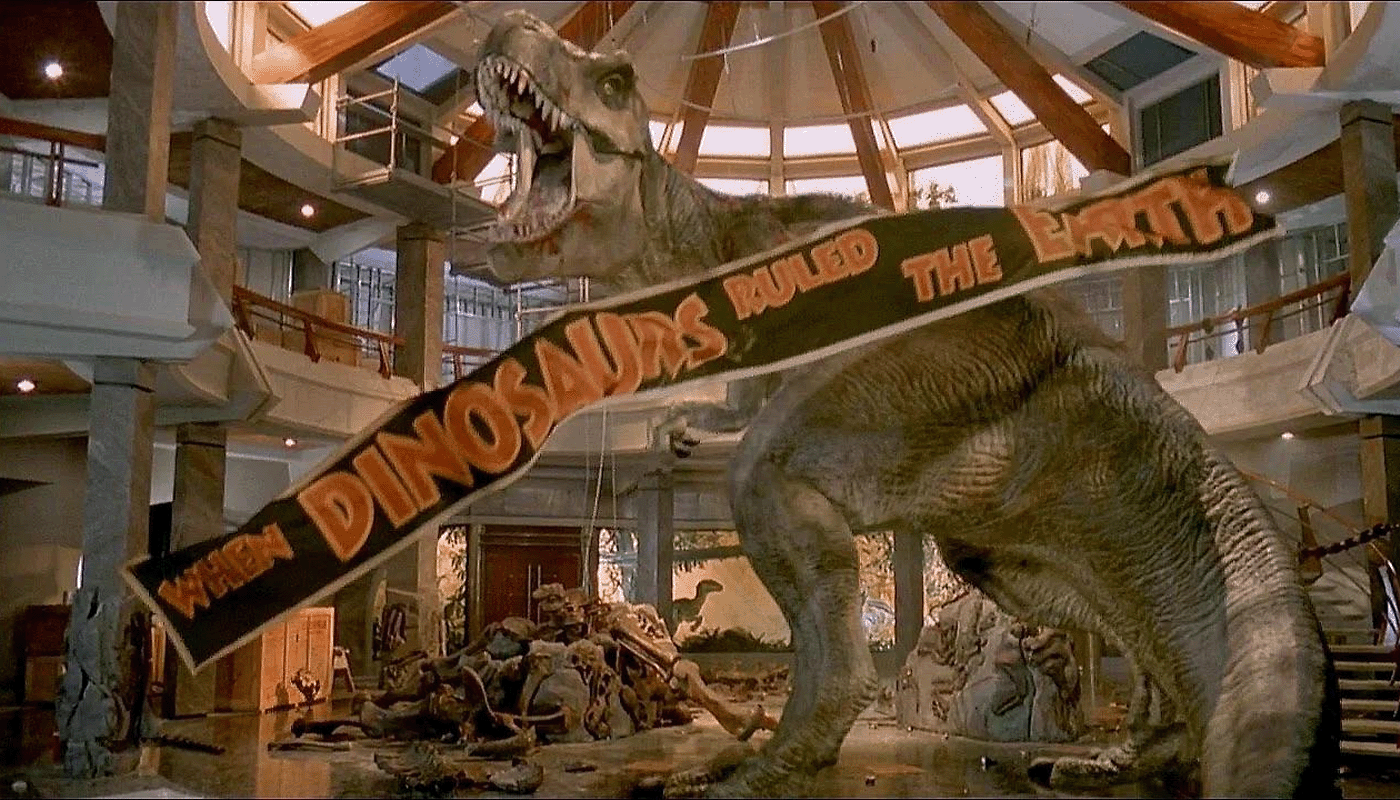
To achieve the necessary scale, the team utilized a complex hydraulic system. Because standard computer-programmed animatronics lacked the fluidity required for an interactive film set, Winston’s team developed a performance-capture system. Human operators essentially "drove" the animatronic dinosaurs, allowing for real-time movement that could react to the actors. The T. rex, a 18-foot-tall, 36-foot-long marvel of engineering, was a nightmare of maintenance—particularly during the rain-drenched set pieces where the foam skin acted like a sponge, necessitating frequent drying between takes.
The Digital Revolution
The transition to computer-generated imagery (CGI) was born of necessity. When the planned stop-motion dinosaurs for the Gallimimus stampede proved insufficient, Dennis Muren and his team at Industrial Light and Magic (ILM) pushed the boundaries of digital animation. The test animation of a T. rex skeleton—a move that famously caused Spielberg and producer Kathleen Kennedy to leap to their feet in shock—proved that digital creatures could convey weight, mass, and personality.

To marry this new technology with the existing practical effects, the team utilized "Dinosaur Input Devices" (DIDs). These were physical models that allowed stop-motion legend Phil Tippett to "perform" the dinosaur movements, which were then translated into data for the CGI animators. This seamless integration of physical weight and digital agility is the reason Jurassic Park remains visually stunning thirty years later.
Implications and Industry Legacy
The success of Jurassic Park was not just commercial; it was a watershed moment for the art of filmmaking. It proved that CGI could be used to create characters that were not just impressive spectacles, but narrative engines capable of driving emotion and fear. The film arrived at a time when audiences were ready for a new kind of cinematic realism, and it delivered with such precision that it redefined the expectations for blockbuster cinema.
However, the film also sparked a broader conversation about the ethics of technological advancement—a theme that remains as relevant today as it was in 1993. The "mad science" depicted in the film is, in many ways, an extension of the Frankensteinian tradition: the pursuit of power without an understanding of the consequences.

A Seasonal Look at Mad Science
In the spirit of Jurassic Park’s exploration of scientific hubris, we invite you to join us this September as we examine the history of "mad science" in film. From the iconic, pre-Code terror of Boris Karloff’s Frankenstein to the tragic, transformative body horror of The Fly, our upcoming series explores the boundaries of human knowledge and the devastating price of crossing them.
September Screening Schedule:
- September 2: Frankenstein (1931) – The definitive look at the consequences of playing God.
- September 9: Island of Lost Souls (1932) – An adaptation of H.G. Wells that remains as disturbing as it is influential.
- September 16: Eyes Without a Face (1960) – A haunting French masterpiece regarding medical obsession.
- September 23: Re-Animator (1985) – A darkly comedic, gore-soaked dive into the pursuit of life after death.
- September 30: The Fly (1958 & 1986) – A double feature exploring the intersection of technology and biology.
Conclusion: The Enduring Awe
Jurassic Park is a film that balances the intellectual with the visceral. It acknowledges the tragedy of extinction while celebrating the majesty of life. It is a movie that invites us to imagine the impossible, only to remind us that some doors, once opened, cannot be shut. Whether you are a fan of the technical innovation or the philosophical questions it raises, the park remains open for business, ready to surprise us with the same wonder we felt in 1993.
As we look back at this cinematic landmark, we are reminded that, like the scientists on Isla Nublar, we are often too preoccupied with whether we could do something that we fail to ask if we should. And yet, we keep watching. Because, just like the audience, we can’t help but want to see the dinosaurs.