

In the modern living room, the streaming stick has become a ubiquitous gateway to entertainment. Compact, affordable, and seemingly simple, devices like the Amazon Fire TV Stick have replaced traditional cable boxes for millions of households. However, unlike a television or a sound system, which are often viewed as decade-long investments, streaming sticks occupy a nebulous space in the consumer electronics market. Users frequently find themselves asking: When does a perfectly functional device become an obsolete piece of e-waste?
While Amazon does not print an "expiration date" on its packaging, the reality of hardware lifespans is governed by a complex interplay of security support, software requirements, and evolving video standards. Understanding this lifecycle is essential for consumers looking to balance cost-efficiency with a seamless viewing experience.
Main Facts: The Lifecycle of a Streaming Device
There is no single "death date" for a Fire TV Stick. Unlike food, which has a clear point of spoilage, a streaming device typically suffers from a slow degradation of utility rather than a sudden catastrophic failure.
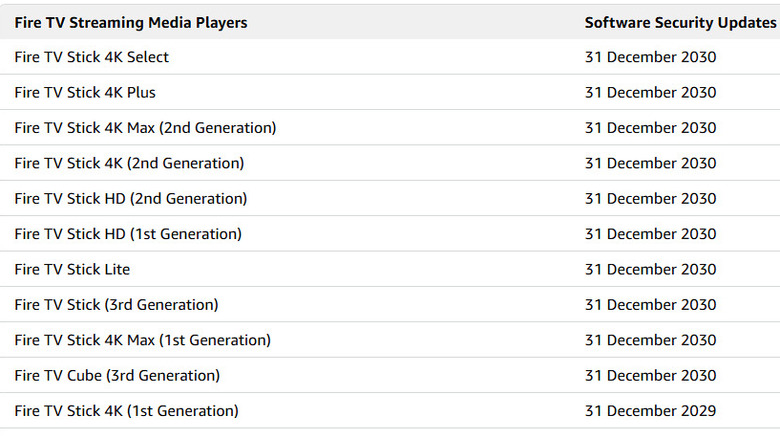
At the core of the longevity discussion is the distinction between security support and functional viability. Amazon explicitly guarantees security updates for at least four years from the date a device is purchased new from an authorized seller. For newer models, such as the Fire TV Stick 4K Select and the 4K Plus, these updates are currently guaranteed through at least December 31, 2030.
However, the end of security support does not mean the device will immediately cease to function. It simply means the hardware will no longer receive critical patches against emerging cybersecurity threats. Many users continue to operate devices well beyond this window, but doing so increases exposure to potential vulnerabilities, especially if the device is connected to a home network containing sensitive personal data.
Chronology: From Launch to Legacy
To understand the lifespan of a Fire TV Stick, one must look at the historical trajectory of the hardware. The original Fire TV and Fire TV Stick launched in 2014, marking the beginning of Amazon’s aggressive push into the streaming dongle market.
For over a decade, these devices served as the primary interface for millions. It wasn’t until June 2025 that major platforms like Netflix officially discontinued support for those first-generation devices. This timeline reveals a critical truth: a streaming stick can theoretically remain useful for over a decade, provided that the app developers—such as Netflix, Disney+, and YouTube—continue to optimize their software for older, lower-powered processors.
The "death" of a device usually occurs in a multi-stage process:
- The Software Lag Phase: As streaming apps add more features, they require more system resources. Older hardware begins to stutter, menus become sluggish, and load times increase.
- The Codec Incompatibility Phase: New video standards emerge. Technologies like AV1 and H.265/HEVC allow for higher-quality video at lower bandwidths. If a device lacks the hardware decoding capabilities for these codecs, it may be unable to play modern 4K or high-bitrate content.
- The Sunset Phase: Major streaming services determine that the cost of maintaining support for an aging, low-market-share device is no longer justified, resulting in the termination of app support.
Supporting Data: Hardware Demands and Memory Pressure
One of the most frequent misconceptions is that a Fire TV Stick’s processor is the primary bottleneck. In reality, the most common culprit behind a "slow" Fire TV experience is memory pressure.
Modern applications are resource-heavy. They require significant RAM to keep the user interface fluid and the video stream buffered. Amazon’s current lineup, including the 4K Select and 4K Plus, offers varying memory capacities—typically 1GB to 2GB. While a 1GB device might handle basic tasks with ease today, it is significantly more susceptible to "memory pressure," where the system is forced to kill background processes or reload apps entirely because it lacks the capacity to keep them in active memory.
Investing in a higher-tier device—such as moving from a 1GB model to a 2GB model—acts as a hedge against future software bloat. For an additional $10 to $20, users are effectively buying "headroom," allowing the device to remain performant as streaming applications inevitably grow in complexity over the next few years.
Official Responses and Maintenance Strategies
Amazon’s official stance emphasizes that a sluggish device is not necessarily a broken one. Before rushing to the store for an upgrade, Amazon encourages users to perform a series of maintenance tasks that can often restore a device to its original responsiveness:
- System Maintenance: Regularly restarting the device clears out temporary cache files that accumulate over time.
- Storage Management: Streaming devices have limited onboard storage. Clearing the cache for individual apps or uninstalling unused applications can significantly improve performance.
- Power Optimization: Many users unknowingly suffer from performance issues caused by insufficient power. If a Fire TV Stick is plugged into a TV’s USB port rather than using the provided wall adapter, the device may not receive consistent voltage, leading to unexplained reboots and throttling.
- Network Troubleshooting: As streaming bitrates increase, older Wi-Fi standards (like 802.11n) may struggle to keep up with modern 4K demands. Ensuring the device is on a 5GHz or Wi-Fi 6 network can resolve perceived "hardware" issues that are actually network bottlenecks.
Implications: When Should You Actually Upgrade?
Deciding when to replace your Fire TV Stick is a subjective exercise in balancing patience with performance. If you are experiencing frequent app crashes, persistent sluggishness that survives a factory reset, or if a critical service you use daily has dropped support for your specific generation, it is time for an upgrade.
However, the "four-year" mark should be viewed as a milestone for evaluation rather than an automatic retirement notice.
The Financial Perspective
Given the relatively low entry price of these devices—often falling between $40 and $50—the cost of ownership is remarkably low when amortized over four years. Even if a user replaces their device every four years, the cost is roughly $10 per year, or less than a dollar a month. This makes the Fire TV ecosystem one of the most cost-effective ways to modernize an aging television.
The Sustainability Perspective
While it is tempting to upgrade every time a new, faster processor is released, consumers should consider the environmental impact of e-waste. If your current stick is still receiving security updates and handles your streaming needs without excessive frustration, there is little technical reason to replace it. A "good enough" device is, in many ways, the most sustainable choice.
Conclusion: A Shift in Expectation
The Fire TV Stick has matured from a novel accessory into a core piece of home infrastructure. As the industry moves toward more complex video encoding and more sophisticated UI designs, the hardware requirements will continue to shift.
Ultimately, the lifespan of your Fire TV Stick is determined as much by your personal tolerance for minor latency as it is by Amazon’s support window. By performing regular maintenance, utilizing proper power sources, and understanding the limitations of your specific hardware generation, you can extend the life of your device well beyond the four-year mark. When the time eventually comes to upgrade, prioritize models with higher RAM capacities to ensure your next investment provides the longest possible runway in an ever-evolving digital landscape.











