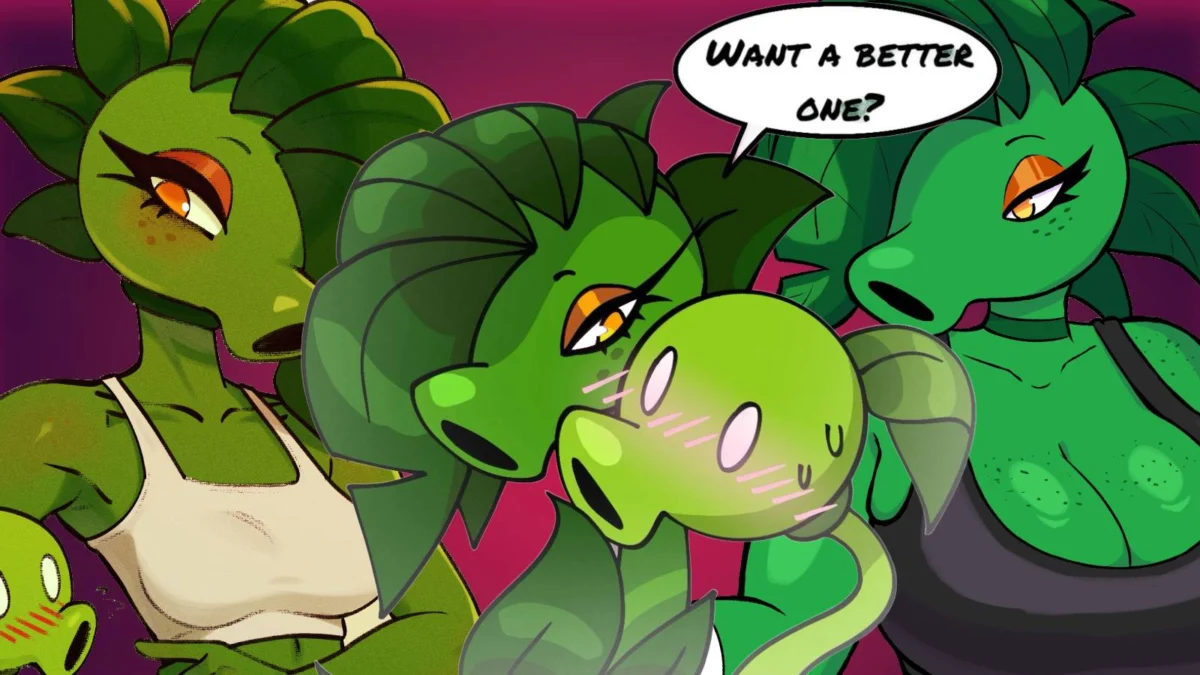
In the vast, decades-spanning history of Plants vs. Zombies, few characters have managed to capture the collective consciousness of the internet quite like the franchise’s iconic Peashooter. Yet, in a bizarre turn of events that underscores the unpredictable nature of viral content, the spotlight has shifted away from the original garden defenders. A fan-artist by the name of LeafPaw has inadvertently sparked a global frenzy by introducing an original character: "PeaBlaze," a flirtatious, anthropomorphic botanical entity that has become the latest obsession for the PvZ community.
What began as a simple four-panel comic has spiraled into a cross-platform cultural movement, drawing in millions of views and reigniting interest in a franchise that recently saw a resurgence with the 2025 release of Plants vs. Zombies: Replanted. As fans demand more content and artists flock to depict this new "baddie," we examine how a single piece of fan art transformed the landscape of a beloved tower-defense series.
A Chronicle of the Viral Spark
The phenomenon traces its origins to August 26, 2026. LeafPaw, a digital artist known for their creative interpretations of gaming characters, uploaded a brief comic to X (formerly Twitter) with the simple, evocative caption: "He got an upgrade."
The narrative of the comic is intentionally melodramatic, playing on common tropes found in visual novels and teen dramas. The sequence begins with the classic Peashooter witnessing his long-time companion, Sunflower, being swept away by another, more successful Peashooter. The protagonist stands in the rain, a picture of botanical desolation. However, the tone shifts abruptly when a new character—PeaBlaze—enters the frame. With a sultry gaze and a suggestive proposition, she approaches the dejected hero, asking, "He took your girl, what a shame. Want a better one?"
The reaction was instantaneous. Within the first seven days, the comic transcended the typical boundaries of niche gaming fan art. It accumulated over 25 million views, 175,000 likes, and 46,000 bookmarks. The speed at which the content traveled—aided by the inherent humor of applying human romantic tropes to cartoon garden flora—cemented PeaBlaze as a viral icon.
The Anatomy of an Obsession: Supporting Data
To understand why PeaBlaze captured the internet’s attention, one must look at the data and the shift in fan engagement. Before this comic, Plants vs. Zombies fan art focused primarily on the aesthetic purity of the game’s design—the cute, sturdy nature of the plants. PeaBlaze, however, introduced a layer of "character personality" that was previously absent.
The Rise of Anthropomorphism
The viral spread is largely attributed to the character’s design evolution. While LeafPaw’s original comic maintained a semi-faithful, albeit stylized, look, the community took the concept further. On platforms like DeviantArt and X, the character was quickly reimagined with exaggerated, humanoid proportions. This transition from a "cute plant" to a "baddie" archetype triggered a surge of interest that bridged the gap between gaming fandom and the broader internet subculture.
Quantitative Engagement
The metrics associated with the character are staggering for a non-official IP addition:
- X (Twitter): 25M+ impressions in the first week.
- Reddit: A single repost in a major gaming subreddit garnered over 2,300 upvotes within 48 hours, with comment threads spanning hundreds of replies debating the "lore" of the character.
- Search Trends: Queries related to "PeaBlaze" and "PvZ fan art" spiked by over 400% in the days following the comic’s release.
The Industry’s Silent (and Not-So-Silent) Response
The speed at which a fan-made character can infiltrate the public consciousness poses a unique challenge for corporations. In this instance, the corporate reaction was surprisingly playful. Youtooz, the collectible manufacturer known for leaning into internet culture, responded directly to LeafPaw’s comic with an image of a stunned zombie.
This interaction is significant. It signals a shift in how modern gaming companies view fan-generated content. Instead of issuing takedown notices or ignoring the trend, Youtooz chose to acknowledge the momentum, effectively legitimizing the character in the eyes of the fanbase. When a company with the licensing reach of Youtooz engages with a fan-made character, it often creates a "halo effect," where the character gains a sense of permanency that mere fan art cannot provide.
The Implications of the "PeaBlaze" Effect
The viral success of PeaBlaze is not just a story about a cute character; it is a case study in the power of "shipping" and character-driven narratives in gaming.
1. The Power of Character-Driven Engagement
Historically, Plants vs. Zombies has been defined by its mechanics—the strategy, the defense, the waves of zombies. The PeaBlaze phenomenon proves that the audience is craving a narrative layer. By injecting a sense of interpersonal drama into the static world of the game, LeafPaw tapped into a dormant desire for character development among the player base.
2. The Blurred Lines of Intellectual Property
The situation also highlights the evolving relationship between developers and the fan-art community. The ease with which users have created fan-fiction, "humanoid" versions, and even requests for spin-offs shows that fans are no longer content to be passive players. They are active participants in world-building. For the developers of Plants vs. Zombies: Replanted, this poses an interesting question: do they incorporate these fan-driven tropes into future updates to maintain engagement, or do they maintain the franchise’s established tone?
3. The "Baddie" Archetype in Gaming
The internet’s reaction to PeaBlaze also reflects a broader trend of "humanizing" non-human characters. By applying traits associated with "femme fatale" characters to a plant, the community demonstrated how quickly they can shift a franchise’s identity. The suggestive nature of the response—ranging from lighthearted memes to more intense romantic fan-fiction—has turned the character into an instant internet obsession, proving that the right design at the right time can turn any IP into a lightning rod for creative expression.
Future Outlook: A New Era for PvZ?
As LeafPaw polls their followers on whether the comic should become a serialized story, the question of longevity remains. Can a singular viral moment sustain a long-term following?
If the current trajectory is any indication, the answer is a resounding "yes." The community has already begun to treat PeaBlaze as a part of the PvZ expanded universe. Artists are creating "crossover" art, writers are penning dialogue, and there is even a growing demand for the character to be featured in future official game patches or as a mod.
The story of PeaBlaze is a testament to the modern digital era—a time when a single artist with a tablet and a clever idea can shift the focus of a global gaming community in an afternoon. Whether or not PeaBlaze is ever officially canonized by the developers, she has already achieved a form of immortality in the digital halls of gaming history. She stands as a reminder that the most powerful force in gaming is not the engine or the graphics, but the imagination of the people who play the game.
For now, the world of Plants vs. Zombies remains a little brighter—and perhaps a little more complicated—thanks to a flower with a little bit of sass and a whole lot of internet momentum. As fans continue to clamor for "10 seasons and a movie," one thing is clear: the garden will never be the same.