

For decades, the living room has been dominated by the television. From the bulky CRT boxes of the 20th century to the sleek, paper-thin OLED panels of today, the TV has been the undisputed king of home entertainment. However, a quiet revolution is taking place. As consumer demand for "cinematic immersion" reaches an all-time high, the gap between the television and the modern projector is closing—and in terms of pure value and screen real estate, the projector is not just catching up; it is pulling ahead.
If you are currently debating how to outfit your home theater, the choice has never been more complicated. With 75-inch TVs plummeting in price and laser-based projectors achieving unprecedented brightness and color fidelity, the old arguments—that projectors are too dim or too difficult to set up—are rapidly becoming obsolete.
Main Facts: The Core of the Comparison
The fundamental difference between a TV and a projector lies in how they deliver light to your eyes. A television is a direct-view display; it is an active light source. A projector, by contrast, is a reflective medium. It bounces light off a screen or wall, which inherently changes the viewing experience.
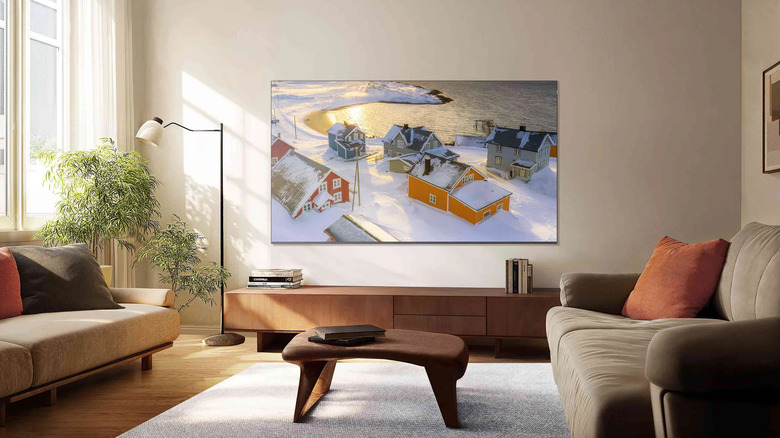
The primary argument for the projector is, and always has been, scale. While a 98-inch or 115-inch television is technically possible, it is a logistical nightmare and a financial black hole. A 115-inch Mini-LED TV can cost upwards of $13,000, and once it is on your wall, it stays there—a massive, black monolith that dominates your decor even when powered off.
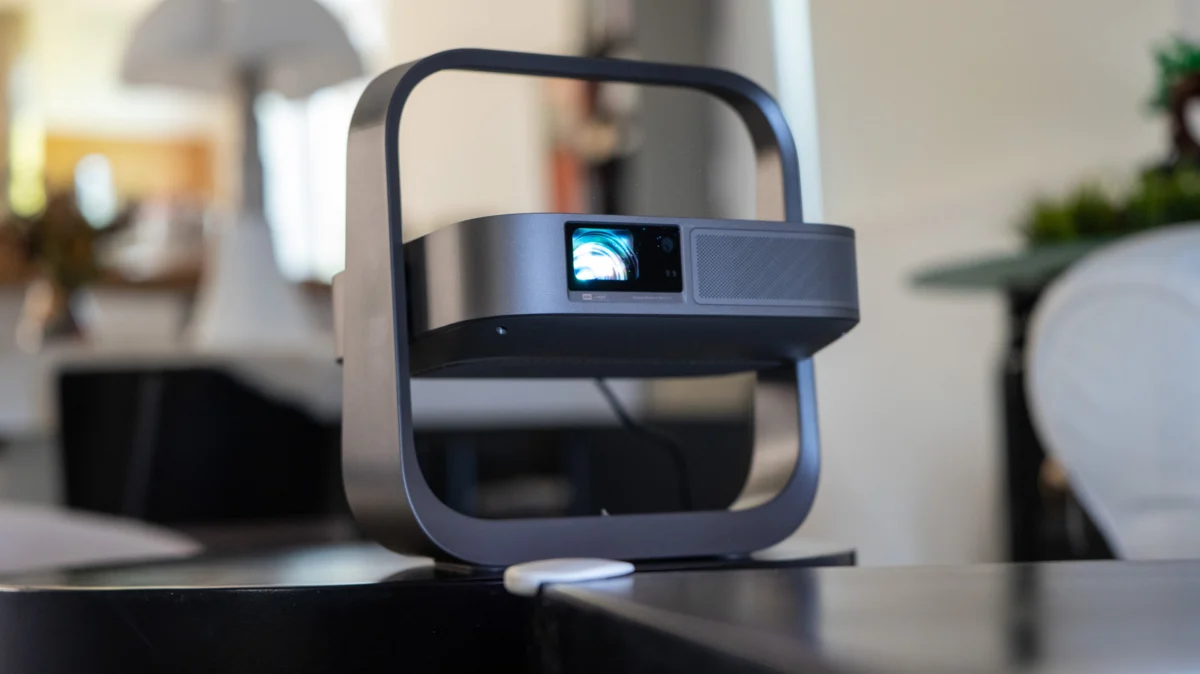
Conversely, a high-end laser projector can easily beam a 120-to-300-inch image. For the price of a mid-range 75-inch TV, you can secure a projection setup that offers a theater-sized canvas, superior color accuracy, and the ability to "disappear" when not in use.
Chronology: The Evolution of the Home Theater
The rivalry between these two technologies has evolved in distinct phases:
- The CRT Era (1980s–2000s): Projectors were expensive, fragile, and required dim bulbs that faded quickly. TVs were limited to 36 inches or less.
- The Flat-Panel Revolution (2005–2015): LCD and Plasma TVs made 50-to-60-inch screens the standard. Projectors remained a niche for hobbyists who had dedicated, light-controlled basement rooms.
- The 4K and Laser Inflection Point (2016–2022): The introduction of 4K pixel-shifting technology and solid-state laser light engines solved the "maintenance" issues of projectors. They no longer needed bulb changes every 2,000 hours and could sustain brightness for years.
- The Modern Era (2023–Present): With the arrival of triple-laser engines, projectors can now hit 110% of the BT.2020 color gamut, surpassing the capabilities of many high-end OLED displays. Simultaneously, "Ultra-Short Throw" (UST) projectors allow users to place a device just inches from a wall, mimicking the convenience of a traditional TV console.
Supporting Data: By the Numbers
The Price-to-Size Ratio
The economics of the large-screen market are heavily skewed in favor of projection.
- 75-inch TV: Entry-level models hover around $500, with high-end Mini-LEDs reaching $1,500.
- 100-inch TV: The price jump is exponential. Quality models rarely dip below $2,000, and premium versions quickly escalate to $5,000+.
- Projector (The 120-inch+ Advantage): A high-quality 4K laser projector can be acquired for $1,700 to $3,500. When paired with a $500 motorized screen, you achieve a screen size that would cost three to five times more in a television format.
The Brightness Paradox
TV manufacturers often tout "nits" (a measure of screen brightness). A high-end OLED or Mini-LED TV can push 2,500 to 4,000 nits. While this is impressive, it is often excessive for a home environment. Viewing a 4,000-nit screen in a dark room can actually cause eye fatigue—a phenomenon often compared to staring at a digital billboard.
Projectors generally output 2,000 to 5,000 ANSI lumens, which translates to roughly 160 to 280 nits on a 120-inch screen. This provides a more "filmic" look, closer to the 75-nit standard of commercial IMAX theaters. It is bright enough to be vivid, yet soft enough to be watched for hours without strain.
Official Perspectives and Industry Insights
Industry experts are increasingly divided based on the intended use case. According to advocates at Viewsonic, the shift toward direct-view LED TVs has raised concerns about "Blue Light" exposure. They argue that because projectors reflect light, they are inherently more natural for the human eye, reducing the physiological impact of long-form viewing.
However, manufacturers like TCL and LG maintain that the "Brightness Advantage" of TVs is essential for modern living. Their argument is that in a room with windows or ambient light, a projector will always struggle to maintain contrast. "A projector is a cinema experience," one industry representative noted. "A TV is an anytime, anywhere experience."
The Implications for the Modern Consumer
1. Space and Aesthetics
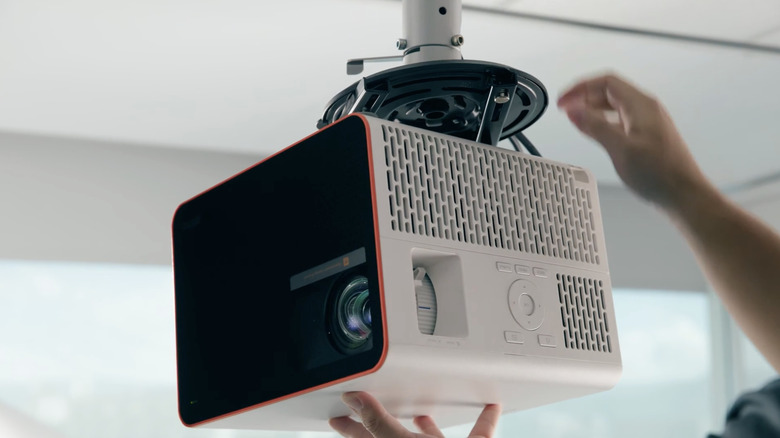
The "invisible" home theater is a major selling point for projectors. In small apartments, such as those found in dense urban centers like Paris or New York, a 100-inch TV is an architectural obstacle. A motorized roll-down screen, combined with a ceiling-mounted or shelf-based laser projector, allows a 300-square-foot room to transform into a cinema at night and a clean, minimalist living space by day.

2. Gaming and Refresh Rates
For years, projectors were considered unsuitable for competitive gaming due to input lag. This has changed. Modern projectors, such as the BenQ X3100i, now offer 240Hz refresh rates and input lag as low as 4.2ms. While they may not hit the 120Hz/4K throughput of the absolute best OLEDs, the sheer scale of the display offers a level of immersion that a 55-inch monitor simply cannot replicate.
3. The Outdoor Factor
A significant implication of modern portable projection technology is the ability to break the fourth wall of the home. Because many new laser projectors are compact, users can take them to a backyard, a camping site, or a friend’s house. You cannot easily transport a 98-inch television, but you can throw a 4K projector into a backpack and have a 100-inch screening under the stars.
Conclusion: Which Path Should You Choose?
The debate between the TV and the projector is no longer about which technology is "better" in a vacuum; it is about the nature of your viewing habits.
Choose a TV if:
- You do the majority of your watching during the day in a room with significant natural light.
- You prioritize "True 4K" or 8K sharpness above all else.
- You have limited space and prefer the convenience of a plug-and-play unit that doesn’t require a separate screen or light control.
Choose a Projector if:
- You are a cinephile who prioritizes the "theatrical" experience.
- You want a screen size of 100 inches or larger without spending the price of a used car.
- You have a dark or light-controlled room where you can optimize the viewing environment.
- You value a clutter-free living space where the technology remains hidden until it is showtime.
Ultimately, we are living in a golden age of display technology. Whether you opt for the piercing brightness of a Mini-LED TV or the soft, massive immersion of a triple-laser projector, the consumer wins. The "Big Screen" dream, once reserved for the wealthy elite with custom-built basements, is now accessible to almost anyone willing to make the jump.











