

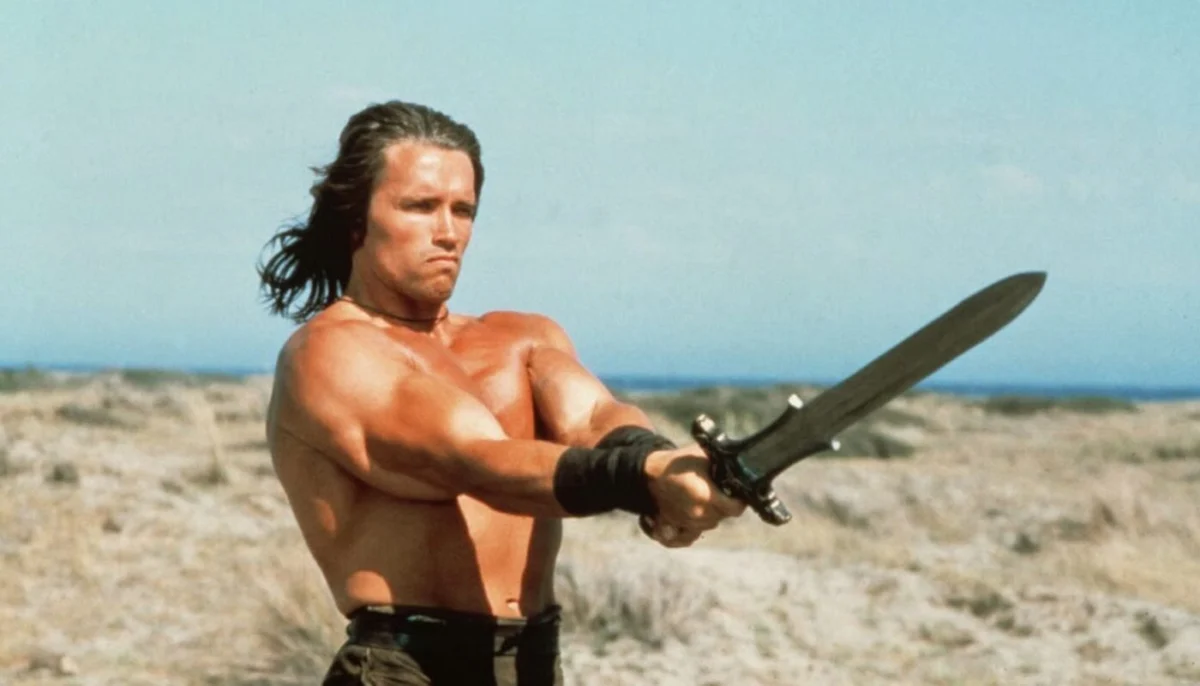
The 1980s represent a distinct epoch in the history of fantasy cinema—a decade where the genre was raw, experimental, and often unburdened by the polished, high-budget CGI aesthetics that would define the blockbuster fantasy of the early 2000s. While many of these films have faded into obscurity, some have transcended their "cult classic" status to become fundamental pillars of pop culture. Among them, John Milius’s 1982 masterpiece, Conan the Barbarian, stands as the definitive cinematic ur-text for the sword-and-sorcery subgenre. It is a film that transformed a former Austrian bodybuilder into a global icon and redefined the scope of heroic fantasy on screen.
The Genesis of a Barbarian: Production and Narrative Foundation
Produced by the legendary Dino and Raffaella de Laurentiis and directed by the uncompromising John Milius, Conan the Barbarian is not a direct adaptation of any single Robert E. Howard short story. Instead, it is a mosaic, synthesizing the spirit of Howard’s pulp fiction—and the iconic comic book interpretations that followed—into a cohesive, mythic origin story.
The film follows Conan, the son of a Cimmerian blacksmith, whose childhood is shattered by the annihilation of his village at the hands of a mysterious group of raiders. Following the slaughter of his parents, Conan is subjected to years of brutal enslavement, eventually evolving into a formidable pit fighter and "breeder." This foundational trauma drives his singular, lifelong quest for vengeance.
Upon gaining his freedom, Conan crosses paths with the enigmatic witch who prophesies his future as a king. His journey leads him to form an alliance with the archer Subotai, played by surfing legend Gerry Lopez, and the fierce brigand Valeria, portrayed with steely grace by Sandahl Bergman. Together, these three engage in a life of high-stakes larceny, eventually drawing the ire of the charismatic cult leader Thulsa Doom—the man who murdered Conan’s parents.
The narrative reaches a crescendo when the trio is hired by King Osric of Zamora (Max von Sydow) to rescue his daughter, Yasmina, from the influence of Doom’s snake-worshipping cult. What follows is a tragic, visceral odyssey of death, resurrection, and the eventual dismantling of a fanatical regime.
Chronology of the Barbarian’s Rise
To understand the film’s impact, one must look at the timeline of its production and its subsequent cultural ripples:
- 1982: Conan the Barbarian premieres, grossing nearly $80 million against a $20 million budget. It polarizes critics but captures the public imagination.
- 1984: The direct sequel, Conan the Destroyer, is released, shifting the tone toward a more conventional fantasy adventure.
- 1985: The spin-off Red Sonja arrives, further cementing the "sword and sorcery" boom initiated by Milius’s vision.
- 1997–2011: A series of spiritual successors and remakes, including Kull the Conqueror (1997), Solomon Kane (2009), and the Jason Momoa-led Conan (2011), attempt to recapture the original’s lightning.
- Present Day: The film remains a touchstone in discussions regarding fantasy tropes, practical effects, and the evolution of cinematic masculinity.
Supporting Data: The Craft of the Hyborian Age
The critical reception of Conan the Barbarian was initially lukewarm, with many mainstream reviewers of the era dismissing it as a "brainless" display of violence. However, modern re-evaluation reveals a sophisticated technical achievement.
The film’s score, composed by the late Basil Poledouris, is widely considered one of the greatest in the history of cinema. Its thunderous, operatic swells elevated the film from a standard action flick to a Wagnerian epic. Furthermore, the visual language—the stark, earthy palettes and the brutalist architecture—provided a grounded, "lived-in" feeling that many modern fantasy films struggle to replicate.
The casting also proved to be a stroke of genius. Arnold Schwarzenegger, though early in his career, provided a physical presence that few actors could match. Under Milius’s direction, Schwarzenegger’s limited dialogue allowed his physicality to convey a complex range of emotions, from stoic grief to sardonic humor. James Earl Jones, as Thulsa Doom, offered a chillingly intellectual antagonist. His portrayal of the cult leader as a weary, arrogant manipulator remains one of the most effective villain performances in genre history.
Challenging the Myths: A Nuanced Look at Masculinity
Perhaps the most compelling argument for the endurance of Conan the Barbarian lies in its subversion of the "macho" tropes typically associated with the genre. While the film is often lumped into the category of "lizard-brained" testosterone-fueled violence, a closer reading suggests a much more nuanced depiction of strength and relationships.
Consider the role of Valeria. In many 1980s fantasy films, female characters served as little more than decorative props or damsels in distress. Bergman’s Valeria, however, is a formidable, autonomous warrior who functions as an equal to Conan. Their romance is built on mutual respect and shared competence, and her sacrifice is a central turning point that informs Conan’s ultimate moral victory.
Moreover, Conan himself is not a one-dimensional killing machine. His famous line—"To crush your enemies, see them driven before you, and to hear the lamentations of their women"—is frequently cited by those who view the film as a celebration of brutality. Yet, within the narrative, these words are revealed to be the indoctrinated philosophy of a slave. By the end of the film, Conan has outgrown the nihilism of his oppressors. He is a character who values loyalty, friendship, and, ultimately, the protection of the innocent over the raw, unchecked power that Thulsa Doom embodies.
Implications: The Lasting Legacy of the Sword
The cultural footprint of Conan the Barbarian is impossible to overstate. It birthed a cinematic aesthetic that dominated the mid-80s, influencing everything from television’s Xena: Warrior Princess to the development of tabletop RPGs like Dungeons & Dragons’ "Dark Sun" setting.
Beyond the screen, the film has found a strange, recurring life in political and social discourse. The most surreal instance occurred in the wake of the January 6th, 2021, attack on the U.S. Capitol, when Arnold Schwarzenegger released a video message comparing the threats to American democracy to the scars of his own past. He held the very sword he wielded in the 1982 film, effectively bridging the gap between his role as a fictional Cimmerian king and his real-world persona as a defender of democratic ideals.
In the final analysis, Conan the Barbarian is far more than the sum of its muscle and steel. It is a testament to the power of myth-making. While the film’s opening Nietzsche quote—"That which does not kill us makes us stronger"—is often treated with a degree of irony today, the film itself remains a resilient piece of art. It has survived the cycles of critical derision and the passage of four decades, emerging as a surprisingly thoughtful, visually stunning exploration of what it means to be a hero in a world that thrives on cruelty.
As we continue to navigate a modern landscape of sanitized, high-gloss fantasy, the grit and grounded humanity of John Milius’s vision serve as a vital reminder: sometimes, the most profound stories are found in the mud, the blood, and the echoes of the ancient, unforgiving past. Whether you view it as a campy relic of a bygone era or a masterwork of sword-and-sorcery storytelling, the shadow of the Cimmerian continues to loom large over the genre, reminding us that true strength is not found in the crushing of one’s enemies, but in the choices one makes when the blade is finally put to rest.










