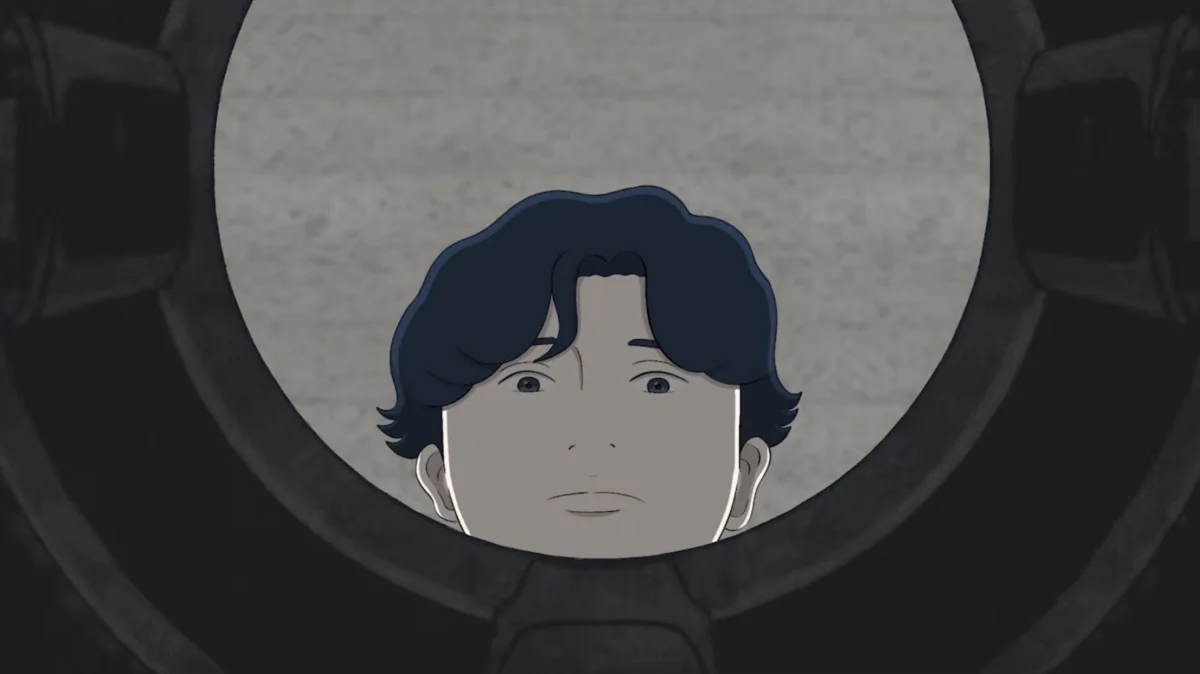
In the evolving landscape of North American cinema, the distribution of Japanese animation has undergone a seismic shift. Once relegated to niche festivals or the dusty shelves of specialty video stores, anime now commands prime real estate in mainstream multiplexes. Yet, even as blockbusters like Demon Slayer or the latest Studio Ghibli features dominate the box office, a curious anomaly has emerged: Jinsei.
A singular, intensely personal project by first-time filmmaker Ryuya Suzuki, Jinsei is currently defying conventional industry logic. While it arrives with a limited opening at New York’s IFC Center on June 5, it is slated for a nationwide expansion across more than 100 theaters by June 12. In an industry where major studio productions often fight for screens, the arrival of such an uncompromisingly idiosyncratic indie film in mainstream theaters suggests that the gatekeepers of film distribution are finally loosening their grip—or perhaps, simply betting on the sheer curiosity of the modern cinephile.
A Historical Shift in Distribution
To understand the significance of Jinsei’s reach, one must look at the historical ceiling for independent anime in North America. For decades, the "limited release" was a rigid barrier. Satoshi Kon, arguably the most visionary director in the medium’s history, never saw a single one of his films surpass 37 screens during his lifetime.
Even the titans of the industry faced these constraints. Studio Ghibli’s 2014 masterpiece, The Tale of the Princess Kaguya, was a critical darling and an Oscar nominee, yet it was restricted to a mere 29 screens during its initial North American rollout. Perhaps most tellingly, Mamoru Hosoda’s Summer Wars—a film that remains one of the most accessible and crowd-pleasing entries in the medium—maxed out at 11 theaters in 2010. While many of these films have since enjoyed successful, wider theatrical re-releases as their reputations grew, their initial runs were humble.
Jinsei’s footprint is, by comparison, massive. It is arguably the least "mainstream-friendly" anime feature to ever achieve this level of exposure. Its presence in over 100 theaters isn’t just a win for independent creators; it is a declaration that the audience for non-commercial animation has finally reached a critical, sustainable mass.
The Production Odyssey: 18 Months of Solitude
What makes Jinsei even more compelling—and arguably more baffling—is its production provenance. While the industry is accustomed to massive production committees and studios employing hundreds of animators, Jinsei is almost entirely the product of one man.
Ryuya Suzuki acted as the writer, director, lead animator, and editor for the entire 95-minute feature. The only external creative collaboration of note was with composer Yuki Hara, who assisted with the film’s score. The remainder of the credits list is sparse, populated by a dedicated sound team led by Shuji Suzuki, a small marketing contingent, a host of Kickstarter backers, and effects artist Taishu Tomita.
The film’s producer, Kenji Iwaisawa, provides a crucial link to the indie scene. Known for directing On-Gaku: Our Sound—a film that took seven years to animate with a similarly lean team—and the sports anime 100 Meters, Iwaisawa is a veteran of the "outsider" approach. However, while On-Gaku required a grueling seven-year cycle, Suzuki completed Jinsei in a staggering 18 months. This compressed timeframe, while an impressive feat of stamina, hints at the very issues that critics have identified within the film’s visual execution.
Narrative Chronology: A Century of Identity
Jinsei is structured as a sprawling, multi-chapter epic that tracks a single protagonist through a century of life, adopting various identities along the way. The narrative is divided into distinct, loosely connected segments:
- "Se-chan": The opening act, which utilizes a minimalist aesthetic to recount the protagonist’s parents’ lives and their subsequent death in a car accident.
- "God of Death": Following his parents’ death, the protagonist navigates the pain of bullying and discovers a friendship with a classmate, Kin (voiced by Taketo Tanaka). The two attempt to break into the idol industry, leading to the protagonist’s transformation into "Kuro," a young man trapped under the thumb of an abusive manager.
- "Reito": After a violent departure from his life as an idol, the protagonist transitions into a host club worker, narrowly escaping death in an abandoned warehouse.
- "Man A" and "Zen": The protagonist continues to shift, becoming "Man A" before re-emerging as a celebrity named "Zen." His relationship with a woman named Sakura adds a layer of emotional complexity, though critics note this remains one of the film’s more underdeveloped arcs.
- The Psychedelic Shift: The final act abandons the film’s earlier realistic tone, hurtling into a far-future bunker during an apocalyptic war and culminating in an encounter that mirrors the metaphysical heights of 2001: A Space Odyssey.
Aesthetic Critique: Beauty in the Eye of the Beholder
The primary friction point for Jinsei lies in its visual language. Suzuki’s decision to handle the animation alone resulted in a "limited animation" style that falls into an uncomfortable middle ground.
In the world of animation, limited frames can be a stylistic triumph. When paired with graphic simplicity (like the works of Don Hertzfeldt), it can evoke raw emotion. Conversely, when paired with lush, high-detail backgrounds (like the classic aesthetic of 1970s erotic horror Belladonna of Sadness), it creates a hypnotic, painterly effect. Jinsei manages neither. The character designs often appear bland, and the movement frequently feels jerky, lacking the fluidity required to fully immerse the viewer in the character’s emotional state.
However, Suzuki’s eye for composition is undeniable. His use of symmetry, intentional color palettes, and shifting aspect ratios to denote the passage of time reveals a filmmaker with a sophisticated visual vocabulary. Many have compared his framing to that of Wes Anderson, particularly in a scene juxtaposing the mundane preparation of sushi with sudden, visceral violence—a juxtaposition that feels almost like a direct homage to Anderson’s Isle of Dogs.
The Implications of the "Blank Slate"
Perhaps the most significant criticism leveled against Jinsei is its lack of character depth. The protagonist, voiced by rapper ACE COOL, remains a "blank slate" throughout the century-long narrative. While one could argue this represents a profound form of detachment or depression, the film fails to bridge the gap between its chapters, leaving the audience to wonder how the character arrived at his new identity at each turn.
Supporting characters, particularly the sympathetic Kin, are often relegated to the background, and the central romance with Sakura feels hollow, if not entirely baffling. Yet, there is a "gonzo" quality to the third act—a chaotic, creative explosion—that saves the film from being a total slog. It is a work that, while flawed, demands attention.
Conclusion: A Triumph of Intent
Objectively, the existence of Jinsei is a triumph. In an era where independent voices are often stifled by the demands of mass-market appeal, the fact that a singular artist can produce an auteur-driven film and secure a nationwide release is a milestone.
Jinsei may not be a perfect film, and it may not satisfy those looking for a traditional, character-driven narrative. However, it serves as a proof-of-concept for the next generation of indie animators. It proves that the "system" can be navigated by the outsider. With a co-writer to tighten the narrative and a larger team to refine the animation, the next project from a visionary like Ryuya Suzuki could be truly transformative. For now, Jinsei remains a curious, uneven, but undeniably bold experiment in the power of the individual.