The anticipation surrounding Rockstar Games’ Grand Theft Auto 6 is, without hyperbole, one of the most significant cultural events in modern entertainment history. Thirteen years after the release of Grand Theft Auto 5—a title that redefined the open-world genre and became one of the best-selling media products of all time—the industry stands on the precipice of a new era. However, the digital landscape into which GTA 6 is set to launch is fundamentally different from that of 2013. We are no longer in an era defined by static forums and traditional gaming journalism; we are in the age of the algorithm, where hyper-short-form video content on TikTok and Instagram dictates cultural discourse.
In this new ecosystem, even the most mundane features of a video game are being repurposed into "content farms" designed to generate outrage, engagement, and viral trends. The latest example? A bizarre and persistent narrative claiming that playing GTA 6 constitutes "cheating" on one’s romantic partner.
The Chronology of the "Cheating" Controversy
To understand how a video game’s internal mechanics have become a litmus test for relationship fidelity, one must look at the timeline of the game’s marketing and the subsequent reaction from the social media ecosystem.
- 2013–2022: The Long Silence: For nearly a decade, fans waited for any confirmation of a sequel to GTA 5. During this time, the GTA brand became a permanent fixture in the cultural consciousness, sustained by GTA Online.
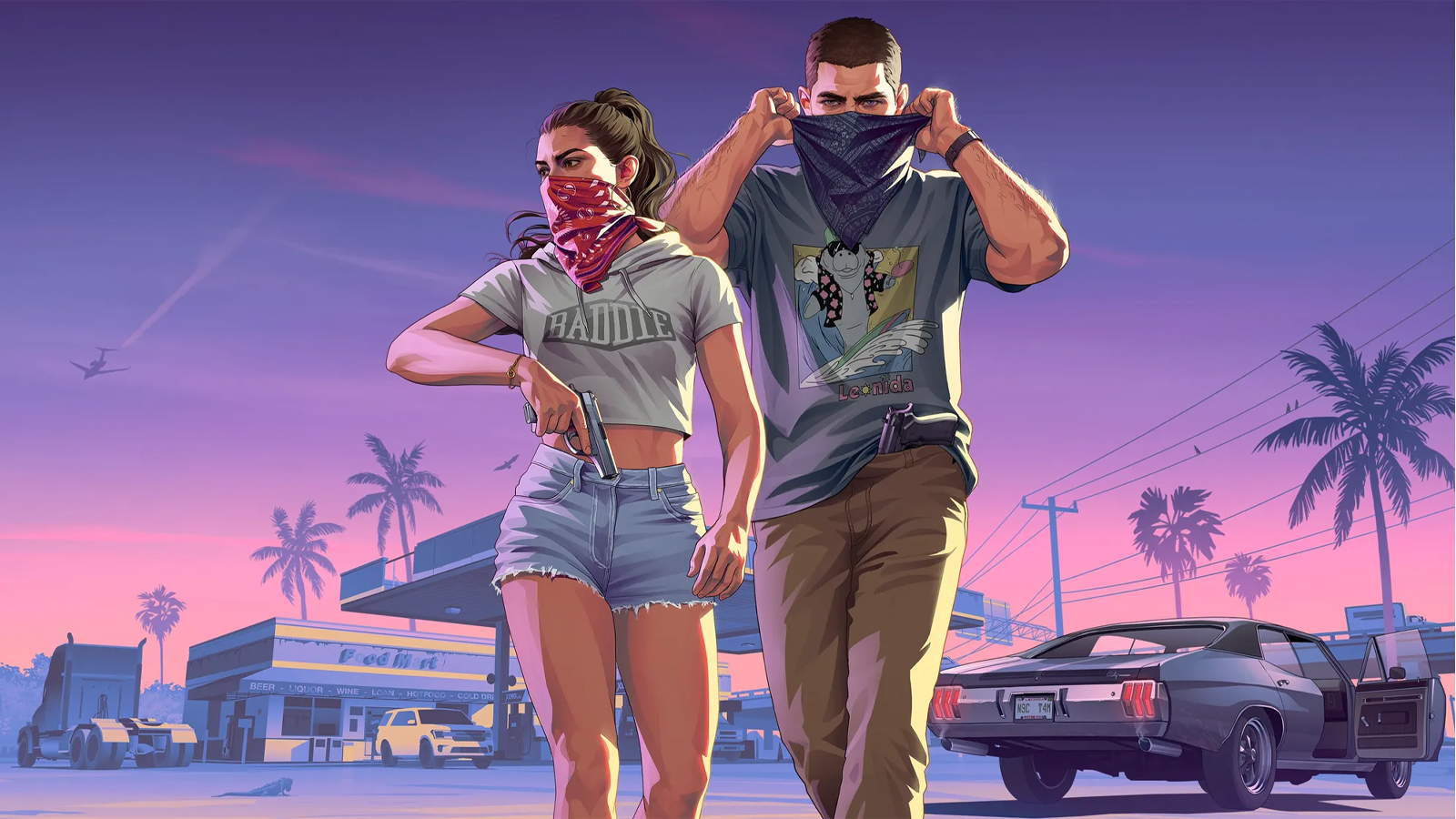
- December 2023: The Trailer Drop: Rockstar Games released the first official trailer for GTA 6. The confirmation of a dual-protagonist narrative featuring Jason and Lucia immediately signaled a shift toward a more character-driven, emotionally complex experience compared to previous iterations.
- Early 2024–Present: The Feature Reveal: As details emerged regarding the game’s "relationship mechanic," which allows players to engage in domestic activities like holding hands, going on dates, and managing digital text-message conversations, the internet began to fixate on the perceived "realism" of these interactions.
- Mid-2024: The TikTok "Outrage" Cycle: Creators began posting videos—often clearly satirical or performative—declaring that they would forbid their partners from playing the game. This quickly mutated into a broader trend where the act of engaging with an in-game romantic partner was equated to infidelity.
A New Digital Landscape: Then vs. Now
When GTA 5 launched in 2013, the internet was a different place. Facebook was the primary social hub, and Twitter (now X) was in its relative infancy. TikTok, the platform currently driving this moral panic, did not exist. Today, the "attention economy" favors rapid-fire, high-emotion content.

The mechanism at the heart of this controversy is simple: the game features a system where protagonists Jason and Lucia interact in ways that mimic human relationships. For a generation of social media users accustomed to documenting every facet of their own lives, the line between a digital simulation and real-world intimacy has become increasingly porous. This, combined with the aggressive nature of short-form video algorithms—which prioritize divisive takes over nuanced analysis—has turned a standard game feature into a "relationship-ending" hazard.
Supporting Data: The Psychology of Parasocial Relationships
Why does this narrative resonate? Behavioral psychologists suggest that the increase in "parasocial" or "pseudo-social" discourse stems from the heightened realism of modern gaming. As graphics, voice acting, and AI-driven behavior move closer to the "uncanny valley," the brain’s mirror neurons may trigger responses similar to those experienced in real-world social interactions.
However, the "cheating" narrative is largely a construct of social media performance. Analysis of engagement data from platforms like TikTok shows that "rage-bait"—content designed to trigger an immediate, angry, or defensive response—receives significantly higher engagement rates. By labeling a game mechanic as "cheating," creators are not necessarily expressing a genuine ethical boundary; they are participating in a performance of digital tribalism.
The controversy is a textbook example of "manufactured outrage." If we look at other media:

- Literary Precedent: Did readers of Fifty Shades of Grey face similar accusations of infidelity? No, because the discourse was not mediated by the hyper-accelerated algorithm of a platform like TikTok.
- Television Precedent: Steamy scenes in period dramas like Bridgerton or Outlander have never been categorized as "cheating" by viewers, because the passive nature of television is fundamentally different from the active, agency-driven nature of a video game.
Official Responses and Industry Silence
Rockstar Games, a studio notoriously guarded about its development process, has remained characteristically silent regarding this social media phenomenon. Historically, Rockstar has used satire as a central pillar of its storytelling, often lampooning the exact kind of performative, media-obsessed culture we see today.
Industry analysts suggest that Rockstar is unlikely to address these claims directly, as doing so would only validate the premise that their game is a "real-life" substitute rather than a work of interactive fiction. By maintaining silence, the studio allows the game to retain its mystique, letting the public discourse—no matter how absurd—keep the title at the top of the search rankings.
The Implications: What This Says About Our Digital Future
The fact that this discourse has gained traction is a sobering indictment of our modern relationship with technology. We are reaching a point where the boundaries between the virtual and the physical are becoming increasingly blurred.
1. The Erosion of Media Literacy
The most concerning implication is the decline of media literacy. When users treat a scripted, pre-programmed digital narrative as a moral test for their real-life partners, it suggests a failure to distinguish between entertainment and reality.
2. The Gamification of Relationships
The "cheating" label effectively "gamifies" romantic trust. It suggests that fidelity is not a matter of mutual respect and communication, but a matter of technical rules. If a partner is "allowed" to play a game with a romantic mechanic, it is being framed as a concession rather than a normal hobby.
3. The Future of Interactive Entertainment
As GTA 6 approaches its November release, we can expect this trend to intensify. Developers are increasingly focused on emotional immersion. If players can build deep, meaningful, and realistic relationships with NPCs, the boundary between the player and the game will continue to shrink. The question is whether society is equipped to handle the psychological fallout of such high-fidelity digital interaction.
Conclusion: A Game About Everything, Including Ourselves
Grand Theft Auto 6 is set to be a monumental technical achievement, a sprawling masterpiece of design that will likely push the limits of modern consoles. Yet, its true legacy may not be its physics, its map size, or its graphics—it may be its role as a mirror for 21st-century society.
The "romance controversy" is ultimately a reflection of our own anxieties. In a world where we spend more time than ever looking at screens, we are finding it harder to define where the human ends and the digital begins. Perhaps the most "GTA-esque" thing about the upcoming game isn’t the crime or the cars, but the fact that it has managed to incite a moral panic over a virtual romance before the first disc has even hit the shelves.

As we approach the November launch, it is worth remembering: it is a game. The characters are lines of code, the dialogue is written by a team of writers, and the "romance" is a set of programmed prompts. If we can remember that, we might just be able to enjoy the game for what it is—a triumph of digital art—without letting it tear our real-world relationships apart.