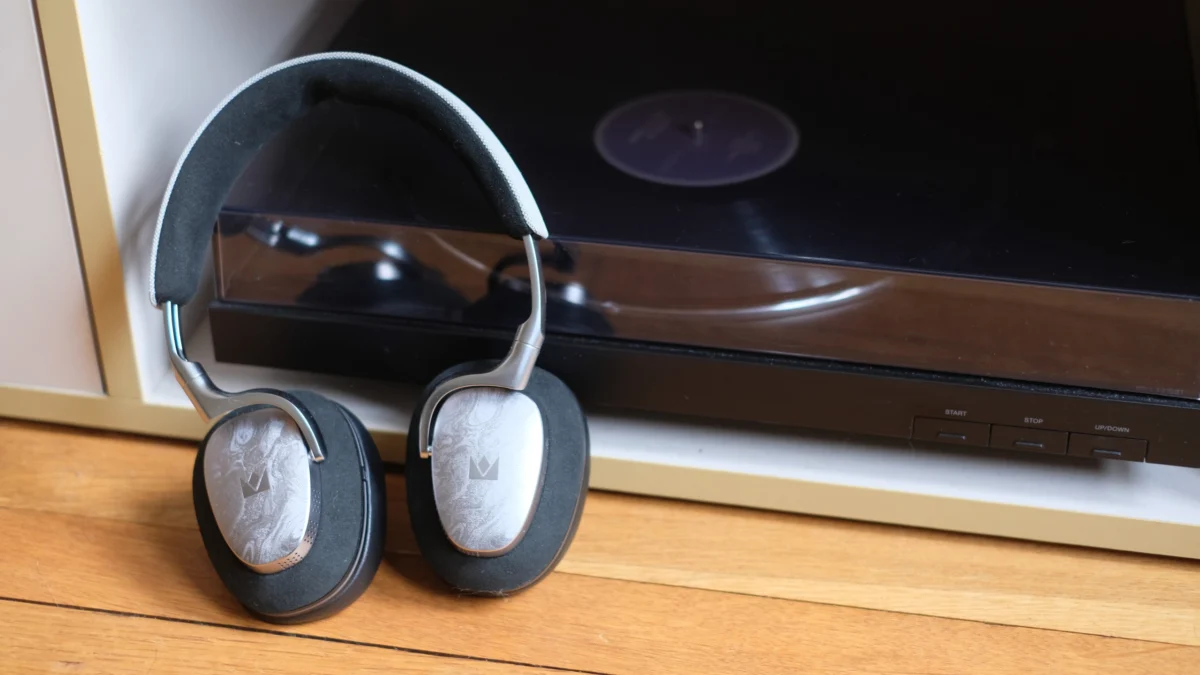
The premium headphone market has long been a battleground of incremental upgrades. Year after year, major manufacturers have fought for dominance by refining noise-cancellation algorithms, tweaking battery life, and iterating on lightweight plastic designs. However, the arrival of the Noble FoKus Artemis signals a shift in priorities. By abandoning the "plastic-first" mentality in favor of an ambitious triple-driver architecture and a commitment to hardware longevity, Noble Audio is asking a provocative question: Is the industry ready to trade mass-market convenience for true audiophile-grade performance?
The Main Facts: An Unconventional Blueprint
The Noble FoKus Artemis is not your typical Bluetooth headset. It stands apart primarily through its internal engineering. While the vast majority of wireless headphones rely on a single full-range dynamic driver per earcup, the Artemis utilizes a complex three-driver array.
This system features:

- A dynamic driver dedicated exclusively to the low-frequency spectrum, ensuring bass response remains punchy without muddiness.
- A planar magnetic driver for the midrange, chosen for its ability to deliver superior articulation and textural detail.
- A balanced armature "super tweeter" to handle high-frequency transients with precision.
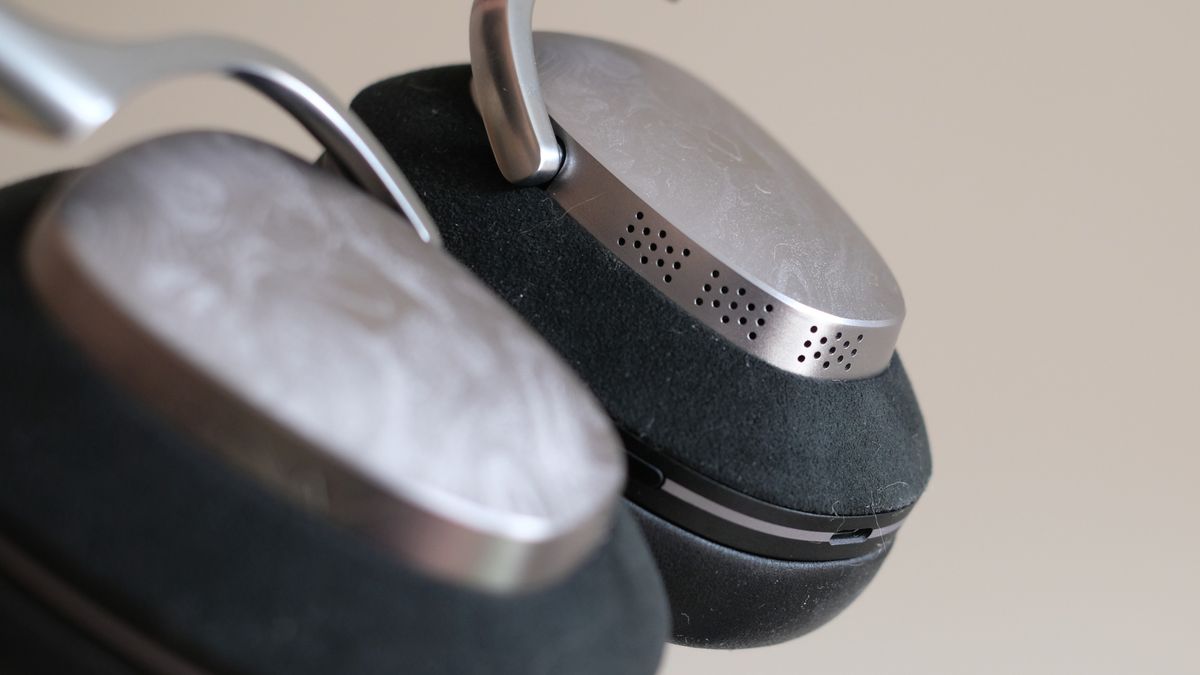
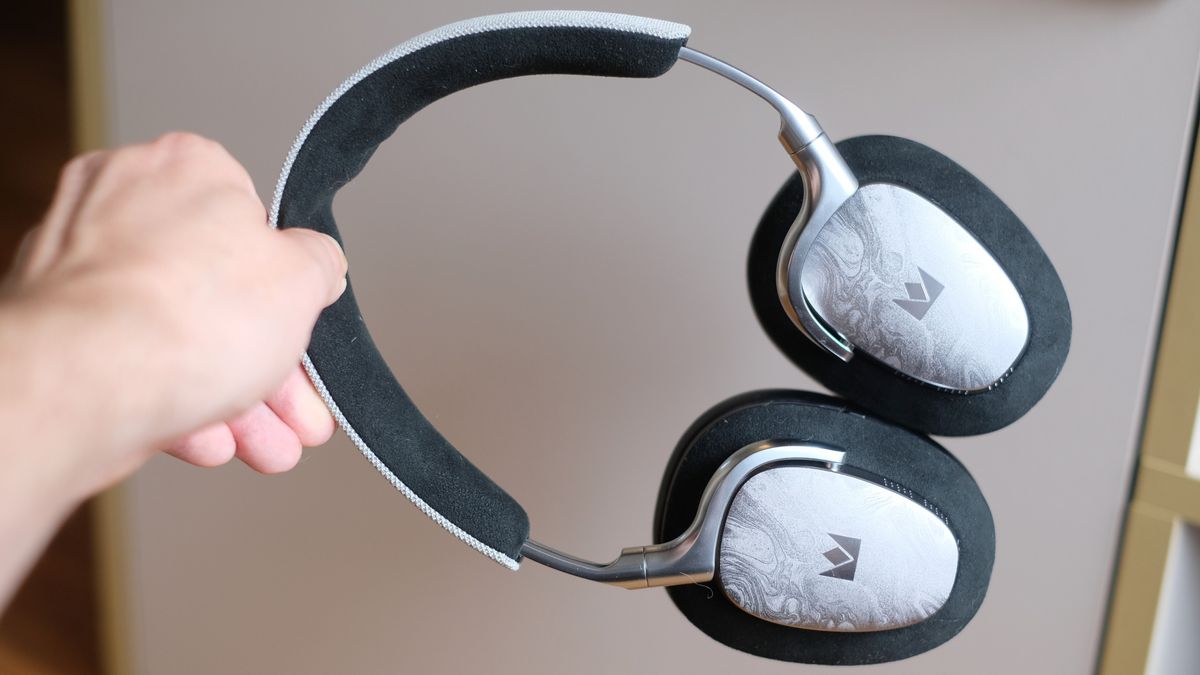
Housed in a chassis crafted from aircraft-grade aluminum, the build quality immediately distinguishes the product from its polymer-based rivals. With a retail price of $899 / £799, the device is positioning itself squarely at the summit of the luxury portable audio category.
Chronology of the Listening Experience
Testing the FoKus Artemis reveals a distinct sonic signature that challenges the "consumer-friendly" V-shaped profiles typical of most modern Bluetooth headphones.
Out-of-the-Box Impressions:
Upon initial testing, the immediate standout quality is the soundstage. There is an expansive, airy quality to the reproduction that is rarely encountered in wireless cans. Vocals possess an intimate, forward presence, while instruments are clearly demarcated in the mix. During a technical analysis of modern tracks, the midrange performance proved particularly impressive, offering a sense of immediacy that makes the listening experience feel "live" rather than processed.
The Treble Challenge:
The high-frequency performance is undoubtedly engaging, leaning toward the brighter side of the spectrum. While this provides excellent clarity for acoustic and orchestral music, those sensitive to high-end sibilance may find it occasionally demanding. During extended listening sessions with dense, percussion-heavy rock, the treble remained crisp, though users may find themselves reaching for the app-based equalizer to temper the brightness.
Bass Dynamics:
The low-end is remarkably well-defined. Rather than overwhelming the mix with boomy, artificial sub-bass, the Artemis offers a tight, taut response. While it may not satisfy those looking for the "club-shaking" rumble found in some consumer-grade competitors, the accuracy and texture of the bass are objectively superior for critical listening.
Supporting Data and Technical Specifications
The performance of the Artemis is underpinned by cutting-edge wireless protocols, ensuring that the hardware is not bottlenecked by bandwidth limitations.
| Specification | Detail |
|---|---|
| Price | $899 / £799 |
| Connectivity | Bluetooth 6.0 |
| Supported Codecs | LDAC, aptX Adaptive, aptX Lossless |
| Battery Life | 35 hours (ANC on) / 55 hours (ANC off) |
| Battery Type | User-replaceable 600mAh |
| Weight | 327g |
| Durability | IP52 Weatherproof Rating |
The inclusion of LDAC and aptX Lossless support is vital, as it allows the triple-driver array to receive high-bitrate audio data, effectively bridging the gap between convenience and the fidelity of wired audiophile equipment.
Official Responses and App Integration
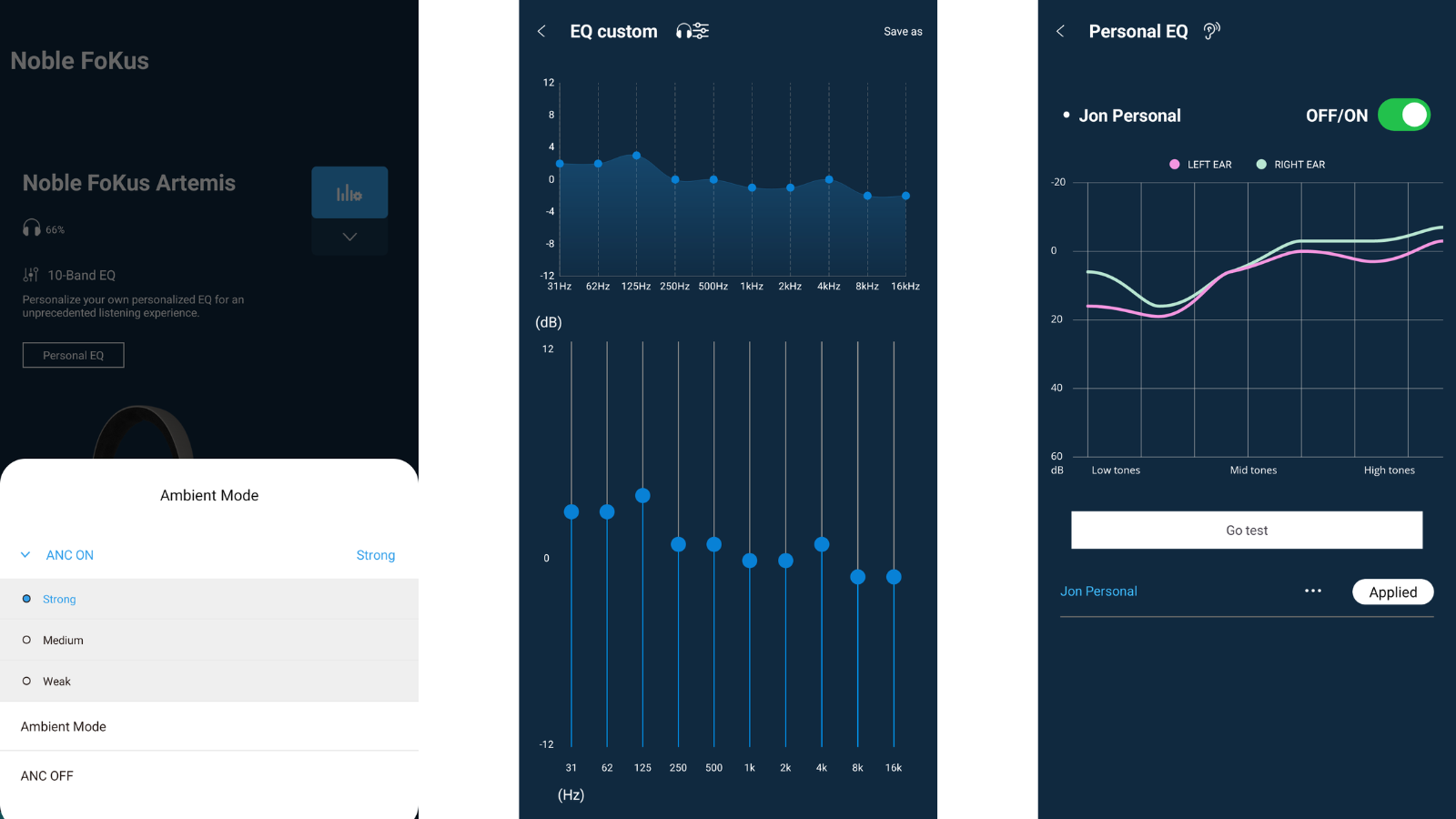
Noble Audio has partnered with Audiodo, a specialist in sound personalization, to solve the subjective nature of hearing. The Noble FoKus app provides a hearing test that maps the user’s specific auditory profile.
Unlike many competing apps that often introduce distortion or phase issues when applying "personalized" EQ, the Audiodo implementation on the Artemis feels refined. It successfully adds warmth and fullness without compromising the underlying clarity of the hardware. For those who prefer a manual approach, a ten-band equalizer allows for granular control, enabling users to create specific presets—such as a "bass-boost" mode for high-energy tracks—that are stored directly on the headset.
Regarding Active Noise Cancellation (ANC), Noble has opted for a tiered system (Strong, Medium, Weak). While it lacks the sheer, "vacuum-like" silence of the market-leading Sony WH-1000XM6, it is highly effective at neutralizing office chatter and transit noise, making it more than adequate for the target demographic.
Implications: The Future of Consumer Tech
The most significant implication of the FoKus Artemis is the normalization of the "user-replaceable battery." In an era of planned obsolescence, where headphones are often discarded once their lithium-ion cells degrade, Noble’s decision to allow users to swap out their own batteries is a landmark move.
This design philosophy shifts the value proposition. When you spend $899, you are no longer buying a consumable gadget with a three-year lifespan; you are investing in a piece of audio equipment that can be maintained for a decade or more.

Comfort and Long-Term Wearability
The build quality, while undeniably premium, brings a trade-off. The use of aluminum and high-quality materials results in a slightly firmer fit. During testing, the clamping force was noted to be secure, though it may cause minor fatigue for some users during sessions exceeding three hours. It is a reminder that the pursuit of premium materials sometimes sacrifices the "pillow-soft" ergonomics found in lower-cost, plastic-heavy alternatives.
Final Verdict: Is it Worth the Investment?
The Noble FoKus Artemis is a polarizing entry into the market. On one hand, it delivers a level of separation, clarity, and soundstage depth that is genuinely revolutionary for a wireless product. It offers a tangible glimpse into a future where Bluetooth headphones are no longer "second-class" citizens compared to their wired counterparts.
However, the $899 price tag cannot be ignored. When compared to the Sennheiser HDB 630 or the Bose QuietComfort Ultra Gen 2, the Artemis is significantly more expensive. The potential buyer must ask themselves what they value most:
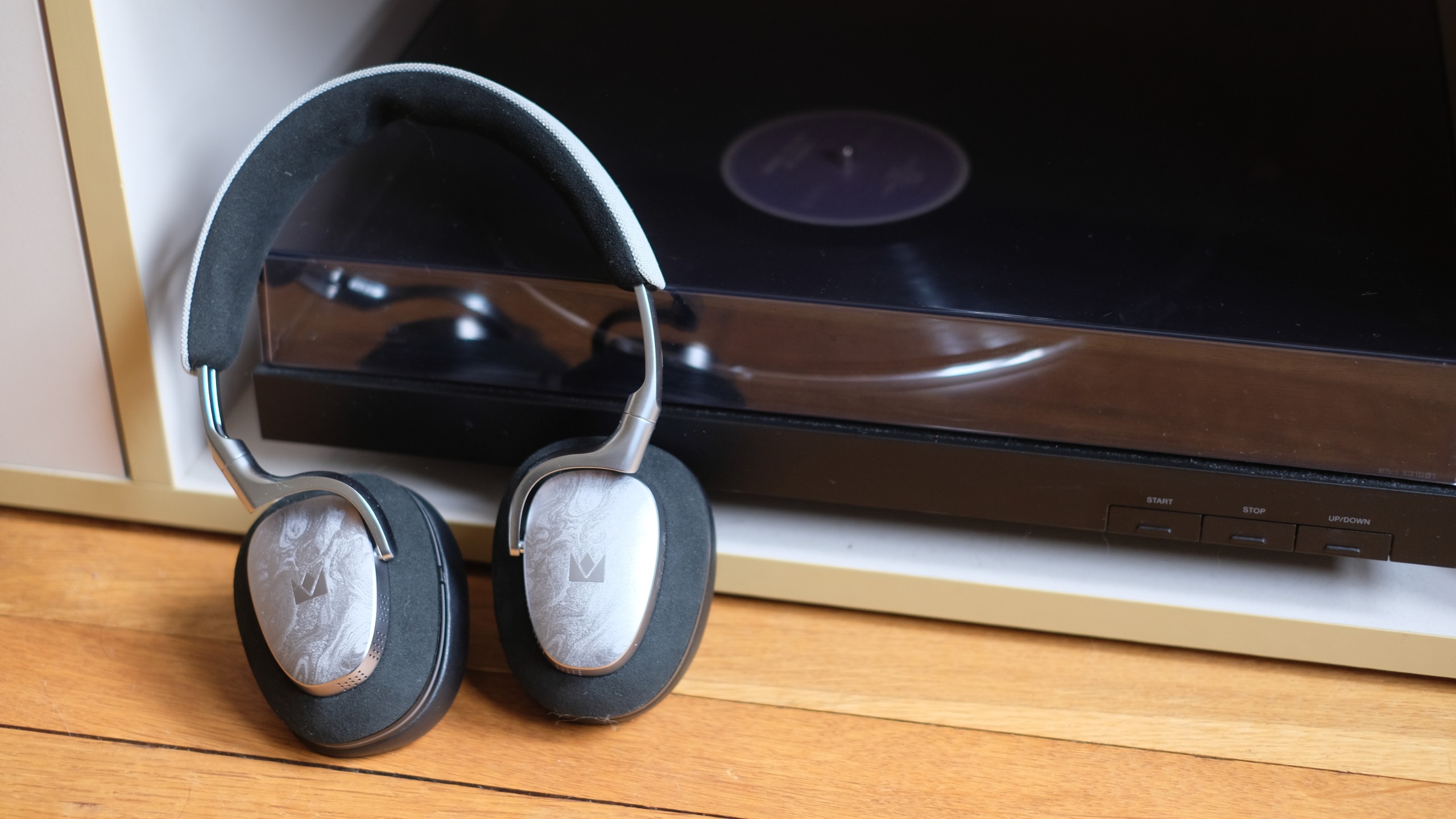
- If you prioritize the absolute best in sound engineering, repairability, and premium construction, the Artemis is arguably the best wireless headphone currently on the market.
- If you prioritize extreme ANC, absolute long-term comfort, or a lower entry price, the traditional giants like Sony and Bose still offer a more "all-rounder" experience.
Ultimately, the Noble FoKus Artemis feels like a professional tool marketed to consumers. It is a bold, uncompromising, and deeply impressive piece of technology that proves we don’t have to sacrifice high-fidelity sound for wireless freedom—provided we are willing to pay the price of admission. It is not just a pair of headphones; it is a statement about how audio gear should be built.