

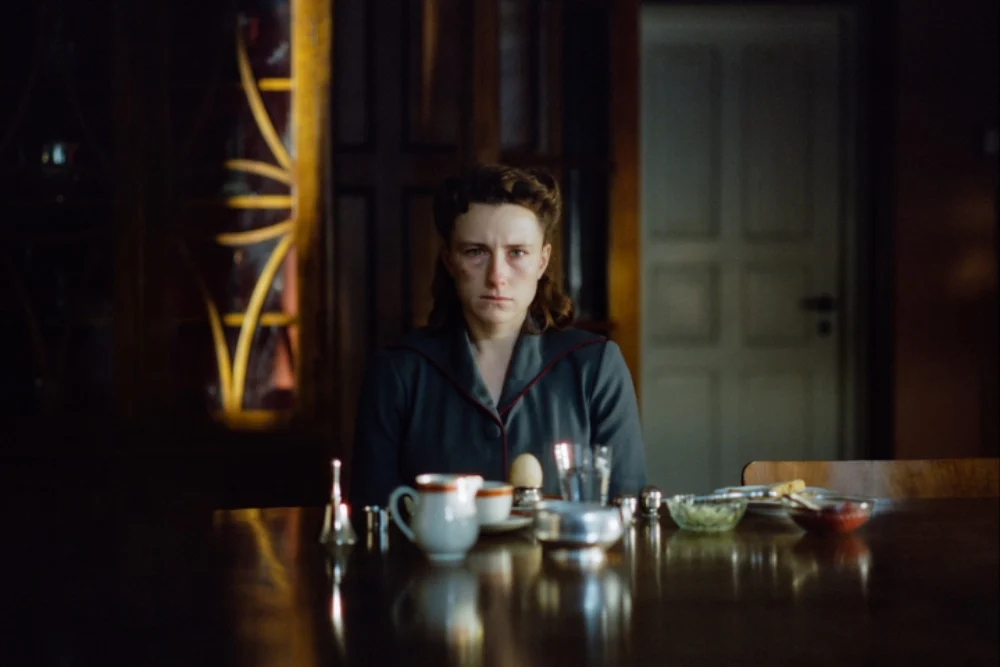
In the shadowed corners of European history, there exist stories that have been systematically buried by the passage of time and the convenience of national myth-making. Danish filmmaker May el-Toukhy, known for her unflinching exploration of human fallibility, has turned her lens toward one of the most suppressed chapters of World War II: the plight of the so-called "horizontal collaborators"—women who were accused of romantic or sexual relationships with German soldiers during the occupation. Her latest feature, Woman Unknown, is not merely a period drama; it is an excavation of the female body as a battleground for national identity.
The Genesis of a Suppressed Narrative
The project began as an intellectual pursuit of the past, though not initially with this subject matter. El-Toukhy, whose filmography—including the provocative Queen of Hearts—has consistently challenged moral binaries, originally intended to explore the witch hunts that followed the Protestant Reformation in the 16th century.
“It was difficult to relate to the perpetrators because many of them were just maniacal,” el-Toukhy explains. “And I’m interested in ambiguity.” Her pivot toward the 20th century occurred after stumbling upon an archival photograph of a woman with a swastika crudely painted onto her back. This singular, haunting image became the catalyst for Woman Unknown.
The film follows Marie, a housemaid and nanny, who stands on the precipice of a promising future: marriage to her wealthy employer. However, as the 1945 liberation of Denmark approaches, the walls close in. Marie is forced to navigate a landscape of shifting loyalties and brutal vigilante justice, all while keeping her past from unraveling her carefully constructed life.
Chronology of a Forgotten Shame
The historical context of Woman Unknown is deeply rooted in the immediate aftermath of the German occupation of Denmark. While history books often focus on the heroism of the resistance, the reality for women who had associated with the occupiers was one of humiliation and erasure.
- 1940–1945: The period of German occupation in Denmark. During these years, women—out of desperation, genuine affection, or survival—entered into relationships with German soldiers.
- May 1945: The liberation of Denmark. This moment of national celebration masked a dark undercurrent of social purging. Women accused of "horizontal collaboration" were often subjected to public shaming, including the shaving of their hair and forced public exposure.
- Post-War Decades: A period of historical silence. As the narrative of the "noble resistance" solidified, the suffering of these women was relegated to the margins of academic and public discourse.
- The Present Day: The emergence of a critical reassessment. Through the work of writers like Svetlana Alexievich and filmmakers like el-Toukhy, these stories are finally being reclaimed from the "unknown" status assigned to them by archive labels.
The Female Experience in the Theater of War
El-Toukhy cites the Belarusian Nobel laureate Svetlana Alexievich, particularly her seminal work The Unwomanly Face of War, as a primary inspiration. “She gathered these testimonies from women who talked about having their periods in war zones, hiding in sheds, and giving birth,” says el-Toukhy. “It’s rare to have such recollections of the female experience during or after the war.”
In crafting the screenplay, the production team established a strict rule: the film would never reproduce the traditional, often romanticized, male experience of war. In Woman Unknown, the streets represent a volatile, masculine space of euphoria and violence, while the home—the traditional "safe space"—becomes a trap for the protagonist. As the liberation celebrations turn into a hunt for perceived traitors, Marie finds that the sanctuary of her home is no longer a shield, but a cage.
“When you see their photographs in the archives, they’re often labeled ‘unknown woman,’” el-Toukhy notes. “Partly because their identities were stripped away, but also because society simply didn’t care to remember them.”
Industry Implications and the Venice Controversy
The arrival of Woman Unknown on the global stage has been marked by as much political discourse as cinematic acclaim. The film’s selection for the Venice Film Festival sparked a firestorm of controversy regarding the inclusion of female directors. Initially, the festival’s main competition featured only one woman, a decision that drew widespread criticism from the industry. While the festival later included the documentary Naza, co-directed by Rachel Szor, the systemic issue remains at the forefront of the conversation.
“Obviously, I’m delighted to have been invited to this historic festival,” el-Toukhy says. “But I would have loved to be in the company of more female directors. I do believe it’s a structural problem.”
She draws a parallel between the historical shaming of women in her film and the current state of the film industry. “Not having enough films by women is also an issue that goes way back. It’s reflected in the budgets we work with and the talent that wants to be involved. Even journalists talk about male directors differently than they talk about women. I’ve never heard a female director called a ‘genius’—and I read many articles about male geniuses.”
The Dogma 25 Manifesto: Disrupting the Process
Beyond the subject matter, el-Toukhy is actively challenging the mechanics of modern filmmaking. As a member of the newly formed Dogma 25 movement, she advocates for a radical re-evaluation of production culture.
“It’s always healthy to disrupt your process as a filmmaker,” she argues. “The way we have to work is almost unbearable. You finish a film and you’re completely stressed out and exhausted. That kind of sprint doesn’t necessarily benefit the result.”
For el-Toukhy, the "big European arthouse drama" format—which often relies on massive budgets, grueling schedules, and top-heavy hierarchies—is in desperate need of reform. She suggests that the current model, which forces directors into a high-pressure, unsustainable sprint, ultimately stifles the creativity it claims to support.
Defying the "Likable" Protagonist
One of the defining characteristics of el-Toukhy’s career is her refusal to write characters that appeal to the audience’s desire for moral purity. In Queen of Hearts, she explored a woman’s transgressive relationship with her stepson; in Woman Unknown, she forces the audience to confront a protagonist who is deeply flawed, calculating, and morally compromised.
“It would be a betrayal to my sisters around the world if I only portrayed women as saints,” she asserts. “It’s important that we tell stories about complex women in a nuanced way, just as we do with male characters. That rings truer to life.”
This commitment to complexity extends to the historical figures she depicts. She acknowledges that some viewers, particularly those with family ties to the Danish resistance, may find the film uncomfortable. “It would have been harder to tell this story 25 years ago when those generations were still alive,” she admits. “Some audience members will still be shocked or angry because their grandfather was part of the resistance movement… but not everyone should have been a part of it.”
Conclusion: Looking Back to Move Forward
The ultimate goal of Woman Unknown is not to rewrite history, but to expand the narrative to include the perspectives that were deemed too inconvenient for the post-war consensus. By focusing on the "unknown" women of the era, el-Toukhy is performing a necessary act of historical reconciliation.
“It’s important to have discussions about what actually happened so that we don’t recreate false narratives,” she concludes. “It’s hard to change the direction you’re going in if you’re not looking back.”
As the film makes its way through the festival circuit, it serves as both a piece of compelling cinema and a call to action—both for the historical record and for an industry currently reckoning with its own exclusionary past. Whether or not the industry is ready for the change she demands, May el-Toukhy has made it clear that she is no longer willing to be silent.










