Dwi Wanna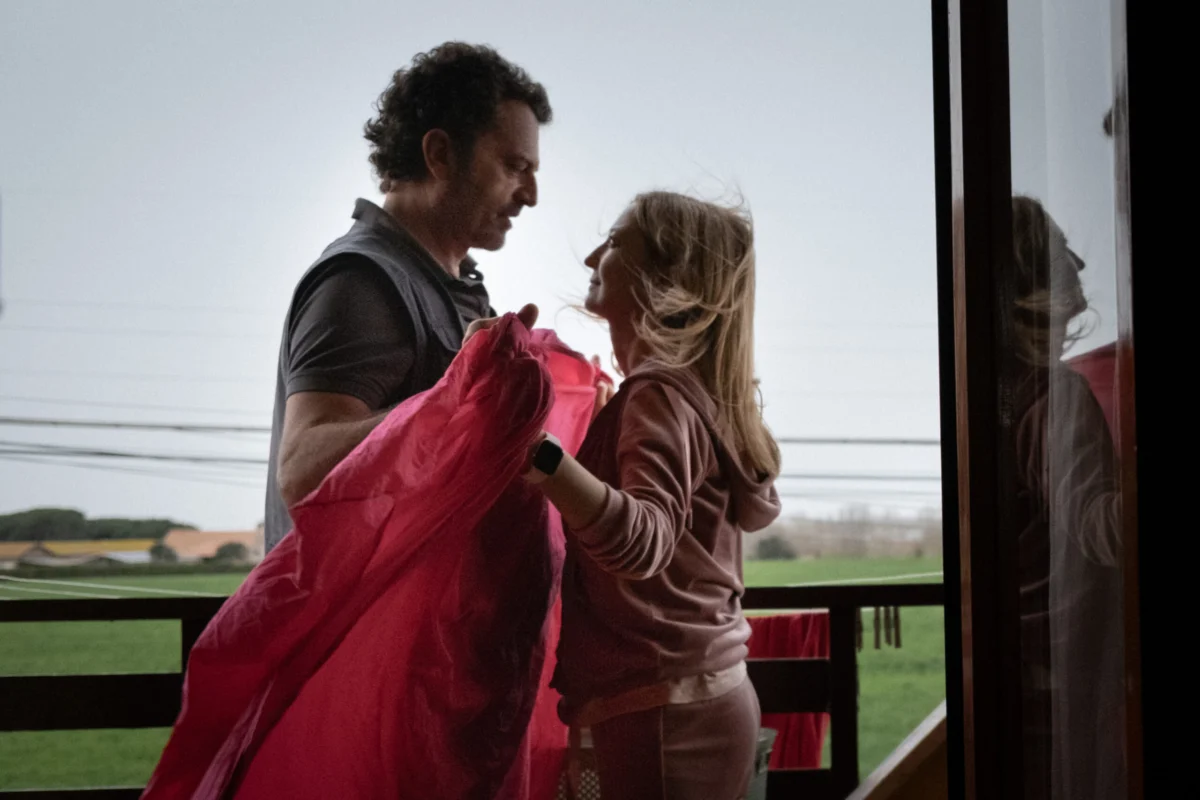
In the crowded landscape of modern cinematic relationship dramas, the genre often falls into a tired, predictable trap: the operatic screaming match. Writers, perhaps lacking the razor-sharp, caustic wit of an Edward Albee, often rely on volume to compensate for a lack of genuine insight. These shouting matches frequently exhaust both the actors tasked with delivering the lines and the audiences forced to endure them.
However, the debut feature from director Anna Foglietta, A Common Story, offers a profound departure from this trend. Drawing from her own extensive experience as an actor, Foglietta understands a fundamental truth of the human condition: silences are often far more powerful than screeches, particularly when a couple is desperate to communicate but lacks the emotional vocabulary to do so. The film is a revelation, not merely within the context of Italian cinema—which has historically leaned toward verbal intensity—but as a universal study of the spaces between speech. Bolstered by career-best performances from Alba Rohrwacher and Guido Caprino, A Common Story serves as a quiet, devastating meditation on the mid-life unraveling of the soul.
The Geography of Absence: Establishing the Voids
The film’s thematic preoccupation with "the void" is established in its opening montage. We are treated to a series of lingering shots of empty university buildings, their vacant stillness serving as a jarring visual metaphor for absence. This sets the stage for the primary conflict: the "empty-nest syndrome" facing Erika (Rohrwacher) and her husband, Mauro (Caprino).
The couple has just dropped off their only child, Irene (Ksenia Borzak), at college. For this family, Irene’s enrollment represents a generational milestone—she is likely the first to seek higher education—a source of immense, if unspoken, pride for her parents. Yet, the moment the car returns to their quiet home, the silence of the empty house becomes an intruder. The couple retreats into their established, rhythmic existence: Mauro returns to his work in construction alongside his demanding father, Marcello (Elio De Capitani), while Erika resumes her duties as a supermarket cashier.
A Life Defined by Service: The Crisis of Purpose
For Erika, life has always been a series of precise, meaningful motions. Her days were a tapestry of service: waking early to bake a fresh bundt cake, managing the household, cooking meals, and checking in on her aging mother, Altea (Caterina Casini), to deliver groceries. In this framework, Erika found her identity. She was "useful," and to be useful was to have a role that granted her existence meaning.
Now, at nearly 45, the structure has collapsed. Her daughter is independent, her mother is self-sufficient and preoccupied with her own social circle, and the daily chores that once provided a sense of accomplishment now feel like empty pantomime. Erika finds herself adrift, lacking the introspective tools or the psychological framework to identify the existential dread gnawing at her.
She is a woman who lives for others, and with that necessity removed, she begins to fall apart. The film poses a harrowing question: What happens to those who are unable to articulate their internal state? Erika does not have access to the feminist texts that analyze the "uselessness" of the domestic life, nor does she possess a vocabulary that would make the concept of a "mental health provider" anything other than an abstract, incomprehensible term. Her depression is a phantom she cannot name, and without a name for her suffering, she cannot share it with Mauro.
The Gendered Barrier of Communication
The tragedy of A Common Story lies in the fact that Mauro, too, is ill-equipped to bridge the widening chasm. As a construction worker, he is a man whose identity is built on the premise of "fixing" things. When his wife begins to disintegrate, he attempts to apply the same logic, only to find that human emotion is not a structural problem with a simple solution.
Compounding his confusion is the deteriorating relationship with his own father. Marcello’s persistent verbal barbs have eroded Mauro’s sense of self, and when he discovers that his father has sold their shared business without consulting him, his role as the family’s anchor is shattered.
The tension reaches a boiling point during a disastrous family luncheon. The ensuing argument between Erika and Mauro is the film’s most explosive moment, yet even here, Foglietta maintains a deliberate, painful distance. Initially, she frames them through the windows of their parked car, creating a voyeuristic, clinical perspective. As the shouting begins, the camera shifts, closing the distance until the viewer is uncomfortably close to their raw, exposed vulnerability.
It is a rare instance of raised voices in a film defined by stillness. Even at their loudest, they fail to communicate. They aren’t arguing about facts; they are screaming because they lack the language to express their fear of being alone.
Supporting Data: The Consumerist Void
The film’s most poignant scene occurs when a desperate, isolated Erika calls a telemarketer after viewing an infomercial for a high-end face cream. The saleswoman, operating from a script of consumer-driven vanity, asks questions about Erika’s skin type—questions Erika cannot answer, not because she lacks the intellect, but because she has never viewed herself as a "self" worthy of analysis.
In this moment, the film brilliantly illustrates the failure of modern society to offer comfort to those who have fallen out of traditional, service-based roles. Erika cannot be the mother or the daughter anymore, and she is too alienated from the glossy, commercial image of the "modern woman" to find solace there either. Rohrwacher’s performance here is a masterclass in subtlety; she captures the hollowness of a woman who has been erased, leaving only the shell of her former roles.
Implications and Artistic Vision
Cinematographer Andrea Benjamin Manenti plays a crucial role in the film’s success. By utilizing fixed framing and creating "barriers" within the shot, he visually reinforces the psychological isolation of the characters. The film is remarkably sparse in its editing, allowing scenes to breathe and, more importantly, allowing the audience to sit in the uncomfortable silence of a dying connection.
The implications of A Common Story are far-reaching. It challenges the cinematic convention that equates "drama" with "volume." Instead, it posits that the most profound human experiences—grief, identity crises, and the loss of love—often happen in the quiet, mundane spaces of a kitchen or a parked car.
Foglietta’s direction suggests that while Erika and Mauro are currently standing on the precipice of collapse, their deep, foundational love for one another—if properly nurtured by the arrival of self-awareness—might yet act as a salvation. The film does not offer a neat, saccharine resolution, but it does offer the only thing that matters: the possibility of change.
Conclusion
A Common Story is a triumph of empathy. By refusing to paint its characters as caricatures or villains, Foglietta allows us to see the genuine, heartbreaking confusion of two people who love each other but have lost the map to each other’s hearts. Rohrwacher and Caprino, through subtle gestures, downcast eyes, and the charged tension of the spaces between their words, deliver performances that will resonate long after the credits roll.
It is a film that reminds us that, sometimes, the loudest cry is the one that makes no sound at all. As the Italian film industry looks for new ways to tell stories of the human heart, Foglietta’s debut stands as a benchmark for how to handle the most complex of subjects: the quiet, daily, and often invisible struggle to simply be.

 Jia Lissa
 Rifan Muazin