Evan Lee Salim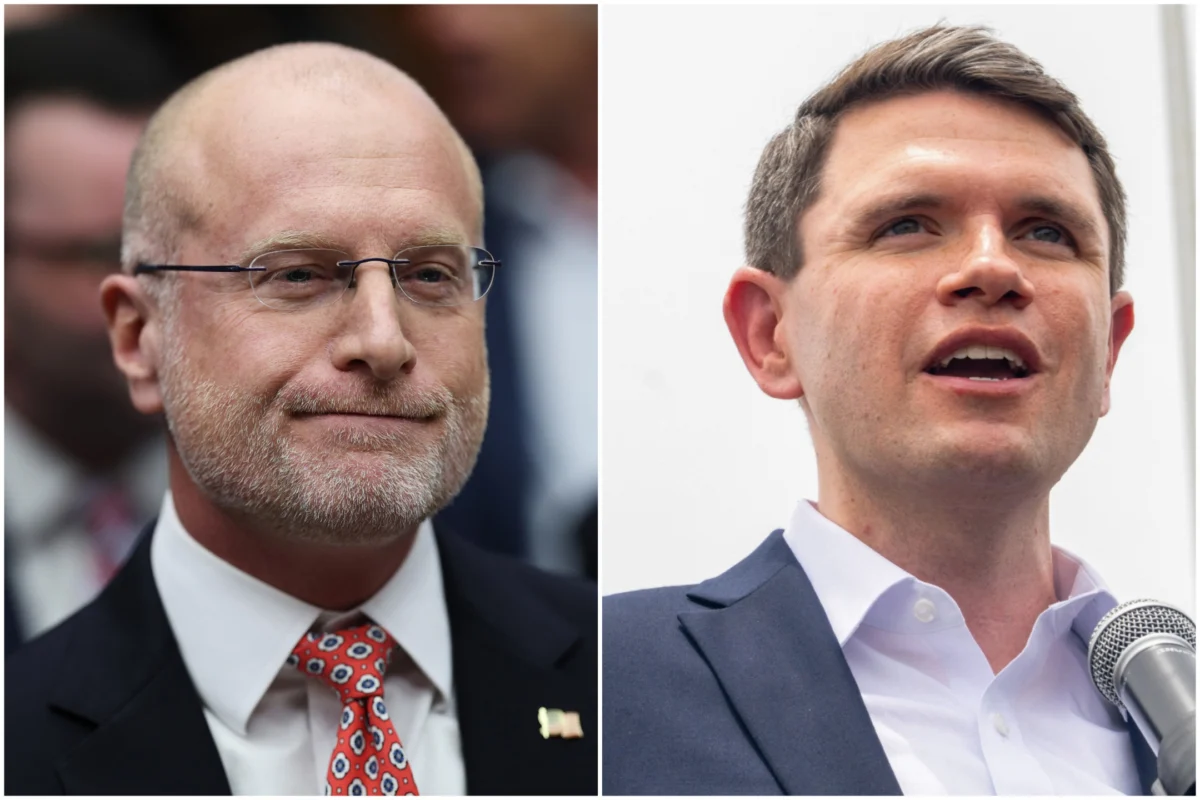
A high-stakes battle over the future of media regulation, political speech, and the definition of "journalism" has erupted, pitting the Federal Communications Commission (FCC) against major late-night television networks. At the center of this firestorm is a digital-only interview between late-night host Jimmy Kimmel and Texas Democratic U.S. Senate candidate James Talarico—a segment that was relegated to YouTube to avoid the looming threat of federal regulatory enforcement.
FCC Chairman Brendan Carr, a Trump appointee, has vehemently pushed back against claims of censorship, accusing Talarico of orchestrating a "hoax" to drive campaign engagement. The clash highlights a fundamental disagreement over the reach of the FCC’s "equal-time" rules in an era where the lines between political advocacy, entertainment, and news have become increasingly blurred.
The Chronology of a Conflict: From Colbert to Kimmel
The current standoff is not an isolated incident but rather the latest escalation in a series of preemptive measures taken by television networks to avoid FCC scrutiny.
In February, a similar controversy occurred when CBS executives reportedly advised producers of The Late Show with Stephen Colbert that an interview with James Talarico could potentially trigger the FCC’s equal-time rule. While CBS later clarified that they did not formally "block" the interview, the resulting "legal guidance" served as a de facto veto, forcing the segment off the air.
The tension reached a boiling point this past week when Jimmy Kimmel announced that his scheduled interview with Talarico would not air on ABC’s broadcast affiliates. Kimmel stated explicitly that the decision was made "out of consideration for our local stations," particularly in Texas, to shield them from the bureaucratic and legal "nonsense" that could arise if the FCC deemed the appearance a violation of its equal-time mandates.
The interview, which moved to YouTube, quickly became a viral phenomenon, amassing over 7.3 million views within its first 48 hours—a testament to the audience’s appetite for political discourse, regardless of the platform.
The Regulatory Framework: What is "Equal Time"?
At the heart of this dispute is Section 315 of the Communications Act, commonly known as the "equal-time rule." The statute mandates that if a broadcast station permits a legally qualified candidate for public office to use its facilities, it must provide "equal opportunities" to all other candidates for that same office.
However, the rule includes significant exemptions for "bona fide" news programs, interviews, and documentaries. For decades, late-night talk shows have existed in a gray area, often operating under the assumption that their entertainment-first format still qualified for these exemptions.
Chairman Carr has challenged this status quo. Earlier this year, he initiated a formal review of whether daytime staples like ABC’s The View qualify for these exemptions. Carr argues that such programs have evolved into "partisan mouthpieces" for the Democratic Party and, as beneficiaries of public spectrum licenses, should be held to the same standards of fairness and political neutrality as traditional news programs.
Official Responses: A War of Words
Brendan Carr’s Defense
In a detailed post on X (formerly Twitter) this Saturday, Chairman Carr rejected the notion that the FCC is engaging in censorship. Accusing Talarico of "running a hoax" for clicks and donations, Carr argued that the candidate is banking on the public’s lack of familiarity with federal statutes.
"The equal-time statute does not prohibit anyone from interviewing anyone on broadcast TV," Carr wrote. "It is about more speech, not less. Congress wanted to ensure that voters would decide elections, not media gatekeepers picking winners and losers by providing preferential airtime to some candidates and not others."
Carr further emphasized the unique nature of broadcast television. He noted that because broadcasters are granted free, exclusive use of a finite public resource—the airwaves—they are subject to "public interest obligations." To Carr, holding these networks accountable is not a First Amendment violation, but a fulfillment of the FCC’s mandate to manage the public’s property.
James Talarico’s Allegations
Talarico, meanwhile, has framed the situation as a dangerous precedent for American democracy. In an interview on MS NOW, the Senate candidate decried the FCC’s pressure on broadcasters as "the most dangerous form of cancel culture."
"Government censorship should be a concern to all of us, regardless of our political party," Talarico stated. His supporters, including the University Democrats at UT Austin, have pointed to the disparate treatment of political figures—specifically contrasting Talarico’s exclusion with Senator Ted Cruz’s (R-Texas) lengthy appearance on ESPN’s College GameDay.
The FCC’s Rebuttal on ESPN
Addressing the comparison to the Cruz appearance, Carr clarified that the equal-time rule does not apply to ESPN because it is a cable network, not a broadcast station subject to the same licensing requirements as ABC, CBS, or NBC. Furthermore, Carr pointed out that the statute only applies to "legally qualified candidates," a technical legal distinction that the Chairman maintains is being ignored by those leveling accusations against his agency.
Implications for the Future of Media
The fallout from this incident raises profound questions about the future of the American media landscape.
The Decline of the "Broadcast Gatekeeper"
As most Americans move away from over-the-air antennas toward cable, satellite, and streaming, the relevance of FCC broadcast regulations is being questioned. If the government continues to exert pressure on traditional networks, it may inadvertently accelerate the exodus of viewers to unregulated digital platforms like YouTube, TikTok, and X. This shift could lead to a two-tiered information ecosystem: one heavily regulated and increasingly avoided, and another entirely free of public interest obligations.
Defining "News" in the Digital Age
The FCC’s investigation into The View and the ongoing struggle with late-night comedy programs suggests that the agency is moving toward a more rigid definition of what constitutes "news." If the FCC successfully narrows the definition of "bona fide news programs," it could force late-night hosts and talk show producers to either abandon political content entirely or be subjected to constant, cumbersome oversight regarding the political balance of their guest lists.
The First Amendment vs. Public Spectrum
The legal debate centers on whether the privilege of holding a broadcast license justifies a government-mandated "fairness" standard. While the Supreme Court has historically upheld the idea that broadcasters have public interest obligations, the rise of the internet has complicated this constitutional interpretation. Critics argue that in a digital age, the "spectrum scarcity" argument—which originally justified the FCC’s power—is no longer valid.
Conclusion: A Nation Divided by Spectrum
The conflict between Brendan Carr and James Talarico is a microcosm of a broader national debate over who controls the narrative in an era of deep political polarization. While the FCC maintains it is merely upholding the law to ensure a level playing field for all candidates, critics see a weaponization of federal authority designed to silence dissenting voices on legacy media platforms.
As the 2026 election cycle intensifies, the role of the FCC as a regulatory referee will face unprecedented scrutiny. Whether this leads to a new era of "fairness" on the public airwaves or a complete dismantling of the broadcast model remains to be seen. For now, candidates like Talarico are finding that while the front door of the television studio may be guarded by federal regulation, the digital back door remains wide open—and increasingly, that is where the real political campaign is being fought.


 Nana Wu
 Asep Darmawan