Iffa Jayyana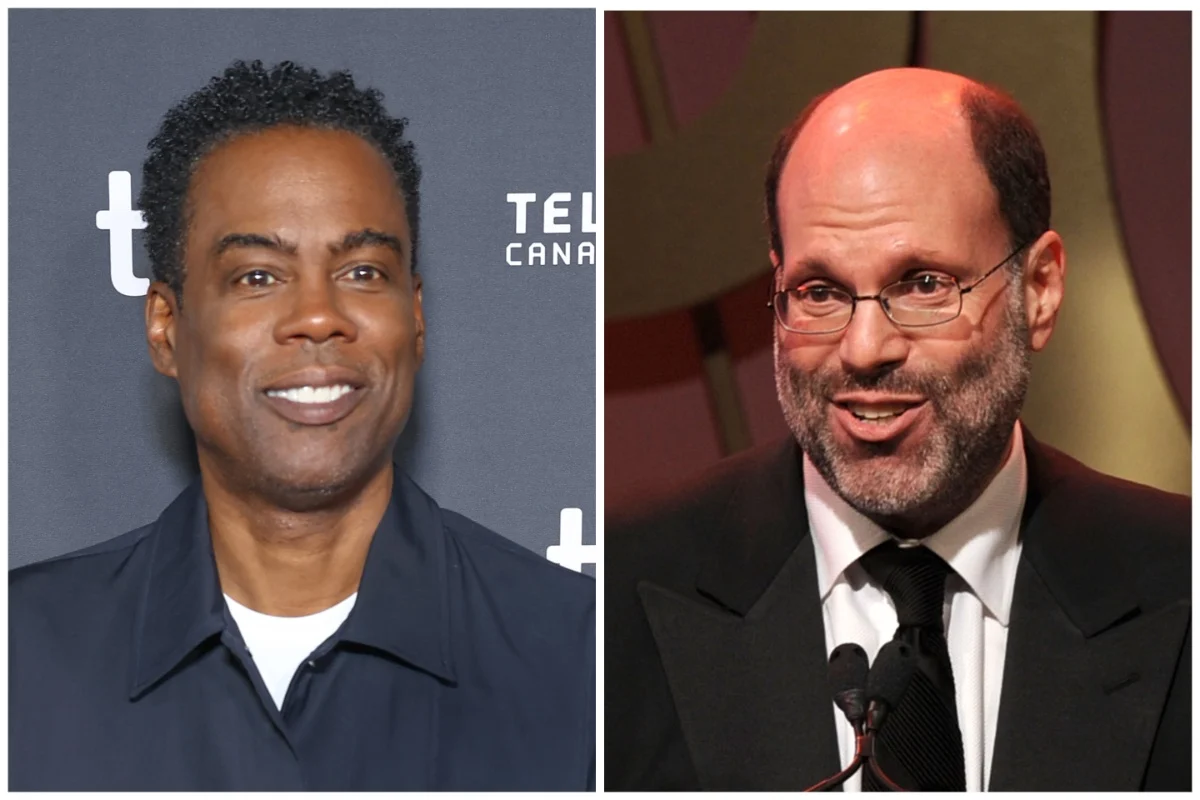
In the high-stakes ecosystem of Hollywood, creative evolution is rarely a gentle process. For comedian and filmmaker Chris Rock, the refinement of his directorial voice did not arrive through soft-handed encouragement, but rather through the abrasive, uncompromising, and deeply controversial mentorship of Scott Rudin. During a candid keynote address at the Toronto International Film Festival (TIFF), Rock offered a provocative reflection on his professional trajectory, crediting the disgraced producer with instilling in him a standard of excellence that remains a cornerstone of his career.
Rock’s comments arrived in the wake of the festival premiere of his latest directorial project, Misty Green, a film that serves as a milestone in his creative output. However, the discussion quickly pivoted from his current success to the foundational lessons learned while helming the 2014 critical darling Top Five.
The Genesis of a Directorial Voice: From ‘Grown Ups 2’ to ‘Top Five’
The origins of Top Five—the film that arguably established Rock as a serious voice in cinema—are rooted in the unlikely environment of a massive studio comedy production. In 2012, while working on the set of Grown Ups 2, Rock found himself with significant downtime. As a secondary member of a bloated, ensemble-driven cast, he was afforded the luxury of isolation.
“Being number three or four on the call sheet of a ginormous movie means you’re going to have a lot of days off,” Rock explained to TIFF CEO Cameron Bailey. Instead of idling, Rock utilized the gap in the schedule to draft what would become a deeply personal, semi-autobiographical script.
He described the creative DNA of the film as a synthesis of his artistic influences. “I wrote Top Five, and yeah, it’s got a lot of Woody [Allen] in it. It’s got a lot of Mike Leigh in it. It’s got a lot of Alexander Payne in it,” he noted. Yet, while the blueprint was his, the structural integrity of the final product, Rock argues, was the result of the “hard coaching” provided by Scott Rudin.
The Rudin Factor: Brutal Mentorship as a Creative Catalyst
Scott Rudin, once considered the most powerful producer in the industry, became a pariah in 2021 following a damning Hollywood Reporter exposé that detailed decades of systemic abuse, verbal hostility, and a workplace culture that former employees described as “monstrous.”
For many in Hollywood, Rudin’s name is synonymous with the toxicity that has historically plagued the industry. However, Rock’s testimony provides a more nuanced—albeit controversial—perspective on the producer’s efficacy. When asked by Bailey why he sought out such a notoriously difficult collaborator, Rock offered an analogy rooted in his personal life.
“Everybody doesn’t respond to a hug, you know what I mean?” Rock said. “I got two daughters. One, you can smile her into excellence. The other one you gotta be like, ‘Hey, what the fuck are we doing?’ Scott really pushed me in a way I hadn’t been pushed in a long time, and it was great.”
According to Rock, Rudin’s “chain-saw” approach to feedback forced him to abandon the path of least resistance. The producer’s relentless demand for perfection compelled Rock to elevate his casting, his pacing, and his commitment to the script’s vision. “I learned to not settle for anything… especially when it comes to getting talent. [To] pursue the best of the best of the best for everything—in front of the camera, behind the camera. No compromise.”
A Chronology of Infamy and Return
To understand the weight of Rock’s comments, one must examine the trajectory of Rudin’s career, which has been defined by a duality of artistic brilliance and interpersonal destruction.
- The Era of Dominance (1990s–2010s): Rudin produced a string of seminal films and Broadway hits, including The Social Network, No Country for Old Men, and The Book of Mormon. He became known for his Midas touch and his terrifying, volcanic temper.
- The Sony Hack (2014): Rudin’s professional mask slipped publicly when leaked emails from the Sony Pictures hack revealed him disparaging A-list talent, most notably calling Angelina Jolie a “minimally talented spoiled brat.”
- The 2021 Reckoning: A Hollywood Reporter cover story blew the doors off the producer’s office, detailing incidents of physical objects being thrown at staff and an environment of perpetual fear. Rudin effectively “cancelled” himself, stepping back from his production company and resigning from the Broadway League.
- The 2025 Resurgence: After four years of relative silence, Rudin announced a return to Broadway, signaling a desire to re-enter the sphere of influence that made him a household name.
Analyzing the “Price of Genius” Narrative
Rudin’s own admission of his behavior provides a chilling context to Rock’s praise. In a 2024 interview with The New York Times, Rudin did not attempt to fully exculpate himself. “A lot of what was said was true,” he admitted. “Some of what was said wasn’t true. But I didn’t feel there was any point in responding… It was bad behavior. I own it.”
Rudin’s candidness regarding his methodology—acknowledging that he knew he was “rough on people” and that, for years, he viewed it as a “price I could live with”—highlights the systemic issue Rock’s comments touch upon. There exists in Hollywood a lingering belief that greatness necessitates suffering. Rock’s endorsement of Rudin suggests that he views the trauma inflicted on others as a regrettable but perhaps inevitable component of the “hard coaching” that produces elite art.
Implications for Industry Standards
The discourse sparked by Rock’s keynote is emblematic of a broader cultural tension: the struggle to reconcile the “Great Man” theory of artistic production with the modern demand for ethical workplace environments.
1. The Normalization of Abuse
Critics of Rock’s stance argue that by framing Rudin’s abuse as “coaching,” he inadvertently validates the behavior of bullies in power. The implication that one must be bullied to achieve one’s best work reinforces the very systems that the #MeToo and Time’s Up movements sought to dismantle.
2. The Artistic Justification
Conversely, proponents of the “hard coaching” philosophy argue that the creative process is inherently combative. In this view, a producer’s primary responsibility is to the product, and if a director lacks the internal fortitude to realize their vision, they require an external force to “break” them into a higher state of discipline.
3. The Future of Accountability
Rudin’s attempted return to Broadway, paired with high-profile figures like Rock openly praising his methods, suggests that the “cancellation” of such figures may be temporary. If industry leaders continue to view abuse as a trade-off for quality, the cycle of toxicity is unlikely to be broken.
Conclusion: The Ambiguity of Success
Chris Rock’s reflections at TIFF offer an uncomfortable truth about the current state of Hollywood: the line between “rigorous mentorship” and “professional abuse” remains dangerously blurred in the eyes of those who have benefited from the latter. While Rock’s artistic growth is undeniable, his willingness to champion a figure as controversial as Scott Rudin raises significant questions about the culture he is willing to accept in exchange for prestige.
As the industry continues to evolve, the challenge remains to foster an environment where "the best of the best" can be achieved without the "monstrous" toll of the past. For now, however, Rock’s testimony serves as a stark reminder that in the high-stakes world of cinema, some scars are still worn as badges of honor.



 Raul Delapena Setiawan