Asro
Asro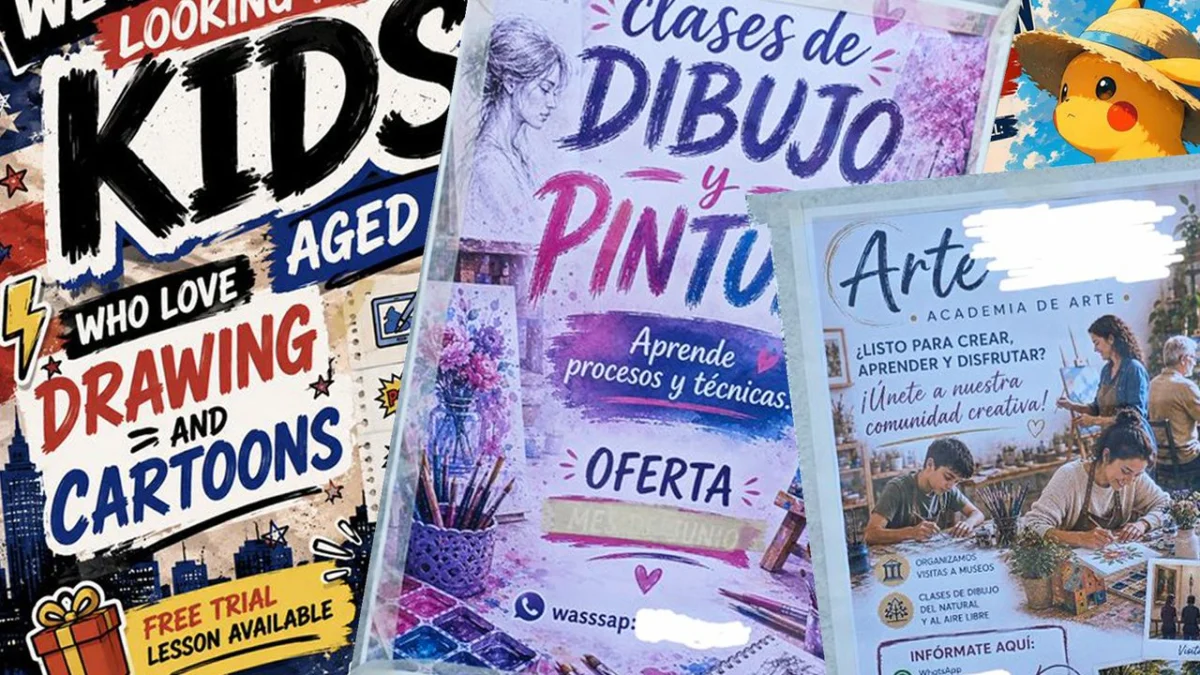
We have long cautioned against the pitfalls of using AI-generated food imagery in restaurant marketing—a trend that often results in "Lovecraftian" culinary horrors that leave customers more nauseated than hungry. However, a new, arguably more damaging trend has emerged. Across social media platforms and city streets, art schools, design workshops, and educational institutions are increasingly promoting their creative courses using AI-generated illustrations.
The backlash has been swift and severe. For many in the creative community, advertising a drawing class with a machine-generated image is the ultimate act of hypocrisy. It raises a fundamental question: Why would a student pay for human instruction from a teacher who clearly values automation over the craft they claim to teach?
The Chronology of a Creative Crisis
The trend began surfacing prominently in mid-2026, as generative AI tools became standard in the casual design workflow. What started as a cost-saving measure for local community centers quickly escalated into a widespread branding issue for higher education.
- Early 2026: Small-scale independent art workshops began utilizing AI tools to churn out flyers, citing the ease and speed of generation as a way to focus on "the curriculum" rather than "the marketing."
- Summer 2026: Larger digital skills providers, such as Kodland, faced intense scrutiny after social media users flagged their use of AI-generated assets for graphic design courses. The juxtaposition of a high-tech course teaching design and a marketing asset clearly "slop-generated" by a prompt struck a nerve.
- September 2026: The discourse reached a boiling point on X (formerly Twitter) and Reddit. A series of viral posts highlighted how tone-deaf these marketing choices were, with users across the globe expressing disbelief that an institution would devalue its own product so effectively.
- Late 2026: The controversy migrated from social media into the halls of academia, as students began documenting the use of AI-generated logos and flyers within universities and high schools, leading to internal protests and calls for "human-only" design policies in institutional communications.
Supporting Data and the Psychology of Perception
The frustration expressed by the creative community is not merely rooted in elitism; it is grounded in the psychology of consumer trust. When a student signs up for a painting class, they are not just buying the syllabus; they are buying into the teacher’s aesthetic judgment and technical mastery.
According to anecdotal evidence from design forums, the "trust gap" created by AI marketing is significant. When a potential student sees a polished, albeit uncanny, AI-generated image advertising a portraiture class, the immediate reaction is one of skepticism.
- The "KFC Argument": Critics frequently compare this phenomenon to a culinary school advertising its services with a photo of a generic fast-food burger. It signals a disconnect between the stated goal (learning to craft food/art) and the methodology (purchasing/generating a mass-produced substitute).
- The Skill-Signaling Failure: Design is, at its core, a form of communication. When an organization fails to use its own design expertise to create a flyer for a design course, it sends a clear message: We do not believe our own craft is worth the time it takes to produce.
As one Reddit user noted, "Even a poorly executed, hand-drawn sketch would have been more professional than a perfect AI image. A bad sketch shows the teacher is trying, struggling, and learning—the exact qualities they should be fostering in students."
Implications for the Creative Industry
The implications of this trend extend far beyond the immediate embarrassment of a poorly received flyer. They touch upon the existential crisis facing creative education in an AI-saturated market.
1. The Devaluation of Human Labor
When schools and universities—institutions tasked with shaping the next generation of professionals—use AI to replace creative tasks, they implicitly tell students that their future labor is expendable. If the university’s own marketing department views human design as an unnecessary expense, why should the student expect a career in the arts to be anything other than "fruitless"?
2. The Erosion of Artistic Authority
A teacher’s authority is built on their ability to mentor students through the creative process. By outsourcing the visual representation of that process to a machine, the educator abdicates their role as a practitioner. It creates a "do as I say, not as I do" dynamic that undermines the mentorship model.
3. The Ethical and Legal Minefield
Educational institutions are expected to be bastions of integrity. Many AI image generators are trained on datasets that include the work of artists who did not consent to their labor being used to train the very machines that might replace them. For an art school to use such tools is, to many, a betrayal of the very community they are supposed to nurture.
Official Responses and Institutional Silences
While many individual tutors have defended their use of AI as "embracing the future," institutional responses have been largely defensive or non-existent. Most schools flagged for these practices have avoided formal press statements, instead quietly swapping out the AI imagery for human-made assets after social media pressure mounts.
In contrast, some forward-thinking design programs have adopted a "transparent curriculum." These institutions argue that AI is a tool, not a replacement. They emphasize that while they may teach about AI, they would never use it to represent the foundational skills of their program.
"There is a difference between using a chisel to carve stone and using a factory to mold plastic," says a representative from a London-based design collective. "If you are teaching a student how to carve, you don’t show up with a plastic replica. You show up with the stone and the tools."
The Path Forward: Can the Industry Reclaim Its Soul?
The backlash serves as a necessary wake-up call. For the arts to remain a viable, respected, and human-centric field, those who teach it must act as its stewards.
Recommendations for Educators:
- Lead by Example: If you are teaching a visual craft, ensure your marketing is a testament to that craft. Hand-drawn illustrations, typography designed by humans, and authentic photography are essential markers of credibility.
- Define the Role of AI: If you must use AI, be transparent about it. Frame it as a technical exploration rather than a shortcut for content creation.
- Prioritize Human Value: Recognize that students are paying for the human experience—the feedback, the nuance, and the lived reality of an artist. Marketing should reflect the humanity of the instructors.
The irony of the current situation is that generative AI is, ironically, a technology that requires design knowledge to prompt effectively. But there is a cavernous divide between "knowing how to prompt" and "knowing how to design." The former is a technical skill; the latter is a cultural, historical, and deeply human pursuit.
As the industry continues to grapple with the integration of AI, one thing remains clear: the art world’s survival depends on its ability to distinguish between the convenience of automation and the substance of true creative labor. When an institution sacrifices its own creative identity to save a few hours of work, it doesn’t just lose its audience’s trust—it loses the very essence of why art matters in the first place.
The next time an art school decides to generate a flyer, they might want to consider whether they are selling a class, or simply admitting that they have nothing left to teach.

 Sagoh
Sagoh
 Lina Irawan