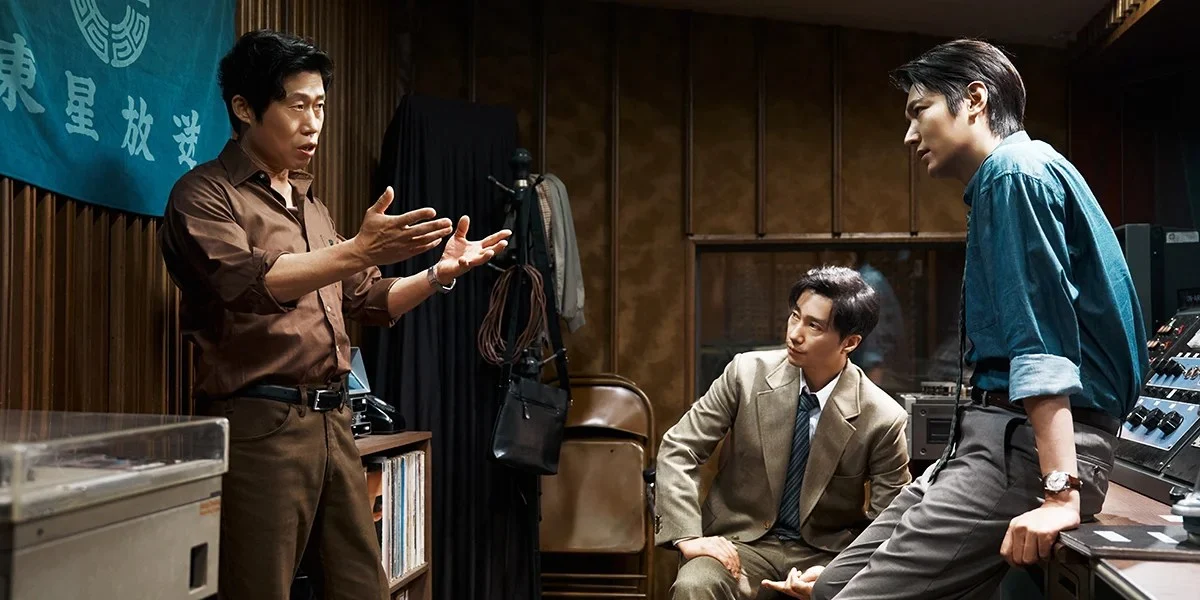
In the landscape of contemporary South Korean cinema, few directors possess the delicate touch of Hur Jin-ho. Known primarily for his lyrical explorations of romance and human intimacy, Hur has pivoted sharply into the high-stakes world of political intrigue with his latest feature, The Assassin(s). The film is a sprawling, star-studded investigative thriller that reimagines the 1974 attempted assassination of Prime Minister Park Chung-hee—a pivotal moment in Korean history that resulted in the tragic death of First Lady Yuk Young-soo and an innocent bystander.
Much like Oliver Stone’s JFK, Hur’s film does not claim to offer a definitive historical record. Instead, it weaponizes the "holes" in the public investigation to craft an imaginative, clockwork saga of conspiracy, state-sponsored malfeasance, and the perilous pursuit of truth. By blurring the lines between documented history and speculative fiction, The Assassin(s) has emerged as a provocative exploration of the cost of press freedom under the boot of authoritarianism.
The Historical Crucible: A Chronology of Chaos
To understand the weight of Hur’s narrative, one must look at the historical framework from which the film draws its inspiration. On August 15, 1974, during a ceremony commemorating the 29th anniversary of Korea’s liberation from Japanese colonial rule at the National Theater of Korea, an assassin named Mun Se-gwang fired shots at the presidential podium.
The film’s internal logic meticulously reconstructs this day through a lens of suspicion. It posits that the event was not merely the act of a lone radical, but a botched operation facilitated—or at least permitted—by high-ranking government officials.
- Pre-Event Tension: The film establishes a backdrop of severe censorship. Journalists at the Dong-sung Daily are shown being harassed by agents of the Korean Central Intelligence Agency (KCIA), a state-security apparatus that functioned as the muscle for the Park administration.
- The Incident: As the Prime Minister delivers his Liberation Day speech, the film tracks the movements of the assassin and the security failures that allowed him to reach the stage.
- The Aftermath: The death of First Lady Yuk Young-soo creates a national vacuum of grief, which the government exploits to tighten its grip on the media and silence dissenting voices, setting the stage for the film’s central mystery.
The Architects of Inquiry: Character-Driven Investigation
At the heart of the film’s narrative engine are three protagonists whose disparate roles converge in the face of danger. Hur Jin-ho wisely centers the story on the professional and personal stakes of these men, grounding the sprawling conspiracy in human emotion.
Young-il (Lee Min-ho): The Firebrand
As a rookie journalist for the Dong-sung Daily, Young-il is a character defined by his pedigree and his defiance. Being the younger brother of a high-ranking government official, he possesses a degree of insulation that he quickly discards in favor of journalistic integrity. His presence at the National Theater during the shooting provides the audience with a visceral, first-hand account of the chaos, thrusting him into the center of a cover-up he is ill-equipped to survive.
Jae-hwan (Park Hae-il): The World-Weary Skeptic
Jae-hwan, the head of the Dong-sung Daily City Desk, represents the intellectual weight of the film. Haunted by the compromises he has had to make to keep his paper running, his pursuit of the truth is an act of redemption. His investigation is not conducted in the halls of power, but in the shadows, relying on documents, informants, and the kind of dogged patience that defined the era’s best investigative reporting.
Cheol-goo (Yoo Hai-jin): The Reluctant Whistleblower
The character of Cheol-goo, a local detective, provides the film’s most poignant moral anchor. Having personally witnessed the security apparatus actively stepping aside to allow the assassin to enter the theater—only to be reprimanded for his own intervention—Cheol-goo serves as the bridge between the state’s official narrative and the reality on the ground. His transition from a cog in the machine to an informant for the press is the catalyst that transforms the film from a procedural into a full-blown political thriller.
Supporting Data: The Machinery of Conspiracy
The Assassin(s) distinguishes itself by focusing on the "process" of the investigation. The film is packed with scenes of characters sifting through dusty archives, decoding cryptic telephone logs, and navigating the labyrinthine corridors of mid-70s Seoul.
The film’s supporting cast adds a layer of palpable dread. Park Hoon shines as a vicious KCIA operative whose presence in every scene serves as a reminder of the immediate, physical danger faced by the protagonists. Bae Seong-woo, as the beleaguered editor of the Dong-sung Daily, offers a masterclass in compromise, capturing the internal struggle of a man torn between the duty to his employees and the duty to his country.
The narrative threads regarding the Zainichi (ethnic Korean in Japan) background of the assassin add a layer of geopolitical complexity. By weaving in the frayed tensions between North and South Korea, Hur elevates the mystery from a local crime to a grand-scale international intrigue, suggesting that the "truth" is a commodity that neither the North nor the South can afford to reveal.
Official Responses and Public Sentiment
While the film begins with a clear disclaimer regarding its fictionalized nature, its impact on the South Korean public has been profound. At the Toronto International Film Festival, where the film premiered to critical acclaim, it was honored as the second runner-up for the International People’s Choice Award. This recognition highlights the film’s ability to tap into a universal, yet deeply national, sentiment: a frustrated anti-authoritarianism that continues to echo through the corridors of Korean history.
Historically, the Park Chung-hee era remains a subject of fierce debate. Supporters point to the "Miracle on the Han River" as evidence of his leadership, while critics emphasize the brutal suppression of human rights and the chilling of the press. By choosing to dramatize this specific event, Hur Jin-ho is not necessarily seeking to rewrite history, but to honor the spirit of those who, in the face of extreme censorship, dared to ask questions that the state wanted to keep buried.
Implications: The Legacy of Truth
The brilliance of The Assassin(s) lies in its ability to synthesize a "what-if" scenario into a high-octane thriller. It challenges the viewer to consider the nature of political accountability. In an era where the flow of information is often controlled by those in power, the film stands as a tribute to the role of the press as the "fourth estate"—the essential check against the excesses of government.
The film suggests that the "truth" behind the 1974 assassination may never be fully known. By acknowledging the gaps in the historical record, Hur allows his characters to fill the void with their own brand of justice. While the audience knows that the film’s climax is an invention of the screenplay, the emotional payoff is undeniably real. It is a reminder that in the face of state-mandated silence, the act of asking a question is itself a revolutionary gesture.
Ultimately, The Assassin(s) is a masterwork of tone and pacing. It is a film that luxuriates in the details of the investigation while maintaining the velocity of an action movie. As the pieces of the puzzle fall into place, the audience is left with a sense of "journalistic urgency" that feels both timeless and deeply relevant to today’s media environment.
Whether the film’s specific conspiracy theories hold water is almost secondary to its success as a piece of cinema. It succeeds because it taps into the collective memory of a nation—a memory that is still sorting through the debris of its past. The Assassin(s) is not just a film about an assassination; it is a film about the relentless, often dangerous, and always necessary process of holding power to account. It is, by all accounts, a stirring, propulsive, and deeply intelligent piece of entertainment that demands to be seen and debated.