Pevita Pearce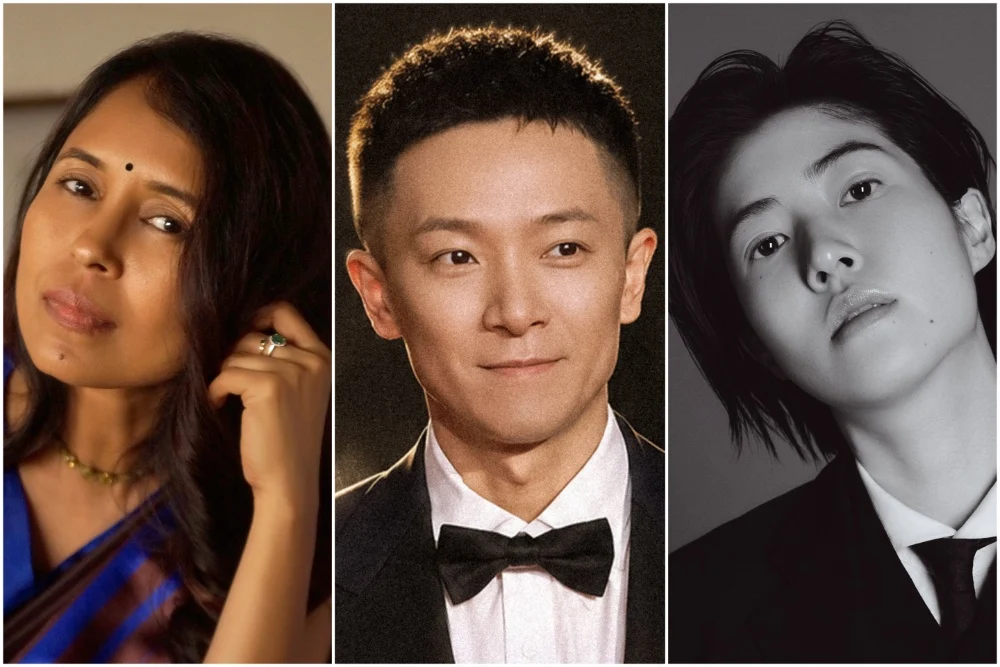
The Busan International Film Festival (BIFF), Asia’s premier cinematic gathering, has officially announced the distinguished panel of jurors for its prestigious New Currents Award at the upcoming 31st edition. In a move that underscores the festival’s commitment to nurturing emerging voices, the jury will feature a powerhouse trio representing the diverse landscape of modern filmmaking: acclaimed Indian director Rima Das, prolific Chinese producer Shan Zuolong, and celebrated Korean actor Shim Eun-kyung.
This announcement sets the stage for a high-stakes competition where debut feature films from across the continent will vie for the festival’s most coveted honor. The New Currents Award, renowned for identifying the next generation of Asian auteurs, carries with it a KRW 20 million ($14,400) cash prize and, more importantly, the international prestige that has launched the careers of some of the most respected names in global cinema today.
A Legacy of Discovery: The Stakes of the New Currents Award
For over three decades, the New Currents section has served as the heartbeat of BIFF. It is designed specifically to highlight the inaugural efforts of filmmakers who have yet to reach the mainstream, offering them a global platform. Eligible films—those making their world or international premieres—are drawn from the festival’s Competition and Vision sections.
The selection process is rigorous, and the resulting award is widely considered the "Oscars of Asian debut features." By inviting figures as influential as Das, Shan, and Shim to preside over this year’s jury, BIFF is signaling that the evaluation process will be as much about artistic bravery as it is about technical prowess. The jurors are tasked with identifying films that challenge existing narratives, push stylistic boundaries, and offer a fresh perspective on the Asian experience.
Meet the Jurors: A Trio of Cinematic Visionaries
The selection of this year’s jury reflects a deliberate balance of creative, commercial, and critical expertise, spanning the breadth of the Asian film industry.
Rima Das: The Poet of Resilience
Based in Assam, India, Rima Das has established herself as a vital voice in independent world cinema. Known for an intimate, observational visual style, her work consistently explores the profound relationship between human beings and the natural world.
Das’s trajectory is a testament to the power of independent storytelling. Having garnered over 75 international awards and seen her films screen at more than 150 festivals, she represents the gold standard for the very filmmakers the New Currents Award seeks to support. Her filmography is a masterclass in regional storytelling with universal resonance:
- "Village Rockstars" (2017): A career-defining work that swept India’s National Film Awards and served as the country’s official submission to the Academy Awards.
- "Bulbul Can Sing" (2018): A poignant follow-up that further cemented her reputation for capturing the nuance of adolescence.
- "Tora’s Husband" (2022) and "Village Rockstars 2" (2024): These works demonstrated her evolution as a filmmaker, with the latter winning the Kim Jiseok Award at BIFF 2024.
- "Not a Hero" (2026): Her most recent success, which garnered a Crystal Bear special mention at Berlin’s Generation KPlus.
As a member of the Academy of Motion Picture Arts and Sciences, Das brings a global sensibility to the jury, ensuring that the winning film is evaluated not just for its local impact, but for its potential to resonate on the world stage.
Shan Zuolong: The Architect of Modern Chinese Cinema
Behind every great director is a producer who understands the alchemy of film. Shan Zuolong has become a central figure in the Chinese-language film industry, particularly known for his long-standing collaboration with auteur Bi Gan. His influence is evident in a string of critically acclaimed hits that have dominated the festival circuit for the last decade.
Shan’s production philosophy is rooted in the belief that bold artistic risks pay off. His portfolio reads like a history of modern independent festival successes:
- "Kaili Blues" (2015): The film that introduced the world to the unique visual language of Bi Gan and won the best emerging director prize at Locarno.
- "Long Day’s Journey Into Night" (2018): A dreamlike masterpiece that received a rapturous reception at Cannes.
- "Love Is a Gun" (2023): The winner of Venice’s prestigious Lion of the Future.
- "The Botanist" (2025): A Grand Prix winner at the Berlin International Film Festival.
- "Resurrection" (2025): Which won the Special Prize at Cannes and was honored at last year’s BIFF for artistic contribution.
Joining the Producers Branch of the Academy in 2026, Shan represents the bridge between high art and production viability, making him an ideal juror to evaluate the structural integrity and market potential of debut features.
Shim Eun-kyung: The Versatile Star of East Asia
Shim Eun-kyung stands as one of the most respected actors in contemporary Asian cinema. Her ability to transition between mainstream commercial hits and nuanced, independent character studies makes her a unique voice on the jury.
Her career is defined by a series of historic milestones:
- "Sunny" (2011) and "Miss Granny" (2014): These films established her as a box-office powerhouse in Korea, earning her multiple Best Actress honors at the Baeksang Arts Awards and Buil Film Awards.
- Crossing Borders: She made history as the first Korean actor to win the Japan Academy Film Prize for her role in "The Journalist" (2019), showcasing her linguistic and emotional versatility.
- "Two Seasons, Two Strangers" (2025): Her latest work received the Golden Leopard at Locarno, further cementing her status as an international star who champions challenging, non-conformist material.
Shim’s inclusion on the jury provides a vital perspective on performance and character development—elements that often distinguish a "good" debut from a "great" one.
The 31st BIFF: A Return to Form
The 31st edition of the Busan International Film Festival is scheduled to take place from October 6–15. The festival will once again transform the Busan Cinema Center and various venues throughout the city into a global hub for cinema.
Alongside the film screenings, the 21st Asian Contents & Film Market will be held from October 10–13, providing a commercial backbone to the artistic festivities. This convergence of creative and business elements is what makes BIFF the most important event on the Asian film calendar.
Implications for the Future of Asian Cinema
The appointment of this jury panel suggests that BIFF is placing a renewed emphasis on "globalized regionalism"—the idea that a story can be rooted in the soil of a specific country while speaking a universal language of human emotion and artistic technique.
For the young directors participating in the New Currents section, the presence of Das, Shan, and Shim offers more than just a judging panel; it offers a mentorship model. These three jurors represent the pathways that many of these debut directors hope to follow: the path of the visionary auteur (Das), the path of the strategic producer (Shan), and the path of the globally recognized performer (Shim).
As the industry faces the dual challenges of rapid technological change and the shifting nature of theatrical distribution, the New Currents Award serves as a crucial barometer for the health of Asian cinema. The jury’s selection will inevitably set a tone for the coming year, influencing which genres, themes, and regional perspectives are prioritized by financiers and festival programmers globally.
In selecting these three specific figures, the Busan International Film Festival has reaffirmed its mission: to ensure that the next generation of Asian storytellers does not just survive in the industry, but thrives in it. As the world turns its eyes to Busan this October, all eyes will be on these three jurors, waiting to see which new voice they choose to amplify.


 Nana
Nana
 Jia Lissa