Suro Senen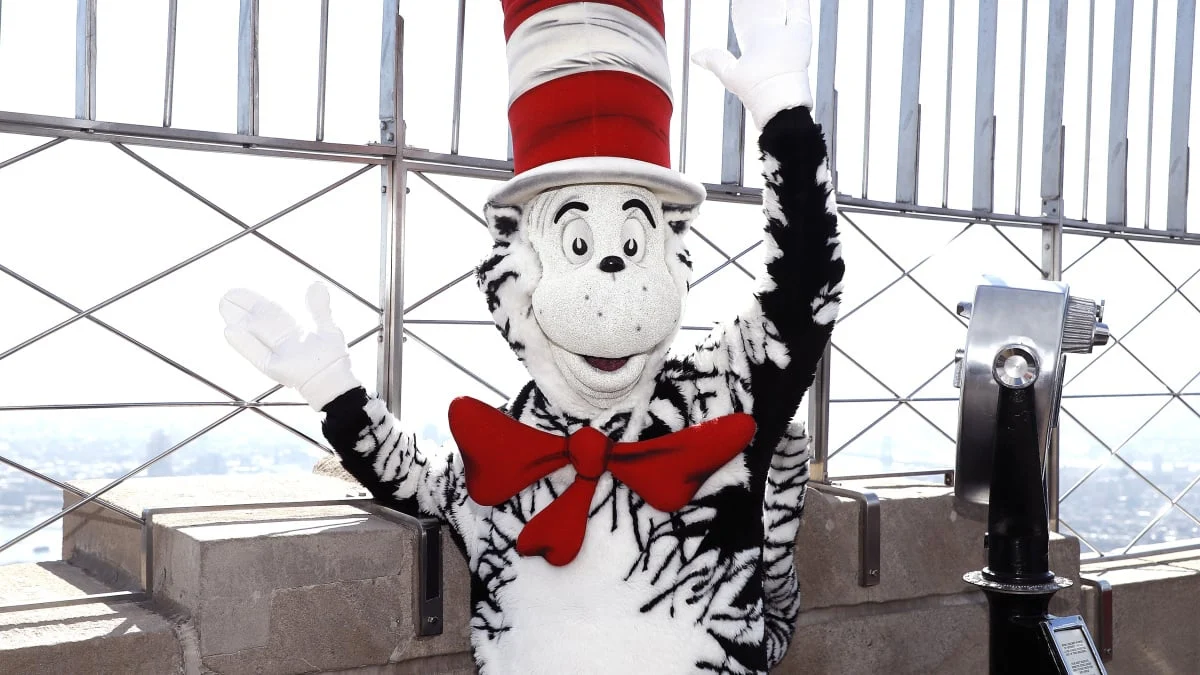
Of all the literary figures one might associate with terror, the whimsical, rhyming protagonist of Dr. Seuss’s 1957 classic The Cat in the Hat sits comfortably at the bottom of the list. Yet, in a chilling demonstration of how quickly digital misinformation can metastasize into real-world chaos, this beloved children’s character has been weaponized. A viral, AI-fueled internet phenomenon has transformed the Cat into a figure of dread, triggering school closures, police investigations, and widespread anxiety across the United States.
The Genesis of a Digital Horror
The trend, which began as a niche corner of internet "creepypasta" (horror fiction shared online), can be traced back to late June. A TikTok user uploaded a clip featuring the unsettling, anthropomorphic iteration of the Cat from the 2003 live-action film starring Mike Myers. By pairing the footage with a dissonant, eerie soundtrack and a grim, ambiguous caption, the creator tapped into a subconscious discomfort many viewers already harbored toward the film’s hyper-realistic costume design.
The original TikTok video, which was later deleted, amassed over 4 million views in a single week. The algorithm acted as an accelerant, encouraging copycat creators to synthesize their own "sightings." Using generative AI tools, users began crafting high-fidelity images and short videos that placed the Cat in mundane, recognizable environments: peering through suburban bedroom windows, lingering in driveways at twilight, or stalking the edges of dark, residential streets.
The psychological effectiveness of these posts relied on their uncanny familiarity. By utilizing the aesthetic of low-quality doorbell camera footage, the content mimicked the visual language of legitimate security threats. To the casual scroller, the distinction between a creative horror project and a genuine, localized security alert became increasingly blurred.
Chronology of the Escalation
The evolution from a digital prank to a nationwide security concern occurred in distinct phases:
- Late June – July: The trend remains largely confined to "horror-core" TikTok circles. Content is generic, focusing on the character’s "sightings" in the UK and Ireland.
- Early August: The trend gains momentum as the original 2003 movie costume is listed for public auction. The high-resolution photos of the weathered, hollow-eyed suit provide new, disturbing source material for AI models to refine.
- Mid-August: The content shifts from global/vague to local/specific. Accounts begin utilizing geofencing and social media tagging to target specific school districts and municipalities in the United States.
- Late August: The transition to actionable threats begins. Posts move beyond "spooky" imagery and incorporate explicit language, such as "you’re next" or "don’t leave your windows unlocked," often naming specific students or academic institutions.
- Current Status: Law enforcement agencies from Kentucky to Tennessee are actively investigating, with school districts implementing heightened security protocols and, in some cases, shifting to remote learning to maintain student safety.
The Intersection of AI and Public Panic
The current "Cat in the Hat" panic shares a striking structural DNA with the "Clown Sightings" hysteria of 2016. In 2016, individuals had to physically dress up in costumes to manifest the threat, which limited the scope and frequency of the sightings. Today, however, the barrier to entry has vanished.
"The shift we are seeing is the democratization of terror," explains Dr. Aris Thorne, a digital sociology researcher. "In 2016, you needed a mask and a physical location. Today, anyone with a smartphone and a subscription to an image-generation AI can create a convincing, location-specific threat from their bedroom. The sheer volume of this content makes it impossible for authorities to ignore, even when they know the source is likely a troll."
The danger lies in the "saturation effect." As thousands of AI-generated images flood social media, the public’s threshold for what constitutes a credible threat drops. When a teenager sees a doctored photo of a horror-movie character standing outside their own high school, the logic of "it’s just a meme" is often superseded by the primal instinct of fear.
Official Responses and the Reality of Risk
Law enforcement agencies have been forced to dedicate significant resources to what they characterize as "digital noise." In the United Kingdom, the Wexford Garda issued multiple statements clarifying that the images were entirely fabricated via AI, yet the reports persisted.
In the United States, the response has been more severe due to the localized nature of the threats. In Kentucky, where the trend hit particularly hard, the response was immediate. Assumption High School in Louisville was forced to pivot to virtual instruction on August 31, citing a high volume of threatening social media posts that named specific students.
"We are dealing with a situation where the distinction between a prank and a criminal threat has effectively evaporated," said a representative from the Louisville Metro Police Department. "Even if the original image is fake, the act of targeting a school and naming individuals transforms a meme into a potential terroristic threat. We treat every report with the gravity it demands."
In Allen County, Kentucky, the consequences of this trend reached a legal turning point when a juvenile was arrested and charged in connection with the creation and dissemination of threatening content related to the trend. Similar actions are being prepared by authorities in Texas, Oklahoma, and Tennessee, where Homeland Security offices have begun monitoring social media platforms for patterns of escalation.
Implications for Digital Citizenship
The "Cat in the Hat" phenomenon serves as a grim case study for the future of digital misinformation. It highlights three critical vulnerabilities in modern society:
- The Fragility of School Safety: Academic institutions are now forced to balance the need for open communication with the necessity of protecting students from digital harassment. Every "meme" now carries the risk of a school lockdown.
- The Weaponization of AI: The ease with which AI can create photorealistic, location-specific threats is currently outpacing the ability of platforms and law enforcement to moderate or mitigate them.
- The Legal Trap for Youth: Many of the individuals generating these threats are minors who view the act as a harmless prank. They fail to understand that when a post leads to a school closure or a police investigation, the legal consequences move from the realm of school discipline to the criminal justice system.
A Warning to the Public
As the trend continues to mutate, law enforcement agencies across the country are issuing a unified plea: Do not engage, and do not replicate.
"The thrill of going viral is not worth a permanent criminal record," a spokesperson for the Tennessee Office of Homeland Security stated. "When you participate in these trends, you aren’t just sharing a joke; you are contributing to a climate of fear that disrupts education and drains public resources. If you see a post targeting your school, report it to the authorities—do not share it, do not comment on it, and do not try to make your own version."
Ultimately, the Cat in the Hat is not stalking American neighborhoods. He is a relic of a 2003 film, trapped in the pixels of a server, waiting to be summoned by a bored teenager with an AI prompt. But while the character is fictional, the fear is real, and the legal repercussions for those behind the screen are becoming increasingly concrete. As the dust settles on this latest digital panic, the incident stands as a stark reminder of the power—and the danger—of the internet in the age of artificial intelligence.

 Layla Zulfa
 Muslim