Sagoh
Sagoh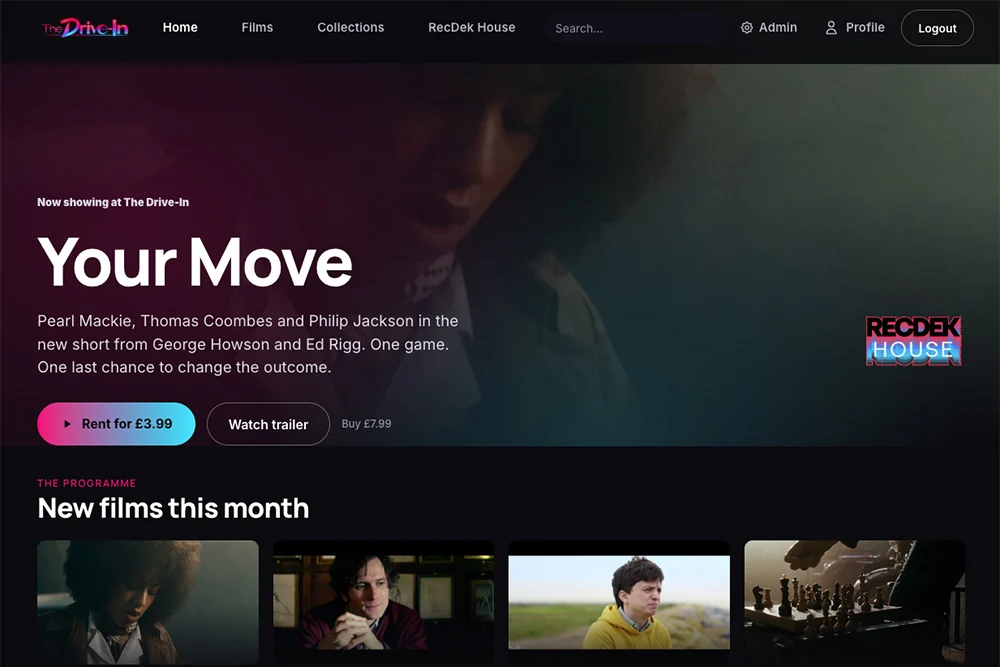
In an era dominated by the algorithmic dominance of global streaming giants, where independent cinema is frequently relegated to the digital margins, a bold new initiative is poised to disrupt the status quo. RecDek, the community-centric discovery app for film and television, has officially announced the launch of "The Drive-In," a transactional video-on-demand (TVOD) service designed exclusively to empower independent filmmakers.
Scheduled for a high-profile debut this October during the London Film Festival, The Drive-In seeks to solve the industry’s most persistent dilemma: how to effectively distribute and monetize independent work without surrendering creative control or IP ownership to faceless corporate entities. By integrating directly into the existing RecDek ecosystem, the platform promises to transform the fleeting connections of the film festival circuit into a sustainable, year-round engine for indie cinema.
The Genesis: From Discovery App to Creative Hub
To understand the significance of The Drive-In, one must look at the evolution of RecDek. What began as a niche platform for film and TV recommendations—driven by the curation of friends, family, critics, and festival programmers—has matured into a robust professional network.
The launch of the "RecDek House" hub catalyzed this growth, fostering a vibrant, 17,000-strong community of directors, producers, financiers, and distributors. This community acts as a microcosm of the independent film industry, providing a space where collaboration, rather than competition, is the primary currency. The Drive-In represents the logical conclusion of this growth, providing the infrastructure to bridge the gap between creative networking and commercial distribution.
A Chronology of Empowerment
The journey toward The Drive-In has been characterized by a deliberate, filmmaker-first philosophy.
- Phase 1: Building the Network: RecDek established its footing as a discovery tool, focusing on high-quality curation rather than mass-market volume.
- Phase 2: Community Consolidation: The launch of RecDek House moved the platform from a consumer-facing app to an industry-facing hub, centralizing talent and resources.
- Phase 3: The Infrastructure Partnership: Recognizing the need for technical stability, RecDek entered a strategic partnership with Hiway, a specialist in direct-to-fan economic infrastructure. This partnership allowed RecDek to bypass the traditional "aggregator" model.
- Phase 4: The Official Unveiling: Following months of development, the service was announced for an October 17, 2024 launch, coinciding with the industry-heavy buzz of the London Film Festival.
- Phase 5: The Call to Action: Currently, RecDek is accepting submissions through their portal, RecDekHouse.com, inviting the inaugural cohort of filmmakers to stake their claim on the platform.
Breaking the Chains: How The Drive-In Works
The technical architecture of The Drive-In is built on a radical premise: transparency. Unlike traditional streaming services that require filmmakers to upload their master files—thereby losing control over the content—The Drive-In streams directly from the filmmaker’s own library within the platform.
Key Operational Pillars:
- IP Retention: Filmmakers retain 100% of their intellectual property. The platform does not "lock away" content; it acts as a window rather than a vault.
- Dynamic Territory Management: In a move that respects traditional distribution models, filmmakers can remove specific territories from The Drive-In the moment they secure a deal with a traditional distributor. This ensures that digital independence never interferes with potential theatrical or global sales.
- Direct-to-Fan Revenue: Producers set their own price points. Furthermore, they keep the receipts from the very first sale, eliminating the convoluted accounting practices that have plagued independent film distribution for decades.
- Real-Time Data Analytics: For the first time, independent creators will have access to the same caliber of audience data as studio executives, allowing them to track who is watching their work and where those viewers are located.
Infrastructure and the "Direct-to-Fan" Revolution
The partnership with Hiway is the cornerstone of The Drive-In’s functionality. By providing the "rails" for the transaction, Hiway allows RecDek to focus on the community and the content. David Orman, CEO of Hiway, notes that the industry has long lacked a specialized screen for the independent sector—a place where the creator remains the primary stakeholder.
"The missing piece was a screen of their own," says Orman. "The Drive-In gives them that, on terms the industry rarely offers. RecDek owns the brand and the relationship, we provide the rails. The tools now exist for RecDek to run their own show."
This approach effectively bypasses the predatory middlemen who have historically taken significant "distribution fees" while providing little in the way of actual marketing or support.
The Visionary Perspective: Ed Rigg on Industry Change
At the heart of the project is Ed Rigg, the writer/director who founded RecDek. For Rigg, The Drive-In is not merely a product; it is a political statement regarding the state of modern cinema.
"We champion the voices studios drown out," Rigg remarked during the announcement. His frustration with the traditional system is palpable. "For too long, it had been unclear exactly how filmmakers get their movies distributed. Sure, you can pitch, screen your work, hustle—and so you should. Go after wherever you think your movie will be looked after best."
However, Rigg emphasizes that The Drive-In exists as an essential fallback and a primary home for those who choose autonomy. "The Drive-In will exist for when filmmakers decide to take their film’s future into their own hands. Filmmakers keep everything that should be theirs, and our community—and the wider industry—gets a place to watch the shows we have been shouting about."
Implications for the Global Film Market
The launch of The Drive-In arrives at a critical juncture for the film industry. With major streamers shifting toward cost-cutting and consolidation, many mid-budget and micro-budget films are finding themselves without a home.
1. The Democratization of Distribution
The Drive-In lowers the barrier to entry for filmmakers who may have been rejected by traditional festivals or distributors. It validates the "direct-to-fan" economy, suggesting that a curated, highly targeted audience is often more valuable to a filmmaker than a massive, disinterested general audience.
2. A Challenge to Traditional Gatekeepers
By providing an alternative to the gatekeepers, RecDek is forcing a conversation about equity. If independent filmmakers can reach their audience directly—and profitably—the bargaining power shifts back toward the creator. This could compel traditional distributors to offer better terms to keep talent from going "independent."
3. Sustainability Through Community
The most significant long-term implication is the sustainability of the model. By anchoring the streaming platform within a professional network (RecDek House), the creators are guaranteed an audience of peers, financiers, and critics who are genuinely invested in the craft. This creates a high-quality feedback loop that is impossible to replicate on broad, generic streaming services.
Conclusion: The Road Ahead
As the industry converges on London this October, the launch of The Drive-In will serve as a bellwether for the future of independent cinema. It is a bold, necessary experiment in technological sovereignty.
For the filmmaker who has spent years perfecting their craft only to see their project gather dust on a hard drive, The Drive-In offers something rare: a digital stage where they remain the master of their own destiny. As Ed Rigg and his team prepare to open the gates, the message to the independent film world is clear: stop waiting for the gatekeepers to open the door. Build your own.
Filmmakers interested in joining the inaugural cohort for The Drive-In can submit their projects at RecDekHouse.com.

 Laily UPN
 Ali Ikhwan