Iffa Jayyana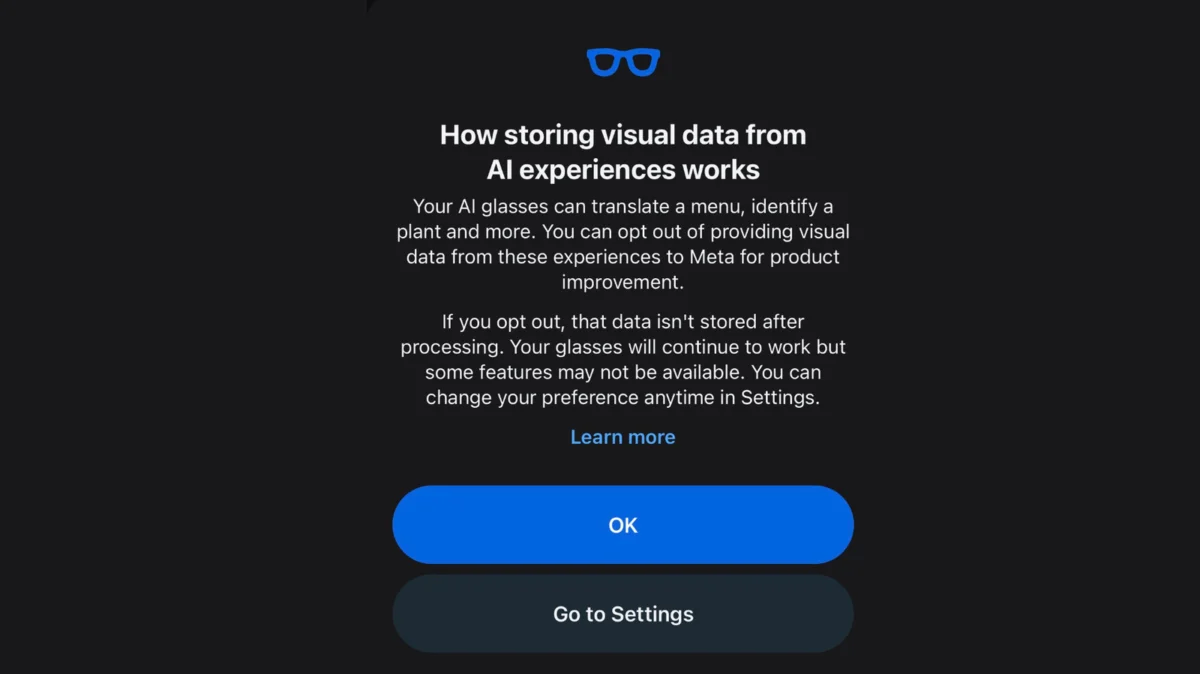
In an era where artificial intelligence is increasingly woven into the fabric of wearable technology, the boundary between user assistance and data harvesting has become a focal point of public scrutiny. Meta, the parent company of Facebook and Instagram, has recently taken a significant step toward transparency by allowing users of its smart glasses—specifically the Ray-Ban Meta collection—to opt out of having their "visual data" used for AI model training.
This move comes as a response to growing concerns regarding how tech giants utilize the footage captured by camera-equipped wearables. For users who value their privacy, the ability to control the flow of data from their personal devices to Meta’s corporate servers is not just a feature—it is a fundamental necessity.
The Core Facts: What Has Changed?
Meta has officially introduced a privacy control setting within the Meta AI application, empowering users to prevent the company from leveraging the visual data captured by their smart glasses for the purpose of refining and training its AI models.
The update specifically targets "visual data," which Meta defines as information captured during AI-assisted interactions. It is crucial to distinguish this from the standard photos and videos users manually record with the glasses. According to Meta, the company’s practice of storing visual data applies only when users engage with specific AI features—such as asking the glasses to identify a landmark, translate a foreign language on a menu, or provide information about an object in the user’s field of view.
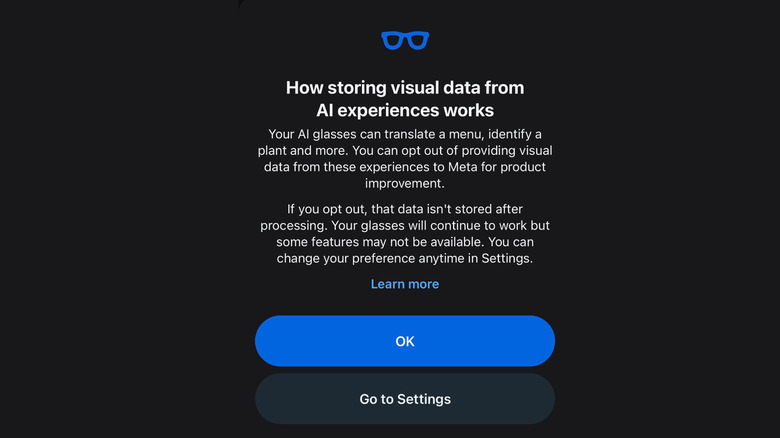
When a user opts out of this data collection, Meta asserts that the data is not stored after the initial processing is completed. This ensures that the user’s interaction remains ephemeral, preventing the company from keeping a permanent log of the environment the user was observing at that moment.
Chronology: The Path to User Choice
The introduction of this setting follows a period of rapid development for Meta’s hardware division.
- September 2023: Meta launched its second-generation Ray-Ban Meta smart glasses, featuring improved cameras, better audio, and deeper integration with the Meta AI assistant. The glasses were marketed as a "lifestyle" device, capable of capturing high-quality content for social media and providing real-time information via AI.
- Early 2024: As Meta’s AI capabilities advanced, questions regarding the training data for its Large Multimodal Models (LMMs) began to mount. Privacy advocates raised alarms regarding the potential for human reviewers to see intimate or private footage recorded by users.
- Late 2024: Following internal evaluations and pressure from regulatory bodies, Meta announced its intent to formalize an opt-out mechanism.
- Current Status: Meta has begun pushing notifications to users via the Meta AI app, guiding them through the steps required to disable the training features.
Navigating the Settings: How to Opt Out
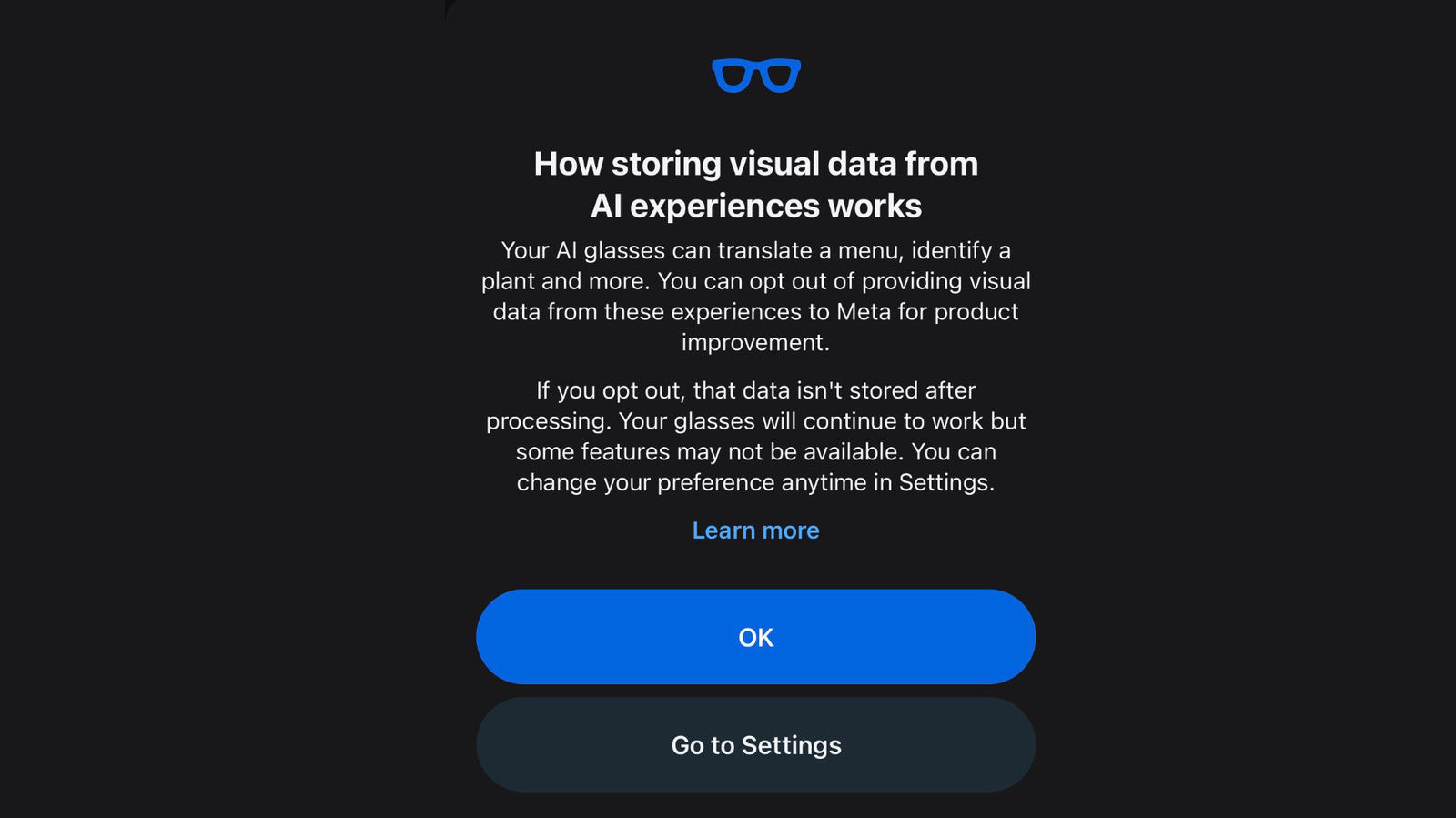
The process for disabling data collection is intentionally granular, requiring users to take action on a per-device basis.
Step-by-Step Instructions
- Preparation: Ensure your smart glasses are removed from their charging case and actively connected to your smartphone via Bluetooth.
- Access the App: Open the Meta AI application (or the companion app for your glasses).
- Navigate: Locate the settings menu specifically for your connected smart glasses.
- Configure: Find the section labeled "Meta AI."
- Adjust: Toggle off the setting labeled "Store visual data from AI experiences."
Important Note for Multi-Device Users: If you own multiple pairs of Ray-Ban Meta glasses, you must repeat this process for each individual device. The setting is stored locally on the hardware, not universally across your Meta account.
The Trade-Off: Features at Risk
Transparency is a double-edged sword. Meta has been clear that opting out of data collection will result in a degraded experience for certain AI-driven functionalities.
The primary casualty of this privacy setting is the "visual reminder" feature. For instance, if a user points their glasses at a product in a store and asks the AI, "Remind me to buy this next week," the system relies on the stored visual data to correlate the user’s voice command with the object in question. Without the ability to store that visual reference, the AI cannot "remember" the specific object the user was looking at.
While Meta has not provided an exhaustive list of every feature impacted, the company warns that any capability requiring a "temporal memory" of the user’s surroundings will likely be disabled or rendered ineffective if the opt-out is enabled.
Official Responses and Data Policy
In an updated help center document, Meta has shed light on the role of human review in its AI development lifecycle. The company confirms that when users interact with the glasses’ AI features, the resulting data may be used to power future iterations of their technology.
"This includes the process of training and improving AI models, which may be automated or manual (human)," the company states. This admission has sparked intense debate. The prospect of a human worker potentially reviewing visual data—even if anonymized—captured by a user’s glasses is a privacy threshold that many consumers find uncomfortable.
Meta distinguishes this "AI-captured" data from traditional media. The company emphasizes that photos and videos taken by the user—where the physical LED indicator light on the frame is illuminated—are not subject to this AI training. Those files are treated as user-owned content, stored locally or in the cloud at the user’s discretion, and are not funneled into the training pipeline for Meta’s foundational models.
Implications: The Future of Wearable Privacy
The implications of this policy shift extend far beyond Meta’s product line. As the tech industry pivots toward "Ambient Computing"—the idea that technology should be ever-present and context-aware—the question of consent becomes the primary obstacle.
1. The Normalization of Surveillance
When a device is designed to "see" what the user sees, it inherently risks capturing the faces and private moments of bystanders. By allowing users to opt out of training, Meta is shifting the responsibility of privacy management onto the individual. This raises a critical question: Should corporations be permitted to train their models on the public by default, or should the "opt-in" model be the industry standard?
2. The Human-in-the-Loop Problem
The admission that human reviewers may access visual data underscores the labor-intensive nature of AI development. It highlights that "Artificial Intelligence" often relies on the manual labor of thousands of workers, raising concerns about the security of the data pipelines where these reviews take place.
3. Regulatory Pressure
This change is likely a preemptive measure to satisfy global regulators, particularly within the European Union under the GDPR and the newly minted AI Act. As governments tighten the leash on how companies collect biometric and environmental data, Meta is attempting to build a framework that is "privacy-by-design," or at least, "privacy-by-choice."
Conclusion: A Step Toward Digital Agency
Meta’s decision to offer an opt-out mechanism for visual data training is a victory for digital agency. It recognizes that users are not merely data points, but individuals who require control over how their physical world is digitized and analyzed by machines.
However, the burden remains on the user to stay informed. As AI features evolve, the settings of today may be superseded by the updates of tomorrow. Users should make it a habit to audit their privacy settings periodically, ensuring that the convenience of smart technology does not come at the cost of their fundamental right to privacy.
As we continue to integrate cameras and sensors into our everyday eyewear, the conversation regarding data sovereignty will only intensify. Meta has provided a map for the exit, but the user must be the one to walk the path. Whether this will satisfy privacy advocates or if it is merely a "band-aid" on a deeper structural issue remains to be seen. For now, taking five minutes to adjust your settings is the most effective way to ensure that your glasses remain your own, and not an unintended lens for a corporate AI.


 Lina Hope
 Nana Muazin