

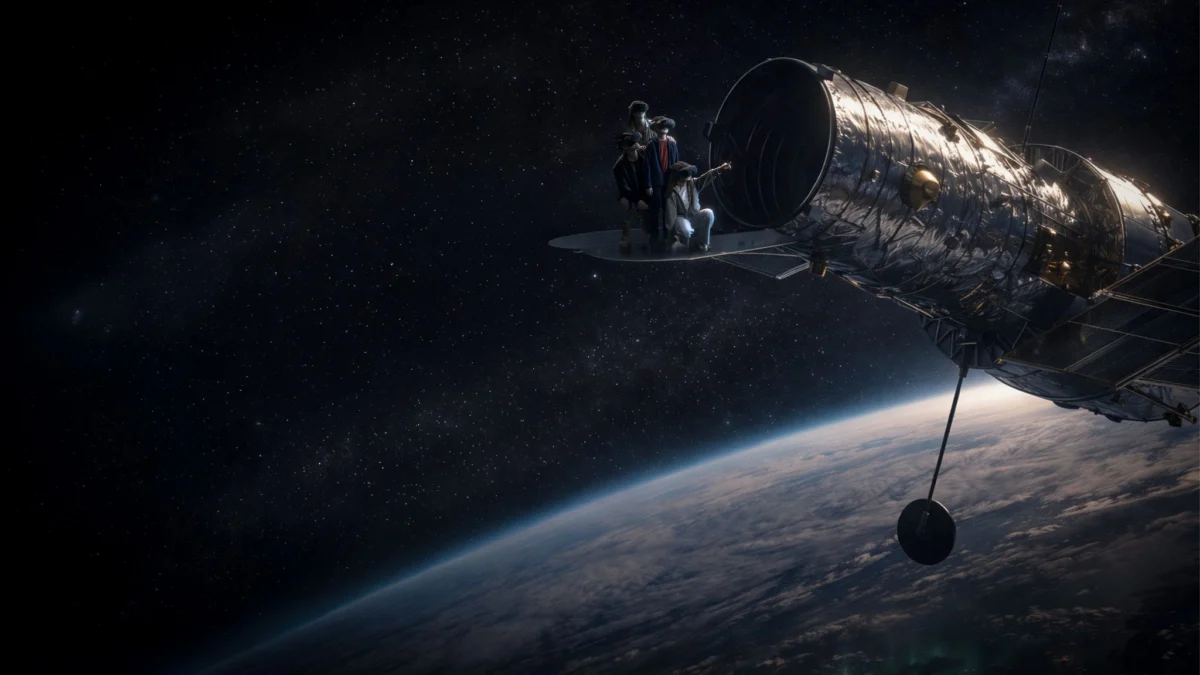
In an age where the boundaries between digital simulation and physical reality are increasingly porous, the Smithsonian Institution has launched an ambitious new project designed to transport visitors from the comfort of a climate-controlled room directly into the heart of the galaxy. Smithsonian Starstruck: An Immersive Experience is not merely a digital exhibit; it is a 40-minute, guided, virtual reality (VR) expedition that attempts to shrink the gargantuan scale of the universe into an intimate, navigable narrative.
Currently making its rounds in major U.S. cities—including a high-profile premiere in Washington, D.C., and upcoming residencies in Denver, Orlando, and San Antonio—Starstruck represents a significant evolution in how scientific institutions engage the public. By leveraging high-fidelity VR hardware, the experience trades the static placards of traditional museums for a dynamic, 360-degree journey through the life cycles of stars, the crushing gravity of black holes, and the fragile beauty of exoplanetary systems.
Main Facts: The Anatomy of the Experience
The core of the Starstruck experience is its ability to synthesize decades of astrophysical research into a cohesive, sensory-heavy walkthrough. Participants are outfitted with HTC Vive Focus 3 headsets—with plans to upgrade to the more advanced Vive Focus Vision in upcoming rotations—and are guided through a series of "viewing stations" within a curated physical space.
The tour is narrated by James Seawood, whose voice provides the human element to a cold, cosmic landscape. The narrative is structured as an "away team" mission, emphasizing collaboration and discovery. Participants stand on a virtual floor of glowing hexagonal blocks, a design choice that provides a sense of grounding while the imagery around them shifts from the microscopic to the intergalactic.
The experience is priced at a competitive tier, ranging from $29 to $35 for individual adult tickets, with significant group discounts aimed at encouraging a communal "expedition" style of learning. It is an attempt to democratize access to the wonders of deep space, moving beyond the two-dimensional imagery of textbooks into a space where, theoretically, the observer can reach out and touch the fabric of the cosmos.

A Chronological Odyssey: From Big Bang to Future Observatories
The narrative arc of Starstruck follows a chronological progression that mirrors the history of the universe itself.
The Dawn of Time
The journey begins at the Whipple Observatory, where participants are placed under a hyper-realistic simulation of the night sky. From this terrestrial starting point, the experience rapidly accelerates, pulling the viewer back through time to witness the "Big Bang"—the singular, cataclysmic event that birthed our reality. This segment is designed to illustrate the sheer scale of cosmic expansion, transitioning quickly into the formation of the "Pillars of Creation," the iconic stellar nursery famously captured by the Hubble Space Telescope.
The Stellar Lifecycle
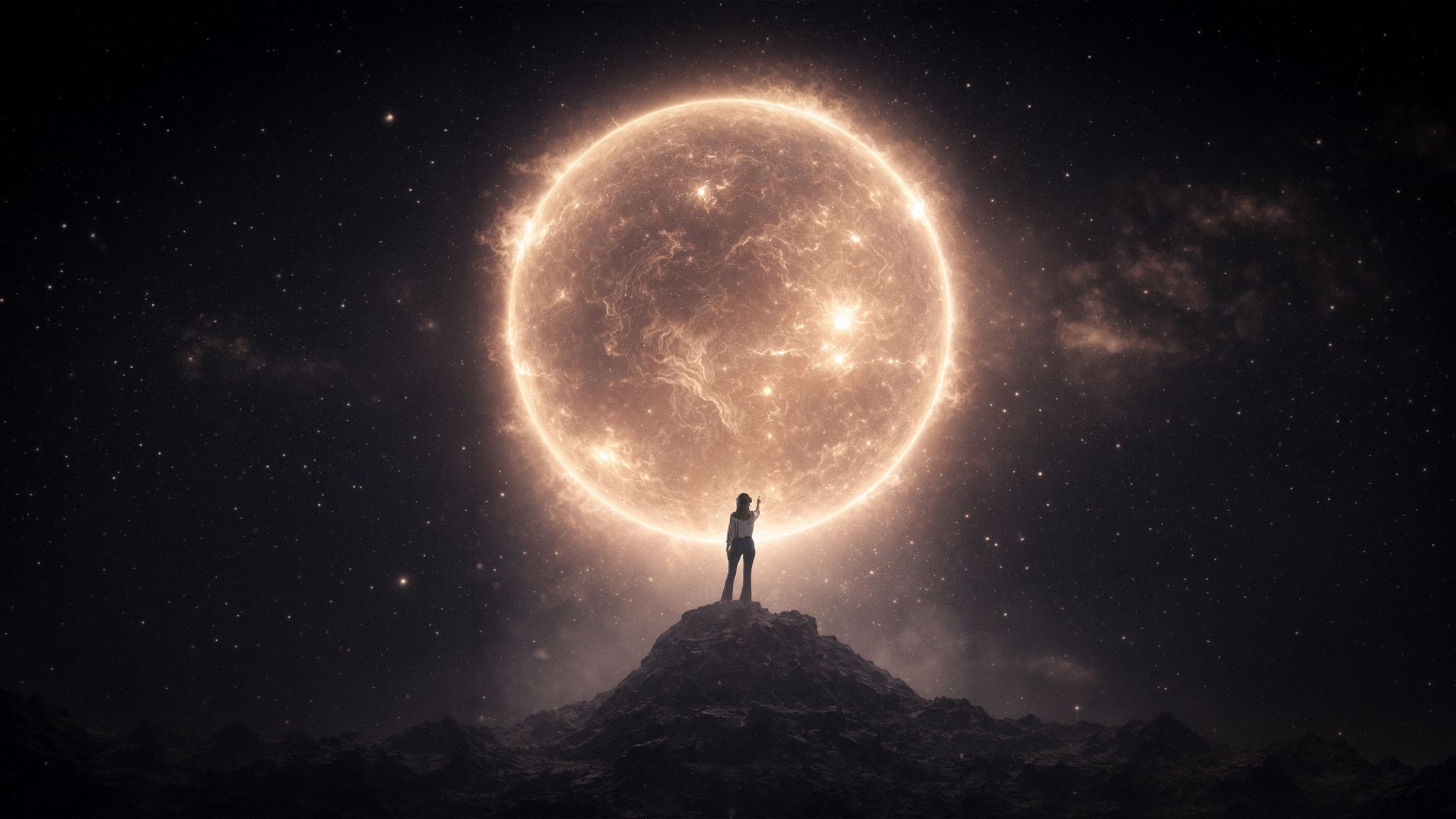
As the tour progresses, the "guide" leads visitors through the life and death of stars. One of the most visually arresting segments involves a visit to the red supergiant Betelgeuse. Participants observe the star in its late-stage evolution, characterized by a "lumpy" appearance as it begins to fuse heavier elements. The experience culminates in a vivid simulation of a supernova, a dramatic visual climax that allows visitors to witness an event that has not been seen by human eyes in our own galaxy for centuries.
The Cosmic Frontier
The final leg of the journey shifts from the past to the present and future. Participants are taken to the event horizon of Sagittarius A*, the supermassive black hole at the heart of the Milky Way. Here, the VR technology excels: users are encouraged to interact with the environment, observing how light bends and shifts toward the red spectrum as it is pulled into the gravity well. The tour concludes with a return to Earth, specifically to the Atacama Desert in Chile, where visitors see the future Giant Magellan Telescope in operation, peering deeper into the universe than any instrument before it.
Supporting Data: Technology and Scientific Fidelity
The technological backbone of Starstruck relies on current-generation spatial computing. While the HTC Vive Focus 3 offers a compelling level of immersion, it is not without its limitations. Some users have reported a slight blurriness during rapid head movements, a common hurdle in current VR hardware. However, the move toward the Vive Focus Vision aims to rectify these fidelity issues, providing higher resolution and a wider field of view that will bring the celestial displays closer to reality.
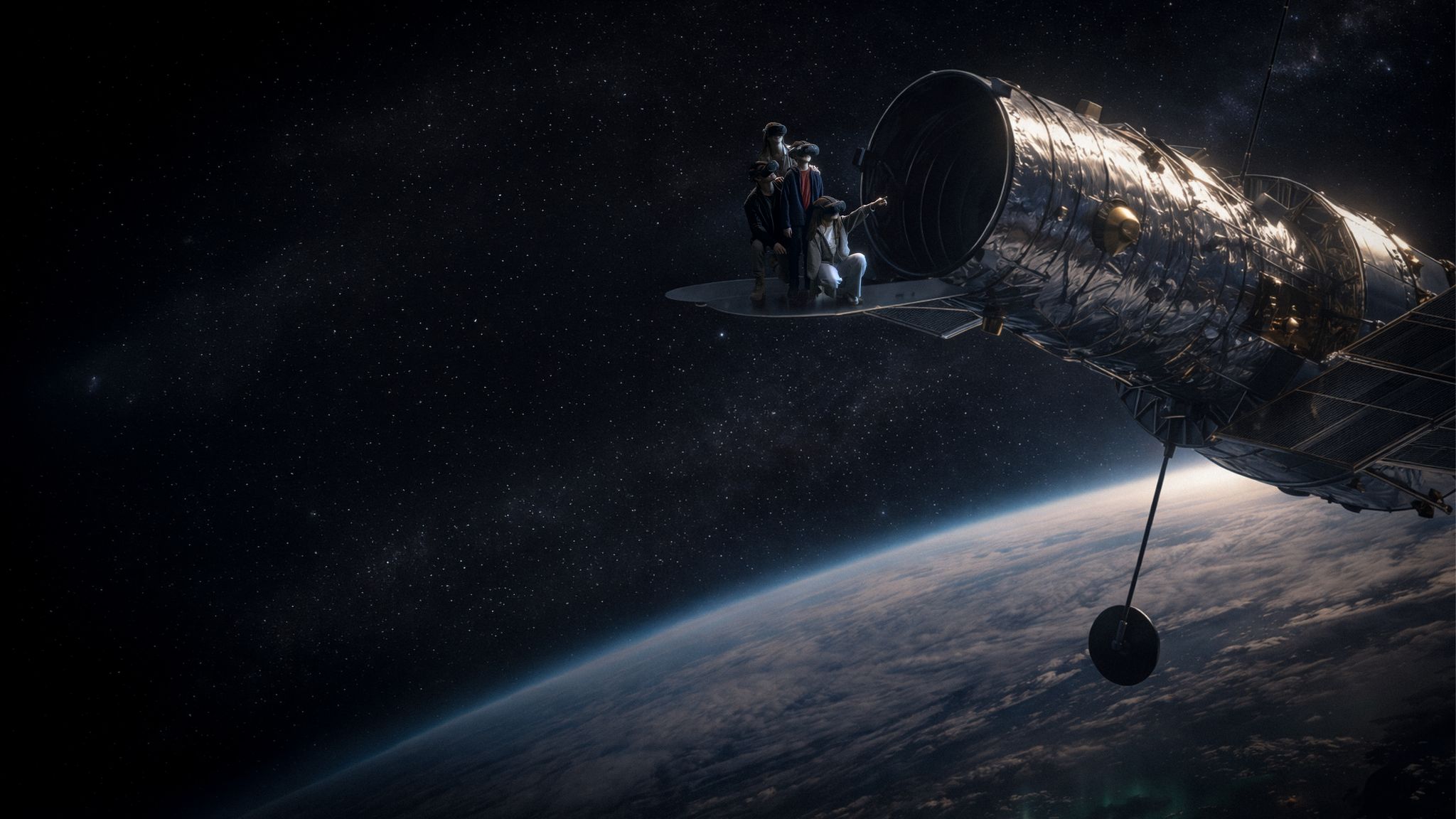
The scientific accuracy of the exhibit is bolstered by the Smithsonian’s vast repository of data. By integrating real-time telemetry and imagery from NASA’s most sophisticated observatories—the Hubble, the Chandra X-Ray Observatory, and the James Webb Space Telescope (JWST)—the exhibit provides a tactile sense of the instruments themselves. Users can interact with 3D models of these telescopes, inspecting the intricate, gossamer designs of the JWST while floating in the virtual void.
Official Responses and Educational Implications
The pedagogical intent behind Starstruck is to foster a sense of "cosmic humility." By highlighting the inhospitable nature of many exoplanets—such as the lava-covered, diamond-crushed surface of 55 Cancri e (Janssen)—the exhibit serves as a stark reminder of Earth’s unique conditions.
"We hit the stellar jackpot," the narrator remarks during the exoplanet segment, emphasizing the rare circumstances that allow for liquid water and life. This sentiment is at the core of the Smithsonian’s mission: to use technology not just for entertainment, but to provide perspective on our place in the universe.
Critics and educators have praised the project for its ability to maintain engagement. By breaking the 40-minute tour into distinct, interactive "stops," the museum avoids the fatigue often associated with prolonged VR use. The inclusion of interactive elements—such as the ability to manipulate models of telescopes—transforms the audience from passive viewers into active participants in the scientific process.
Implications: The Future of Museum Exhibits
Smithsonian Starstruck serves as a proof-of-concept for the future of experiential learning. As VR technology continues to mature, the barriers between the museum and the field will continue to dissolve.
Bridging the Gap
For those who do not have access to a professional-grade telescope or the ability to visit the Atacama Desert, this experience provides a proxy that is, in many ways, more descriptive than static images. It allows the user to experience the "beautiful chaos" of star formation in a way that feels personal and immediate.
The "Away Team" Effect
The emphasis on group participation—the "away team" concept—is perhaps the most vital implication for future exhibit design. By encouraging groups of four or more to attend, the Smithsonian is effectively recreating the social nature of a traditional museum visit. It solves the isolationist problem often inherent in VR, turning a potentially solitary experience into a shared adventure.
A New Standard
As the exhibit prepares to expand to Orlando and San Antonio, it sets a new standard for science communication. It demonstrates that the public is eager for content that is not only educational but also deeply immersive. While it may not replace the technical fidelity of high-end home devices like the Apple Vision Pro for the most dedicated tech enthusiasts, it succeeds in providing a high-quality, scientifically grounded escape for the curious public.
Ultimately, Smithsonian Starstruck is a testament to the fact that we no longer need to wait for the next generation of space travel to visit the stars. With a headset, a guide, and a bit of imagination, the universe is currently just a reservation away.











