Nana Muazin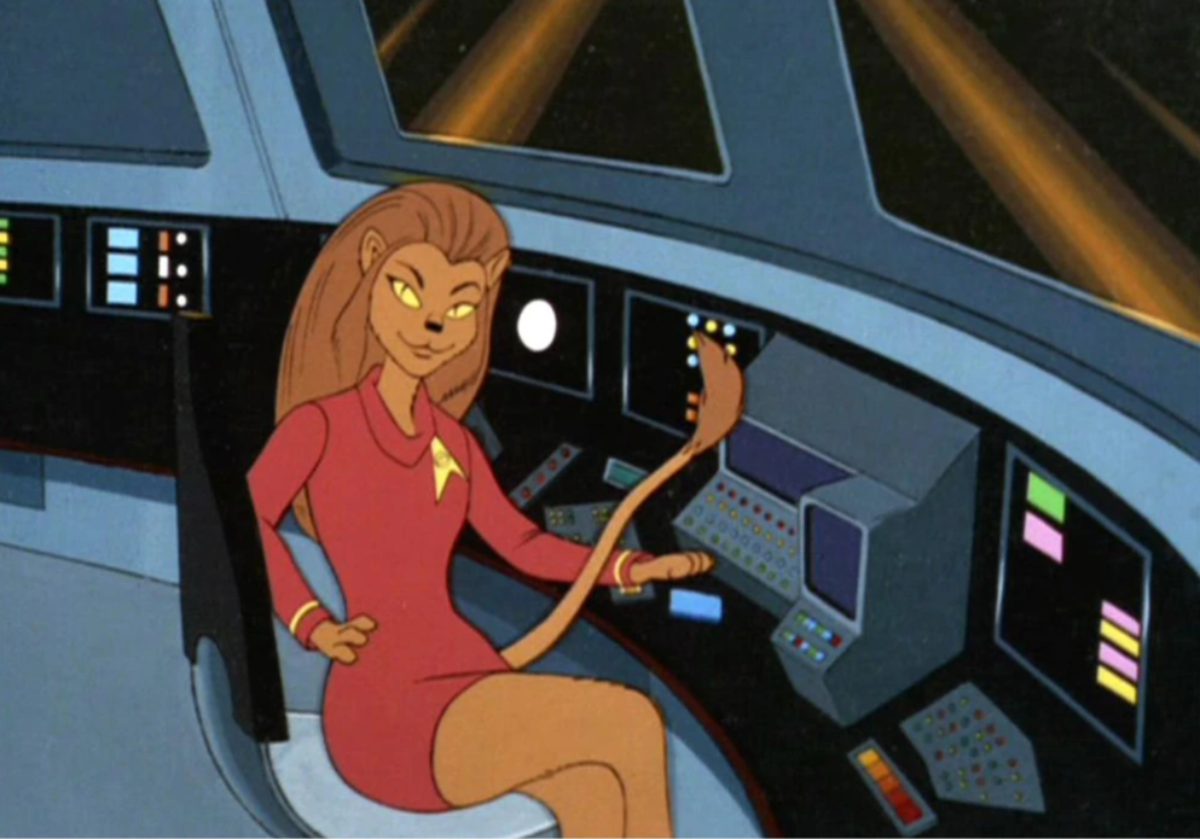
The latest episode of Paramount+’s Star Trek: Strange New Worlds has left the fandom buzzing, not merely for its high-stakes temporal narrative or its inventive "What if?" scenarios, but for a series of blink-and-you-miss-it cameos that have sent lore enthusiasts scrambling to their archives. While the episode, which leans heavily into the franchise’s penchant for time-travel chicanery, offers plenty of narrative substance, the conversation has been dominated by a brief, tantalizing appearance of a feline humanoid in a Starfleet uniform.
This figure, widely identified by eagle-eyed viewers as M’Ress, represents a significant bridge between the modern era of Star Trek production and its experimental roots in the 1970s. As the series continues to expand the Strange New Worlds mythos, these small, deliberate nods to the past are becoming increasingly vital to the show’s identity, signaling a production team deeply invested in the continuity of the entire Star Trek tapestry.
The Core Discovery: A Feline Lieutenant in the Shuttle Bay
The primary point of interest occurs during a pivotal moment in the episode as Cadet Nyota Uhura prepares for an intense spacewalk. In the background, within the sterile confines of the shuttle bay, a figure is visible that deviates sharply from the standard human-centric aesthetic of the USS Enterprise crew. Clad in a regulation Starfleet uniform, this individual is clearly a Caitian—the feline-humanoid species first introduced in the late 20th century.
For the uninitiated, the Caitian in question appears to be none other than Lieutenant M’Ress, a character who famously debuted in Star Trek: The Animated Series (TAS). While M’Ress has remained a marginal figure in the decades since the animated show’s cancellation, her presence here—even if only for a few frames—has ignited a firestorm of speculation regarding the timeline and the intentionality of the showrunners.
A Chronological Conundrum: The Timeline of M’Ress
The inclusion of M’Ress is not without its complications, providing a classic "Comic Book Guy" observation opportunity for fans. Based on established Star Trek canon, the events of the current season of Strange New Worlds are generally situated around 2263. Conversely, M’Ress’s primary tenure aboard the Enterprise under Captain James T. Kirk is historically pegged to the year 2269, the era of The Animated Series.
The Discrepancy Defined
- Current Era: Strange New Worlds (approx. 2263).
- Canonical Appearance: The Animated Series (2269).
This six-year gap creates a chronological friction that has sparked debate. Is this a continuity error, or a deliberate choice to suggest that M’Ress had a longer, more varied career within Starfleet than previously depicted? In the animated series, M’Ress was a multi-talented officer, frequently serving as a communications officer to relieve Uhura and stepping into the role of science officer when Spock was away on dangerous missions.
By placing her in the shuttle bay during the 2260s, the showrunners are effectively "softening" the edges of the franchise’s timeline. It suggests that while the rigid dates of the 1970s shows provide a framework, they are not necessarily the absolute boundaries for character existence. It is entirely plausible that M’Ress was completing a deep-space assignment or a rotating tour of duty on the Enterprise years before her more prominent roles in the later five-year mission.
The Case for Aleek-Om: A Double Dose of Nostalgia
The M’Ress cameo is not the only artifact from The Animated Series to surface in this episode. A secondary, arguably more obscure character also makes an appearance: a tall, avian creature resembling an Aurelian. This character is widely believed to be Aleek-Om, a figure who appeared in the fan-favorite TAS episode "Yesteryear."
The presence of an Aurelian is perhaps even more telling than the Caitian, given the specific history of the character. In "Yesteryear," Aleek-Om was a figure deeply entwined with the study of history and temporal manipulation. Given the episode’s focus on time anomalies and the fragility of the timeline, the inclusion of a character associated with the Department of Temporal Investigations—a role Aleek-Om later occupies in the non-canon Star Trek novels—feels like a deliberate "wink" to the most dedicated portion of the fanbase.
If these background characters are indeed M’Ress and Aleek-Om, it paints a picture of a ship that is more diverse and populated by deep-canon entities than previously realized. It turns the Enterprise from a set-piece into a living, breathing ecosystem of legacy characters.
The "Glass Canon": Implications for Franchise Continuity
The term "glass canon" is often used in gaming to describe something powerful but fragile. In the context of Star Trek, the term takes on a double meaning: the franchise’s "canon" is powerful in its cultural influence but fragile in its ability to withstand the scrutiny of modern, internet-connected fandom.
How the Showrunners Manage Lore
- The "Out" Strategy: By keeping these cameos brief and non-verbal, the production team provides themselves with an "out." If, at some future point, a writer needs to confirm or deny the presence of these characters, they have the narrative flexibility to do so.
- Atmospheric World-Building: These cameos are not intended to drive the plot, but to build atmosphere. They reward the viewer who pauses their screen and pays attention to the background, fostering a sense of reward for deep engagement.
- Canon Synthesis: Strange New Worlds has consistently attempted to synthesize the aesthetic of the 1960s/70s with the high-production values of the 2020s. Using legacy characters like M’Ress is the ultimate tool for this synthesis.
This approach suggests that the writers are not looking to "break" canon, but to expand it. By placing these characters in the background, they acknowledge that the Enterprise is a massive vessel, and the adventures we see on screen are only a fraction of what is happening on the decks behind the bridge.
Official Responses and Fan Reception
While there has been no official "press release" from the showrunners specifically detailing the presence of M’Ress or Aleek-Om, the creative team has been vocal in interviews about their desire to honor the breadth of the Star Trek universe. Producers have frequently cited The Animated Series as an underappreciated pillar of the franchise, one that deserves to be integrated more fully into the live-action aesthetic.
The fan reception, meanwhile, has been overwhelmingly positive. On forums and social media platforms, the discovery of these characters has been treated as a scavenger hunt. This level of engagement is exactly what the Star Trek franchise requires to maintain its relevance in an era of endless content. By rewarding long-term viewers with these "Easter eggs," the show creates a sense of community and shared discovery.
Conclusion: Why These Details Matter
In the grand scheme of the Strange New Worlds narrative, a feline lieutenant in the shuttle bay or a bird-like creature in the corridor may seem inconsequential. However, in the world of Star Trek, these details are the mortar that holds the bricks of the franchise together.
The inclusion of M’Ress and potentially Aleek-Om is a testament to the current creative team’s reverence for the material. They are not merely remaking The Original Series; they are curating a legacy. They understand that for a show about exploration, the most important terrain is often the history of the franchise itself. As the series moves forward, one can only hope that this trend continues—that the Enterprise remains a ship where, if you look closely enough, you might find a piece of Star Trek history around every corner.
Whether these characters are official canon additions or simply clever nods by proxy, they serve their purpose: they remind us that the Enterprise is a home to many, a vessel of infinite possibility, and a place where the past and the future are never as far apart as they seem.

 Siti Muinah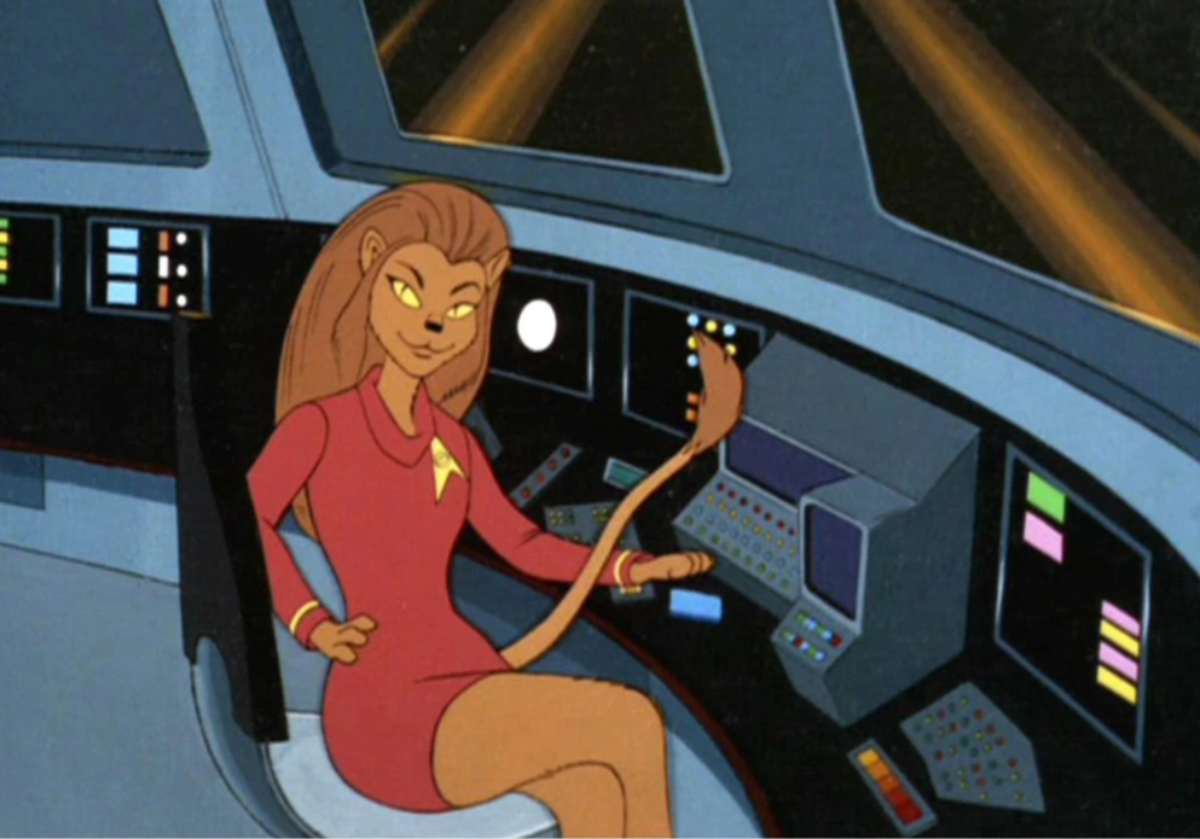
 Neng Nana