

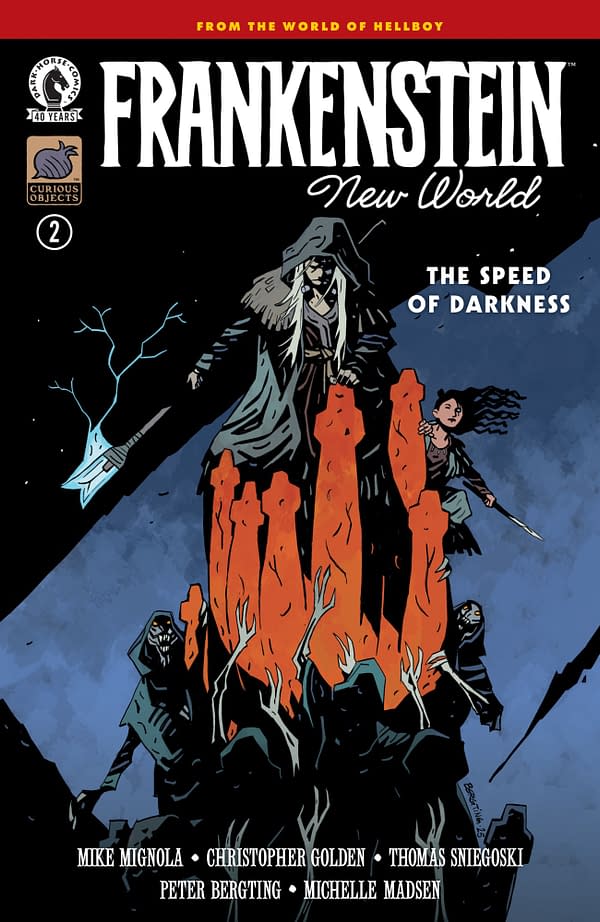
The landscape of modern dark fantasy comics is often crowded, yet few titles manage to capture the atmospheric dread and narrative weight of Dark Horse Comics’ latest expansion into the Hellboy universe. This Wednesday, June 3, 2026, readers will be treated to the second installment of the four-issue miniseries Frankenstein: New World – The Speed of Darkness.
As the titular monster and his companion, Lilja, traverse a post-apocalyptic landscape plagued by a mysterious, transformative corruption, the stakes have never been higher. With a creative team consisting of industry titans Mike Mignola, Christopher Golden, and Thomas Sniegoski, alongside the evocative artistry of Peter Bergting, this series promises to redefine the boundaries of the Frankenstein mythos within the established Hellboy canon.
Main Facts: The Narrative Core
Frankenstein: New World – The Speed of Darkness #2 continues the harrowing journey of the Frankenstein monster. Following the events of the previous miniseries, the monster finds himself in a world that has been fundamentally altered—not just by the passage of time, but by an encroaching, insatiable force known as "the Murk."
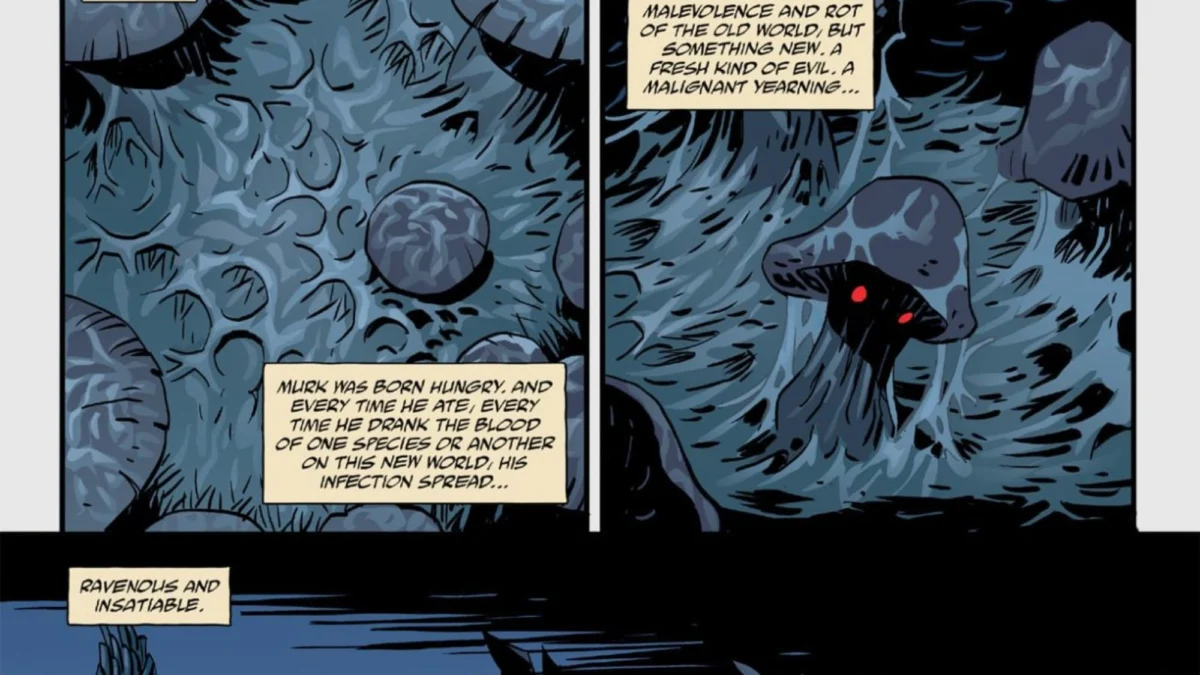
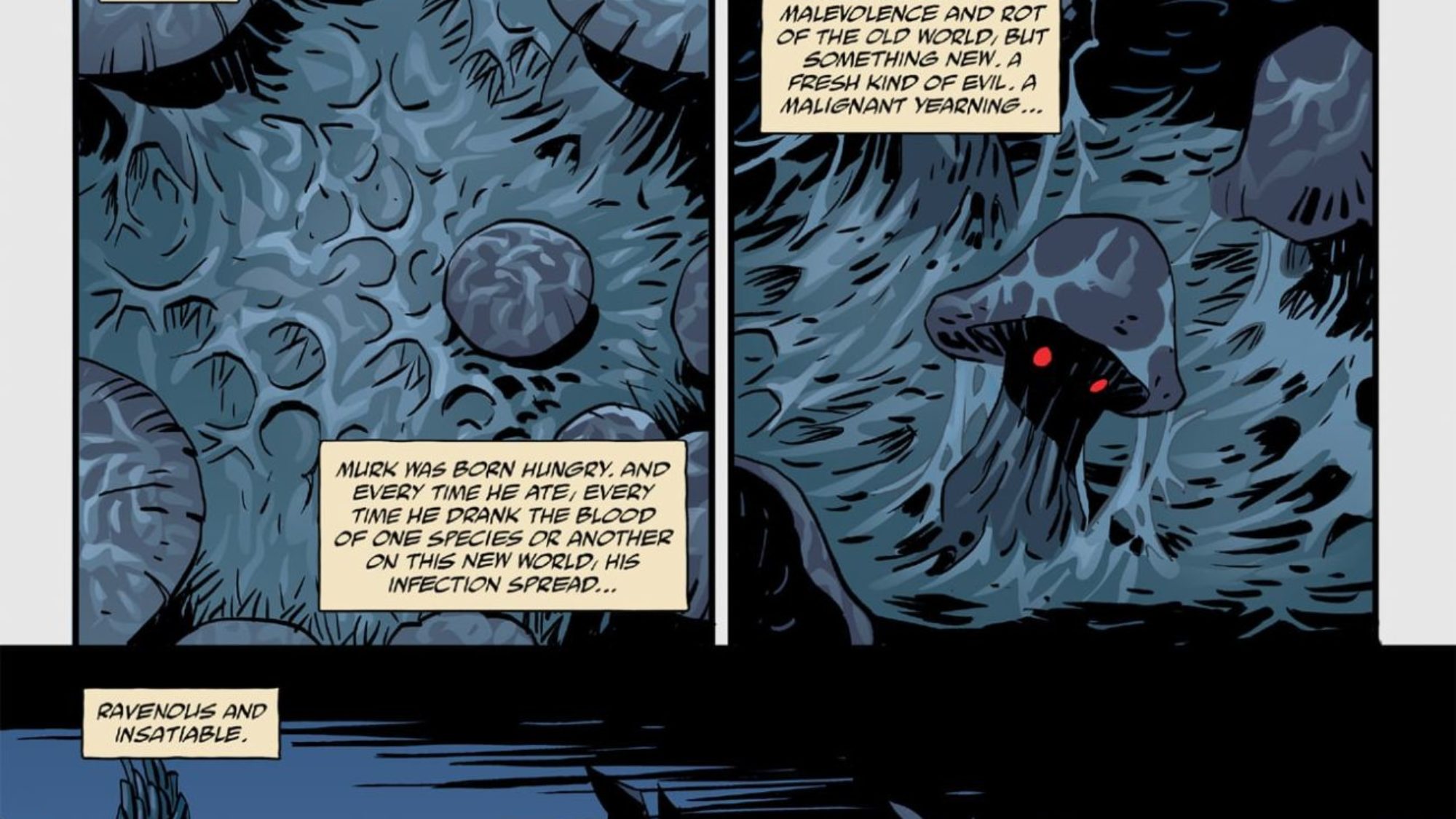
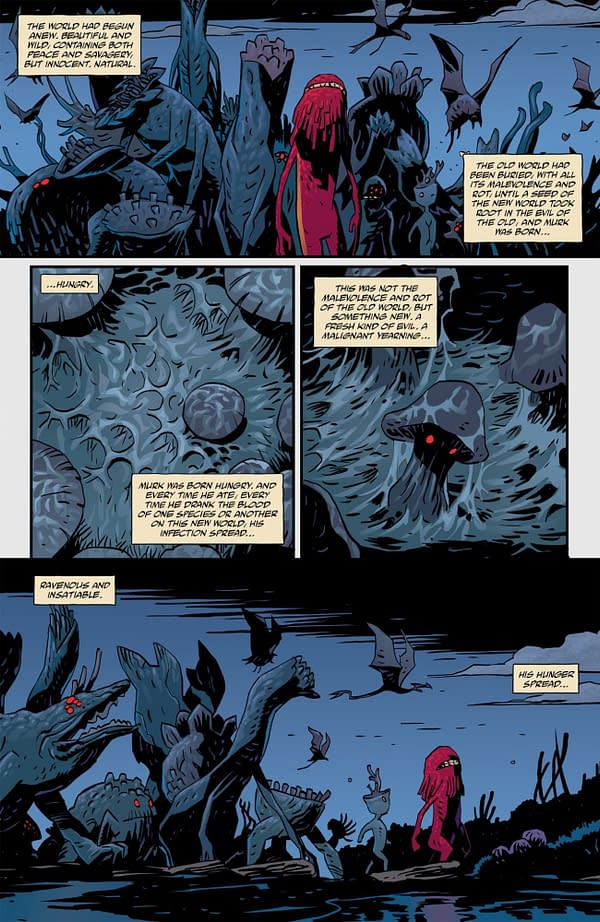
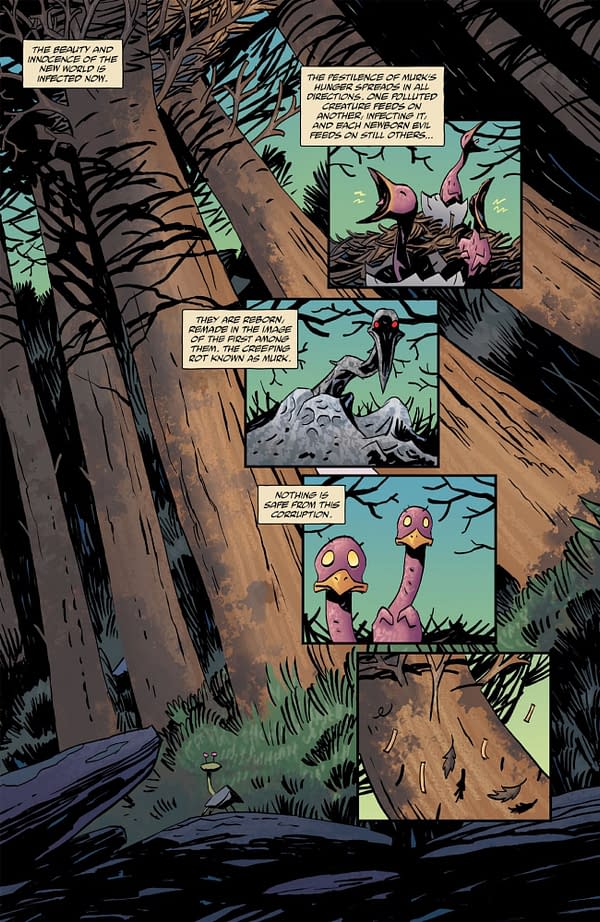
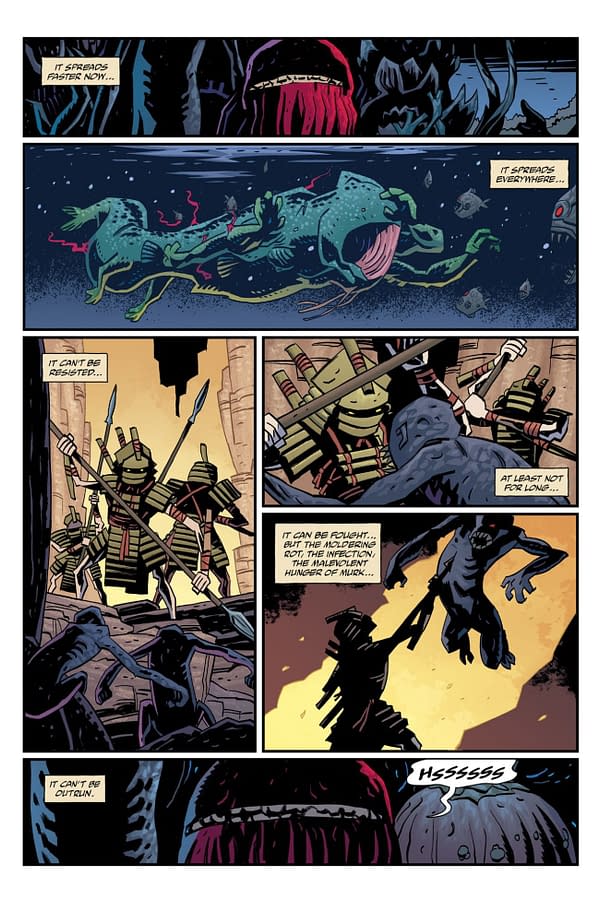
The plot centers on the duo’s urgent quest to locate Liz Sherman, a pivotal figure whose presence has become the linchpin for their survival. However, as the narrative progresses, Lilja’s visions of the future become increasingly fragmented and desperate, signaling that time is running out. The "Murk" is not merely a background element; it acts as a sentient, infectious agent that consumes organic life and reshapes it into twisted, nightmare-fueled versions of its former self. This second issue serves as a critical bridge, escalating the tension from the initial setup of the premiere to the high-stakes conflict that will surely define the remainder of the miniseries.
The Creative Pedigree
The strength of Frankenstein: New World lies in its collaborative architecture. Mike Mignola, the visionary behind Hellboy, provides the foundation for this world, ensuring that the tone remains consistent with the grim, gothic sensibilities that fans have come to expect. The inclusion of Christopher Golden and Thomas Sniegoski adds a layered, prose-like depth to the character interactions, while Peter Bergting’s linework captures the visceral, decaying beauty of the world.
Bergting’s approach to the "Murk" is particularly noteworthy. By utilizing stark contrasts and distorted silhouettes, he visualizes the corruption as an elemental force rather than a simple monster. This artistic choice elevates the book from a standard adventure tale to a study in existential horror. Michelle Madsen’s color palette, favoring muted earth tones punctuated by the sickly, bioluminescent glow of the infection, further grounds the reader in this desolate future.
Chronology: The Evolution of a Legend
To understand the significance of The Speed of Darkness, one must look at the progression of the Frankenstein: New World project:
- Origin: The character of Frankenstein’s monster, as reimagined in the Hellboy universe, first emerged as a tragic, heroic figure, shedding the "mad science" baggage of the original Mary Shelley novel for something far more stoic and burdened.
- Miniseries I & II: These initial outings established the monster’s independence from the B.P.R.D. and set him on a path of self-discovery amidst the ruins of a civilization that humanity failed to preserve.
- The Current Arc: The Speed of Darkness marks the third major miniseries. It represents a pivot point where the monster is no longer just surviving but is actively seeking the remnants of the past (Liz Sherman) to potentially provide a catalyst for salvation.
- The Imminent Future: With two issues remaining after this Wednesday’s release, the series is moving toward an inevitable climax where the monster will be forced to choose between preserving what remains of his humanity or succumbing to the transformative power of the Murk.
Supporting Data: Technical Specifications
For collectors and enthusiasts, the physical and digital release of Frankenstein: New World – The Speed of Darkness #2 is as follows:
- Publisher: Dark Horse Comics
- Release Date: June 3, 2026
- Format: 32-page, full-color comic book
- Series Length: Four-issue miniseries
- Dimensions: 6.57" x 10.16"
- Price: $4.99
- Rating: T (Teen)
- Creative Team: Mike Mignola, Christopher Golden, Thomas Sniegoski, Peter Bergting, Michelle Madsen, and Clem Robins.
The book is currently being distributed through Lunar Distribution and is available for pre-order or purchase at all reputable comic book specialty retailers.
Official Perspectives and Thematic Depth
In recent interviews, the creative team has emphasized that this series explores the concept of "the cost of legacy." By placing the Frankenstein monster in a world that has essentially moved past the need for humanity, the writers are asking fundamental questions about what it means to be a "creation" in a universe that is rapidly becoming a creator itself.
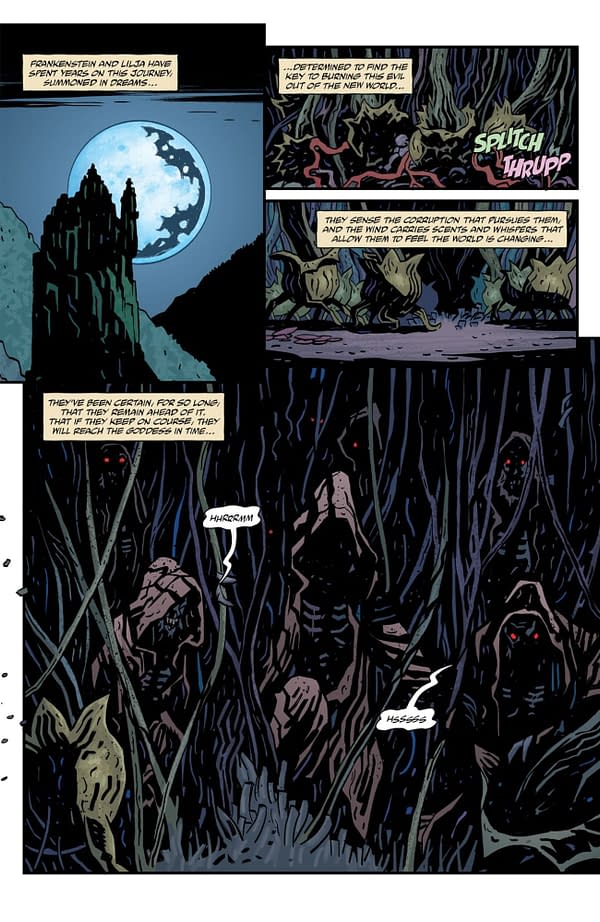
The "Murk" functions as a metaphor for the entropy of the modern age—a force that, once unleashed, cannot be reasoned with or contained. For the Frankenstein monster, who was born of surgery and lightning, the prospect of an infection that "rewrites" biology is a direct assault on his own nature. This thematic tension between the "old monster" and the "new corruption" provides the dramatic engine for the entire story.
Implications for the Hellboy Universe
The implications of Frankenstein: New World on the wider Hellboy mythos cannot be overstated. By setting this story in a future timeline, the creative team has the freedom to explore consequences that would otherwise be restricted by the main Hellboy continuity.
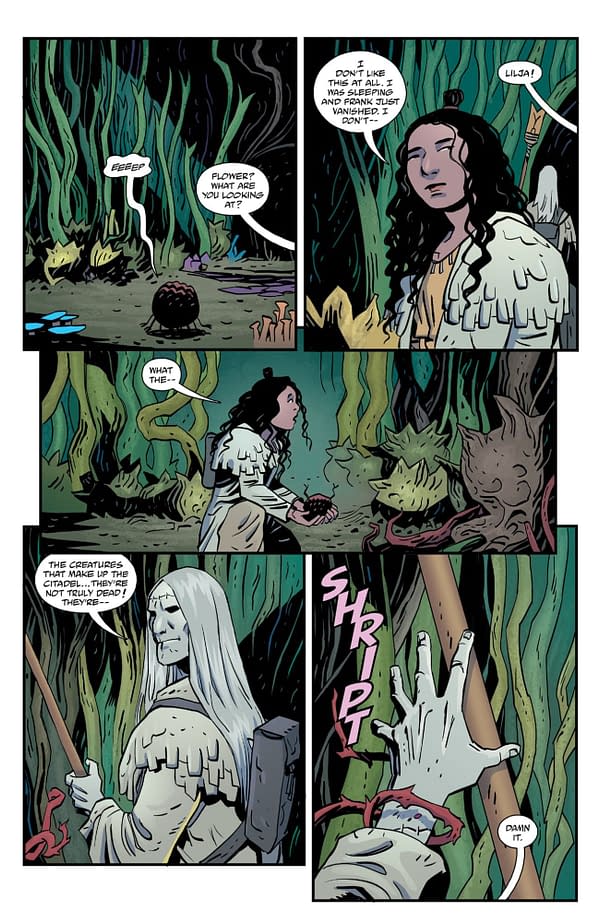
If the monster fails to find Liz Sherman, or if the Murk proves to be an unstoppable evolutionary step, the "New World" may well be the terminal point for this reality. This creates a sense of genuine danger that is rare in serialized comics. Readers are not just witnessing a fight scene; they are witnessing the slow-motion collapse of a world, and the Frankenstein monster is our only witness.
Furthermore, the characterization of the monster here continues to be one of the most compelling arcs in modern comics. He has transitioned from a weapon of the B.P.R.D. to a wandering ronin of the apocalypse. His internal monologue—often sparse, reflective, and tinged with a weary wisdom—provides a stark contrast to the chaotic, visceral violence occurring on the page.
Final Analysis: Why This Issue Matters
As Frankenstein: New World – The Speed of Darkness #2 hits the stands this Wednesday, it stands as a testament to the enduring appeal of gothic horror in a modern medium. It is not merely a "monster book"; it is a meditation on survival, identity, and the relentless march of change.
Whether you are a long-time fan of the Hellboy extended universe or a newcomer drawn to the hauntingly beautiful covers by Peter Bergting, this issue offers a compelling reason to visit your local comic shop. In an era where digital content is often disposable, there is a tangible, heavy significance to this physical artifact—a story about a creature who was never meant to live, fighting to ensure that something of his world continues to exist.

As the Murk spreads and the pages turn, one thing becomes clear: the speed of darkness is accelerating, and the Frankenstein monster is running out of time. Don’t miss this pivotal chapter in what is shaping up to be one of the most important fantasy series of the decade. Ensure your pull lists are updated, and prepare to confront the corruption head-on. The future of the New World hangs in the balance, and the answers may be as terrifying as the questions themselves.










No comments yet. Be the first to join the conversation!