Asro
Asro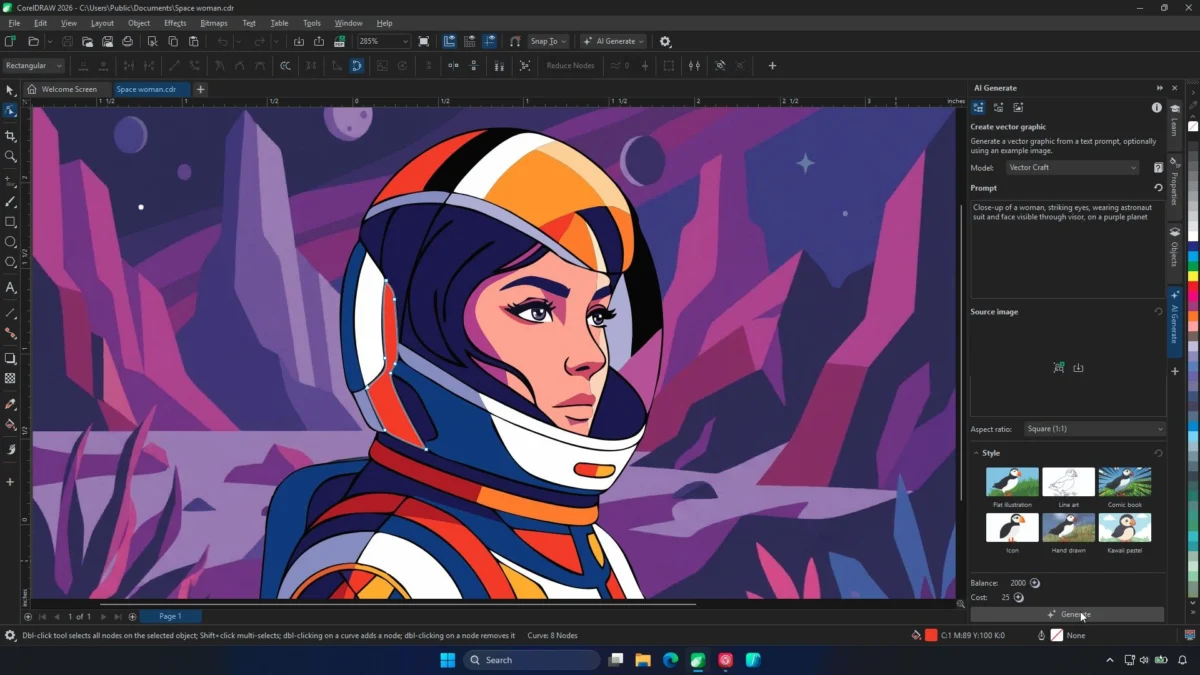
In the rapidly evolving landscape of creative software, the integration of generative AI has often felt like an awkward, albeit shiny, addition—a feature that looks impressive in a marketing deck but frequently falls short on the workbench. Earlier this year, when Corel introduced its initial foray into AI-assisted design, the creative community was met with a lingering, pragmatic question: Do professional designers actually need this? The skepticism was well-founded; the early tools were pixel-based, lacking the granular control that defines the vector workflow.
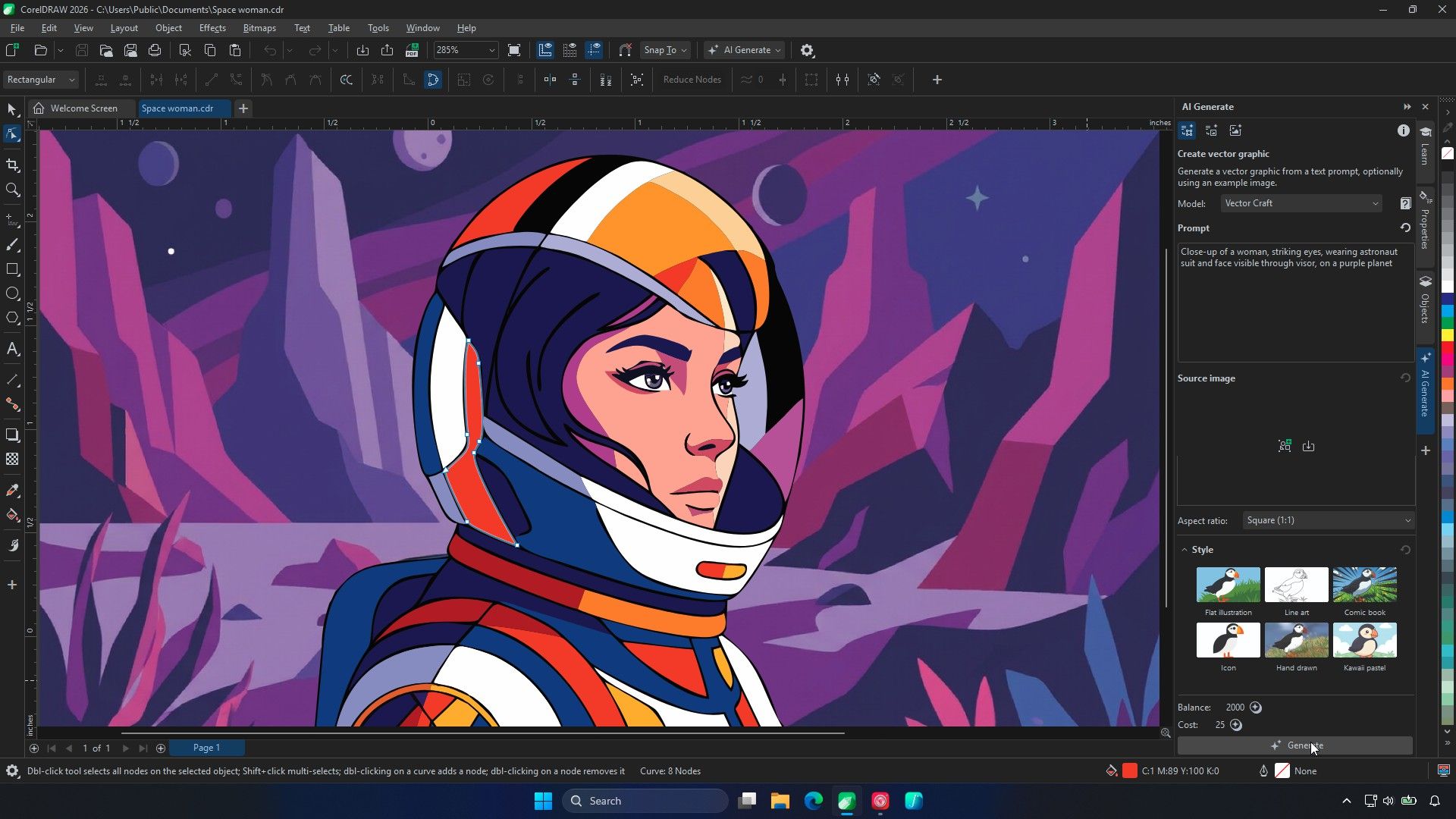
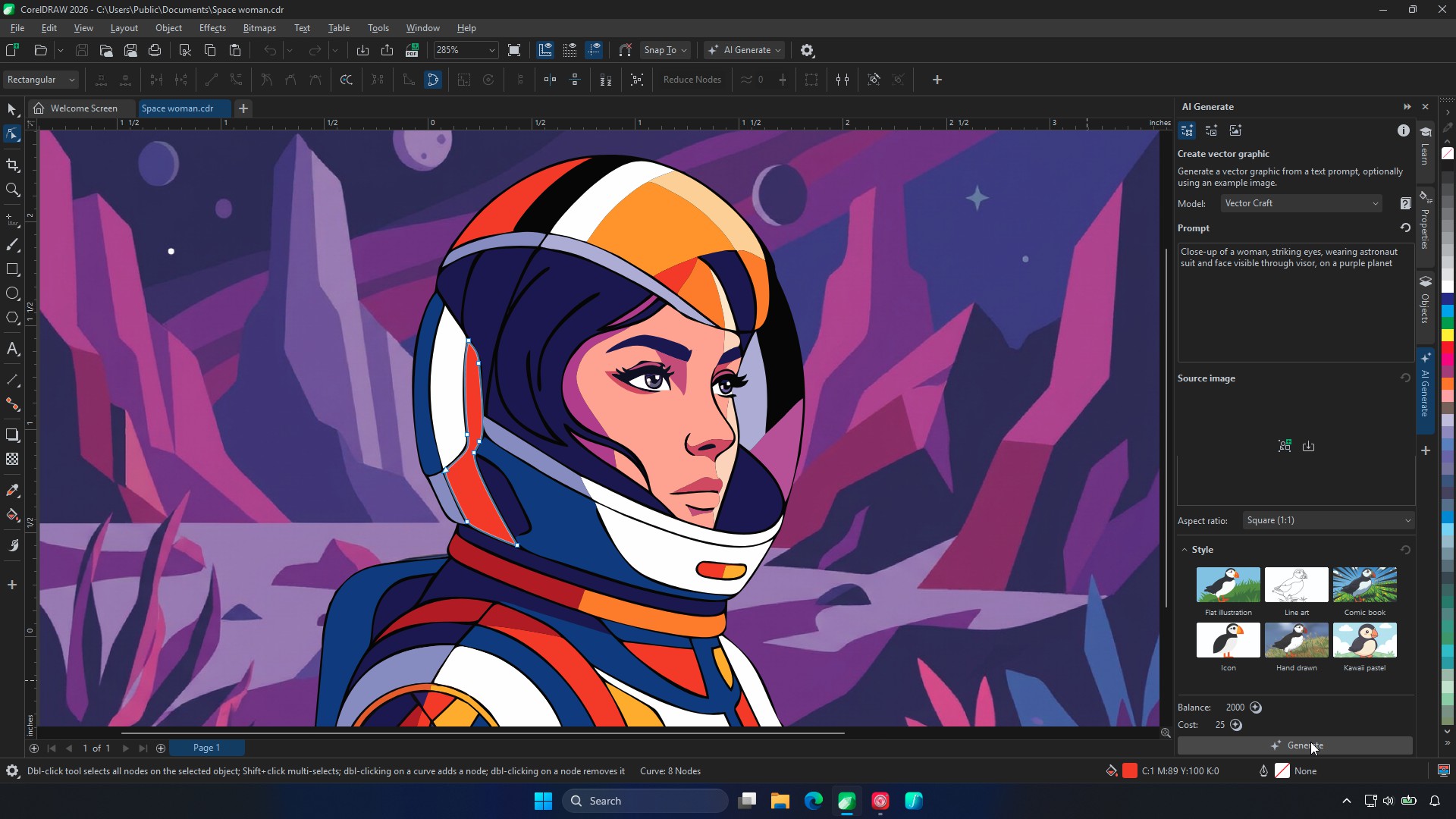
However, with the September 2026 update to the CorelDRAW Graphics Suite, Corel appears to have pivoted from mere experimentation to genuine utility. The introduction of the new "Text-to-Vector" feature signals a shift in the AI paradigm for graphic design. Rather than simply generating static images, this tool produces fully editable objects, curves, and nodes—a true vector-native output that integrates seamlessly into a professional design environment.
The Evolution of AI in Vector Design: A Chronology
The integration of artificial intelligence into vector software has been a journey defined by trial and error. For years, the industry relied on manual tracing or primitive auto-trace tools that often resulted in "noisy" paths and inefficient object structures.
- Early 2026: Corel introduced its first suite of AI-assisted tools. While visually striking, these tools were criticized by veteran designers for being "raster-first," creating images that required extensive manual cleanup before they could be used in professional layouts or branding projects.
- Mid-2026: Recognizing the feedback from its user base, Corel shifted its development focus toward generative models that prioritize topology and path accuracy. This period saw the intensive training of models specifically on vector geometry rather than just pixel density.
- September 2026: The official launch of the Text-to-Vector suite. This release marked a departure from the "all-or-nothing" generative models of the past, offering a tiered system (Vector Spark, Vector Craft, and Vector Master) designed to handle different levels of complexity, from simple icon generation to intricate, multi-layered illustrations.
Breaking Down the Tech: Vector Spark, Craft, and Master
Corel’s strategy with this update is rooted in the recognition that not all design tasks require the same level of computational heavy lifting. To address this, they have categorized their generative offerings into three distinct models:
- Vector Spark: Tailored for the "quick win." This model is optimized for simple, clean icons, clip art, and basic shapes. It is designed to remove the tedium of creating repetitive, simple assets.
- Vector Craft: The "all-rounder." This is the workhorse of the suite, capable of handling standard illustration tasks while maintaining a clean path structure that is easy for a human designer to refine later.
- Vector Master: The sophisticated engine. Designed for complex design projects, this model works by analyzing reference content—such as existing logos, product sketches, or photographs—to generate variations that retain the structural integrity and stylistic nuance of the original source.
The Power of Reference: Putting the Designer in Control
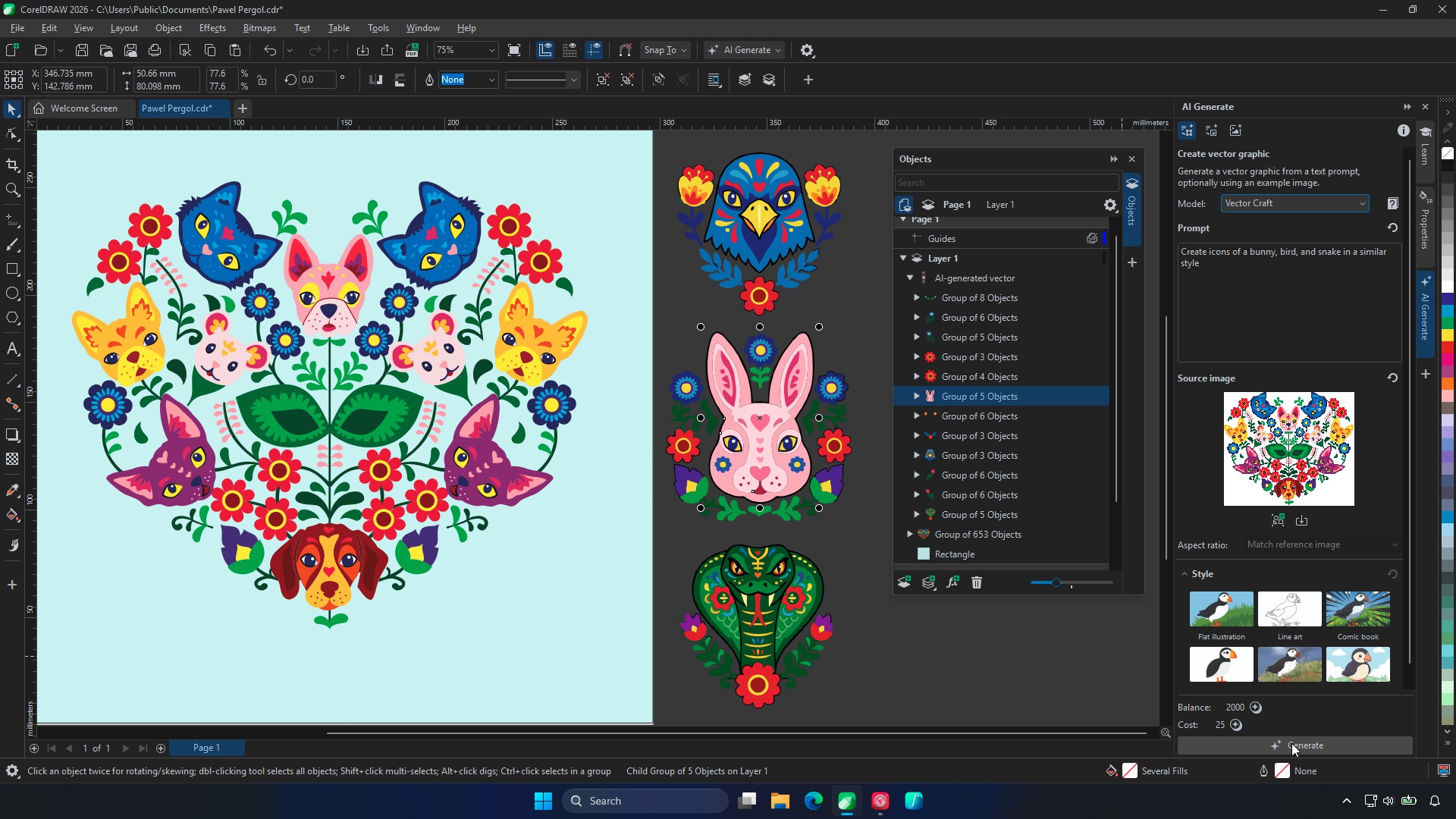
The most compelling aspect of this update is not the ability to generate something from a text prompt—a feature now commonplace in nearly every creative app—but the "reference workflow." Jenny John, Product Management for CorelDRAW, demonstrated this functionality by using a complex illustration by artist Pawel Pergol as a starting point.
The demonstration was a masterclass in how AI should augment, rather than replace, human creativity. The AI did not just output a static image; it generated a series of icons—a bunny, a bird, and a snake—that matched the stylistic visual language of the original 600-object illustration. These assets arrived in the workspace already partitioned into objects, curves, and nodes.
"That’s really where the artist’s work begins," John noted. By providing a starting point that is already 80% of the way to a finished asset, the software eliminates the "dull bits" of the job—the repetitive tasks that consume hours—allowing the designer to focus on the nuances of composition, color theory, and final polish. This approach validates the findings from Corel’s beta testing group, where professional designers consistently reported that they were less interested in AI for "creation" and more interested in AI for "ideation" and "acceleration."
Technical Implications: Cloud vs. Local GPU
A point of contention in the current AI climate is the reliance on cloud-based processing versus local GPU power. Corel has taken a firm stance: the generative tools run entirely in the cloud.
For the average professional designer, this is a strategic choice. Unlike video editors or 3D artists, who are often mandated to own top-tier workstations equipped with the latest Nvidia graphics cards, the average graphic designer’s rig is often more modest. By offloading the processing to the cloud, Corel ensures that the power of generative AI is accessible to users on standard, cost-effective laptops. While some power users might lament the lack of local, offline processing, the consensus among the design community suggests that the accessibility of the tool currently outweighs the latency of cloud-based generation.
Beyond Generation: Improving the Foundation
While the spotlight is on the flashy generative tools, the September update also includes significant improvements to the under-the-hood performance of PowerTRACE. For designers who work with large, legacy files, these updates are perhaps more impactful than the new AI features.
The engine has seen a significant overhaul, resulting in traces that are up to four times faster than previous versions. The improvement isn’t just in speed, but in quality: the resulting object structures are cleaner, the color handling is more precise, and the system is far more resilient when handling high-resolution, 8,000px images. Where once a designer would have to initiate a trace and walk away to "make a brew," the process is now nearly instantaneous, allowing for real-time iterative design.
The Human-AI Collaboration: A Reality Check
Despite these advancements, the technology is not yet perfect. A common frustration among designers is the "destructive" nature of many AI tools—the tendency to rewrite an entire scene when the user only wants to change a single element.
When asked about the roadmap for granular control, Corel’s team acknowledged that the goal is a more surgical approach to editing. Currently, if you generate a scene, you cannot simply swap a night sky for a sunrise without the AI potentially altering the geometry of the entire composition. Designers are still required to intervene manually to fix discrepancies.
However, this is precisely why the "vector-native" approach is so vital. Because the output consists of editable paths and nodes rather than baked-in pixels, the human designer can step in to correct, refine, and polish. The AI provides the "jump-start," but the designer provides the "final word."
Implications for the Industry
The introduction of these tools suggests that the "novelty phase" of generative AI is nearing its end. Designers are no longer impressed by the mere ability to generate a picture from a prompt. The current market demand has shifted toward tools that integrate into a professional pipeline, maintain file integrity, and, most importantly, save time on the repetitive aspects of the design process.
Whether this technology will translate into significant time savings on real-world client projects remains to be seen. The true test will occur as agencies and freelance designers integrate these tools into their daily workflows, balancing the efficiency of AI-generated assets with the necessity of human artistic vision.
For now, CorelDRAW has successfully moved the needle. By focusing on editable, node-based outputs and offering a workflow that respects the designer’s existing style, they have created a tool that feels less like a threat to the profession and more like a high-powered assistant.
Quick Facts: The September 2026 Update
- Core Feature: Introduction of "Text-to-Vector" with full node and curve editability.
- Models: Three-tiered system (Vector Spark, Vector Craft, Vector Master) for varying project complexities.
- Efficiency: PowerTRACE engine overhauled for 4x faster tracing and improved object management.
- Accessibility: Cloud-based processing enables high-end AI performance on standard laptops.
- Subscription: Graphics Suite remains available via annual subscription ($269/£319) or perpetual license ($549/£659).
- Launch Promotion: Includes one week of unlimited AI vector generation for all tiers.
As the industry moves forward, the success of these tools will be measured not by how many images they can create, but by how well they allow designers to do what they do best: create, refine, and deliver high-quality work that stands the test of time.

 Rifan Muazin
 Ammar Sabilarrohman