
 Siti Muinah
We have all experienced it: the visceral frustration of navigating a poorly designed website. Perhaps it’s a barrage of aggressive pop-up advertisements, an auto-playing video that obscures the text, or a layout so counterintuitive that it feels like a digital maze. For years, the only recourse was to close the tab or install an ad-blocker. But what if you could take physical—or at least virtual—revenge on the code itself?
Enter Destroy Any Website, a browser-based experiment that turns the cold, rigid architecture of the internet into a playground for chaos. Developed by Hugo Duprez, a design engineer at Craiyon AI, the game transforms virtually any URL into a destructible 2D level. By leveraging the power of "vibe coding," Duprez has created a tool that bridges the gap between web development and interactive gaming, allowing users to blast apart the very elements that make modern browsing so irritating.
The Core Concept: Turning the Web into a Battleground
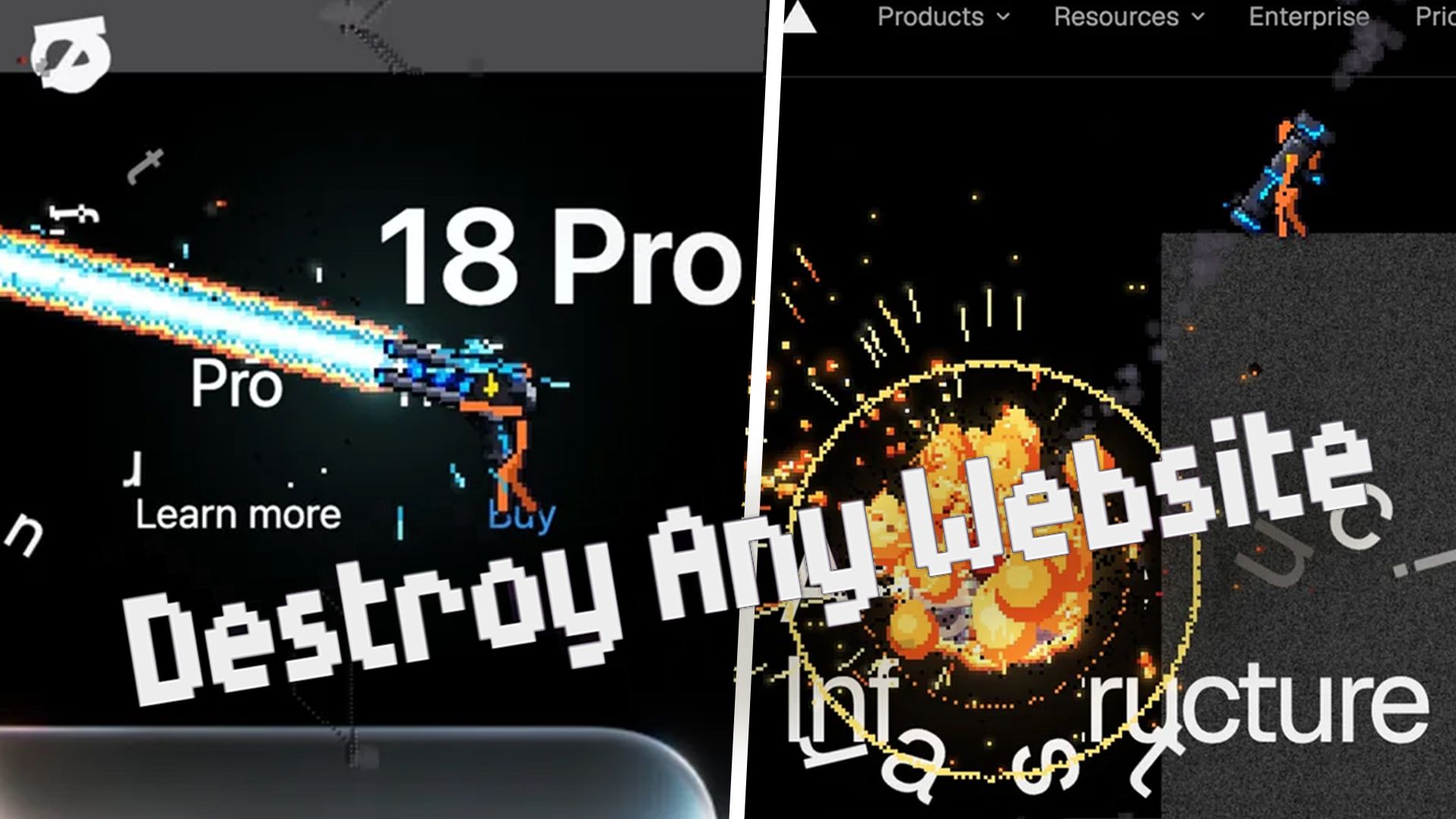
At its heart, Destroy Any Website is a simple yet revolutionary concept. When a user inputs a URL into the game’s interface, the site parses the HTML, CSS, and image assets of the target page, converting them into a playable, physics-based environment. The text, banners, and layout blocks become platforms for a small, heavily armed pixel-art warrior.
The gameplay loop is surprisingly addictive. Players navigate their character across the "landscape" of a website, using a variety of weapons to systematically dismantle the UI. You can scroll through an arsenal of firepower to blast holes in image containers, disintegrate navigation bars, and reduce bloated footer menus to rubble.
The controls are intuitive for anyone familiar with platformers: the cursor guides the character, while the arrow keys manage movement. Dropping down through a webpage is as simple as pressing the down arrow, effectively treating the page’s divs as floors. For those who prefer a vertical approach, hitting the up arrow engages a jetpack, allowing the player to soar to the top of the page and rain destruction down on the header.
A Chronology of the "Vibe Coding" Movement
The rise of Destroy Any Website is intrinsically linked to the emergence of "vibe coding"—a development philosophy that prioritizes rapid iteration and AI-assisted prototyping over rigid, traditional software engineering workflows.
The Genesis
The project began as an experimental build by Hugo Duprez, who sought to challenge the static nature of the modern web. By utilizing generative AI tools within the Sprite Fusion environment, Duprez was able to code the mechanics of the game in record time. Unlike traditional game development, which can take months of asset creation and engine configuration, Destroy Any Website was built to demonstrate how AI can bridge the gap between creative intent and functional code.
The Viral Launch
The game gained significant traction in late September 2026, following a series of social media demonstrations that showcased the tool obliterating well-known websites. The sheer satisfaction of watching a corporate landing page collapse under pixelated gunfire struck a chord with the tech community, turning the game into a viral sensation almost overnight.
Current State and Future Iterations
As of late 2026, the game is hosted on the Sprite Fusion platform. While it does not work on every website—some pages contain complex security layers or dynamic content structures that return an error—the tool continues to receive updates. Duprez’s work highlights a growing trend of "creative web destruction," where developers are increasingly looking for ways to inject playfulness into the utility-driven world of web design.
Technical Foundations and Supporting Data
While the game is intended for entertainment, its underlying technology provides a fascinating look at how web scrapers and game engines can intersect.
The Architecture of Destruction
The game operates by injecting a script into the browser context of the target URL. This script flattens the Document Object Model (DOM) into a physics-enabled coordinate system. Each HTML element is assigned a "health" value and a collision mesh, allowing the game engine to determine when a piece of the website has been "destroyed."
AI-Driven Asset Generation
A significant portion of the game’s aesthetic—specifically the pixel-art sprites—was generated using AI tools. Sprite Fusion, the hosting platform, serves as a hub for these tools, which allow designers to generate game-ready assets from text prompts. This efficiency is what allowed Duprez to focus on the "vibe" of the game rather than the granular details of sprite animation.
Multi-user Capability
One of the most engaging features of the platform is its multiplayer functionality. Users can open a "room" and invite up to five friends to join in the destruction. This adds a competitive layer to the experience, as players compete to see who can clear a page the fastest or create the most artistic "damage" to a layout.
Official Perspectives: The Developer’s Intent
In discussions regarding the project, Hugo Duprez has been clear about his motivations. He characterizes the project not as a malicious tool, but as a "cathartic design exercise." By allowing users to break the websites that frustrate them, Duprez is essentially providing a digital pressure valve.
"The web has become overly cluttered and often hostile to the user experience," Duprez noted in early development logs. "By turning these elements into game assets, we reclaim a sense of agency. It’s about taking the frustration of bad design and turning it into something fun."
Industry experts have praised the project for its accessibility. By hosting the tool on Sprite Fusion, Duprez has ensured that anyone with a web browser can participate in the experiment without needing to download complex software or possess high-level coding skills.
The Implications: Web Design and Future Interactivity
The existence of Destroy Any Website raises profound questions about the future of web design and the relationship between users and the platforms they visit.
Challenging the Static Web
For decades, the web has been a "read-only" or "read-write" medium, but it has rarely been a "play-with" medium. Destroy Any Website suggests that users are hungry for more interactive, fluid experiences. While no brand wants their website to be destructible, the concept of "gamified browsing" could influence how designers approach future interfaces. Could we see more websites incorporate playful, non-destructive interactive elements to keep users engaged?
The "Vibe Coding" Paradigm Shift
The most significant implication, however, is the shift in how software is created. The success of this project proves that a single developer, using AI-augmented workflows, can create a high-quality, viral application in a fraction of the time traditionally required. This "vibe coding" approach is likely to democratize software development, enabling a new generation of creators to build complex, interactive experiences that were previously the domain of large, well-funded teams.
Ethics and Security Concerns
Naturally, there are nuances to consider. While the destruction is purely cosmetic and localized to the user’s browser, some have raised questions about the potential for such tools to be used in more malicious contexts, such as defacement simulations. However, because the game operates locally, it does not actually damage the source servers or alter the experience for other visitors. It remains a personal, isolated experience, much like playing a video game on one’s own computer.
Looking Ahead: Where Do We Go From Here?
As the Destroy Any Website community grows, the potential for expansion is limitless. Future updates could include:
- Custom Weaponry: Allowing users to create their own "destructive" tools using generative AI.
- Level Sharing: A system where players can share "saved" layouts of destroyed websites as high-score challenges.
- API Integration: Opening the engine for other developers to integrate into their own projects.
If you are inspired by this intersection of web design and gaming, the barrier to entry has never been lower. Whether you are interested in learning the best game development software—such as Unreal Engine 5 or Unity 6—or simply looking for the best laptops to support your creative endeavors, the path from "user" to "creator" is shorter than ever.
For those who crave a more tactile experience, the rise of independent, hand-crafted projects remains a vital counterpoint to the AI-driven wave. Games like Punch to Defend, which features the developer’s own beatboxing as the soundtrack, serve as a reminder that at the core of all digital creation, there is still a human heart.
In the meantime, the next time you find yourself staring at an intrusive pop-up or a poorly placed banner, remember: there is a pixel-art warrior ready to help you handle it. Just don’t blame us if you end up spending your entire afternoon "cleaning up" the internet, one pixelated blast at a time.


 Dwi Wanna
 Lina Irawan




