
 Jia Lissa
The landscape of professional creative software is undergoing a seismic shift. As generative AI moves from the realm of experimental image prompting to the core of complex production pipelines, software developers are racing to integrate these tools without compromising the precision required by industry professionals. Maxon, the powerhouse behind the industry-standard Cinema 4D, has just taken a decisive step in this evolution, announcing native support for third-party AI assistants through the implementation of the Model Context Protocol (MCP).
This development represents a departure from the "walled garden" approach favored by some competitors. Rather than forcing users into a proprietary, single-vendor AI ecosystem, Maxon is empowering artists to leverage the analytical power of industry-leading models—such as Claude, ChatGPT, and Codex—directly within their 3D workspace.
The Core Innovation: What is the Model Context Protocol (MCP)?
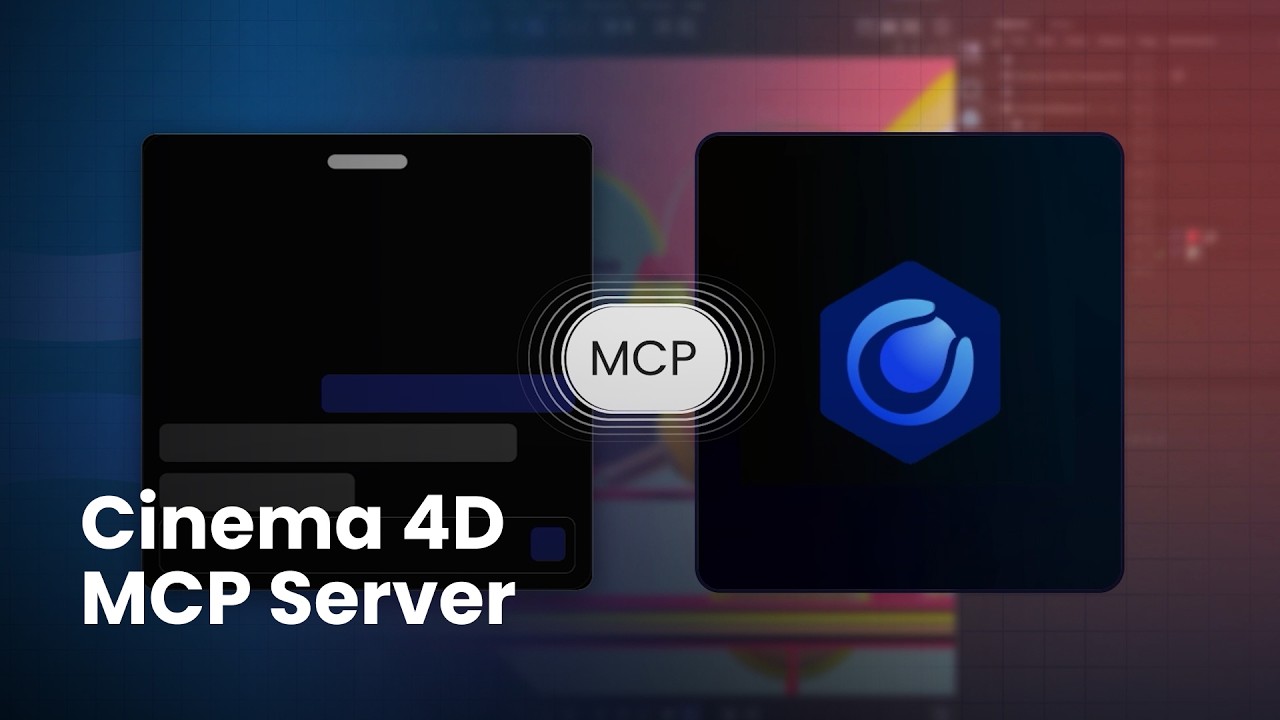
At its heart, the Model Context Protocol (MCP) serves as a bridge, or a standardized "language," that allows AI models to interface directly with external software. By integrating an MCP server into Cinema 4D, Maxon has effectively opened the application’s API to external AI agents.
Unlike traditional AI plug-ins that might generate static images or generic assets, the MCP integration allows the AI to "see" and "manipulate" the actual data within a Cinema 4D scene. This means an artist can issue a natural language command, and the AI can execute a sequence of technical tasks—such as re-hierarchizing an object list, generating complex material variations, or setting up a multi-pass render queue—without the artist needing to click through dozens of menus.
A Chronology of Integration: From Adobe to Maxon
The trajectory of AI in creative software has been rapid. In early 2024, Adobe made headlines by embedding an AI assistant directly into Photoshop, signaling to the industry that AI was no longer a standalone tool, but an embedded colleague.
Maxon’s path, however, has been more nuanced. Recognizing that professional 3D artists require granular control over their scene data, the company initially experimented with targeted AI implementations. Earlier, they introduced 3D model generation via Tencent’s HY 3D AI engine, a move that hinted at their willingness to partner with specialized AI developers to solve specific creative bottlenecks.
The launch of MCP support in version 2026.4 marks the next logical step in this chronology: moving from generating content to orchestrating workflows. This release, available today for both Windows and macOS users, signals that the era of "AI as an assistant" has officially matured into "AI as an operator."
Supporting Data: Eliminating the Procedural Burden
The primary argument for integrating AI into 3D workflows is the reduction of "technical debt"—the hours spent on repetitive, non-creative tasks that consume a significant portion of a 3D artist’s day. According to early internal testing and user feedback cited by Maxon, the MCP integration targets several high-friction areas:
- Scene Organization: Automatically arranging thousands of imported objects into consistent hierarchies.
- Asset Variation: Rapidly generating multiple iterations of materials or object placements for client review.
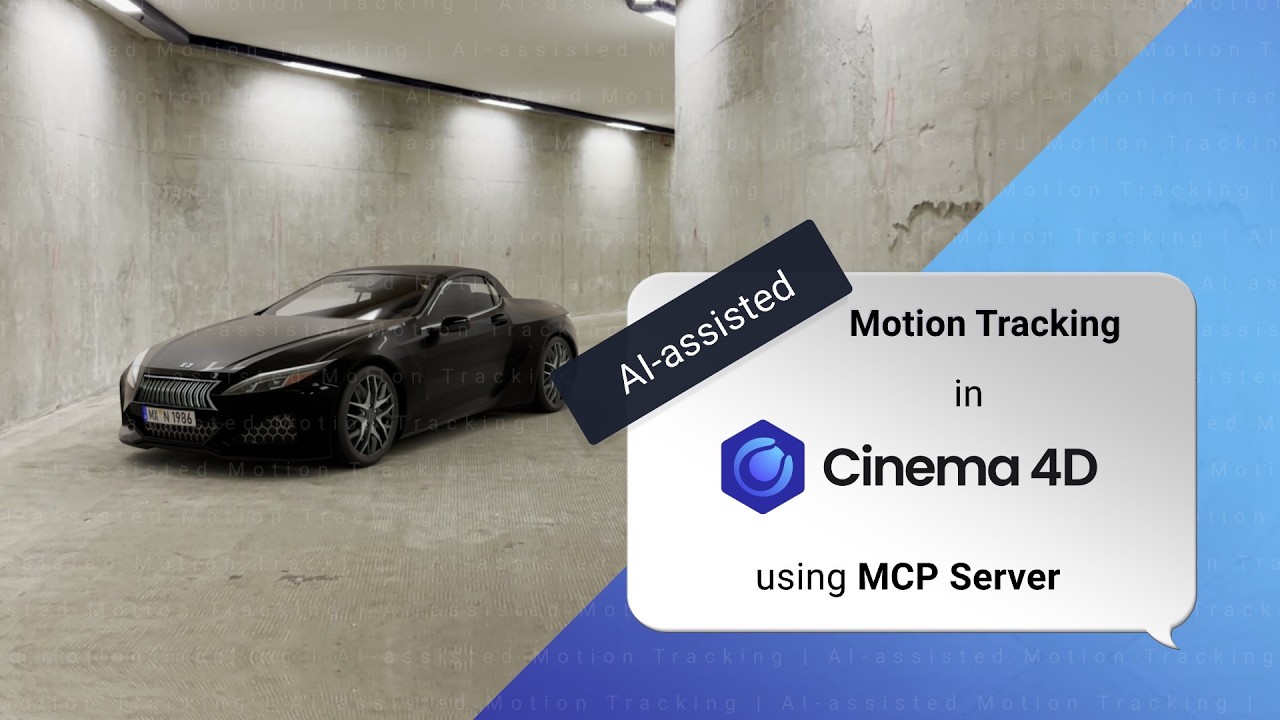
- Technical Setup: Automating the configuration of multi-pass renders, camera tracking, and UV mapping.
- Data Integration: Building complex scene variations based on external data sources like CSV files.
By automating these procedural tasks, Maxon estimates that studios can significantly reduce the "prep time" associated with 3D animation and modeling, allowing artists to spend more time on aesthetic refinement and storytelling.
Maintaining the Human in the Loop: Maxon’s Design Philosophy
Perhaps the most critical aspect of this announcement is Maxon’s insistence on user control. In an industry where "black box" AI outputs are often viewed with skepticism, Maxon has built its MCP implementation with transparency and safety as foundational pillars.
Local Execution and Data Privacy
Every action performed via the AI assistant happens locally on the artist’s workstation. The results are not "generated" in the sense of a flat image or an opaque file format; they are native Cinema 4D scene data. This distinction is vital: because the AI is manipulating the scene graph, the artist retains full control to undo, tweak, or override any decision the AI makes.
Controlled Permissions and Auditability
Security is often the primary concern for large-scale studios. To address this, Maxon has implemented a robust security framework:
- Default-Off Policy: The MCP server is disabled by default. It requires an intentional, proactive opt-in from the user.
- Access Tokens: The server is protected by an MCP adapter access token, ensuring that only authorized AI agents can interact with the software.
- Scoped Permissions: Artists can define exactly which tools and functions the AI is permitted to access, effectively "sandboxing" the assistant.
- Audit Logs: Every command executed by the AI is recorded in a local audit log, and every action is registered in the standard Cinema 4D undo history. This allows for total transparency in the creative process.
The Implications for the Industry
The introduction of MCP support in Cinema 4D has profound implications for the future of the 3D industry.
The Death of the "Repetitive" Artist?
For decades, the role of the 3D "technical artist" has been defined by their ability to navigate complex software to perform repetitive tasks. As these tasks become automatable through natural language, the role of the technical artist will likely evolve toward "pipeline orchestration." The artist of the future will be less of an operator and more of a "director" of an automated technical crew.
Democratization of High-End 3D
By lowering the barrier to entry for complex workflows, Maxon is likely to see an increase in productivity among smaller boutique studios and freelance artists. A solo practitioner with an AI assistant now has the technical capacity that previously required a team of two or three junior technical artists to maintain.
The Rise of the "Open" AI Ecosystem
By choosing the Model Context Protocol, Maxon is signaling that they do not intend to compete with the giants of the AI industry. Instead, they are positioning Cinema 4D as an open platform. This is a strategic masterstroke; as better, faster, and more specialized models (such as LLMs trained specifically on 3D geometry or animation principles) emerge, Cinema 4D will be able to integrate them without needing a major software overhaul.
Looking Ahead: The iPad and Beyond
The momentum shows no sign of slowing. With the desktop integration now live, the community is already looking toward the upcoming Cinema 4D iPad app, which is scheduled for release before the end of the year. The combination of mobile portability with the power of AI-driven automation could redefine "on-the-go" 3D production.
For those eager to dive into the technical details, Maxon has provided extensive documentation on their website. The ability to connect an AI assistant without additional, clunky installations is a testament to the streamlined nature of this update.
Conclusion
Maxon’s integration of the Model Context Protocol into Cinema 4D 2026.4 is a pivotal moment for digital creation. It successfully bridges the gap between the chaotic potential of generative AI and the rigid, precision-based requirements of 3D production. By prioritizing local control, auditability, and human-in-the-loop workflows, Maxon has provided a roadmap for how professional software can survive and thrive in an AI-augmented world.
As artists begin to experiment with these new capabilities, the focus will undoubtedly shift from "Can AI do this?" to "How can we use this to push the boundaries of what is possible?" In this new era, the tool is no longer just a digital chisel—it is a digital apprentice, ready to take on the heavy lifting so that the artist can focus on the singular, irreplaceable work of human creativity.


 Dwi Wanna
 Lina Irawan




