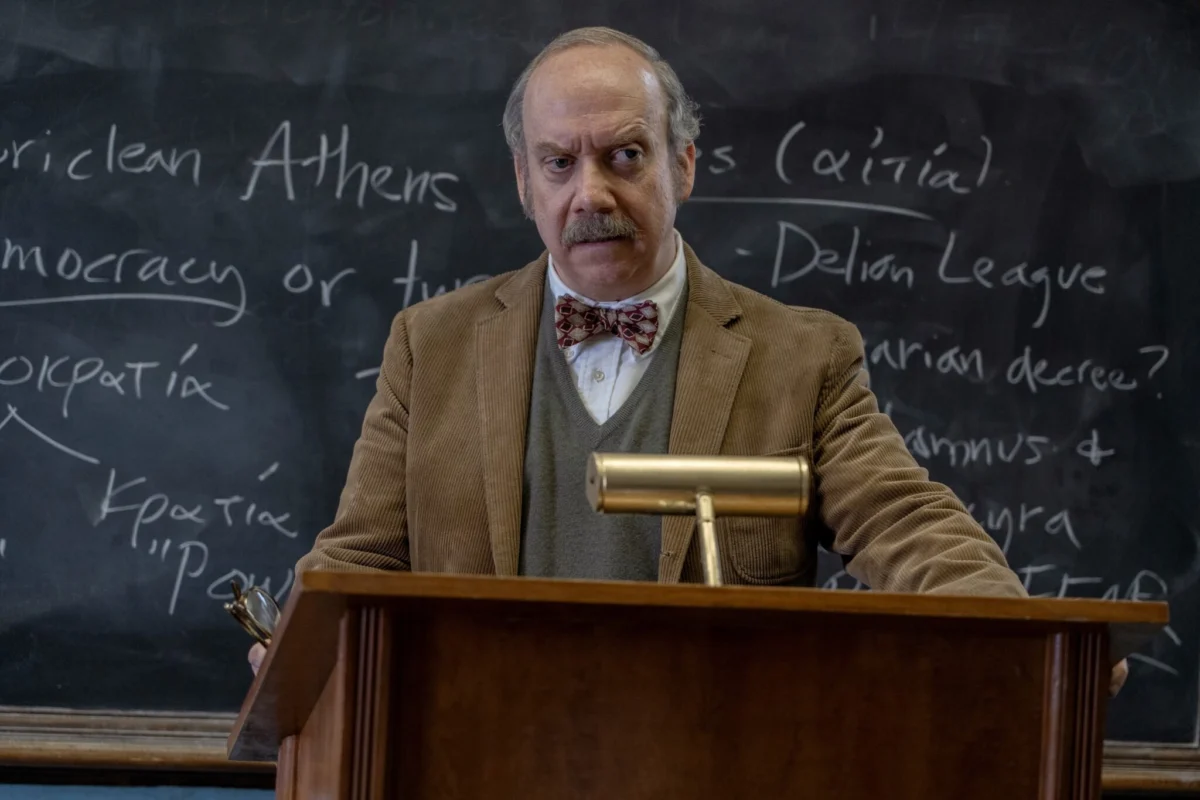
The cinematic world, often defined by its creative ingenuity, finds itself embroiled in a high-stakes legal battle that strikes at the heart of intellectual property rights in Hollywood. On Wednesday, screenwriter Simon Stephenson—known for his contributions to acclaimed films like Paddington 2 and Pixar’s Luca—formally initiated a lawsuit against Academy Award-winning director Alexander Payne. At the center of the dispute is the 2023 critically lauded film The Holdovers, which Stephenson alleges is built upon the structural and narrative foundation of his own unproduced screenplay, Frisco.
The litigation, filed in federal court, represents a significant escalation in a controversy that has simmered behind the scenes of the industry for over a year. Stephenson contends that his script, which garnered substantial attention as a top-tier entry on Hollywood’s prestigious "Black List," was not merely an inspiration for Payne’s project but a direct "blueprint" that was systematically appropriated and repurposed.
The Core Allegations: A Blueprint for Infringement
The complaint, which names not only Payne but also screenwriter David Hemingson, producer Mark Johnson, Miramax, Focus Features, and several associated corporate entities, paints a picture of deliberate intellectual theft. Central to Stephenson’s argument is the existence of what he describes as 46 "matched incidents" between the two works.
According to the lawsuit, Frisco—written by Stephenson in 2012–13—is a deeply personal project. Drawing on his own background as a pediatrician, the script follows a dispirited, cynical doctor at a children’s hospital who finds himself tasked with caring for a precocious, challenging teenage patient. The narrative arc traces their developing bond during a transformative trip to San Francisco, concluding with the doctor’s pivotal decision to abandon his stagnant career and embark on a life-altering cross-country journey.
Stephenson argues that these core elements were not merely coincidentally similar to The Holdovers, but were "meticulously transposed" into the final film. The legal filing alleges that the defendants engaged in a process of "surface cosmetic changes" to disguise the origin of the narrative structure, effectively utilizing Frisco as a scaffold upon which to build their own screenplay. "Screenplays are often called the blueprint for a film," the lawsuit asserts. "The Defendants built their film using Frisco as their blueprint."
A Chronology of Access and Rejection
The foundation of Stephenson’s case rests on the issue of "access"—a legal requirement in copyright infringement claims, proving that the accused party had the opportunity to view the original work.
The chronology provided in the court documents is extensive. Stephenson claims that his representation made multiple attempts to interest Alexander Payne in the Frisco script. Specifically, the suit alleges that Payne was provided with the manuscript in 2013 and again in 2019. On both occasions, the response was a polite but firm decline. According to the filing, a producing partner of Payne’s informed Stephenson’s agent that while the director "did like it," he was ultimately "not interested in producing or directing it."
This history of access, coupled with the subsequent release of The Holdovers, forms the crux of the plaintiff’s argument. Stephenson suggests that the narrative elements of Frisco did not materialize in the final film by chance, but were introduced into the creative process of The Holdovers through Payne’s direct influence and input during his collaboration with screenwriter David Hemingson.
The WGA Conflict and Public Denials
Before turning to the court system, Stephenson sought recourse through the industry’s internal channels. In 2024, he brought his grievances before the Writers Guild of America (WGA), seeking an adjudication of the matter. However, the union ultimately informed him that it lacked the authority to resolve the dispute, advising him to pursue legal counsel instead.
The public discourse surrounding these allegations has been sharp. Alexander Payne, a director celebrated for his nuanced character studies, has been characteristically blunt in his defense. During an appearance at the Sarajevo Film Festival in 2024, Payne was confronted with the plagiarism claims. He dismissed them outright, labeling the accusation as "the stupidest thing in the world."
Despite this dismissal, the legal weight of the current filing necessitates a formal response from the production entities involved. By naming major studios like Miramax and Focus Features, the lawsuit signals that this is not merely a dispute between two writers, but a challenge to the corporate stewardship of a major motion picture project.
Analyzing the "Matched Incidents"
The legal discovery process will likely focus heavily on the specific 46 "matched incidents" cited in the complaint. In copyright law, the standard for "substantial similarity" is notoriously complex. Courts must distinguish between protected expression—the specific way a story is told—and non-protected ideas, such as general tropes or common narrative themes.
Legal analysts observing the case note that the "pediatrician and teenager" dynamic, combined with the "cross-country journey" structure, provides a specific, granular narrative path. If Stephenson’s legal team can prove that the specific sequence of events, character beats, and emotional turning points in The Holdovers mirror the unique structural choices made in Frisco, the defense may face a difficult uphill battle.
The fact that Frisco was ranked third on the Black List—a survey of the most liked unproduced screenplays in Hollywood, often serving as a barometer for industry quality—further underscores that the script was a finished, highly professional, and widely recognized piece of intellectual property prior to the development of The Holdovers.
Broader Implications for the Film Industry
This case arrives at a time when the entertainment industry is increasingly sensitive to issues of copyright and creative integrity, particularly in the age of generative AI and heightened scrutiny of studio development pipelines.
1. The Power Dynamic of "Access"
For aspiring and working screenwriters alike, the case highlights the inherent risk of submitting work to high-profile directors. The reliance on informal industry networks for script circulation creates a tension between the need to market one’s work and the fear of intellectual property theft. If this lawsuit succeeds, it could lead to more stringent "submission protocols" across Hollywood, with agencies and studios becoming more cautious about the scripts they review and the records they keep.
2. The Definition of Plagiarism vs. Inspiration
The defense will undoubtedly argue that The Holdovers is an original work that fits within established cinematic traditions—specifically the "mismatched pair" subgenre. Alexander Payne and his legal team are likely to emphasize the cultural differences between the settings (a hospital in Frisco versus a private school in The Holdovers) and the evolution of the characters’ motivations. The outcome of this case will serve as a bellwether for where the legal system draws the line between "inspired by" and "stolen from."
3. The Future of WGA Arbitration
The fact that the Writers Guild of America was unable to mediate this dispute suggests a potential gap in current union protections. Writers often look to the WGA to police professional conduct; if the union lacks the mechanisms to handle complex plagiarism claims, it may prompt a push for updated bylaws or specialized arbitration panels to handle such disputes in the future, potentially sparing creators the exorbitant costs of federal litigation.
Conclusion: A High-Stakes Legal Precedent
As the legal proceedings move forward, the focus will shift from the court of public opinion to the court of law. For Simon Stephenson, this is an attempt to claim ownership over a story he spent years developing. For Alexander Payne and the production teams behind The Holdovers, it is a challenge to the creative legitimacy of one of the most celebrated films of the decade.
Regardless of the verdict, the case serves as a stark reminder of the fragile nature of authorship in an industry driven by collaboration. As the defendants prepare their motions to dismiss or counter-arguments, the entire industry will be watching to see how the court balances the protection of a screenwriter’s intellectual labor against the creative freedom of directors to weave stories that may, at times, echo the work of others. For now, the question remains: was The Holdovers an act of creative synthesis, or, as Stephenson claims, an unauthorized appropriation of a meticulously crafted blueprint? The answer will likely define the career legacies of those involved for years to come.