

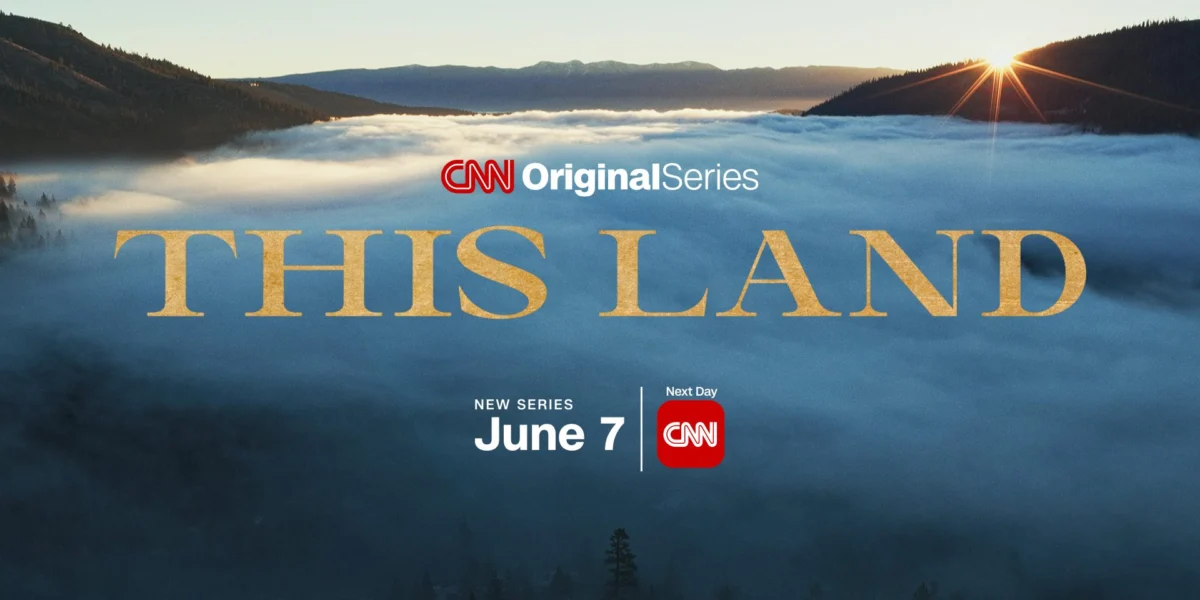
As the United States approaches its semiquincentennial—the 250th anniversary of the signing of the Declaration of Independence—the national discourse is increasingly turning toward self-reflection. In a major programming move, CNN has announced the launch of This Land, an ambitious six-part docuseries designed to re-examine the geopolitical, social, and cultural metamorphosis of the American landscape. The series, which promises to move beyond textbook summaries, aims to synthesize the "fragile experiment" of 1776 into the global superpower of the 21st century.
Main Facts: A New Lens on History
This Land is set to premiere on Sunday, June 7, at 9 p.m. ET/PT on CNN. The series is structured as a weekly original production, airing two episodes per Sunday to complete its six-part run. Produced by October Films, the series seeks to bridge the gap between historical scholarship and modern narrative storytelling.
The core premise of the series is to dismantle the monolithic narrative of American expansion. Instead of viewing history as a static timeline of dates and treaties, This Land positions itself as an exploration of the human experience behind territorial acquisition and national growth. From the Louisiana Purchase to the urbanization of New York City, the series posits that the American map was drawn not just by ink on paper, but by the "extraordinary sacrifices" of those who lived through the era.
Beyond the television broadcast, CNN has integrated the series into its digital ecosystem. Episodes will be available for streaming the day after their broadcast via CNN.com/watch and the dedicated CNN app, reflecting a commitment to reach a multi-generational audience that consumes content across various platforms.
Chronology of Expansion: Mapping the American Story
The series is organized chronologically and geographically, focusing on six pivotal chapters that defined the physical and cultural borders of the United States.
1. The Louisiana Purchase and the Interior
The journey begins with the Louisiana Purchase of 1803, an event that effectively doubled the size of the nascent nation. This Land investigates the complex political maneuvering behind the deal and the immediate consequences for the interior of the continent.
2. The Lewis and Clark Expedition
Following the expansion, the series delves into the Lewis and Clark expedition. Rather than focusing solely on the explorers’ bravery, the series highlights the ripple effects of their journey on the Indigenous nations that had occupied the territory for millennia.
3. The Perilous Push West
The mid-19th century surge toward California is framed in the series as a "perilous" endeavor. This segment captures the human cost of Manifest Destiny, illustrating the intersection of dreams, gold fever, and the immense physical toll taken on the settlers.
4. Texas and the Shifting U.S.-Mexico Border
The narrative turns to the volatility of the Southwest. By exploring the fight over Texas, the series examines how the shifting U.S.-Mexico border redefined national identity and created a cultural synthesis that remains a defining feature of the region today.
5. The High-Stakes Gamble of Alaska
In a fascinating pivot, the series covers the acquisition of Alaska. Often overlooked in general history courses, the "Seward’s Folly" narrative is re-evaluated here as a calculated, high-stakes gamble that secured vast natural resources and a strategic foothold in the North.
6. The Rise of New York
The final arc centers on the transformation of New York City from a port town into a global powerhouse. This segment highlights the industrial revolution, the surge of immigration, and the emergence of the American city as the engine of the global economy.
Supporting Data and Production Scope
The production value of This Land relies heavily on a "human-first" approach to historical documentation. October Films has utilized a mix of archival research and modern-day interviews with descendants of historical figures. This includes not only the voices of the politicians and explorers who made the decisions, but also those who bore the brunt of these policies: Indigenous leaders, whose ancestral lands were annexed, and the immigrant laborers who laid the literal and figurative foundations of the growing nation.
The choice to air episodes in two-hour blocks is a tactical scheduling decision, allowing for a deep-dive experience. By pairing episodes, CNN creates a "miniseries" effect, encouraging viewers to stay engaged for the duration of the evening. Data suggests that historical documentaries focusing on personal narratives—rather than purely academic lectures—consistently perform well in the demographic segments most prized by cable news networks.
Official Responses: The Philosophy Behind the Lens
Amy Entelis, the executive vice president of talent at CNN Originals and creative development for CNN Worldwide, has been the primary architect of the project’s messaging. In a recent statement, Entelis underscored the importance of relevance in historical filmmaking.
"At its core, This Land is about the connection between past and present," Entelis noted. "It brings history to life through the voices of those still connected to it, making these stories feel urgent, personal, and very much alive."
The network’s strategy is clearly to avoid the "dry" nature of traditional historical programming. By emphasizing that these stories are "alive," Entelis suggests that the network is looking to tap into the current cultural appetite for uncovering suppressed or hidden histories. The goal is to make the audience understand that the United States of 2026 is a direct, living consequence of the decisions made in the 1800s.
Implications: Why History Matters Now
The timing of This Land is no coincidence. As the nation approaches its 250th birthday, the public is increasingly engaged in a "history war"—a struggle over how the American story should be told, who should be credited for its successes, and who should be held accountable for its systemic failures.
The Challenge of Nuance
By including the perspectives of Indigenous leaders alongside those of descendants of explorers, CNN is positioning This Land as a neutral arbiter in a polarized landscape. The implication is that a unified national story can only exist if all voices are heard. This approach reflects a broader trend in media where "objective" history is being replaced by "comprehensive" history—a narrative that acknowledges multiple, often conflicting, perspectives.
Impact on Future Programming
If This Land succeeds in capturing both high viewership and critical acclaim, it could signal a shift for CNN Originals. The network has been aggressively expanding its footprint in the documentary space to compete with streaming giants like Netflix and Disney+, which have seen massive success with historical docuseries. Success for This Land would provide a blueprint for how cable networks can utilize their established branding to deliver high-quality, long-form content that maintains a professional, journalistic standard.
A Legacy for the Semiquincentennial
The series will likely serve as an unofficial anchor for the national 250th-anniversary celebrations. As museums, local governments, and national institutions prepare for the festivities of 2026, This Land provides a foundational narrative that can be debated, analyzed, and discussed in classrooms and living rooms alike.
Ultimately, the docuseries challenges the viewer to look at the map of the United States and see not just lines and states, but a living, breathing, and often painful history. As the series title suggests, this is not just "American history"; it is the history of this land—the physical, shifting, and deeply complex territory that millions call home.
Whether the series will satisfy the critics who demand a more patriotic focus or those who demand a more critical examination of colonialism remains to be seen. However, by choosing to center the human voice, CNN has ensured that the conversation will be focused on the people who have been, and continue to be, the architects of the American experiment. As June 7 approaches, the stage is set for a profound reflection on what it means to belong to a nation that is still very much in the process of becoming.












No comments yet. Be the first to join the conversation!