Azzam Bilal Chamdy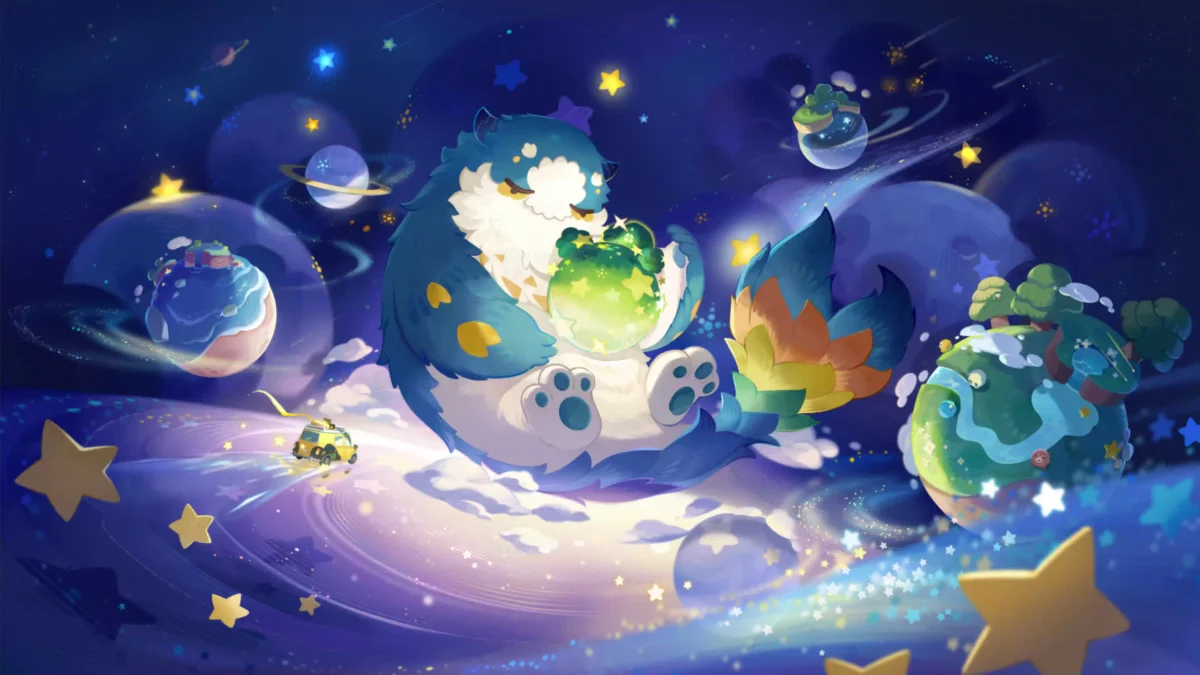
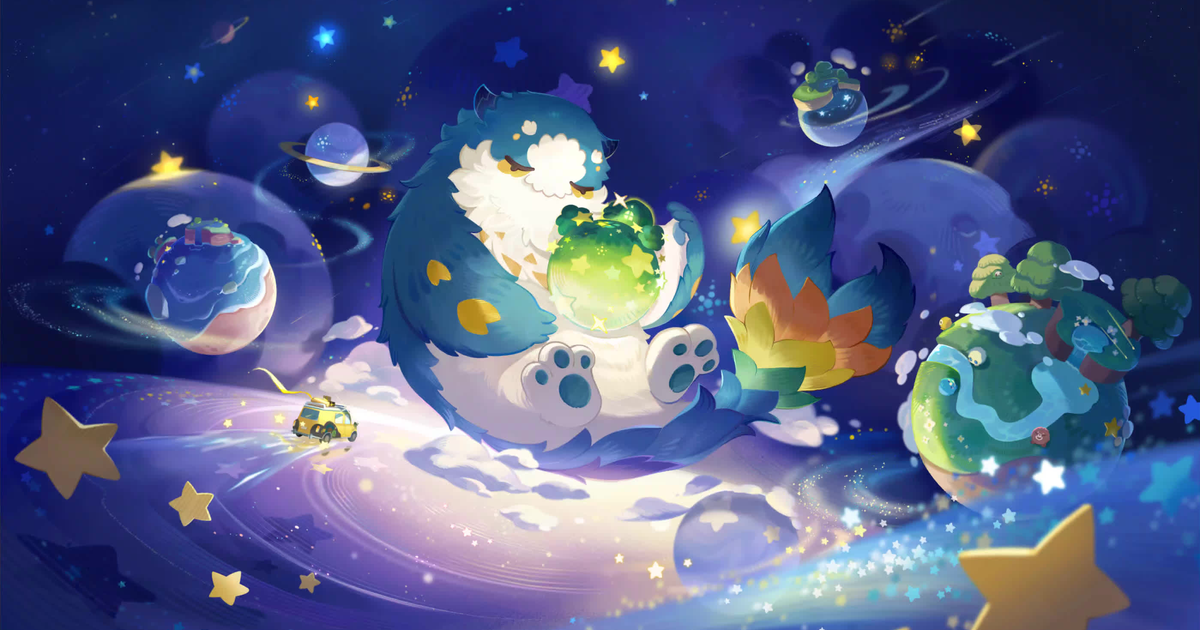
Shanghai, China – [Current Date] – In an increasingly crowded gaming landscape, where the echoes of Nintendo’s genre-defining Animal Crossing: New Horizons reverberate through countless new titles, HoYoverse, the global gaming titan behind Genshin Impact and Honkai: Star Rail, has thrown its hat into the social simulation ring with Petit Planet. Currently undergoing its second beta test, Petit Planet offers an undeniably appealing sci-fantasy aesthetic, transforming the familiar desert island into a charming desert planet nestled among the stars. Yet, beneath this fresh coat of paint, the game appears to struggle with bringing genuinely novel ideas to the table, prompting a critical examination of its place in the genre, its strategic implications for HoYoverse, and the broader questions it raises about innovation and ethics in modern game development.
The Ever-Present Shadow of Animal Crossing
The 2020s gaming scene has witnessed an undeniable proliferation of titles that openly embrace or subtly emulate the foundational mechanics of Animal Crossing. From Heartopia to Pokopia, and even a resurgence of interest in games like Tomodachi Life, the influence of Nintendo’s beloved franchise is pervasive. This phenomenon is hardly surprising; Animal Crossing: New Horizons provided a much-needed balm during the global lockdowns, offering millions a tranquil escape into personalized island paradises. As the decade progresses, it seems many studios have come to the same conclusion: there’s a sustained appetite for relaxing, customizable social sims.
HoYoverse, known for its meticulously crafted open-world RPGs, has explicitly positioned Petit Planet as its interpretation of the Animal Crossing formula. This comparison, first drawn when the concept leaked several years ago, has been neither refuted nor distanced by the developer. Such an approach is consistent with HoYoverse’s past strategies; their flagship title, Genshin Impact, famously drew heavy inspiration from The Legend of Zelda: Breath of the Wild. In Genshin‘s early days, frequent parallels were made, yet the game’s distinct character system, party-based combat, and intricate gacha monetization proved sufficient to carve out its own massive niche. Indeed, reducing Genshin Impact to a mere Breath of the Wild clone in 2026 would be a disservice to its evolved identity and unique contributions to the action RPG genre.
The critical question for Petit Planet, however, is whether it can achieve a similar level of differentiation. While Genshin Impact fundamentally altered the combat and progression loop of its inspiration, early impressions of Petit Planet suggest a closer adherence to its muse’s core gameplay. Without significant departures, the game risks being perceived as a reskin rather than a reinterpretation, struggling to justify its existence beyond its charming visual theme.
A Genre Built on Homage: The Life Sim Legacy
It is crucial to contextualize Petit Planet within the broader history of life, social, and farming simulation games. This genre, perhaps more than any other, thrives on iteration and homage. The classic trio of The Sims, Animal Crossing, and Harvest Moon (now Story of Seasons) have continuously influenced one another and spawned countless spiritual successors. Many of these, like the indie darling Stardew Valley, have gone on to achieve critical acclaim and cult status by successfully building upon established mechanics while injecting fresh perspectives or unique narrative elements. Stardew Valley, for instance, masterfully blended the farming, social, and exploration aspects of Harvest Moon with a deep sense of player agency and charm, creating a phenomenon that transcended its inspirations.
On paper, there’s no inherent reason why Petit Planet couldn’t find a similar success story, particularly within the free-to-play, mobile-led space that HoYoverse dominates. The studio has a proven track record of creating highly polished, engaging experiences with broad appeal. The challenge, however, lies in identifying what unique contribution Petit Planet brings to this well-trodden path. Merely being "HoYoverse’s Animal Crossing" may not be enough in a market saturated with competent and often innovative alternatives.
Head-to-Head with Contemporaries: The Heartopia Challenge
The competitive landscape for Petit Planet is not limited to established giants like Animal Crossing: New Horizons. Emerging titles are already carving out their own segments. Heartopia, for example, a gacha social sim with a distinctive "playdough-y" aesthetic, presents a direct contemporary challenge. It targets a similar demographic and draws from the same well of genre classics. Heartopia currently boasts a significant advantage: global availability since January, while HoYoverse remains tight-lipped about Petit Planet‘s official release window.
More importantly, Heartopia offers a clear Unique Selling Proposition (USP): all the neighbours in its charming town are controlled by other players, fostering a dynamic and inherently social multiplayer experience. This distinguishes it from the largely NPC-driven world of Animal Crossing and, by extension, Petit Planet.

In contrast, Petit Planet‘s USP, beyond its admittedly appealing "desert planet in space" aesthetic, remains elusive. Gameplay loops observed in the beta are strikingly familiar: shaking faintly apple-looking plums from a familiar tree, catching fish and insects to deliver to a kindly, cultured anthropomorphic animal for display in a vivarium (a clear nod to Animal Crossing‘s Blathers), and helping an energetic little monkey organize settlement resources (evoking Happy Home Paradise‘s Niko). While these mechanics are inherently enjoyable for fans of the genre – and the reviewer admits to immense personal enjoyment due to their affinity for social sims and HoYoverse’s general quality – the lack of innovation poses a significant barrier to long-term engagement. When players can simply return to their meticulously curated 900-hour ACNH island to scratch the same itch, what compelling reason does Petit Planet provide to start anew? For players already juggling multiple social sim settlements, the prospect of investing hundreds of hours into another highly similar experience is a tough sell.
The Elephant in the Room: HoYoverse’s Generative AI Commitment
One of the most contentious aspects of Petit Planet, and indeed HoYoverse’s broader development strategy, is the explicit use of generative AI. The game makes no secret of this, with disclosures already present in the beta build. While transparency is commendable in an industry often opaque about its AI integration, the "frustrating opacity" surrounding the specifics of its implementation persists. The current content, such as NPC dialogue, could conceivably be generated using a Small Language Model (SLM) trained on HoYoverse’s extensive in-house data, which would be a far less ethically problematic approach than relying on Large Language Models (LLMs) trained on vast, unconsented internet datasets. However, there is no guarantee that this is the case, leaving a lingering uncertainty about the ethical footprint of the game’s development.
The broader implications of HoYoverse’s "all-in" approach to generative AI are profound and multifaceted. Critics point to potential harms across various fronts:
- Worker displacement: The fear that AI will replace human artists, writers, and developers.
- Creative integrity and quality: Concerns that AI-generated content, while efficient, lacks the nuance, originality, and soul of human-made art. The observation that Petit Planet‘s NPC conversations resemble the 20-year-old indie game Façade – a pioneering but rudimentary experiment in AI-driven dialogue – is particularly telling. While Façade was ahead of its time, presenting such results as a triumph of modern generative AI feels like a misstep, especially when juxtaposed with the significant ethical and environmental costs associated with large-scale AI deployment.
- Audience perception: A segment of players is increasingly wary of AI-generated content, viewing it as a shortcut that devalues creative effort.
- Environmental impact: Training and running large AI models consume vast amounts of energy.
- Economic implications: The potential for a race to the bottom in content creation, impacting independent creators and smaller studios.
Publicly declaring a commitment to generative AI without apparent care for these potential harms, only to deliver results that are competent but not groundbreaking, risks a significant backlash. It raises questions about whether the pursuit of AI integration is driven by genuine innovation or simply a cost-cutting measure, potentially at the expense of creative integrity and public trust.

The Monetization Mystery: Gacha or Not?
Perhaps the most curious element of the Petit Planet beta is the absence of a discernible gacha monetization system. This is a radical departure for HoYoverse, a studio whose entire current roster of five titles – Genshin Impact, Honkai: Star Rail, Honkai Impact 3rd, Tears of Themis, and Zenless Zone Zero – is built upon the gacha model, a strategy that has undeniably contributed to their immense financial success.
While the beta hints at a seasonal pass subscription model, the traditional gacha-shaped hole, where players spend currency to randomly acquire characters, cosmetics, or items, is conspicuously absent. This strategic shift could be a deliberate move to make Petit Planet more palatable to parents, who typically hold the purse strings for younger players. HoYoverse is clearly targeting a "family" audience with this title, and the removal of gacha elements could be an attempt to mitigate concerns about predatory monetization practices often associated with the system.
However, even if Petit Planet eschews gacha, the prospect of HoYoverse – a live-service specialist whose monetization tactics, even when aimed at fully-informed adults, are far from above reproach – entering the children’s gaming market is bound to raise alarm bells. The industry has a troubled history with monetizing younger audiences, and while a seasonal pass might seem less aggressive than gacha, the potential for subtle, continuous engagement hooks designed for maximum playtime and recurring expenditure remains. This concern is amplified by the realization that today’s primary school-aged children, who are presumably Petit Planet‘s core demographic, are too young to remember the "halcyon days" of Animal Crossing: New Horizons and its less aggressive monetization. This marks a new frontier for HoYoverse, one that demands careful scrutiny regarding its ethical implications for younger, more vulnerable players.
Targeting the "Family" Audience: A New Frontier for HoYoverse
Petit Planet represents a significant strategic pivot for HoYoverse as its first game explicitly designed for a "family" audience. While younger players certainly engage with Genshin Impact and other HoYoverse titles (often with parental oversight), Petit Planet‘s design, aesthetic, and potentially its monetization strategy, are geared towards a demographic that values comfort, accessibility, and a perceived innocence.

This move could be seen as HoYoverse attempting to diversify its portfolio and capture a broader market segment, particularly in regions where family-friendly gaming holds substantial cultural and economic weight. However, it also introduces a new layer of responsibility. The design choices, content moderation, and monetization methods for a game targeting children must be held to a higher standard. The potential absence of gacha, if confirmed, would be a positive step in this direction, but it does not absolve the studio of the need for transparent and ethical practices in all aspects of the game, especially concerning player engagement and psychological design.
Conclusion: Competent, Comfortable, but Cautious Optimism
Credit where it’s due: Petit Planet demonstrates HoYoverse’s impressive ability to step outside its established niche of action RPGs. Alongside titles like Tears of Themis (a romance visual novel), Petit Planet serves as further proof of the studio’s versatility and polish across diverse genres. It is, by all accounts, a "perfectly competent social sim," which, while sounding like a backhanded compliment, is a considerable achievement for a studio venturing into a new gaming space. The game’s appealing aesthetic, smooth mechanics, and familiar gameplay loops offer a comforting experience for genre enthusiasts.
However, this comfort comes at the cost of distinctiveness. Petit Planet may not be poised to revolutionize the genre or set the world on fire with groundbreaking innovation. Instead, its most achievable goal appears to be carving out a modest niche among life sim fans who are eager for a shiny new, yet still comfortingly familiar, playground. For players who have exhausted their Animal Crossing islands or are seeking a HoYoverse-flavored take on the social sim, Petit Planet offers a polished, if predictable, escape.
The ultimate success of Petit Planet will hinge on several factors: HoYoverse’s final monetization strategy, its continued transparency (or lack thereof) regarding AI usage, and its ability to subtly differentiate the experience beyond its initial charming sci-fantasy aesthetic. While the game provides a pleasant minute-to-minute experience, its long-term appeal in a crowded market will depend on whether it can evolve past being merely a competent homage and offer compelling reasons for players to invest their precious time and resources into its small, star-dusted world.


 Lina Irawan
 Sagoh
Sagoh