Jia Lissa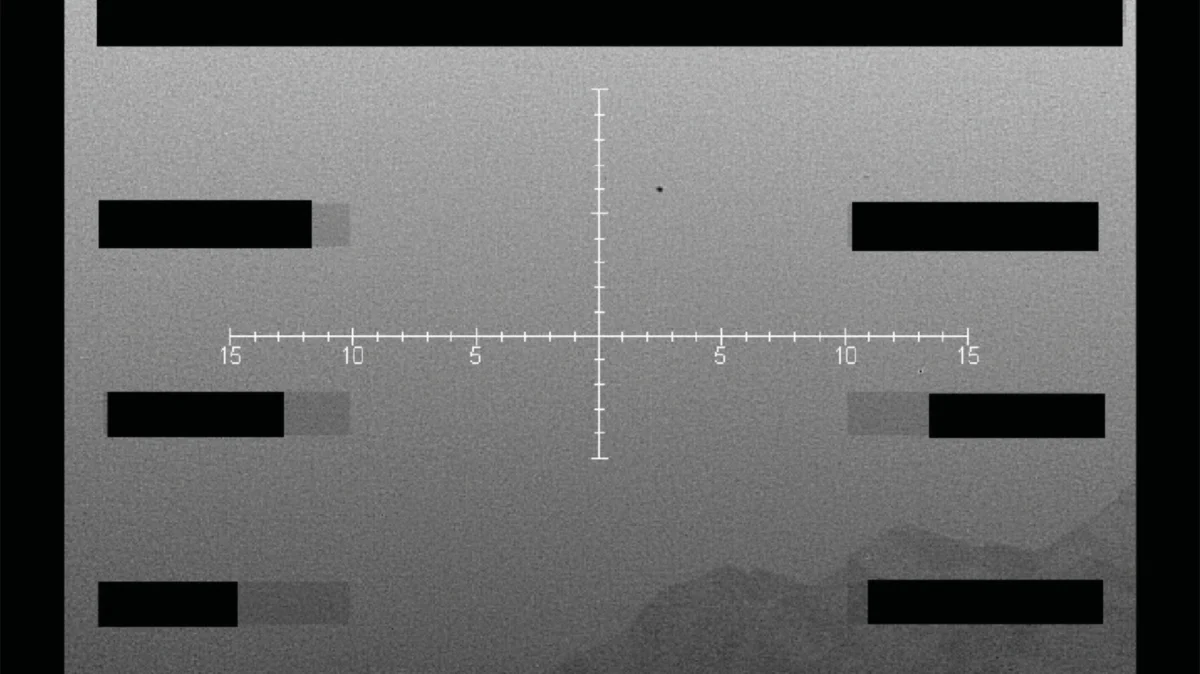
In a move that has sent ripples through both the intelligence community and the global community of extraterrestrial researchers, the United States Department of War (DOW) has launched a centralized digital portal—war.gov/UFO—dedicated to the public release of "never-before-seen" files regarding Unidentified Anomalous Phenomena (UAP). This initiative, which the agency promises to update on a rolling basis, represents the most significant push toward bureaucratic transparency regarding unexplained aerial and maritime phenomena in American history.
While the files are presented with an aesthetic that leans into the high-stakes, conspiratorial intrigue favored by UFO enthusiasts, the reality behind the digital curtain is more complex. The release follows a direct directive from President Donald Trump earlier this year, signaling a pivot in how the executive branch manages the intersection of national security, public curiosity, and the persistent mystery of objects that defy conventional explanation.
The Genesis of the Disclosure: A Presidential Mandate
The launch of the portal is the direct result of a February directive issued by President Trump via his Truth Social platform. In a post that caught many in the intelligence community off guard, the President called upon the Department of War and affiliated agencies to "begin the process of identifying and releasing Government files related to alien and extraterrestrial life, unidentified aerial phenomena, and unidentified flying objects."
This mandate marks a departure from the historically guarded stance of the Pentagon and intelligence agencies. For decades, the subject of UAPs—formerly categorized strictly as UFOs—was relegated to the fringe, shielded by layers of classification and administrative obfuscation. By institutionalizing the release of these records, the current administration has shifted the burden of proof, forcing the government to curate and display its own archives, regardless of the findings.
A Chronology of Official Engagement
The road to the current disclosure portal has been paved with shifting attitudes, bureaucratic hurdles, and public pressure. To understand the significance of this moment, one must look at the historical trajectory of UAP research within the U.S. government.
2007–2012: The Shadow Era (AATIP)
The modern era of government UAP research began in relative silence with the formation of the Advanced Aerospace Threat Identification Program (AATIP) in 2007. Spearheaded by the late Senator Harry Reid, the program was designed to investigate incidents of unexplained aerial encounters reported by military personnel. Despite its efforts, the program was shuttered in 2012, with officials claiming the project had run its course.
2017: The Curtain Lifts
The public’s perception of government secrecy changed in 2017 when the existence of AATIP was finally acknowledged by the Department of Defense. This revelation, coupled with the unauthorized leaking of high-profile gun-camera footage showing anomalous objects interacting with Navy aircraft, forced the issue into the mainstream political conversation.
2020–2021: The First Trump Administration
During his first term, President Trump oversaw the first official declassification of UAP footage. These videos, which captured objects performing maneuvers far exceeding the capabilities of known terrestrial propulsion systems, were widely analyzed by global media. However, a subsequent government report concluded that while the phenomena were "unexplained," there was no empirical evidence linking them to extraterrestrial technology.
2026: The Current Initiative
The current deployment of the war.gov/UFO portal represents the latest chapter. By consolidating files from the DOW, the FBI, and NASA into a searchable repository, the government is attempting to modernize its approach to a topic that has historically thrived in the darkness of classified briefings.
Examining the Data: What the Portal Reveals
The war.gov/UFO interface is intentionally designed to evoke the "X-Files" aesthetic, complete with a carousel of grainy images, redacted PDFs, and case files. A deep dive into the repository reveals a massive catalog of sensory reports, radar telemetry, and eyewitness accounts from military pilots.
However, a critical review of the provided material suggests that the "smoking gun" remains elusive. Much of the data consists of mundane reports of weather balloons, drone incursions, and atmospheric anomalies. Skeptics argue that the presentation of the material—which highlights the "conspiratorial" elements—may be an attempt to manage public expectations. By flooding the zone with files that are, for the most part, inconclusive, the government effectively manages the narrative without necessarily confirming or denying the existence of non-human intelligence.
The Geopolitical Context: A Strategic Diversion?
Critics of the administration have raised questions regarding the timing of this massive information dump. As the United States navigates a volatile international landscape, including an escalating and increasingly disastrous conflict with Iran in the Strait of Hormuz, some observers suggest that the UAP release serves a secondary, perhaps more utilitarian, purpose.
The "distraction hypothesis" posits that the government is utilizing the public’s fascination with the unknown to shift the spotlight away from foreign policy failures and domestic economic struggles. When the news cycle is dominated by debates over interstellar visitors, the public discourse on complex military engagements and regional instability is inevitably diluted. Whether this is a conscious strategic decision or a fortuitous coincidence remains a subject of intense debate among political analysts.
Official Responses and Bureaucratic Hurdles
The All-domain Anomaly Resolution Office (AARO), which contributed significantly to the current file release, maintains that its mission is purely scientific and security-oriented. In a recent statement, an AARO spokesperson noted that the goal of the portal is to "provide the American public with the same information we are reviewing, in the interest of transparency and to mitigate the risks posed by unidentified objects in restricted airspace."
The bureaucratic process of vetting these files is monumental. Each document must be scrubbed for intelligence methods and sources, ensuring that while the public learns more about the phenomena, they do not gain insight into the capabilities of U.S. surveillance technology. This process is inherently restrictive, meaning that the "never-before-seen" files are, by definition, those that the government has deemed safe for mass consumption.
Implications for Science and Society
The impact of this disclosure on the scientific community is profound. For decades, legitimate researchers were discouraged from studying UAP reports due to the stigma associated with the subject. By institutionalizing the investigation through the Department of War, the government has provided a framework for academic and private-sector collaboration.
However, the scientific consensus remains cautious. The primary challenge is not the lack of data, but the lack of quality data. Most UAP sightings are transient, recorded by sensors that were never calibrated for such observations, and unsupported by ground-based validation. The transition from "UFO sightings" to "scientific inquiry" requires a level of rigor that the current portal, while historically fascinating, has yet to achieve.
Conclusion: A Curio or a Turning Point?
As the Department of War continues to add material to the portal on a rolling basis, the public is left to grapple with a paradox: we have more information than ever before, yet we remain no closer to a definitive answer.
The war.gov/UFO portal is an undeniable milestone in the history of government transparency. It serves as an archive of our collective obsession with the unknown and a testament to the way a massive bureaucracy processes anomalies that fall outside its control. Whether these files eventually reveal the presence of advanced extraterrestrial intelligence, or simply offer a clearer picture of the limitations of our own military technology, remains to be seen. For now, the files stand as a fascinating curio—a window into a government struggling to define the undefinable in an age where the truth is rarely as simple as the stories we tell about it.


 Nana
Nana
 Basiran